Artwork
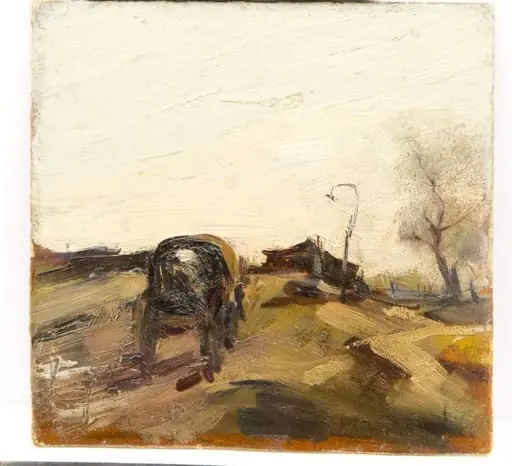
Popas în zăpadă
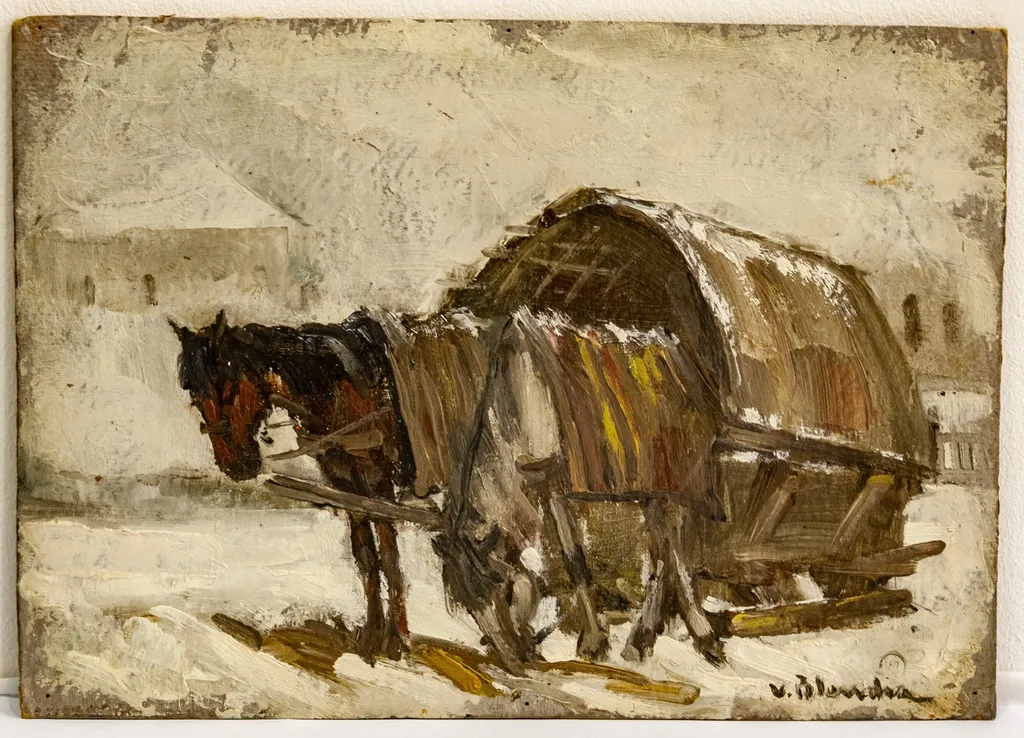
Popas în zăpadă is an unspecified painting by Vasile Blendea. It is held in the collection of the Gavrila Simion Eco-Museum Research Institute Tulcea.
About this work
Overview
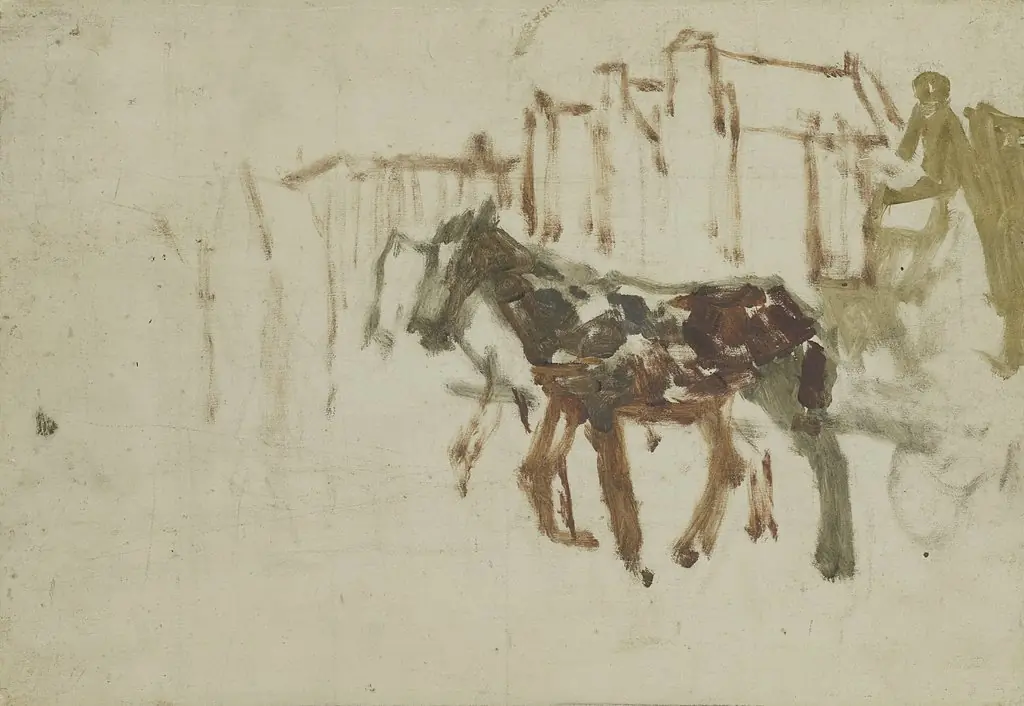
The work titled “Popas în zăpadă” depicts a horse harnessed to a wooden cart, both enveloped in a thick white layer that suggests snow. The animal’s dark, mottled coat contrasts with the cart’s simple, rough construction, which includes a single yellow stripe near its rear. The scene rests against a pale, uneven background that resembles cracked plaster.
Subject & Meaning
The composition centers on the relationship between the horse and its vehicle, emphasizing the burden of travel in wintry conditions. The stark white covering unifies the figures, while the muted yellow accent on the cart hints at a lingering presence of warmth or human activity amid the cold landscape.
Technique & Style
Paint is applied in heavy impasto, creating a textured surface where brushstrokes stand out as palpable ridges. The white snow is rendered with rough, chunky strokes rather than smooth blending, giving the surface a tactile, three‑dimensional quality. The overall handling is vigorous, emphasizing materiality over fine detail.
History & Provenance
The piece is catalogued as an image, with no additional information on its creation date, artist, or exhibition history provided in the source material.
Context
The work aligns with a tradition of winter scenes that explore the interplay of light, texture, and the physicality of paint. Its emphasis on impasto connects it to broader modernist experiments in surface and material presence.
Legacy
Without further documentation, the painting’s influence or reception cannot be detailed beyond its demonstration of thick paint application and atmospheric winter subject matter.
Artist & collection
Artist
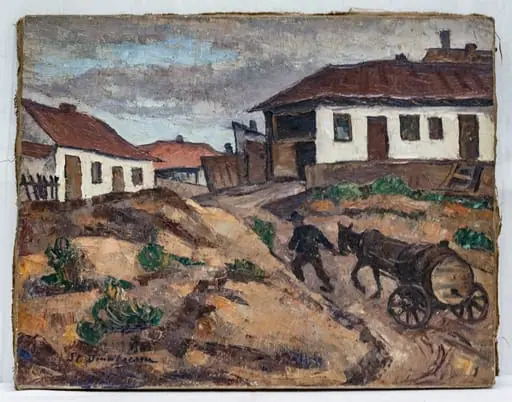
Vasile Blendea made prints and paintings in early 20th-century Romania, often showing workshops, village scenes, and wintry roads.
Museum
Gavrila Simion Eco-Museum Research Institute Tulcea
Continue through works from the same source collection.