Artwork
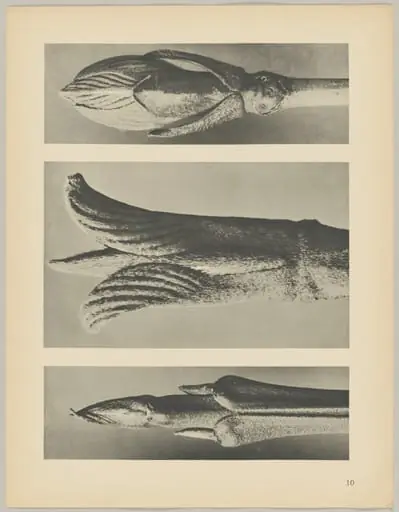
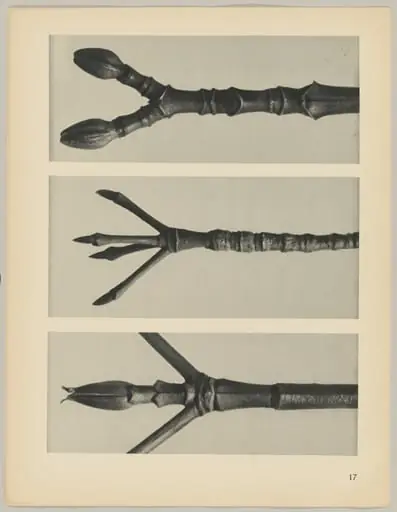
a Callicarpa dichotoma; b Fraxinus ornus; c Cornus pubescens
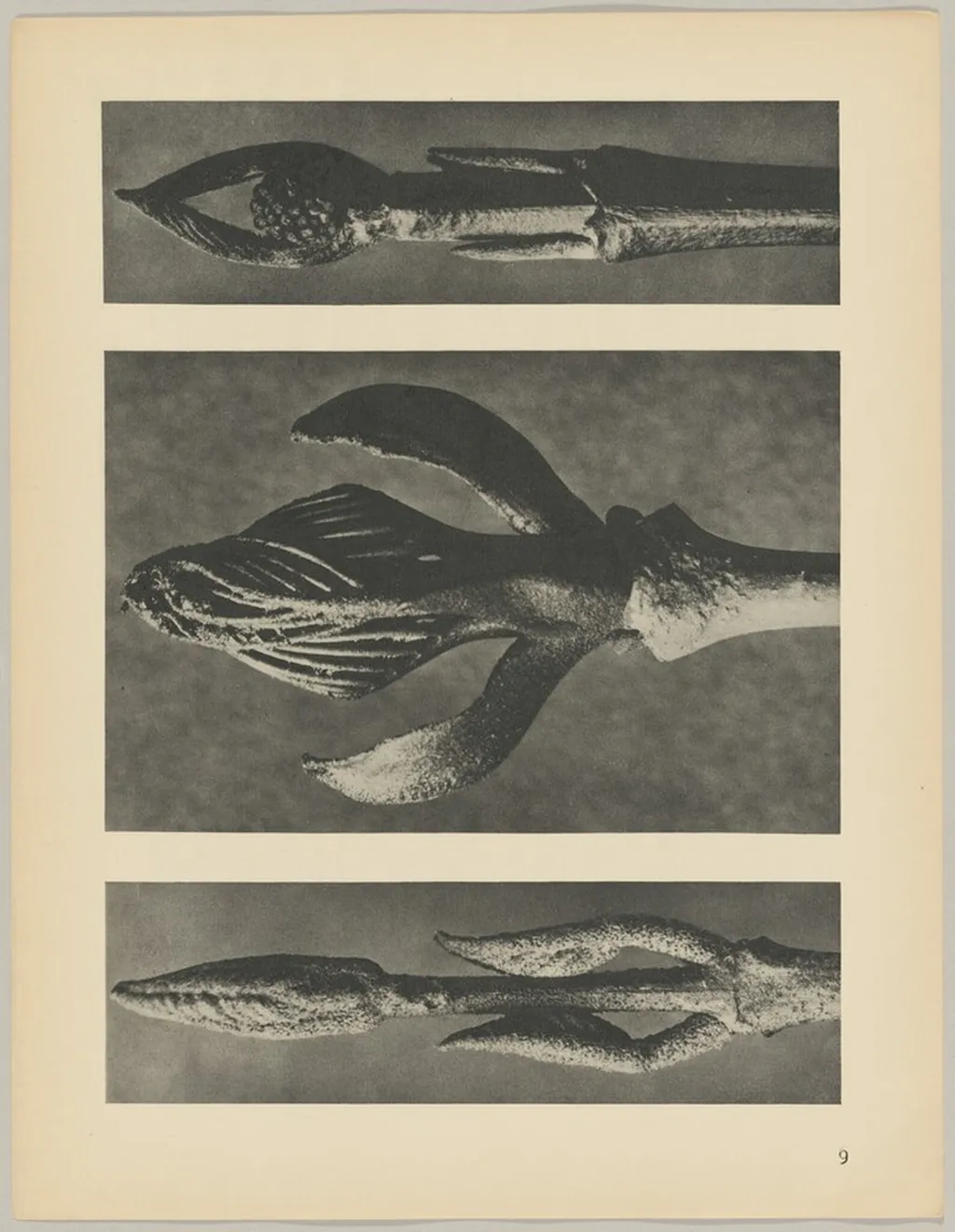
a Callicarpa dichotoma; b Fraxinus ornus; c Cornus pubescens is a print by Karl Blossfeldt. It dates from 1928 and is held in the collection of the National Gallery of Art.
About this work
Overview
The technique, photogravure, allows for rich tonal variation and fine texture, transforming photographic negatives into enduring printed images.
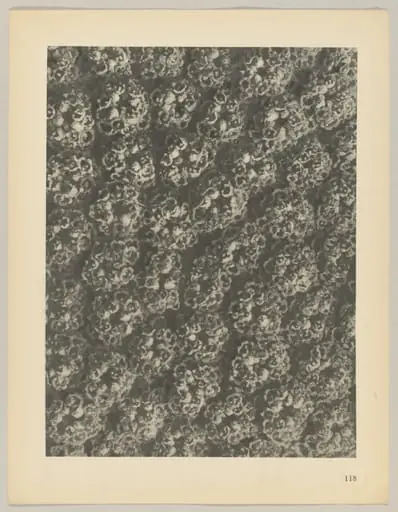
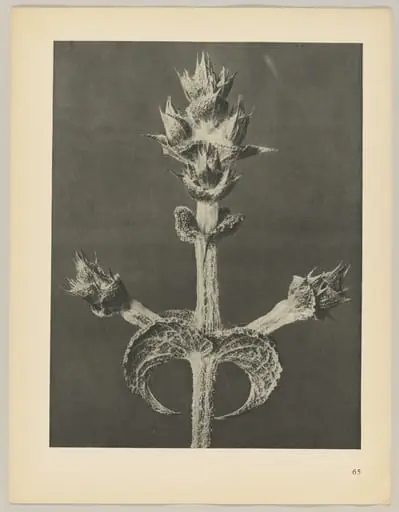
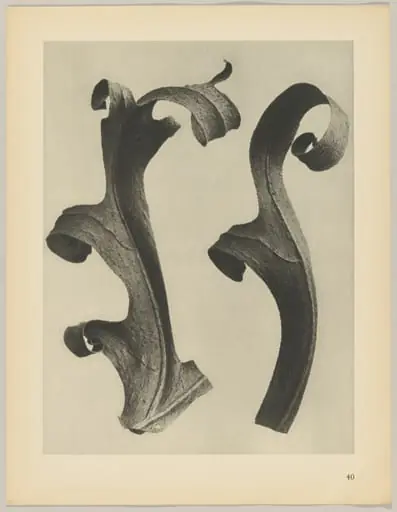
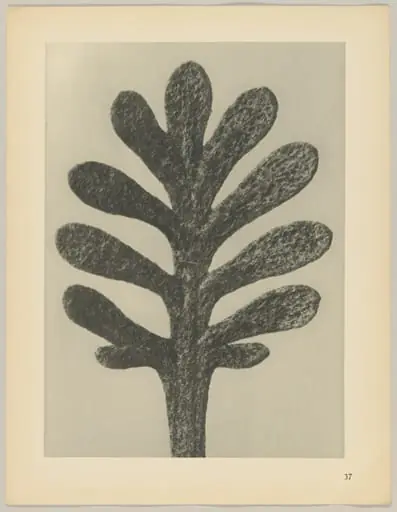
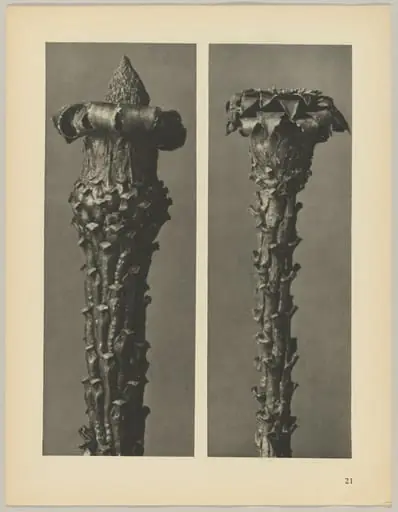
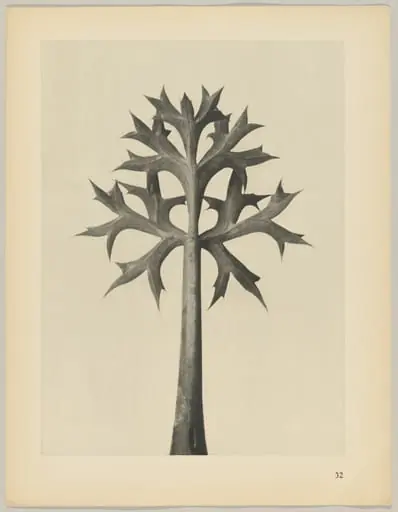
This photogravure print by Karl Blossfeldt presents three distinct plant specimens—Callicarpa dichotoma, Fraxinus ornus, and Cornus pubescens—captured in precise black-and-white detail. Produced in 1928, the work belongs to a series of botanical studies that emphasize structural form over decorative appeal. The technique, photogravure, allows for rich tonal variation and fine texture, transforming photographic negatives into enduring printed images.
Subject & Meaning
Each specimen is isolated against a neutral field, inviting focused observation of leaf morphology. The slender, serrated edges of the top and bottom leaves contrast with the broader, smooth contour of the central one, highlighting natural variation in venation and surface texture. Blossfeldt’s intent was not botanical classification but an exploration of inherent geometric patterns in plant growth, revealing order within organic forms.
Technique & Style
Using photogravure, Blossfeldt translated microscopic details into high-contrast prints with remarkable clarity. The process involved coating a copper plate with light-sensitive gelatin, exposing it through a photographic negative, and etching it to hold ink. This method preserved subtle gradations of light and shadow, allowing the roughness of leaf surfaces and the delicacy of veins to emerge with tactile precision, aligning with his scientific yet aesthetic approach.
History & Provenance
Created in 1928, this print was later included in Blossfeldt’s 1929 publication *Urformen der Kunst*, which compiled over 200 such images. The work emerged from his teaching practice at the Berlin School of Arts and Crafts, where he used photographs to illustrate natural forms for design students. These images were not intended for commercial sale but as pedagogical tools grounded in observation.
Context
Blossfeldt’s work developed amid early 20th-century movements that sought to reconnect art and industry with natural forms. His images resonated with Bauhaus principles and the rise of modernist design, which valued functional geometry. Unlike botanical illustrations, his photographs avoided idealization, presenting plants as they appeared under magnification—unembellished and structurally revealing.
Legacy
Blossfeldt’s photogravures influenced later generations of photographers and designers interested in the intersection of science and visual art. His method of isolating natural forms against plain backgrounds became a visual language for studying morphology. Though rooted in early 20th-century pedagogy, his images continue to be referenced in discussions of abstraction, perception, and the aesthetics of the everyday natural world.
Artist & collection
Artist
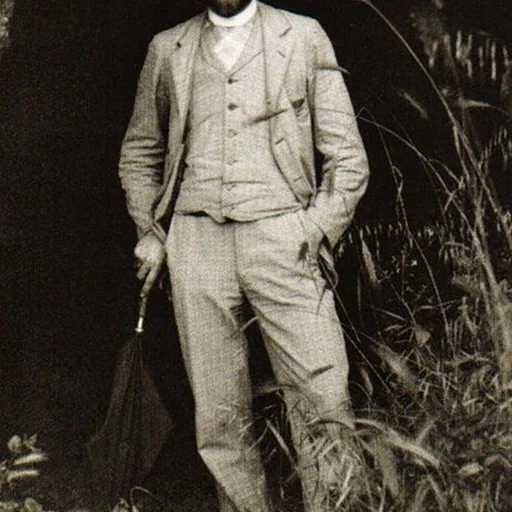
Karl Blossfeldt (13 June 1865 – 9 December 1932) was a German photographer and sculptor.

 a Cornus brachypoda; b Cornus pubescens; c Viburnum
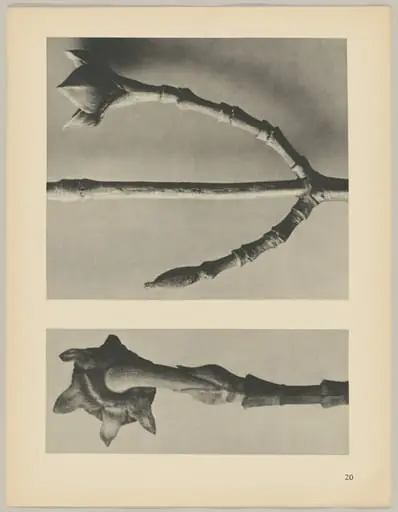 a Cornus Nuttallii; b Cornus officinalis
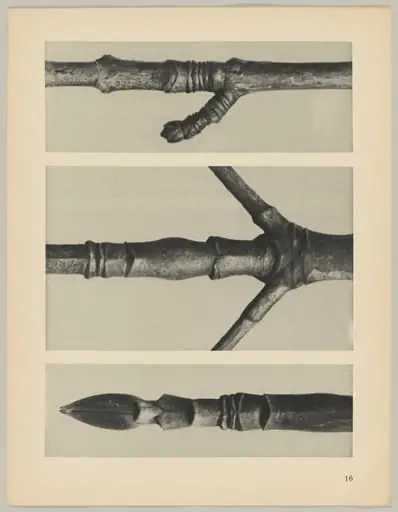 a Cornus Nuttallii; b Cornus Nuttallii; c Acer
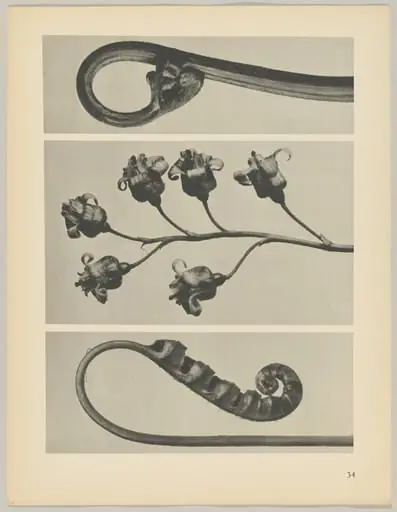
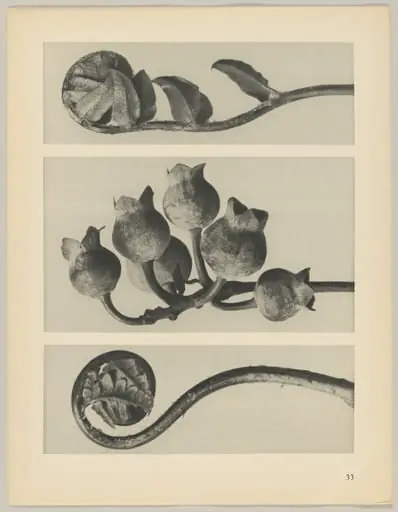 a Polypodiaceae Aspidieae; b Vaccinium corymbosum; c Polystichum falcatum
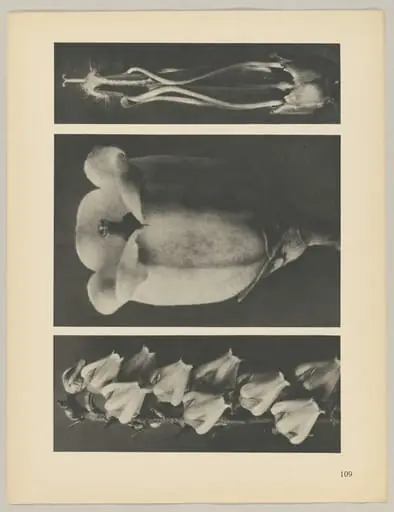 a Andromeda floribunda; b Vaccinium corymbosum; c Acanthus mollis
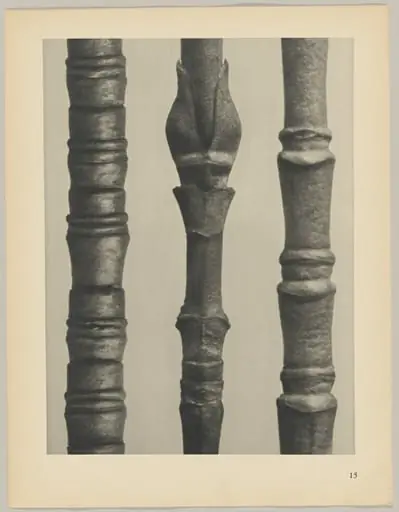 a Cornus Nuttallii; b Cornus Nuttallii; c Cornus florida
 a Cornus Nuttallii; b Cornus florida; c Acer pennsylvanicum