Artwork
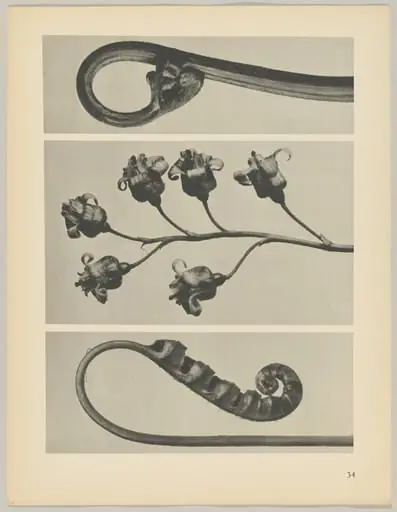
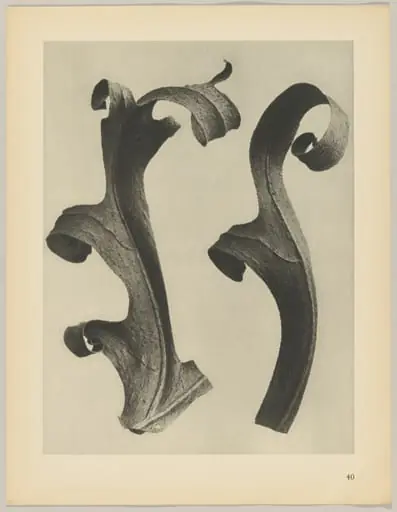
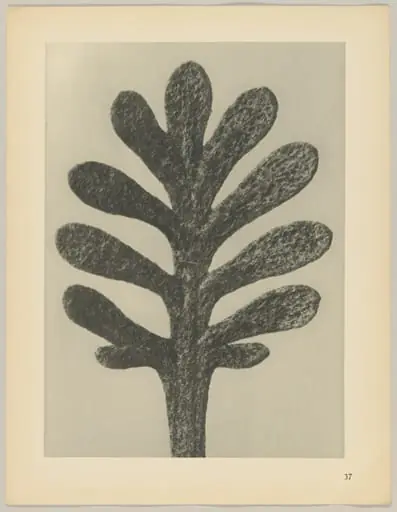
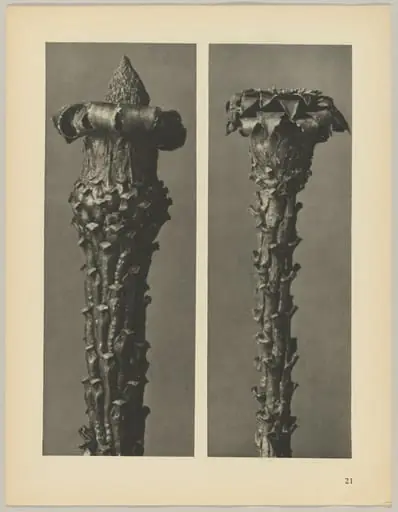
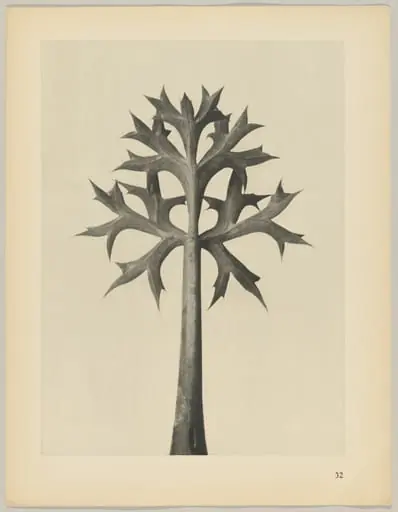
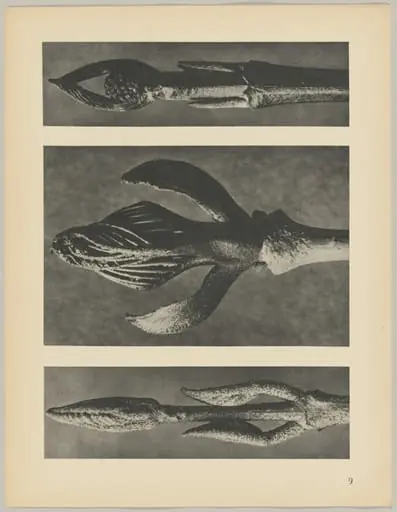
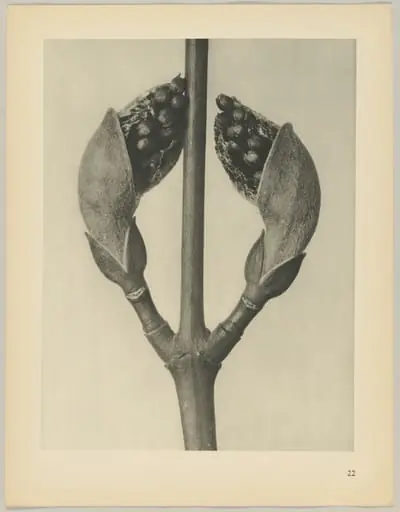
a Polypodiaceae Aspidieae; b Vaccinium corymbosum; c Polystichum falcatum
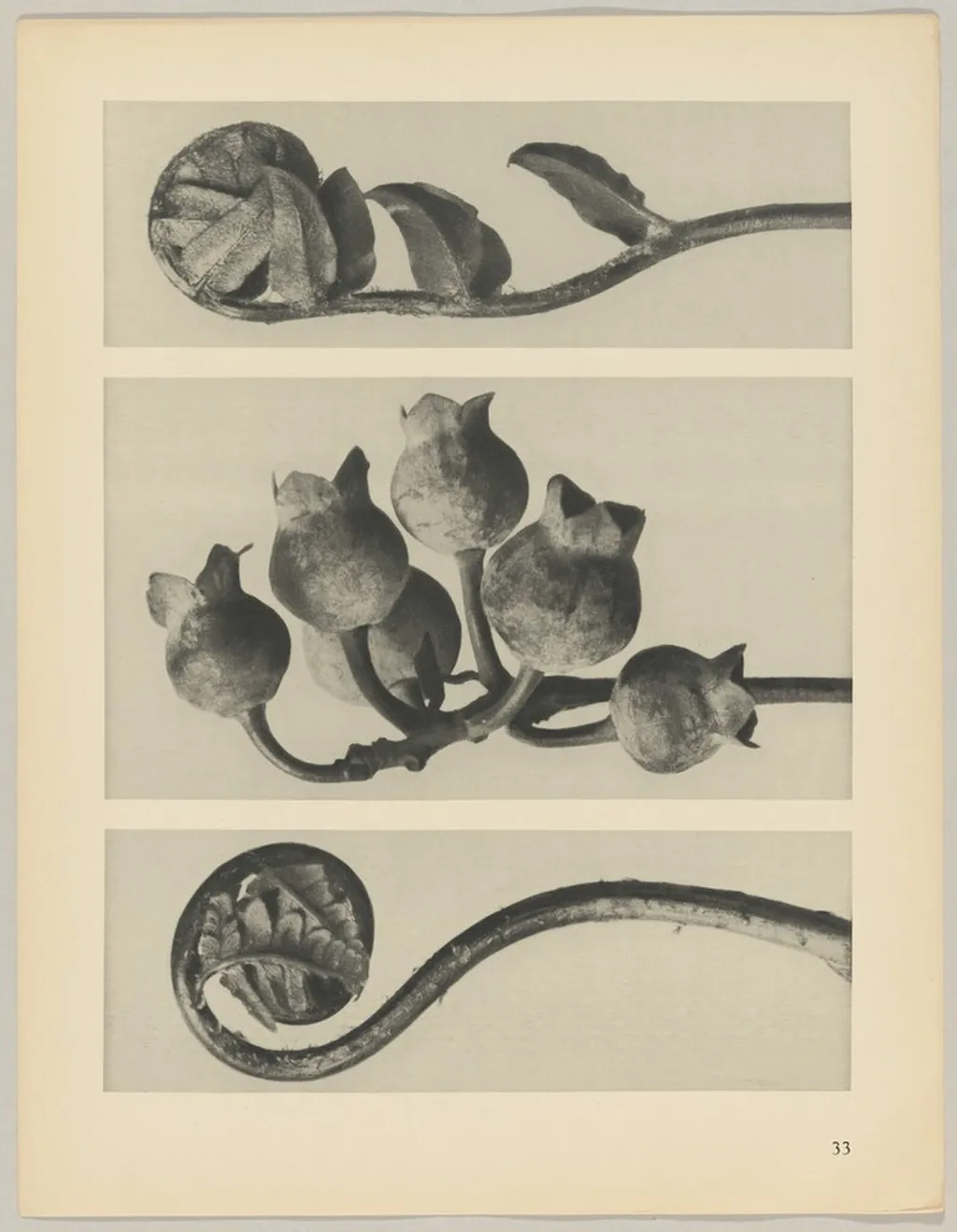
a Polypodiaceae Aspidieae; b Vaccinium corymbosum; c Polystichum falcatum is a print by Karl Blossfeldt. It dates from 1928 and is held in the collection of the National Gallery of Art.
About this work
Overview
Blossfeldt used photogravure, a printmaking technique known for its fine tonal range, to render minute structural details with exceptional clarity.
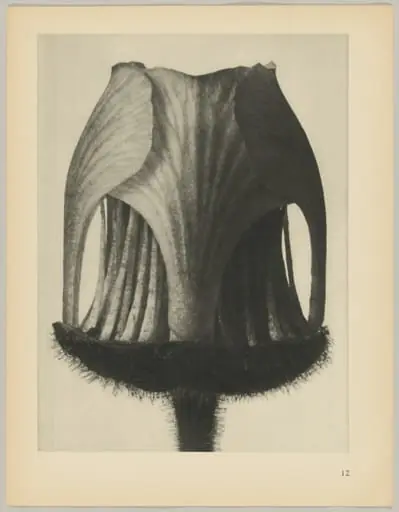
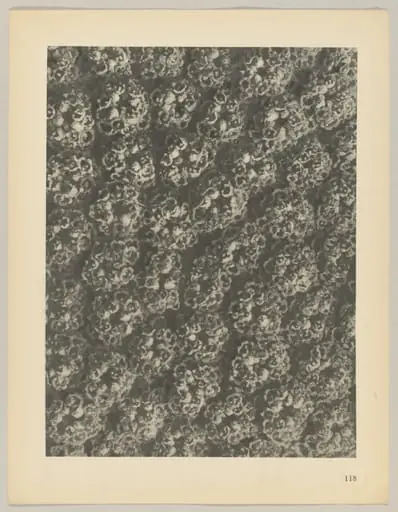
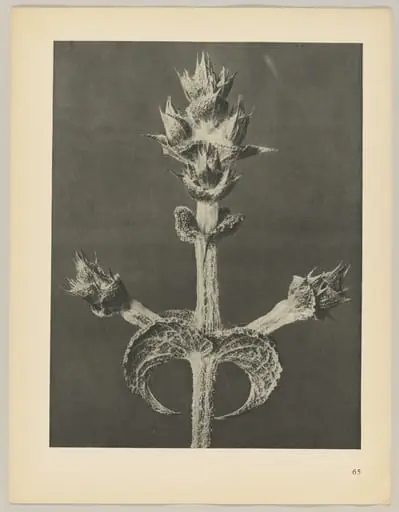
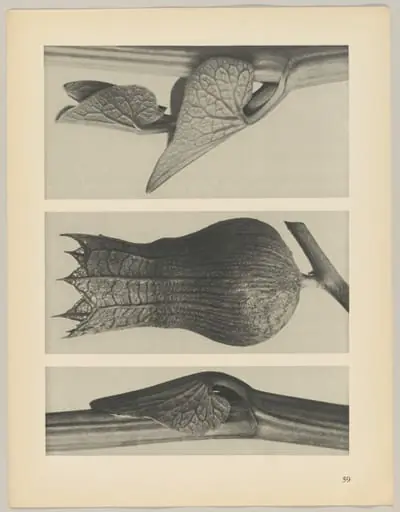
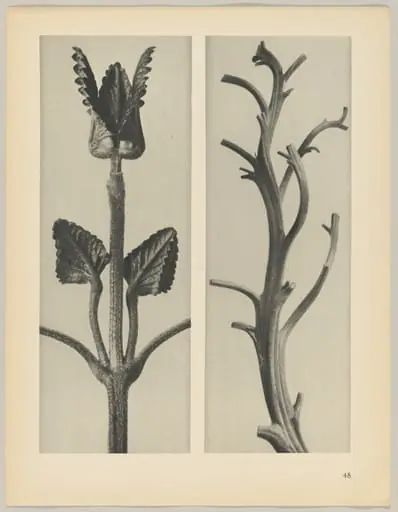
This photogravure, created in 1928 by Karl Blossfeldt, is part of a systematic study of plant morphology. It presents three botanical specimens—two ferns and a huckleberry cluster—captured in precise black-and-white tone. Blossfeldt used photogravure, a printmaking technique known for its fine tonal range, to render minute structural details with exceptional clarity. The work reflects his methodical approach to documenting nature’s forms as if they were architectural or sculptural models.
Subject & Meaning
The three subjects—Polypodiaceae Aspidieae, Vaccinium corymbosum, and Polystichum falcatum—are selected for their distinct geometric rhythms. The curled and wavy fern fronds reveal repeating vein patterns, while the berry cluster displays clustered, spherical forms. Blossfeldt’s framing removes context, encouraging viewers to perceive these plants not as flora but as self-contained compositions, suggesting an underlying order in natural growth that mirrors human-made design.
Technique & Style
Blossfeldt employed photogravure to achieve deep blacks and subtle gradations of gray, enhancing the tactile quality of each surface. His camera was mounted on a stand, allowing for consistent, magnified views of specimens lit by even, diffused light. The resulting images emphasize texture—bumpy berry skin, delicate leaf margins, and the fine ridges of fern veins—transforming botanical elements into abstract, almost industrial forms through extreme close-up and sharp focus.
History & Provenance
Created in 1928, this print was later included in Blossfeldt’s 1929 publication *Urformen der Kunst*, which compiled over 200 such studies. The work emerged from decades of personal observation and teaching at the Berlin School of Arts and Crafts, where he used photographs as instructional tools. These images were not intended for scientific cataloging but as visual pedagogy to reveal nature’s latent design principles to art students.
Context
In the interwar period, European artists and designers sought new sources of formal inspiration beyond traditional ornament. Blossfeldt’s work aligned with movements like New Objectivity and Bauhaus, which valued clarity, structure, and the beauty of functional form. His images offered a visual vocabulary rooted in nature, countering industrial alienation by showing how organic growth could inform artistic discipline.
Legacy
Blossfeldt’s photogravures influenced later generations of photographers and designers who explored the intersection of nature and abstraction. His method of isolating botanical details became a precedent for scientific imaging and modernist aesthetics. Though his work was initially used in pedagogy, it gained broader recognition as a unique contribution to 20th-century visual culture, bridging botany, art, and design without romanticizing its subjects.
Artist & collection
Artist
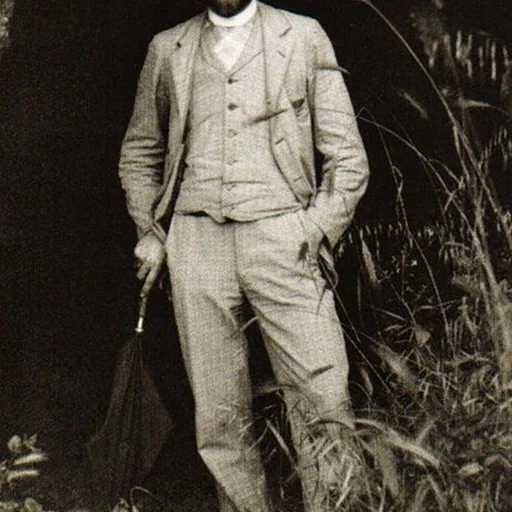
Karl Blossfeldt (13 June 1865 – 9 December 1932) was a German photographer and sculptor.