Artwork
Cirsium canum
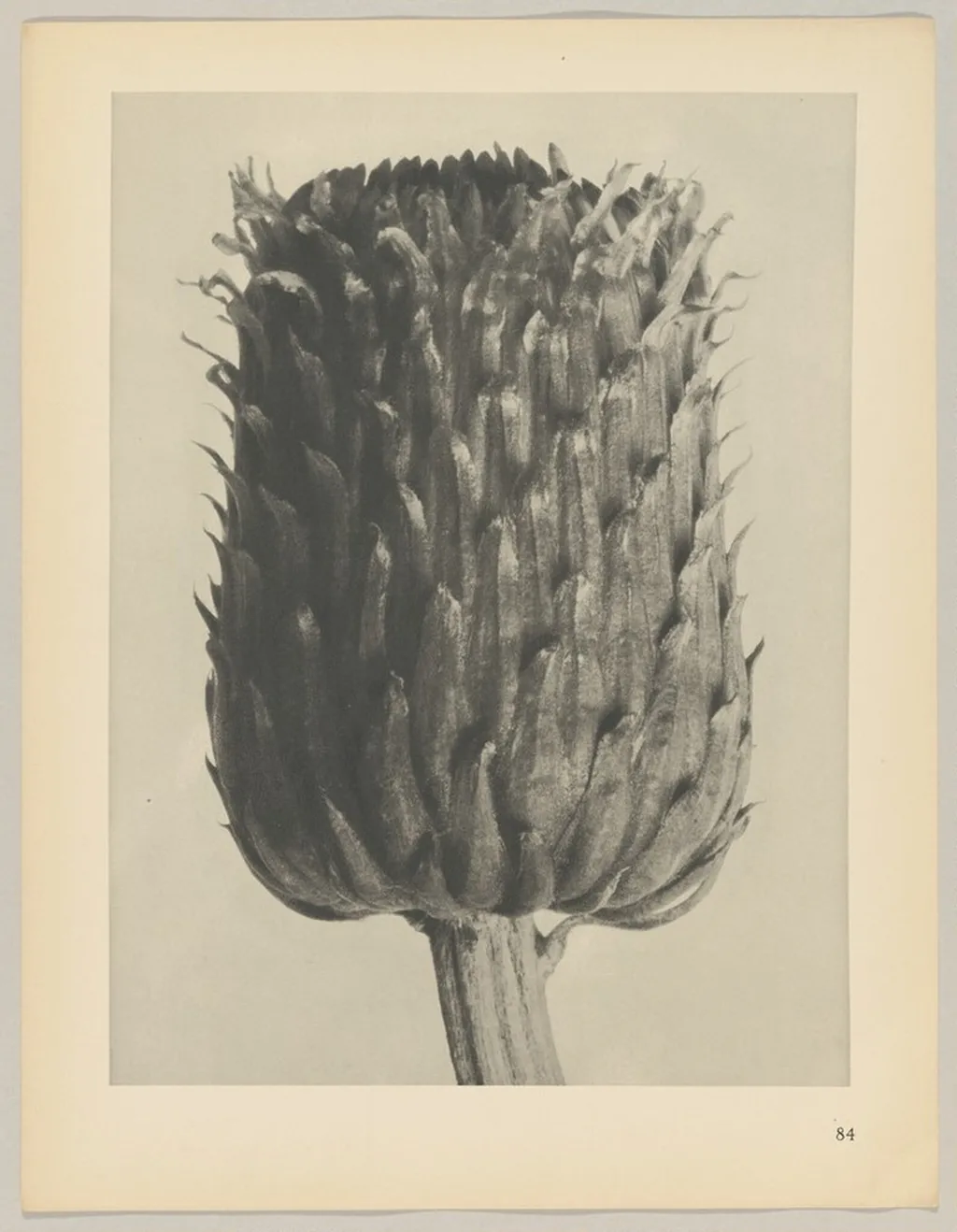
Cirsium canum is a print by Karl Blossfeldt. It dates from 1928 and is held in the collection of the National Gallery of Art.
About this work
Overview
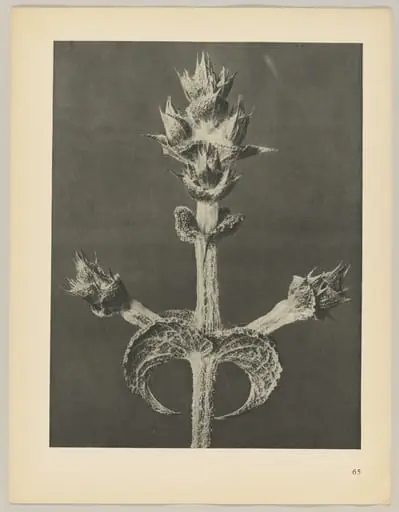
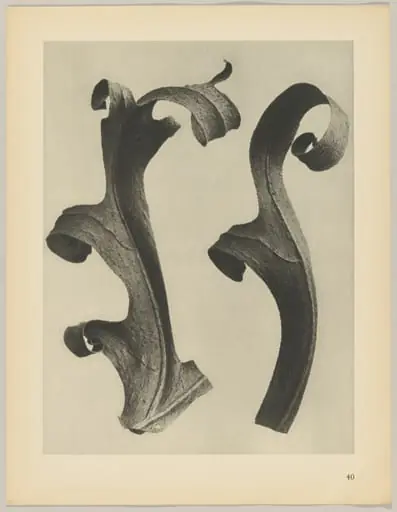
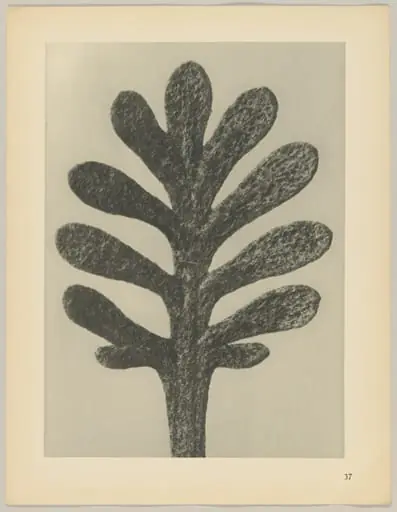
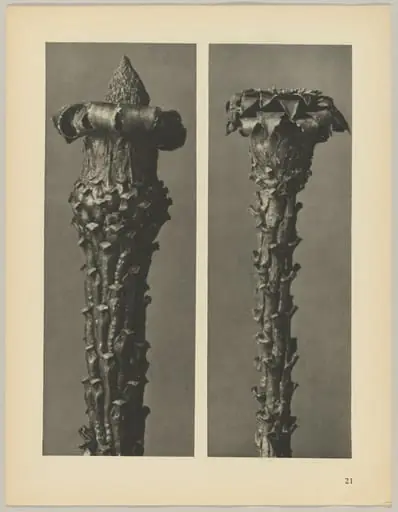
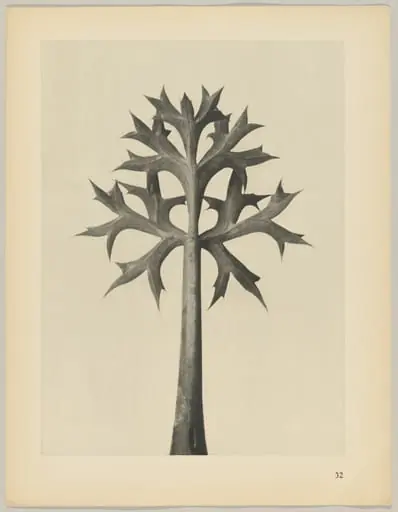
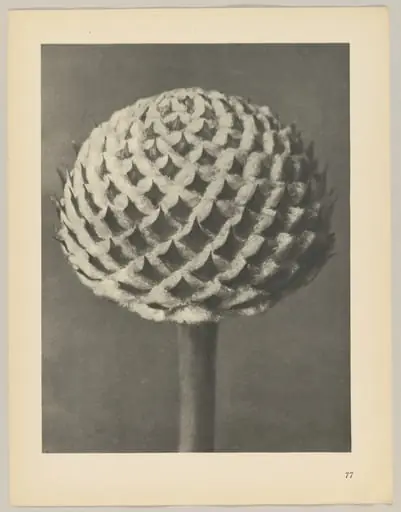
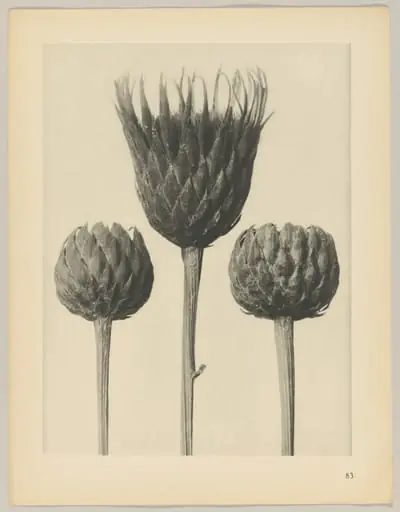
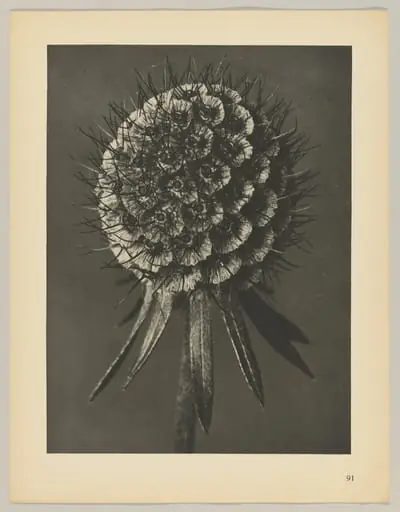
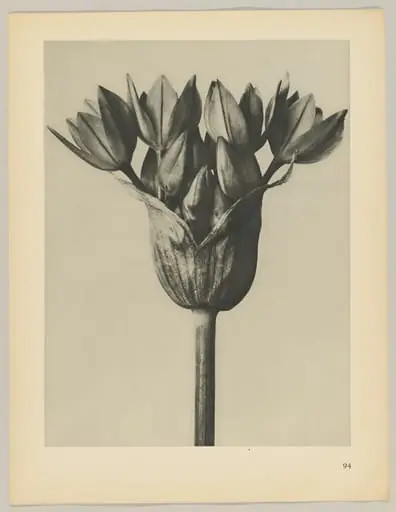
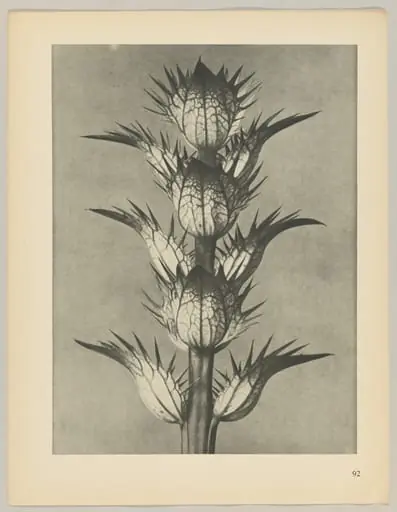
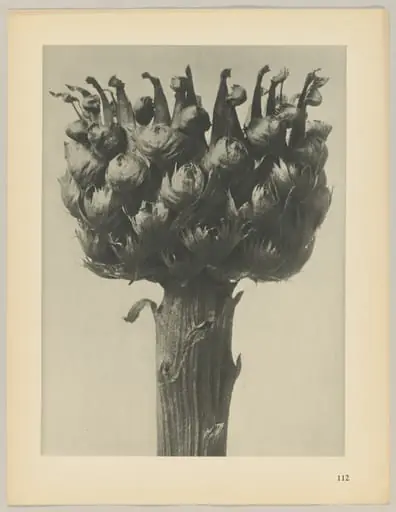
Cirsium canum is a 1928 photogravure print by Karl Blossfeldt, featuring a close-up of a thistle flower head. Characterized by sharp lines, soft shading, and effective use of light and shadow, the image showcases the artist's attention to botanical detail.
Subject & Meaning
The subject of Cirsium canum is a thistle flower head, depicted in meticulous close-up. Blossfeldt's emphasis on the plant's structural forms highlights aesthetic parallels between natural growth and artistic design, reflecting his inspiration from nature.
Technique & Style
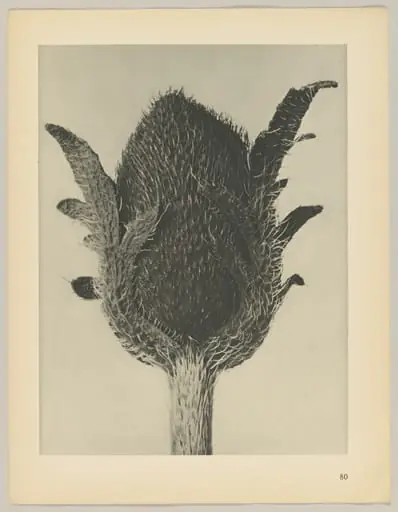
The print employs chiaroscuro, a strong contrast between light and dark, to create a three-dimensional effect. Thin, dark stem contrasts with pale background, while sharp lines and soft shading define the tightly layered, spiky leaves.
History & Provenance
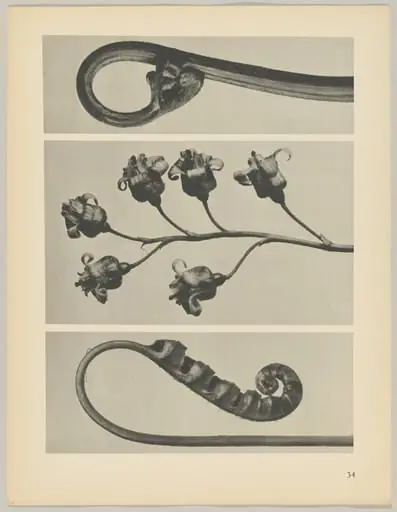
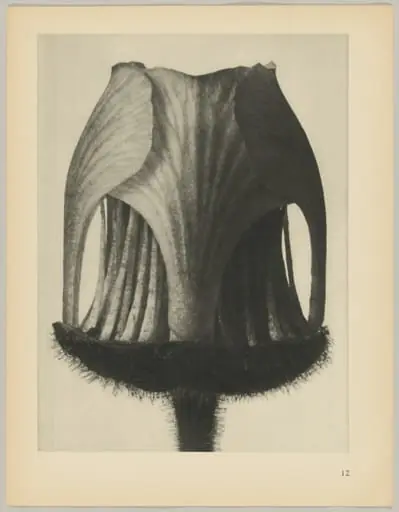
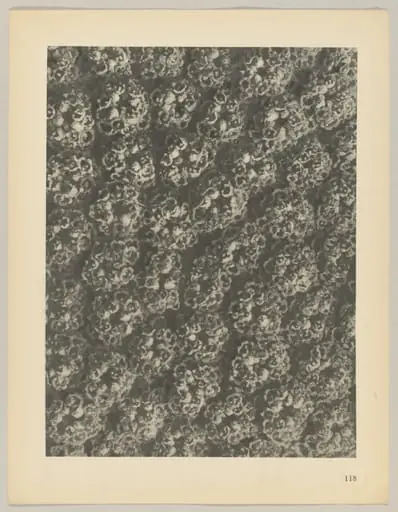
Created in 1928, Cirsium canum was published in 1929 as part of Blossfeldt's Urformen der Kunst, a collection of plant studies emphasizing structural beauty in nature.
Context
Blossfeldt's work, including Cirsium canum, reflects a broader early 20th-century interest in the intersection of natural forms and artistic design, influenced by his background in photography and sculpture.
Legacy
As part of Urformen der Kunst, Cirsium canum contributes to Blossfeldt's enduring legacy in highlighting the aesthetic value of botanical subjects through precise, visually striking photography.
Artist & collection
Artist
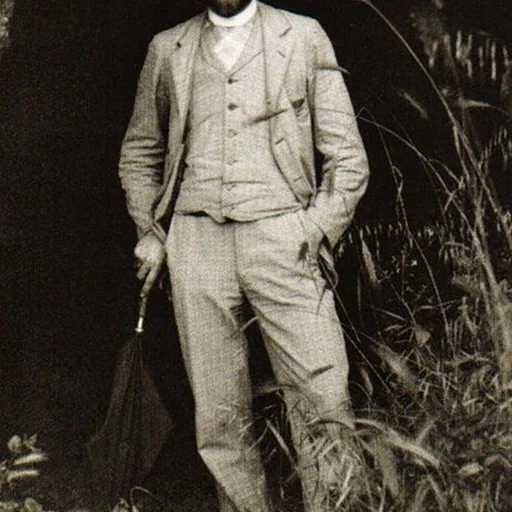
Karl Blossfeldt (13 June 1865 – 9 December 1932) was a German photographer and sculptor.