Artwork
Scabiosa columbaria
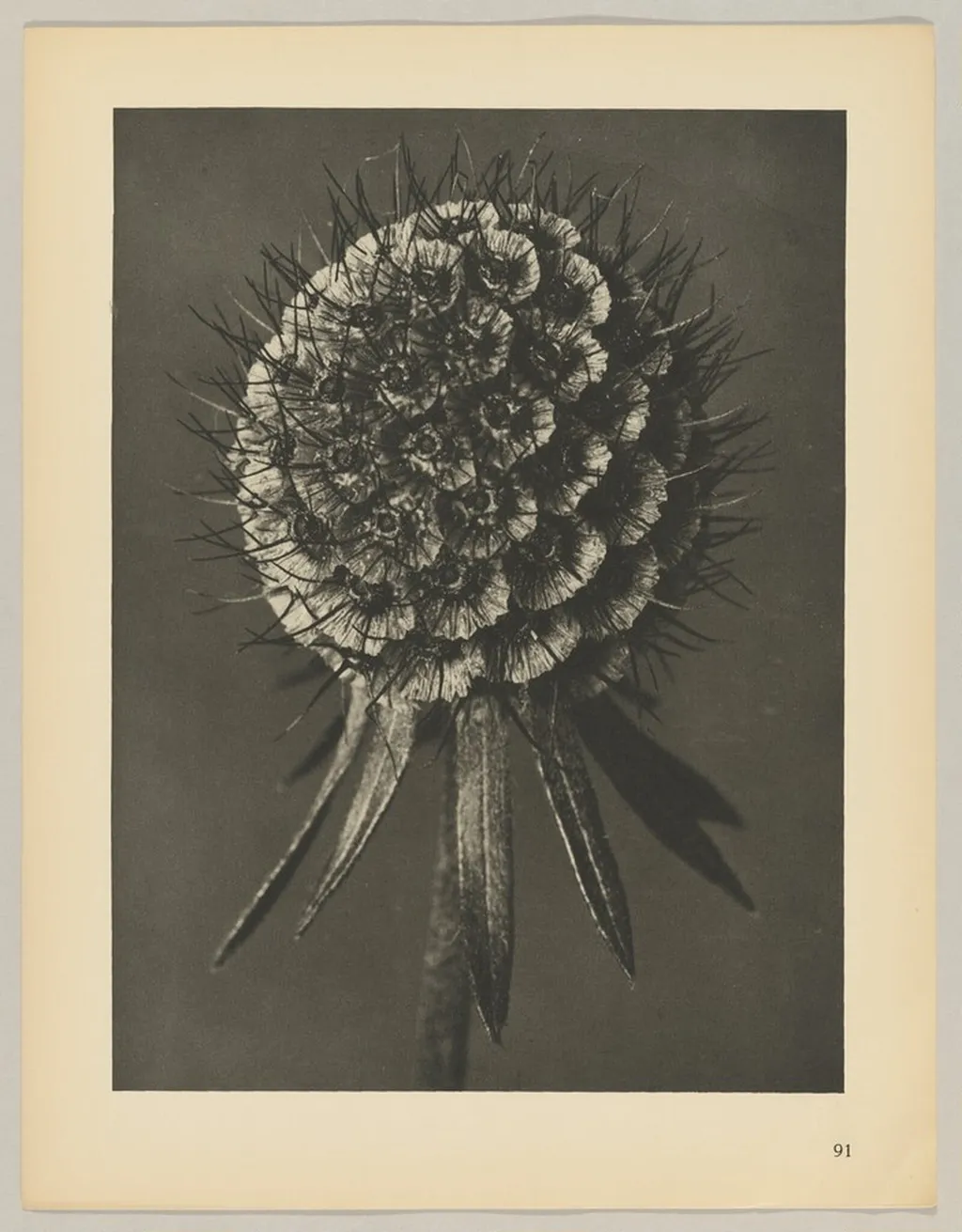
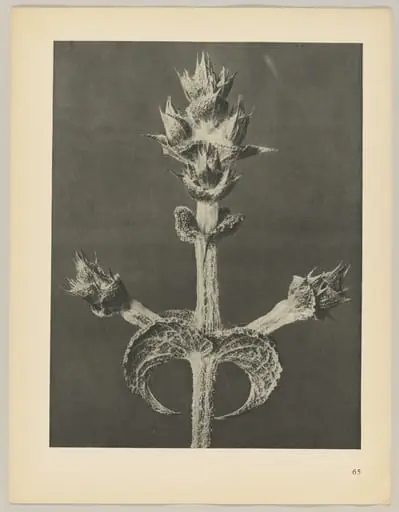
Scabiosa columbaria is a print by Karl Blossfeldt. It dates from 1928 and is held in the collection of the National Gallery of Art.
About this work
Overview
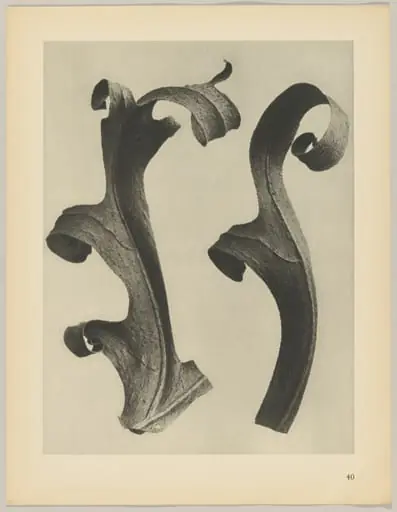
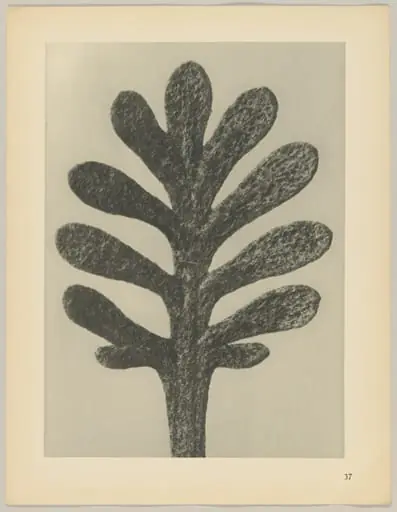
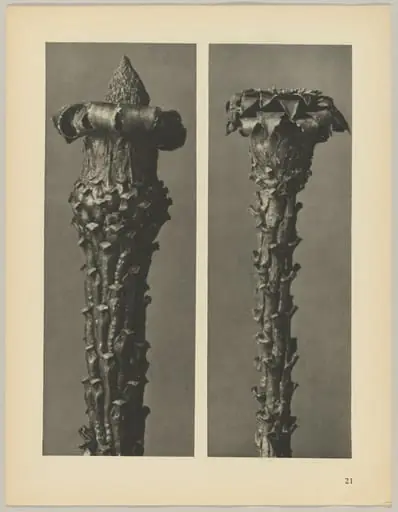
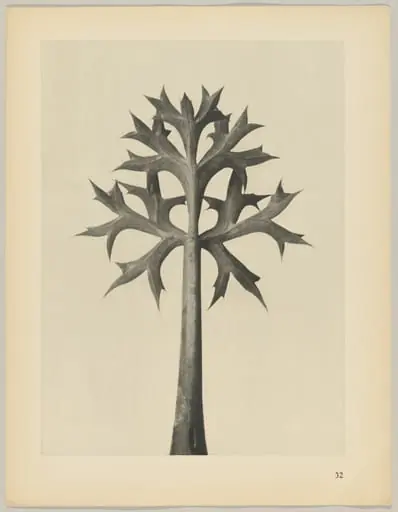
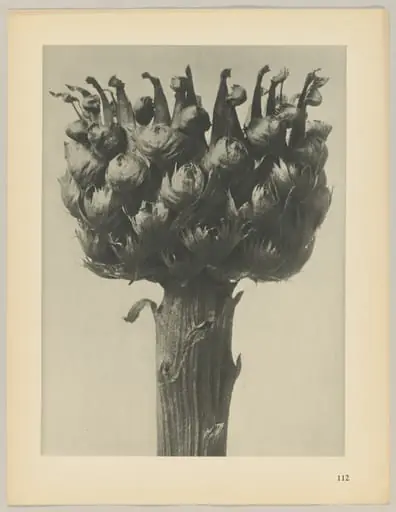
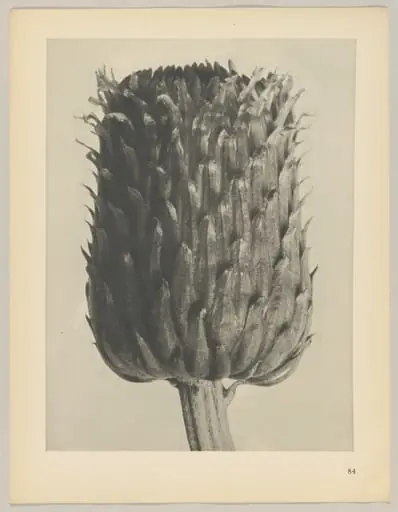
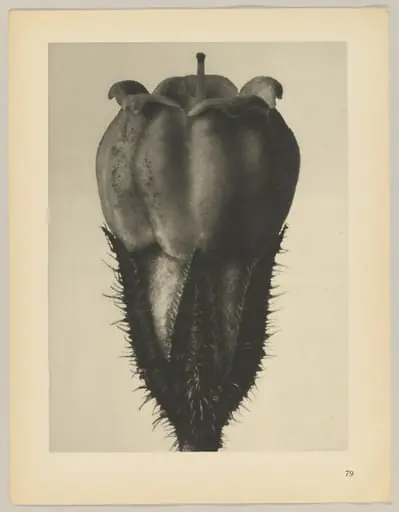
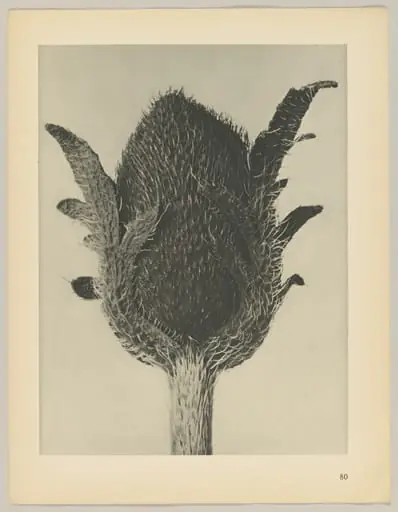
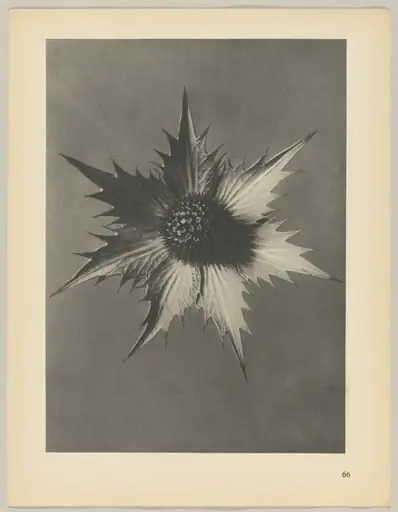
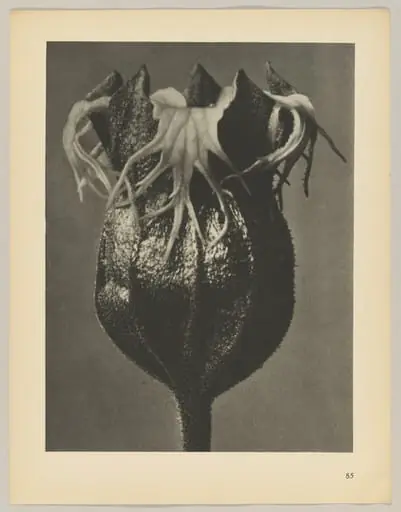
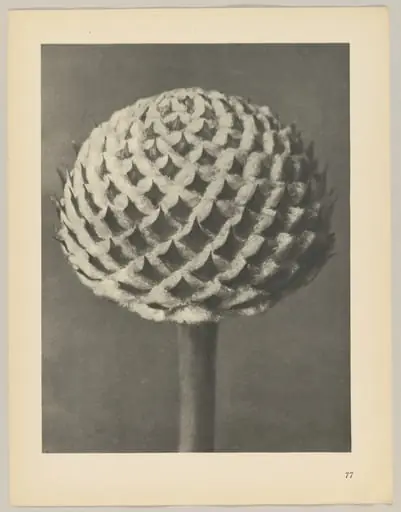
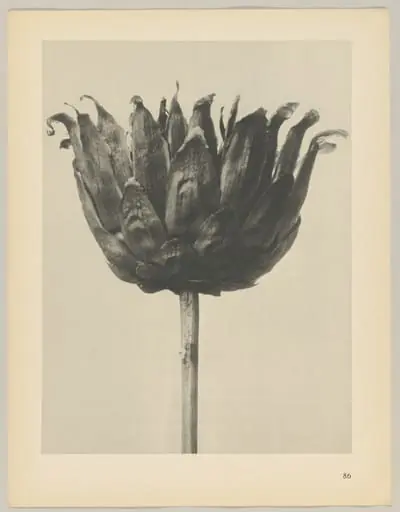
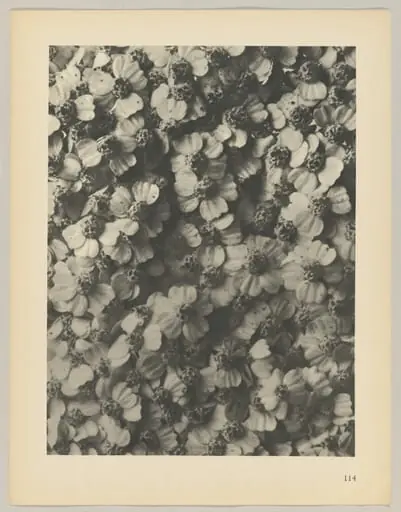
Scabiosa columbaria is a 1928 photogravure print by Karl Blossfeldt, capturing a close-up view of a dried flower. The image features a flower with spiky petals and a rounded, layered center set against a plain dark background, highlighting its textured details through precise lighting.
Subject & Meaning
The subject is a Scabiosa columbaria flower, portrayed in a state of desiccation. Blossfeldt's focus on the flower's structural form reflects his lifelong interest in the natural world, influenced by his father and evident in his emphasis on capturing the intrinsic beauty of plant morphology.
Technique & Style
The work is a photogravure, a printmaking technique that translates photographic images into engraved plates for printing. Blossfeldt's use of strong contrast—a dark background and highlighted edges—emphasizes the flower's textures and structural details, characteristic of his meticulous photographic approach.
History & Provenance
Created in 1928, Scabiosa columbaria was included in Blossfeldt's 1929 publication Urformen der Kunst (Archetypes of Art), a collection of plant photographs showcasing his unique aesthetic and technical skill.
Context
Part of a broader body of work exploring the structural beauty of plants, Scabiosa columbaria sits within Blossfeldt's exploration of nature's forms, reflecting early 20th-century interests in both the scientific study of nature and the aesthetic appreciation of its detailing.
Legacy
As part of Blossfeldt's seminal photogravure series, Scabiosa columbaria contributes to his enduring influence on botanical photography and the broader appreciation of nature's intricate forms in art.
Artist & collection
Artist
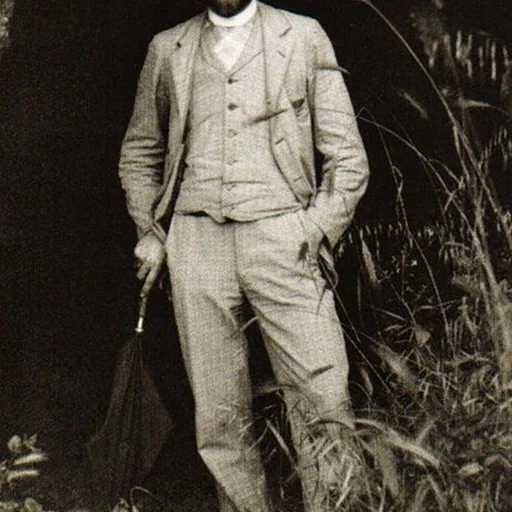
Karl Blossfeldt (13 June 1865 – 9 December 1932) was a German photographer and sculptor.