Artwork
View of Lewenberg
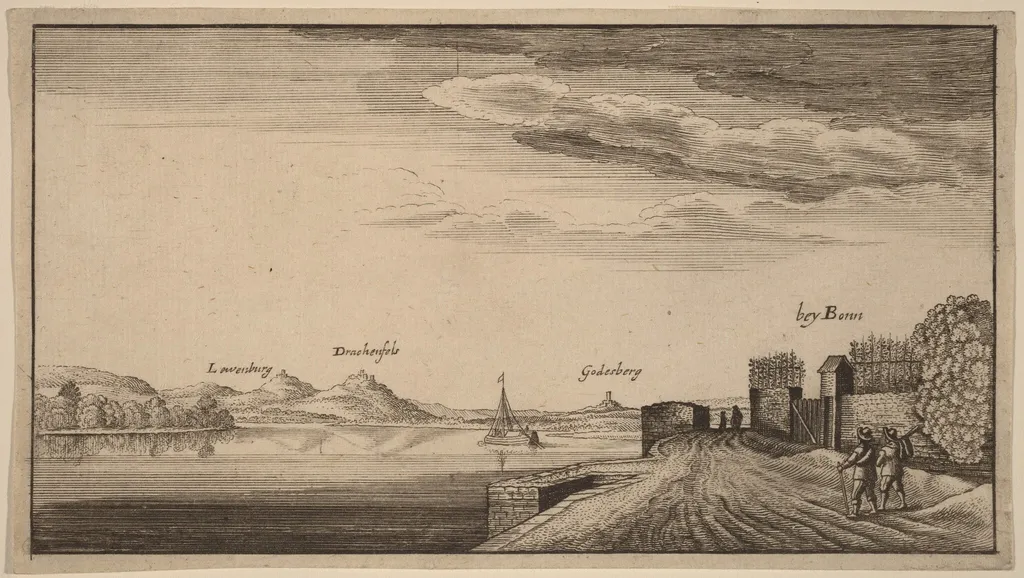
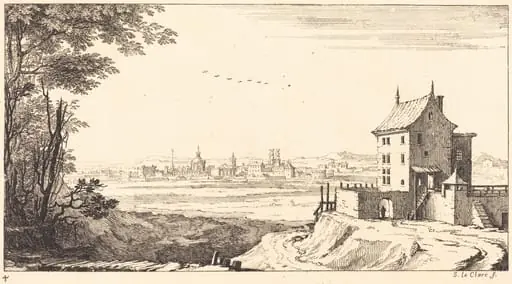
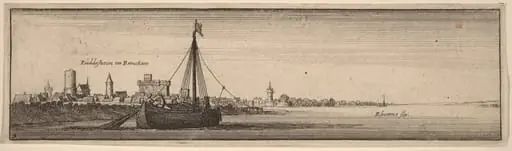
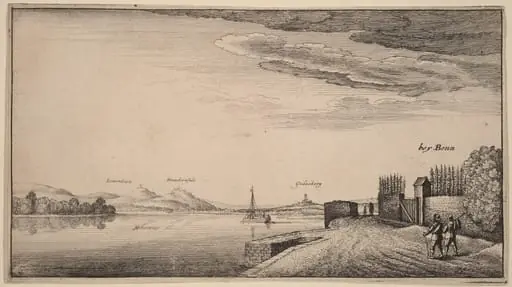
View of Lewenberg is an ink print by the Baroque artist Bohemian 17th Century. It dates from 1650 and is held in the collection of the National Gallery of Art. This etching presents a quiet rural landscape, capturing a moment of stillness with subtle human presence.
About this work
Overview
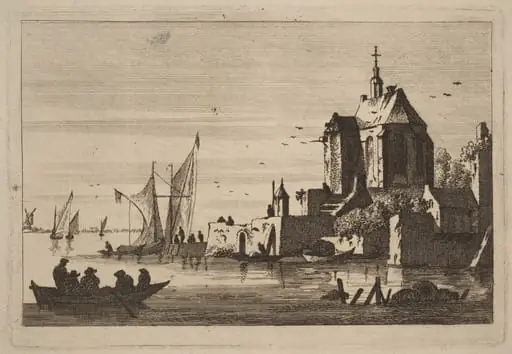
A body of water anchors the foreground, bordered by trees and rolling hills, while a stone structure on the right suggests a boundary or entrance.
This etching presents a quiet rural landscape, capturing a moment of stillness with subtle human presence. A body of water anchors the foreground, bordered by trees and rolling hills, while a stone structure on the right suggests a boundary or entrance. A distant sailboat and small figures near a gate introduce quiet movement, balancing the scene’s calm with gentle activity. The composition is carefully structured to guide the eye from near to far.
Subject & Meaning
The scene evokes a sense of peaceful transition—between land and water, nature and human habitation. The gate and road imply passage, while the figures suggest daily routines or travel. The sailboat, barely visible on the horizon, hints at connection beyond the immediate landscape. Together, these elements convey a contemplative mood, not narrative, inviting reflection rather than storytelling.
Technique & Style
Fine, controlled lines define the textures of trees, water, and stone, demonstrating mastery of etching’s precision. Light and shadow are modeled through varying line density rather than tone, creating depth without heavy contrast. The cloudy sky is suggested by sparse, soft strokes, while the sailboat and figures are rendered with minimal detail, enhancing their distance and subtlety within the composition.
History & Provenance
The work is attributed to a 17th-century Dutch printmaker, part of a broader tradition of landscape etchings popular in the Netherlands during the Golden Age. Its survival in private and institutional collections suggests it was valued for its technical refinement and atmospheric quality, though its exact early ownership remains undocumented.
Context
Created during a period when Dutch artists increasingly turned to intimate, everyday landscapes, this print reflects a shift from grand historical or religious themes to quiet observations of the natural world. Etching allowed artists to produce multiple copies, making such scenes accessible to a growing middle-class audience interested in domestic tranquility and topographical accuracy.
Legacy
The etching exemplifies the quiet influence of Dutch landscape printmaking on later European traditions. Its emphasis on subtle light, restrained detail, and harmonious composition influenced generations of printmakers who sought to capture mood through economy of line. Though not widely known today, it remains a representative example of its time and medium.
Artist & collection

Artist
She spent her seventies locked in a Prague print shop, inking copper plates until her hands shook.