Artwork
Two Houses with Tile Roofs
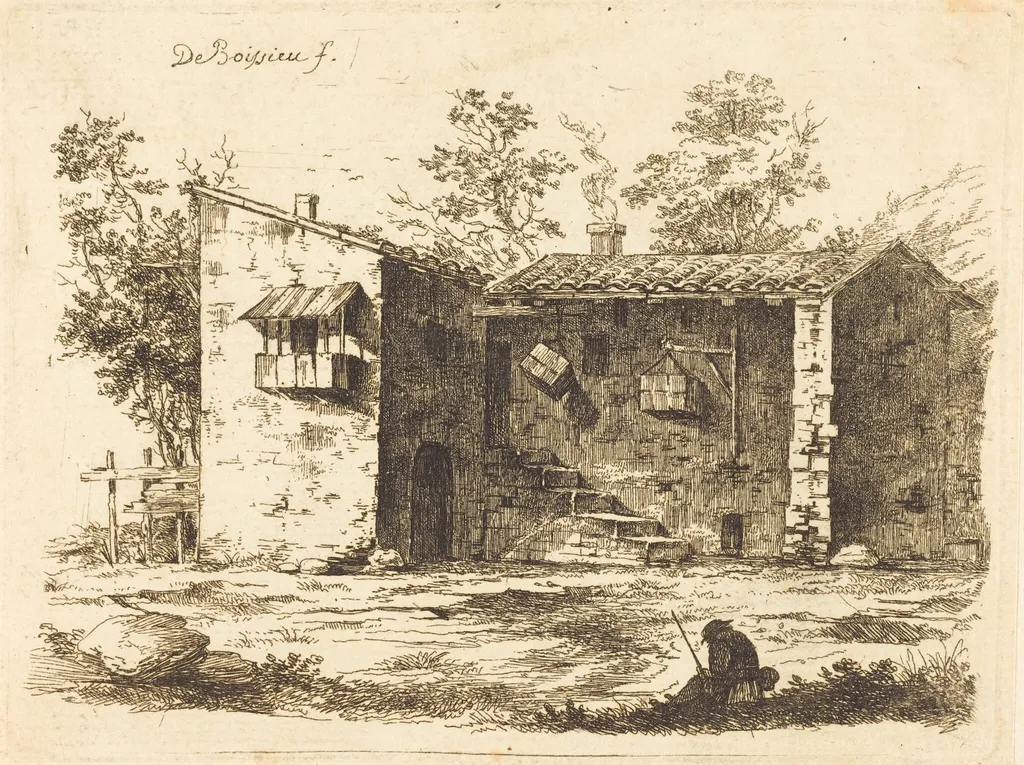
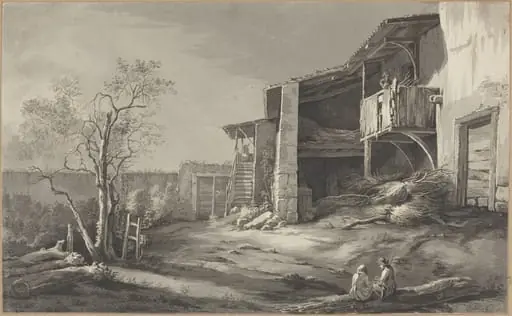
Two Houses with Tile Roofs is an ink print by the Romanticist artist Jean-Jacques de Boissieu. It dates from 1759 and is held in the collection of the National Gallery of Art.
About this work
Overview
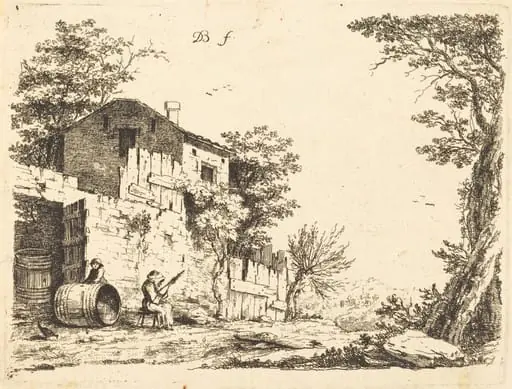
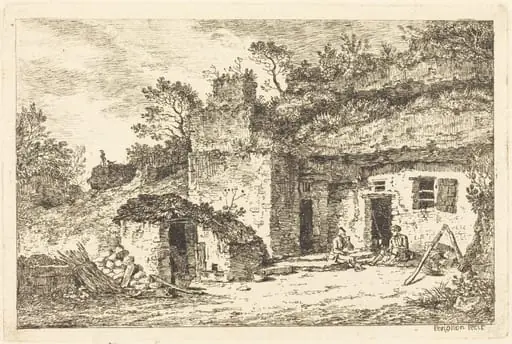
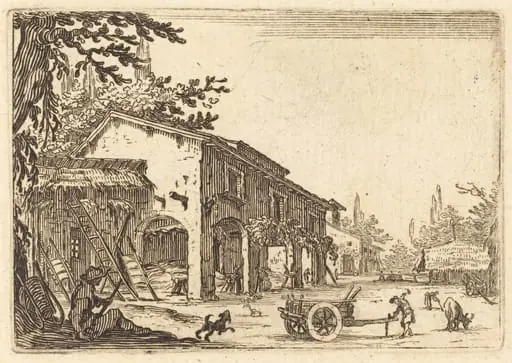
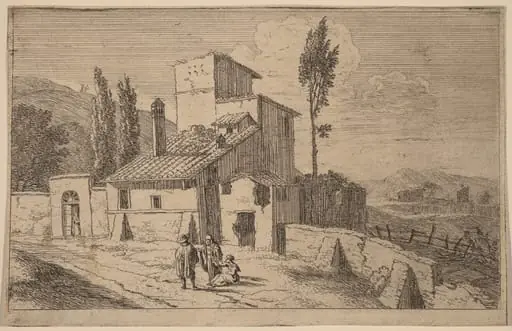
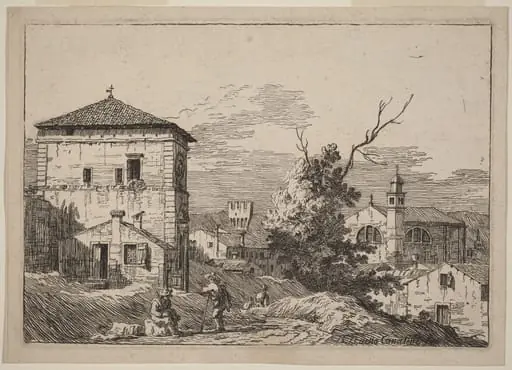
Two Houses with Tile Roofs is an etching on laid paper created by Jean-Jacques de Boissieu in 1759, depicting a rustic scene of two small wooden houses amidst bare trees and muddy ground.
Subject & Meaning
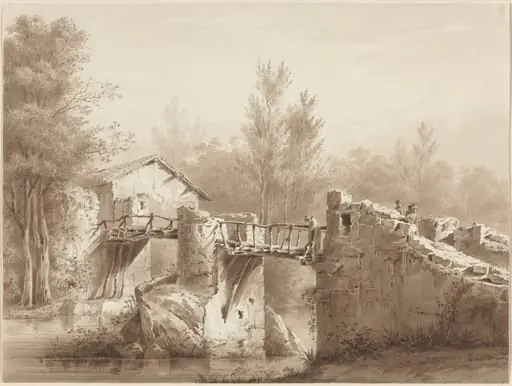
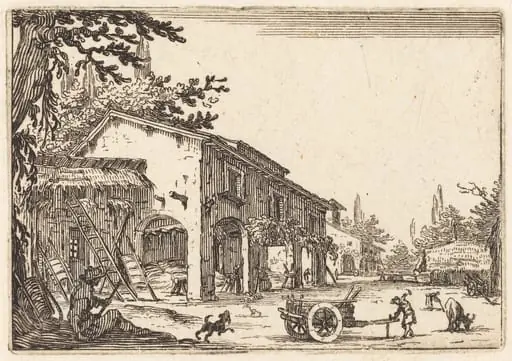
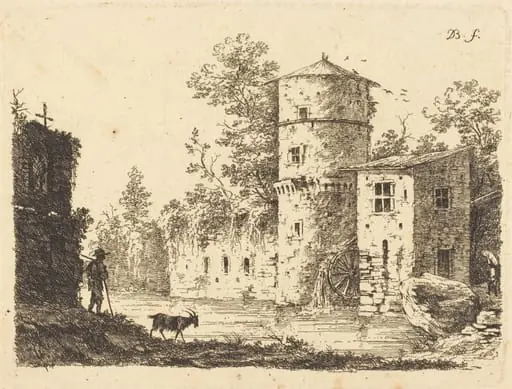
The etching portrays two humble, steep-roofed houses, one with a balcony and the other appearing under construction. A figure in the foreground, engaged with a tool, suggests everyday activity, potentially emphasizing the mundane aspects of rural life.
Technique & Style
De Boissieu employed etching to achieve sharp yet soft lines, characteristic of the medium. The textured, laid paper enhances the work's antiquated feel, underscoring its pre-photographic production method.
History & Provenance
Created in 1759, specific provenance details of Two Houses with Tile Roofs are not provided in the available information.
Context
This etching reflects 18th-century European artistic interests in capturing quotidian rural scenes, utilizing etching as a prevalent method for printmaking before the advent of photography.
Legacy
The legacy of Two Houses with Tile Roofs is not explicitly detailed in the provided information, though it contributes to the broader understanding of 18th-century etching practices and rural thematic depictions.
Own this work as a print
Artist & collection
Artist
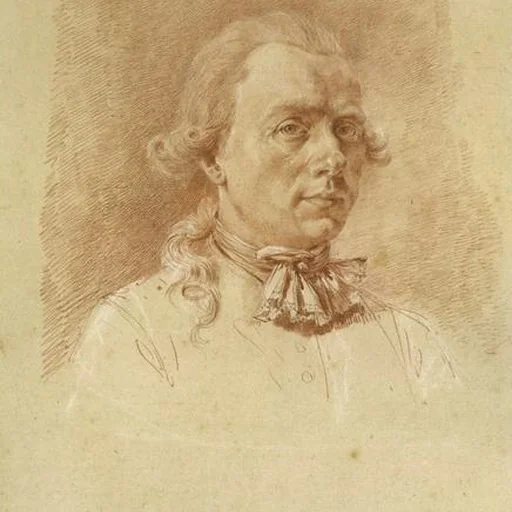
Jean-Jacques de Boissieu (1736–1810) was a French artist, born in Lyon.