Artwork
The Arrival of Aesculapius in Rome
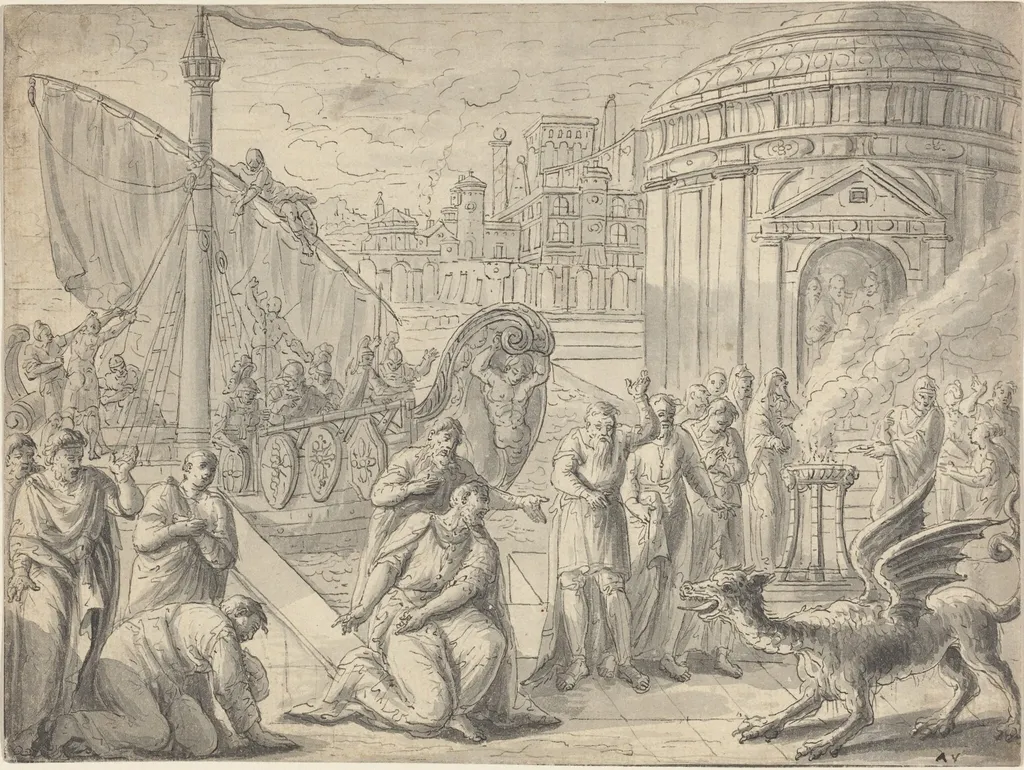
The Arrival of Aesculapius in Rome is an ink drawing by the Baroque artist François Boitard. It dates from 1700 and is held in the collection of the National Gallery of Art.
About this work
Overview
François Boitard’s drawing titled The Arrival of Aesculapius in Rome dates from around 1700. Executed with pen, black ink and a gray wash applied over a graphite underdrawing on laid paper, the work presents a bustling urban scene that captures a moment of mythic import.
Subject & Meaning
The composition centers on a large, winged serpent—Aesculapius’s staff—coiled around a tall pole as it advances toward a crowd of onlookers. Figures in the foreground display a range of reactions, from alarm to curiosity, while distant architecture and a ship near a tower suggest a ceremonial entry into the city.
Technique & Style
Boitard employs rapid, sketch‑like pen strokes combined with cross‑hatching to model volume and shadow. The gray wash deepens the tonal range, while the underlying graphite sketch remains visible, giving the drawing a lively, unfinished quality that emphasizes movement over precise finish.
History & Provenance
Created circa 1700, the drawing is attributed to Boitard, a French draughtsman active in the early eighteenth century. Its provenance prior to modern collection records is not documented, and it remains a singular example of Boitard’s interest in mythological subjects rendered in a preparatory drawing format.
Artist & collection


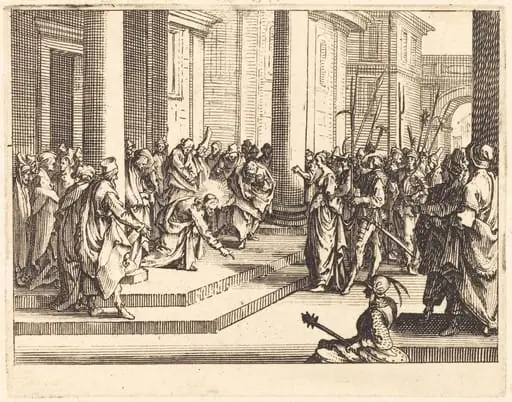 Christ and the Woman Taken in Adultery
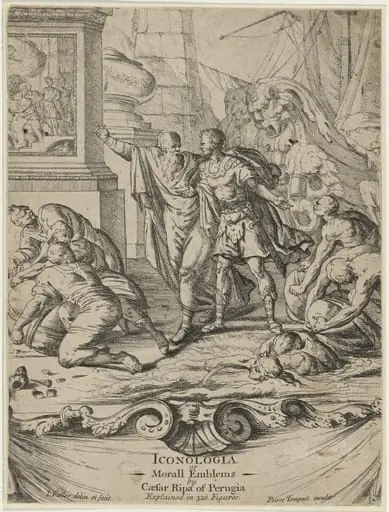 Iconologia or Morall Emblems by Caesar Ripa
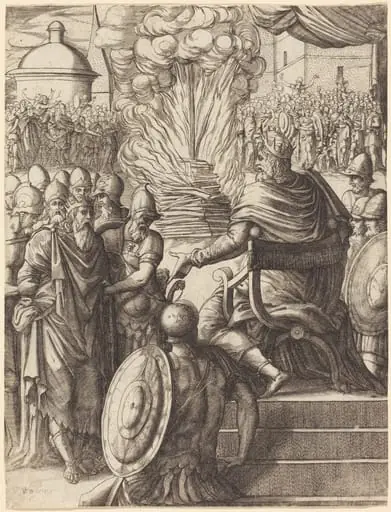 Heraclius Sentencing the Tyrant Phocas
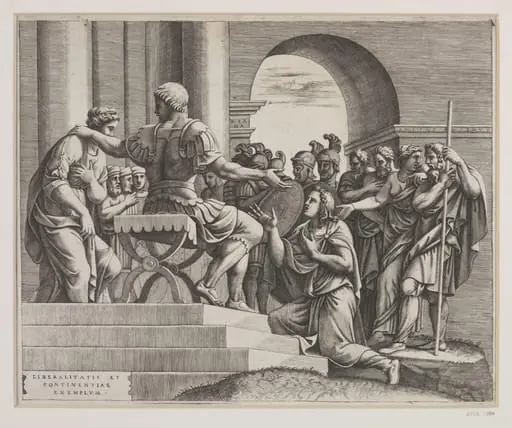 The Continence of Scipio
 Liberare Captivos
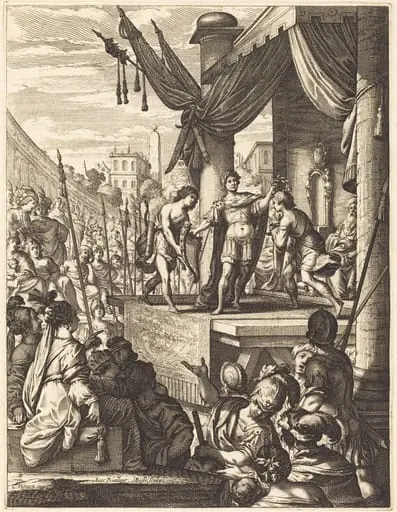 Illustration to Jean Desmarets' "L'Ariane"
 Assault on the Outer Forts of Bone
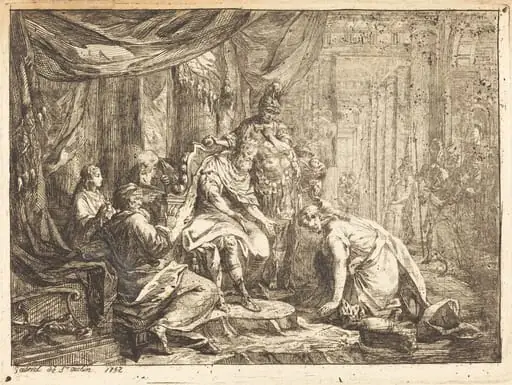 Reconciliation of Absalom and David (Réconciliation d'Absalom et de David)
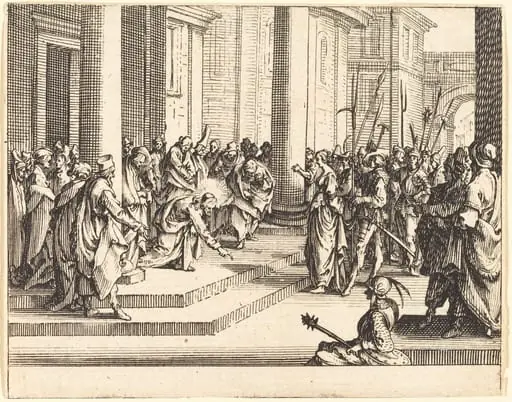 Stoning of Jesus
 The Triumph of Fame
 Camma and Sinorix
 Josiah Celebrating Passover