Artwork
Descent from the Cross
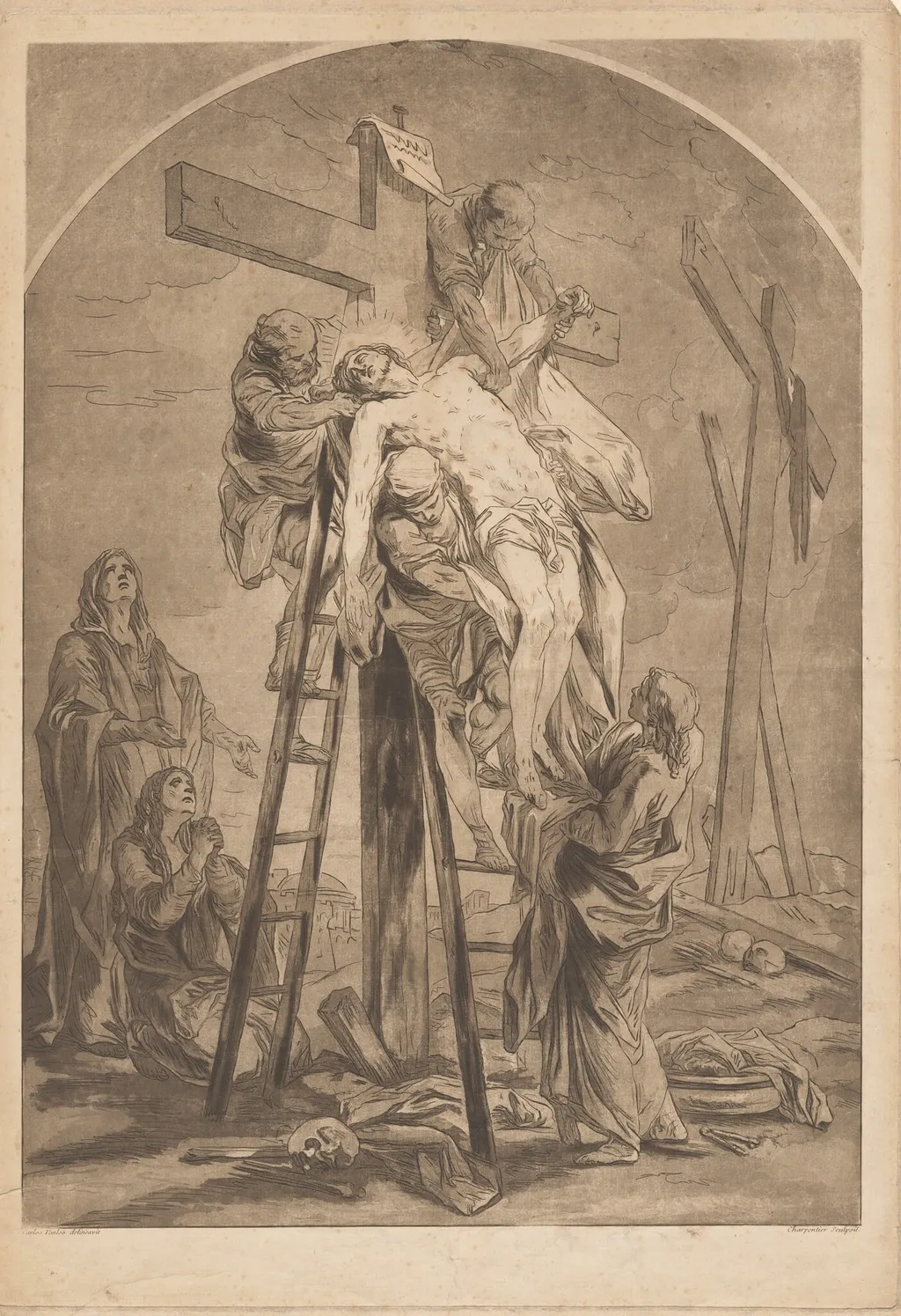
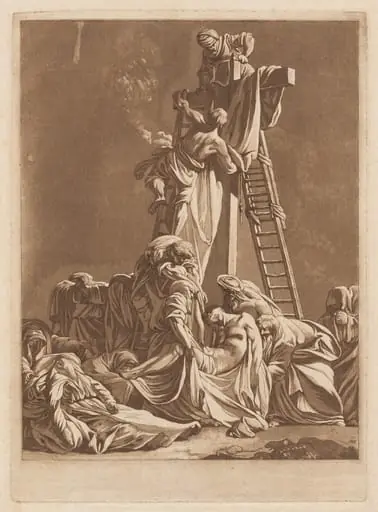
Descent from the Cross is an ink print by the Romanticist artist François-Philippe Charpentier. It dates from 1762 and is held in the collection of the National Gallery of Art. Created circa 1762, this print presents the biblical episode of Christ being lowered from the cross.
About this work
Overview
Created circa 1762, this print presents the biblical episode of Christ being lowered from the cross. Executed in black ink on laid paper, the image combines etching, aquatint and roulette techniques to convey a densely populated, emotionally charged scene.
Subject & Meaning
The composition captures the moment of the Descent, with the lifeless figure of Christ wrapped in cloth and supported by several attendants. Figures on a ladder, those gripping the cross, and kneeling worshippers convey collective grief and reverence, emphasizing the solemnity of the ritual.
Technique & Style
Charpentier employed a hybrid process: etched lines define the figures, while aquatint areas, produced with a roulette, generate tonal washes that suggest depth and shadow. The quick, sketch‑like strokes impart a sense of immediacy, and the use of laid paper adds a subtle texture to the surface.
History & Provenance
The French engraver François‑Philippe Charpentier, born in Blois in 1734, produced the work after training in Paris. Financial difficulties forced him to leave a Jesuit college, after which he pursued engraving and invented a mechanical method for aquatint. The print is now part of the National Gallery of Art’s collection in Washington, D.C.
Context
Charpentier’s practice reflects mid‑18th‑century French printmaking, a period marked by experimentation with tonal effects. His mechanical aquatint process responded to contemporary demands for greater tonal range in prints, situating this work within the broader shift from line‑focused engraving toward richer, painterly textures.
Artist & collection

Artist
François-Philippe Charpentier (b. Blois, 1734; d. there 22 July 1817) was a French engraver and inventor. His father was a bookbinder, a poor man who reportedly made many sacrifices so that his son might attend the…

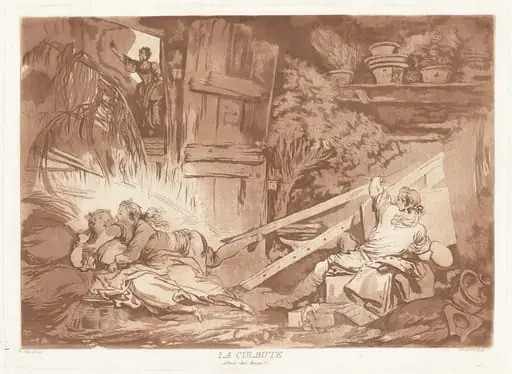 La Culbute (The Tumble)
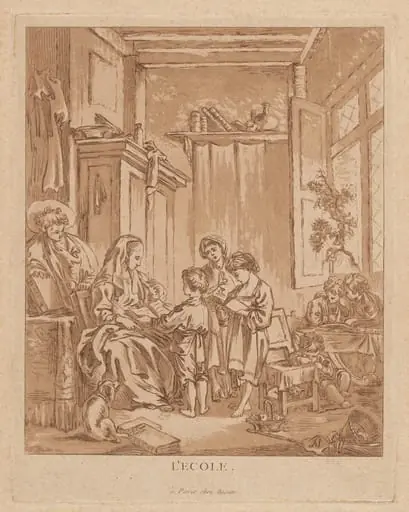 L’École (The School)
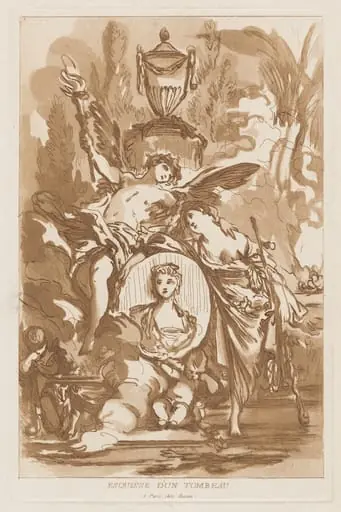 Esquisse d’un tombeau (Sketch for a Tomb)
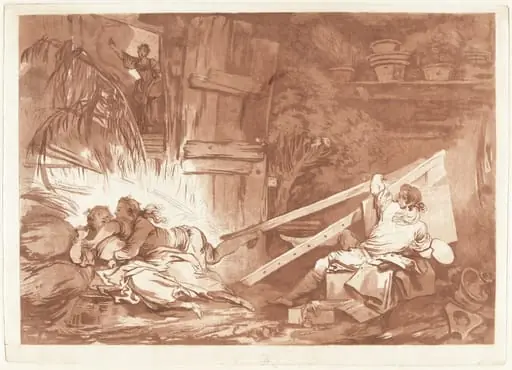 The Tumble
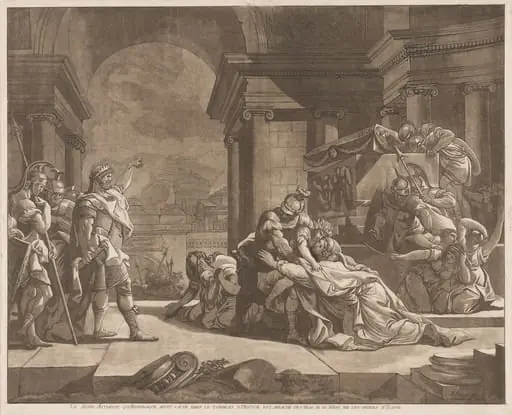 Le Jeune Astianax qu’Andromaque avoit caché dans le tombeau d’Hector est arraché des bras de sa Mere par les ordres d'Ulisse (Young Astianax, who Andromache Hid in Hector's Tomb, is Seized from his Mother's Arms by Ulysses' Orders)
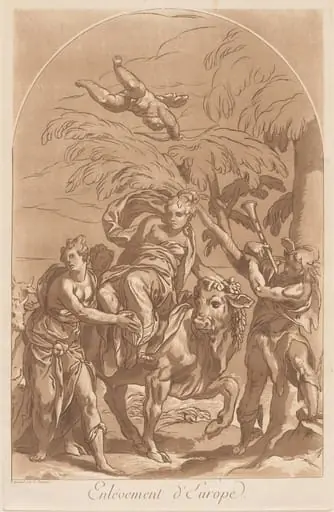 Rape of Europa
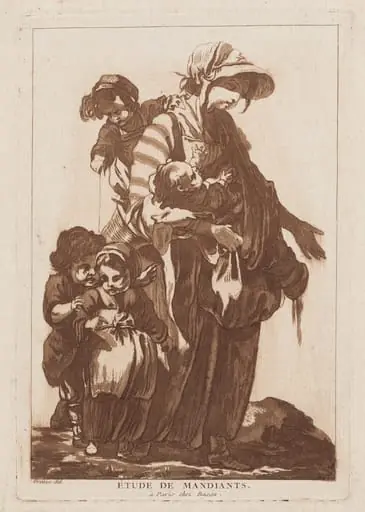 Étude de Mandiants (Study of Beggars)
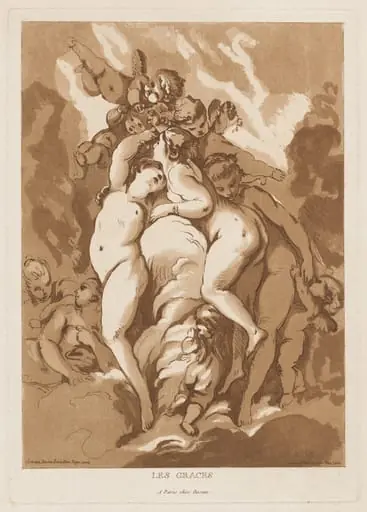 Les Graces (The Graces)