Artwork
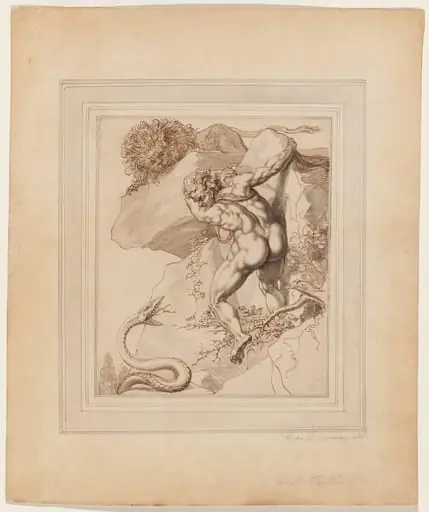
Falling Giant
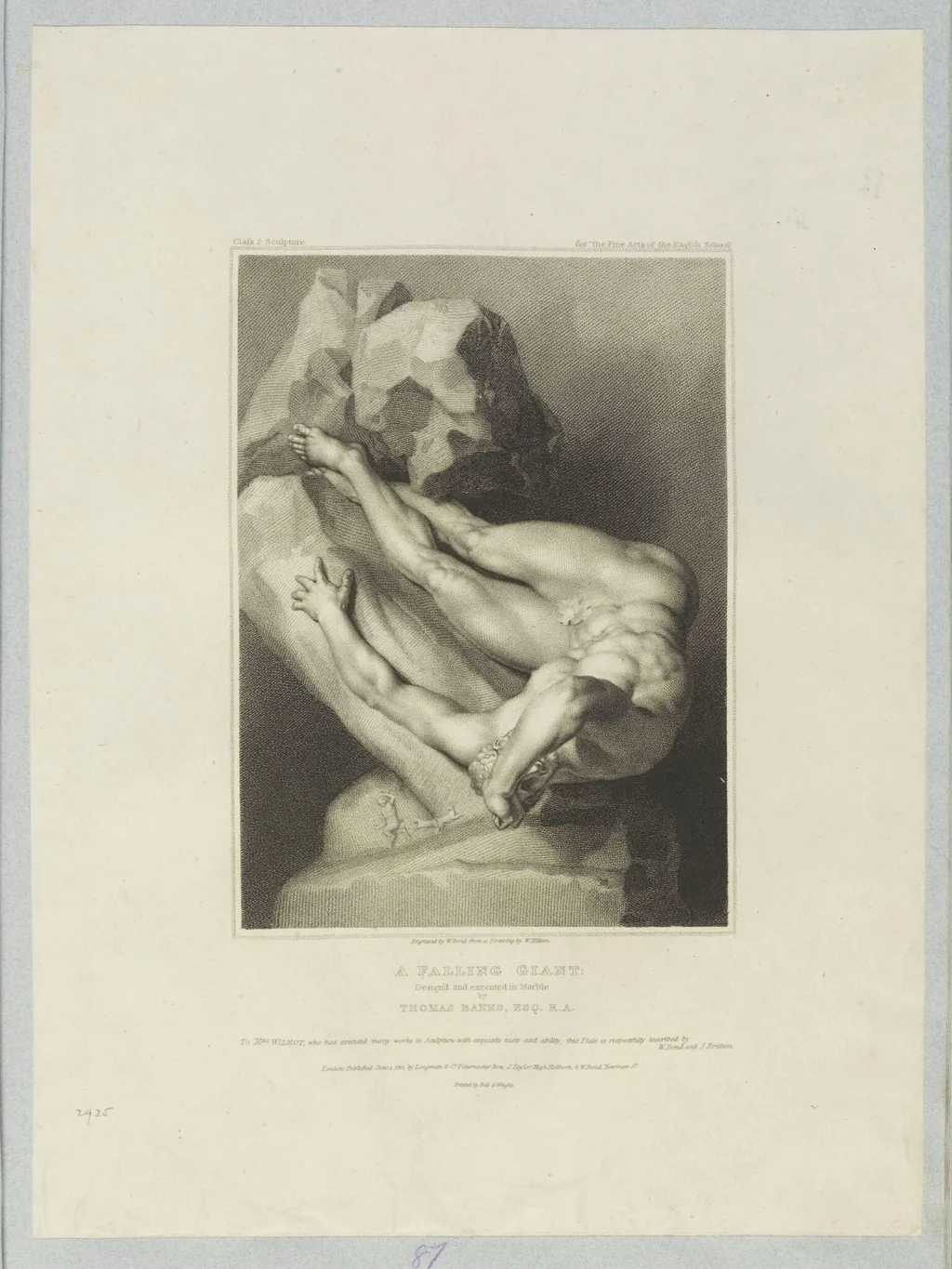
Falling Giant is a print by the Romanticist artist William Bond. It dates from 1798 and is held in the collection of the Victoria and Albert Museum.
About this work
Overview
' Rendered in ink on paper, it captures a monumental figure in mid-fall, rendered with precise linework and tonal shading to suggest volume and motion.
Created in 1811, this print by William Bond illustrates a sculpture by Thomas Banks titled 'Falling Giant.' The work was produced as an illustration for the publication 'Fine Arts of the English School.' Rendered in ink on paper, it captures a monumental figure in mid-fall, rendered with precise linework and tonal shading to suggest volume and motion. The image serves as a reproductive print, translating a three-dimensional form into a two-dimensional medium.
Subject & Meaning
The figure depicts a colossal male form, limbs twisted in violent motion, as if collapsing under an unseen force. His face is obscured, emphasizing physicality over identity. The pose suggests mythic or allegorical defeat—possibly referencing fallen titans or the collapse of grandeur. The absence of narrative context invites interpretation as a symbol of human struggle, power undone, or the sublime force of nature over man.
Technique & Style
Bond employed fine-line engraving and meticulous hatching to model the giant’s musculature and convey depth. The contrast between light and shadow enhances the figure’s three-dimensionality, while the tight, controlled strokes reflect the precision of reproductive printmaking. The style aligns with early 19th-century academic realism, prioritizing anatomical accuracy and dramatic tension over expressive brushwork.
History & Provenance
The print was made to accompany 'Fine Arts of the English School,' a publication documenting British artistic achievements. It reproduces Banks’s marble sculpture, now lost, which was exhibited in the early 1800s. Bond’s version preserved the composition for wider circulation, ensuring the sculpture’s visual legacy despite its physical disappearance. The print’s survival offers rare insight into a work no longer extant.
Context
Emerging during the Romantic era, the image resonates with contemporary fascination for the sublime and the monumental. Though not overtly emotional, its depiction of overwhelming scale and violent motion aligns with Romantic themes of human vulnerability before cosmic or mythic forces. The print reflects a period when sculpture and printmaking collaborated to disseminate artistic ideals beyond elite audiences.
Legacy
As a record of Banks’s lost sculpture, Bond’s print holds archival significance. It exemplifies the role of reproductive prints in preserving and circulating visual culture before photography. While not widely exhibited today, it remains a key reference for scholars studying British Romantic sculpture and the mechanics of 19th-century art reproduction.
Artist & collection


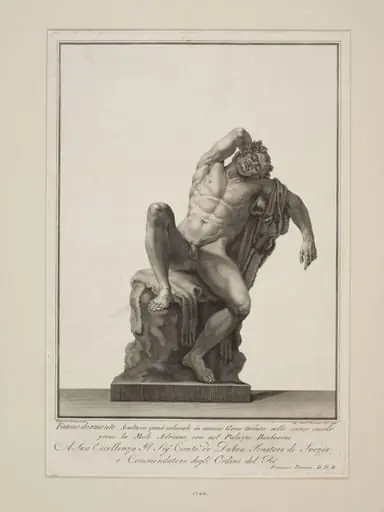 Fauno Dormente
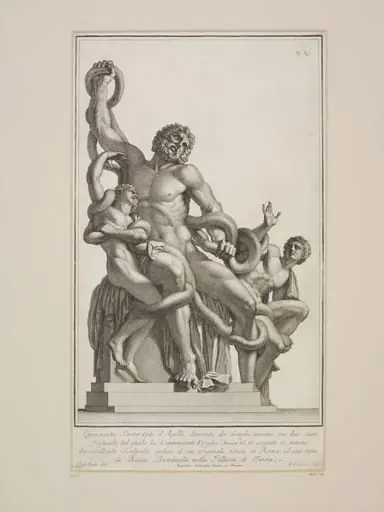 Laocoon
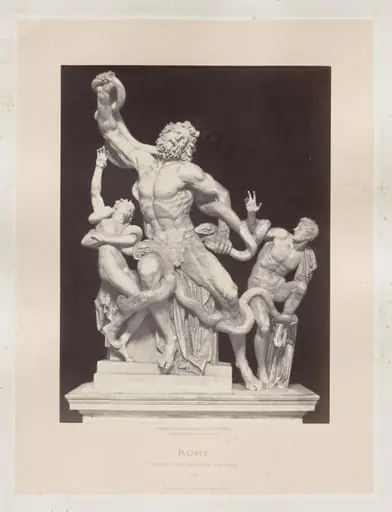 Rome: Groupe de Laocoon (Vatican)
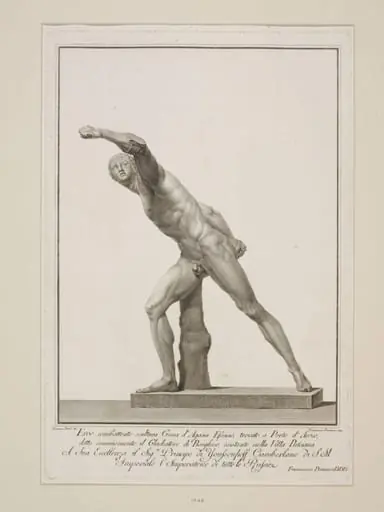 Eroe Combattente
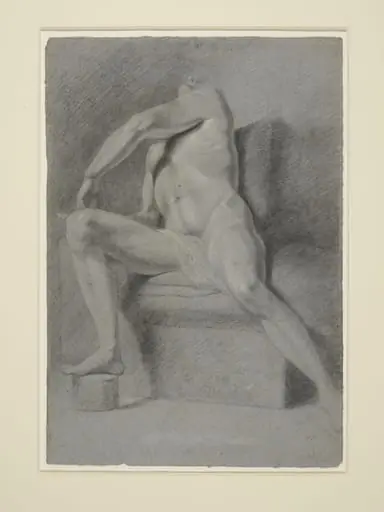 Study of a male nude figure, seated, with his right foot on a round block and his head thrown back.
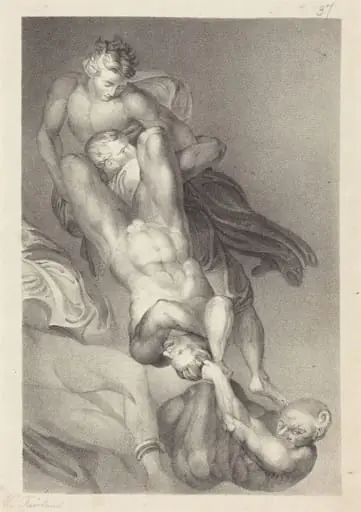 Part of the Last Judgment from Michael Angelo
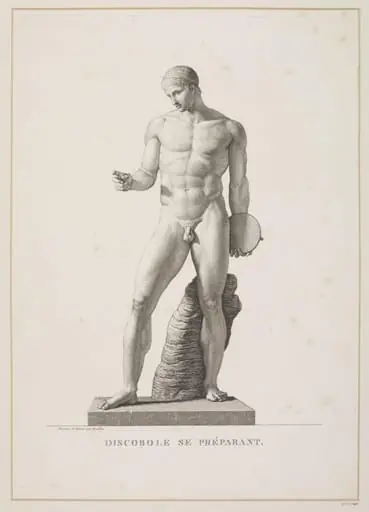 Gladiator
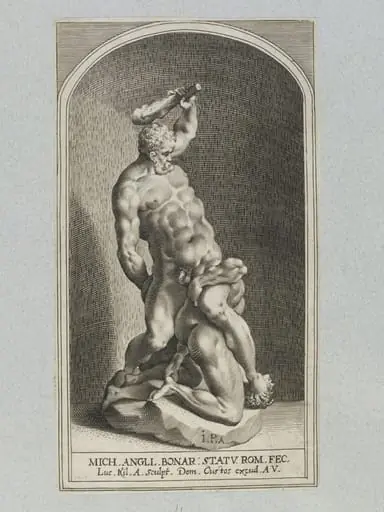 Hercules Killing Cacus
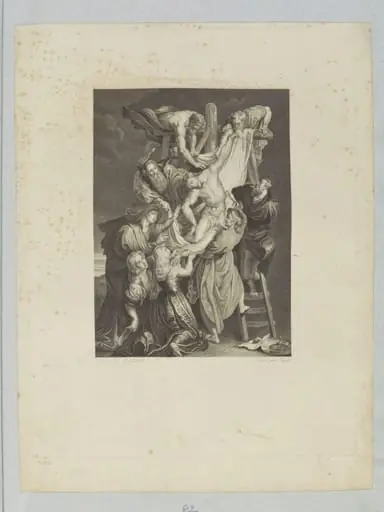 The taking down from the Cross
 A Man Trapped between a Lion and a Serpent
 Male Academy