Artwork
Tête de Putiphar (Head of Potiphar's Wife)
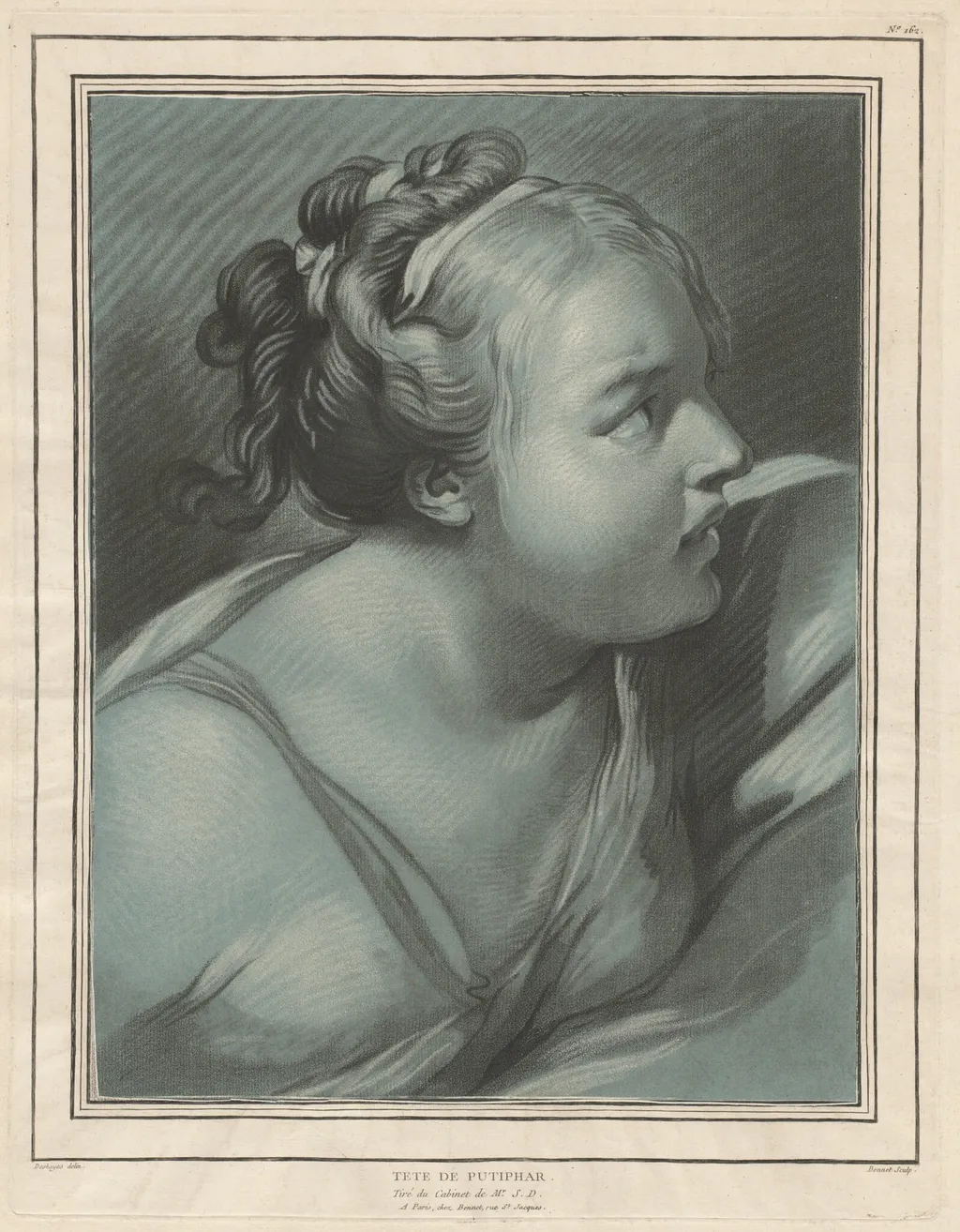
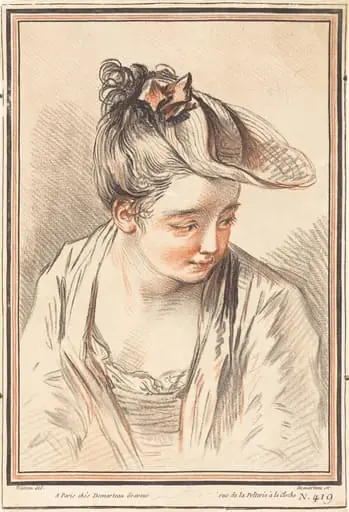
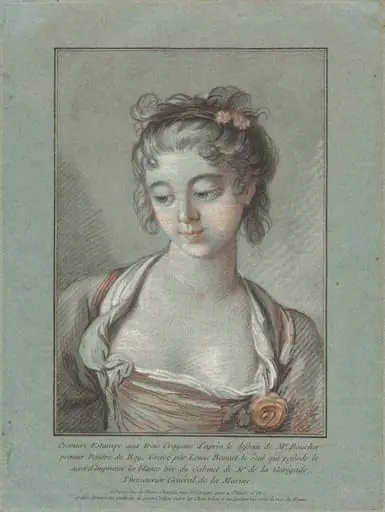
Tête de Putiphar (Head of Potiphar's Wife) is a chalk print by the Romanticist artist Louis-Marin Bonnet. It dates from 1773 and is held in the collection of the National Gallery of Art.
About this work
Overview
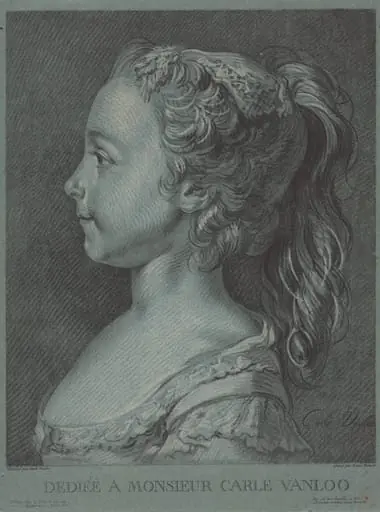
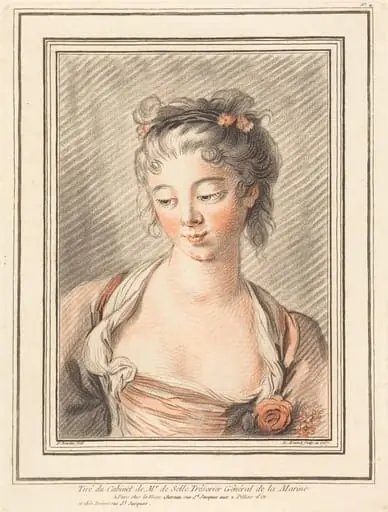
Tête de Putiphar (Head of Potiphar's Wife) is a print created by Louis-Marin Bonnet in 1773. The work depicts a serene portrait of a woman, identified by the title as Potiphar's Wife, with her head turned to the right and hair styled in a bun.
Subject & Meaning
The subject, Potiphar's Wife, is portrayed in a state of quiet contemplation, her subtle expression and softly rendered features suggesting introspection. The title references a biblical figure known for her attempted seduction of Joseph, though the artwork focuses on her serene, introspective aspect rather than narrative drama.
Technique & Style
The print, executed from two plates in black and white on blue laid paper using the chalk manner technique, utilizes chiaroscuro to achieve depth and volume. Soft, gentle lines characterize the woman's face, emphasizing the contemplative atmosphere.
History & Provenance
Created in 1773 by Louis-Marin Bonnet, specific details regarding the print's provenance and historical context of creation are not provided in the available information.
Context
While the biblical narrative of Potiphar's Wife is well-known, this 18th-century print diverges from typical depictions of the character by capturing a moment of serene introspection, reflecting a shift in artistic interest towards emotional portraiture during this period.
Legacy
The enduring impact or influence of Tête de Putiphar on subsequent artistic movements or works is not specified in the provided information, highlighting a gap in documented legacy for this particular piece.
Artist & collection