Artwork
Pride
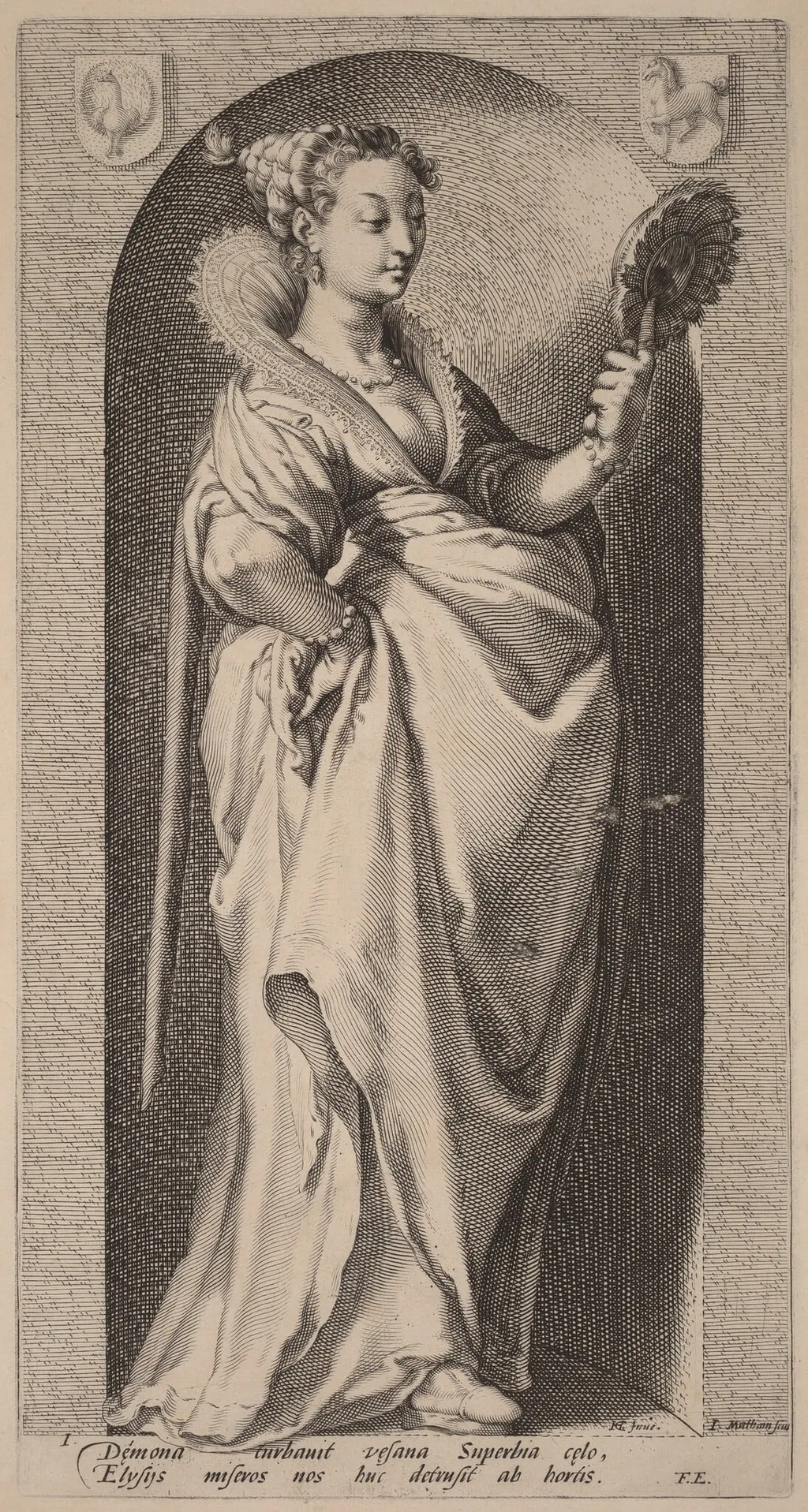
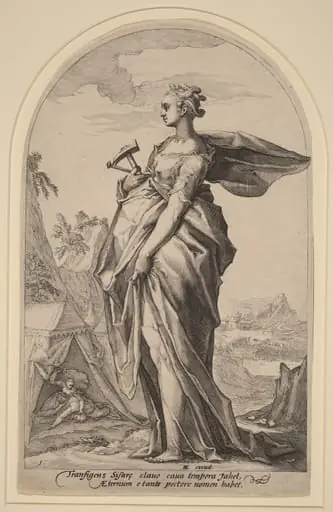
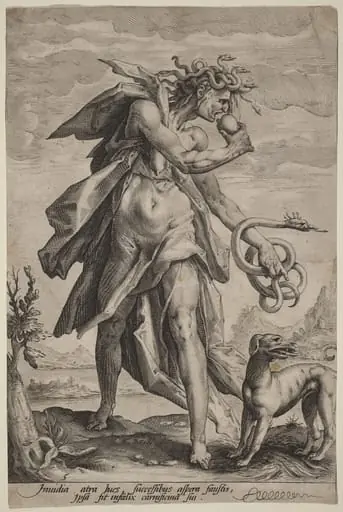
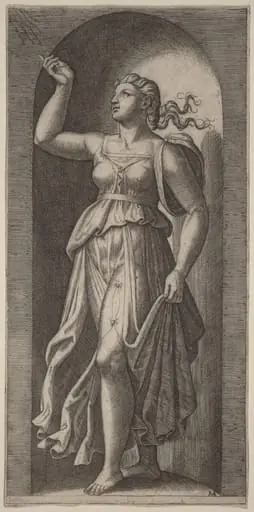
Pride is an ink print by the Renaissance artist Jacob Matham. It dates from 1601 and is held in the collection of the National Gallery of Art.
About this work
Overview
The composition emphasizes stillness and restraint, relying on subtle tonal gradations rather than color to define form and space.
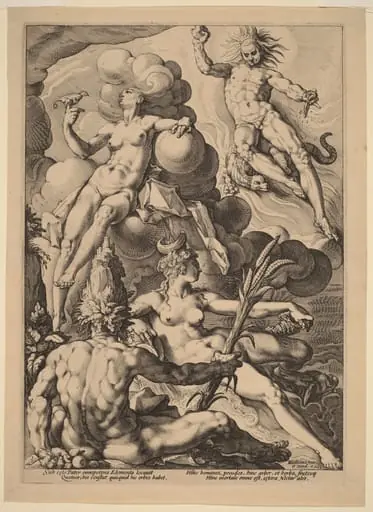
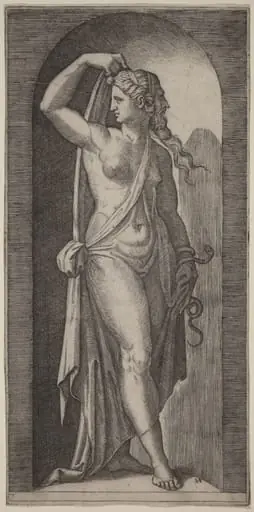
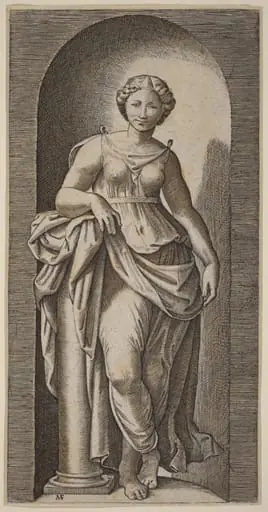
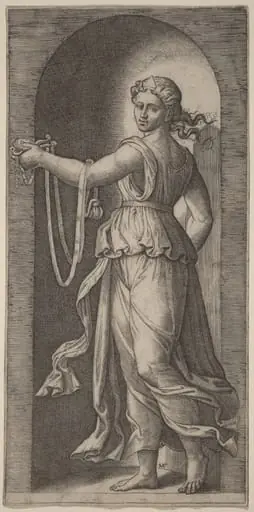
Pride is a 1601 engraving by Jacob Matham, executed in black ink on laid paper. The work presents a solitary female figure framed by an arched opening, rendered with fine linear precision. The composition emphasizes stillness and restraint, relying on subtle tonal gradations rather than color to define form and space. Its small scale and intimate presentation invite close observation, characteristic of Northern European printmaking of the period.
Subject & Meaning
The figure, adorned with pearls and an elaborate updo, holds a feathered fan with composed grace. Her expression is inward, suggesting contemplation rather than display. The title Pride implies a moral reflection on vanity or self-possession, common in allegorical imagery of the time. The absence of overt symbolism leaves interpretation open, but the refined attire and poised posture evoke aristocratic self-awareness.
Technique & Style
Matham employs meticulous cross-hatching to model volume and texture, particularly in the folds of the robe and the delicate strands of hair. The background is minimally suggested, enhancing focus on the figure. Laid paper’s subtle texture complements the engraving’s fine lines, while the contrast between light and shadow gives the form a quiet three-dimensionality. The fan and jewelry are rendered with precision, drawing attention without distraction.
History & Provenance
Created in 1601, the engraving belongs to a series of moral allegories produced in the Netherlands during the early 17th century. Matham, trained in the workshop of his stepfather Hendrick Goltzius, was known for his technical mastery in reproductive prints. This work likely circulated among collectors and scholars interested in emblematic imagery, though its early ownership records remain undocumented.
Context
Pride emerged during a period when Northern European artists frequently explored the Seven Deadly Sins through visual allegory. While religious and moral themes dominated print culture, Matham’s approach avoids overt didacticism. The restrained composition and psychological nuance reflect a shift toward individualized portraiture within allegorical frameworks, aligning with broader trends in Dutch and Flemish art of the era.
Legacy
Though not widely exhibited today, Pride exemplifies the sophistication of early 17th-century engraving. Matham’s ability to convey psychological depth through line alone influenced later printmakers interested in intimate, non-narrative portraiture. The work remains a quiet testament to the era’s capacity for moral reflection through understated visual language.
Artist & collection