Artwork
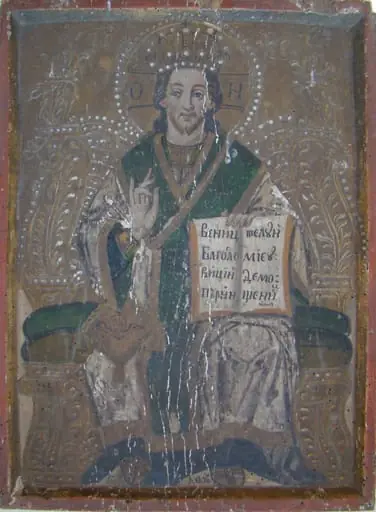
Iisus Hristos Mare Arhiereu și Învățător
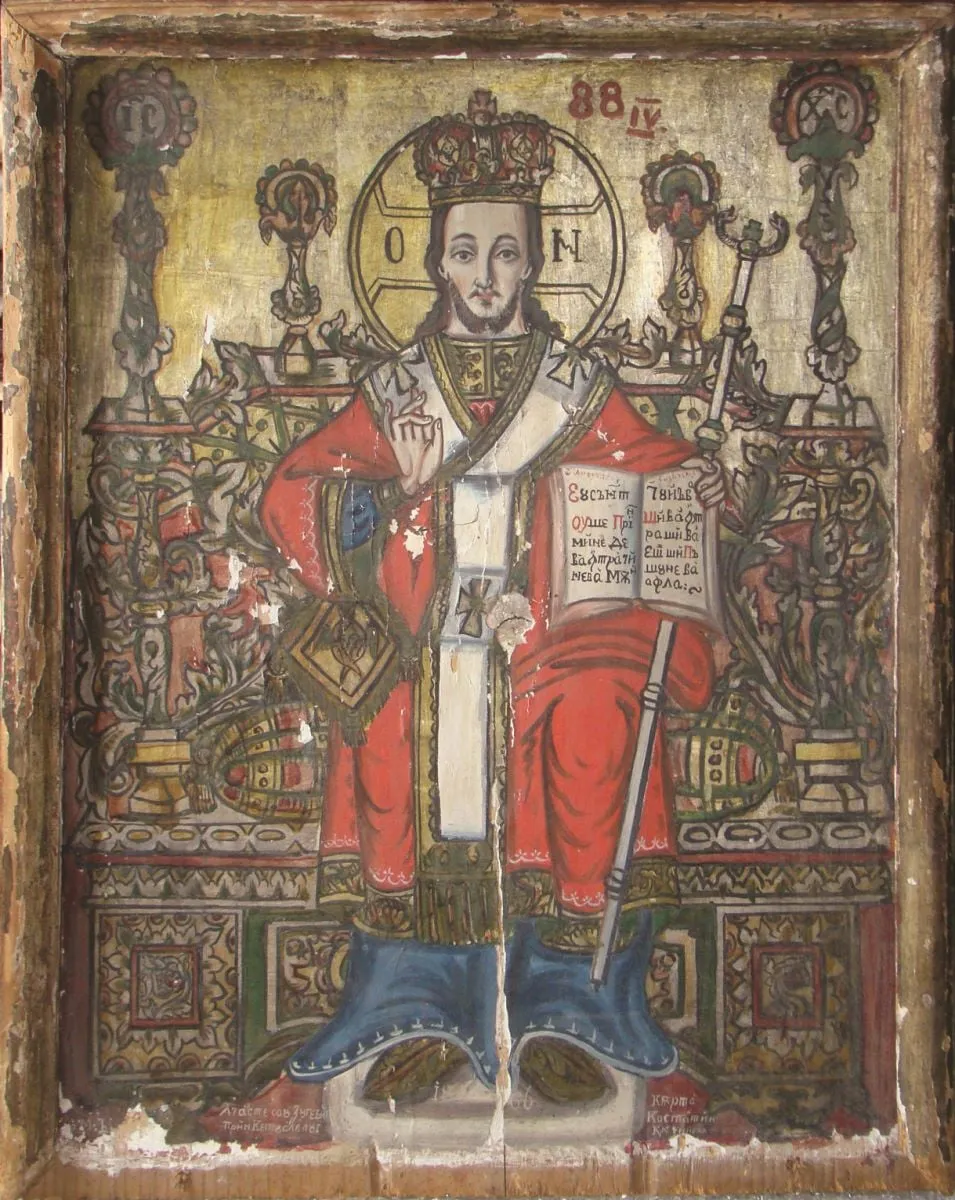
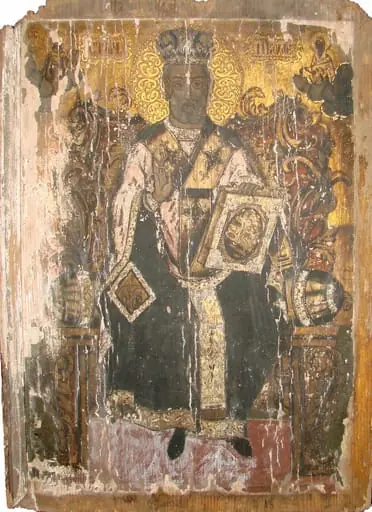
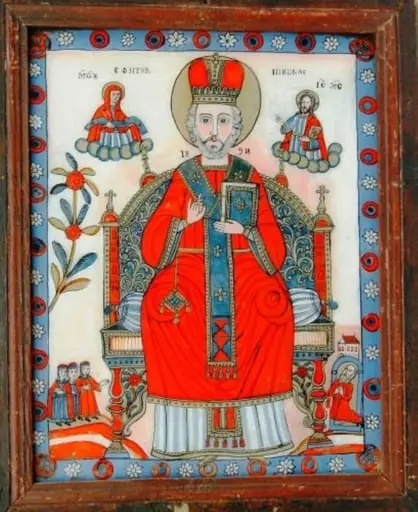
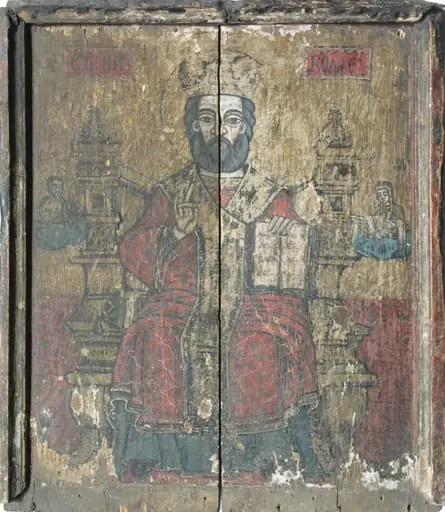
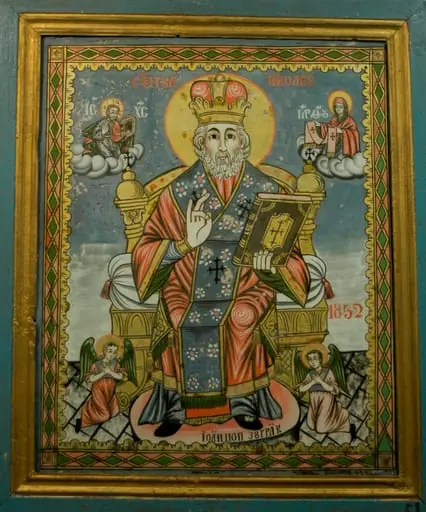
Iisus Hristos Mare Arhiereu și Învățător is an unspecified painting by the Baroque artist Moise Borșoș. It dates from 1806 and is held in the collection of the Alba Iulia Unification National Museum.
About this work
Overview
Painted in 1806 by Moise Borșoș, this religious portrait depicts Jesus Christ as both High Priest and Teacher. Executed in tempera or oil on wood, the work is part of the collection at the Museum of Ethnography. Its formal composition and symbolic elements reflect Eastern Orthodox iconographic traditions, adapted with regional stylistic features common in 19th-century Romanian ecclesiastical art.
Subject & Meaning
The glowing nimbus around his head bears Greek letters, an abbreviation for 'Jesus Christ,' a standard iconographic convention in Orthodox tradition.
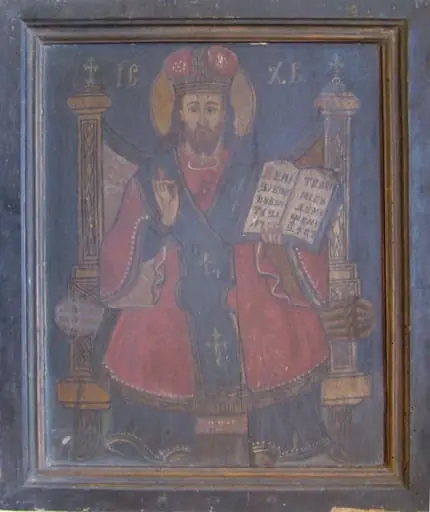
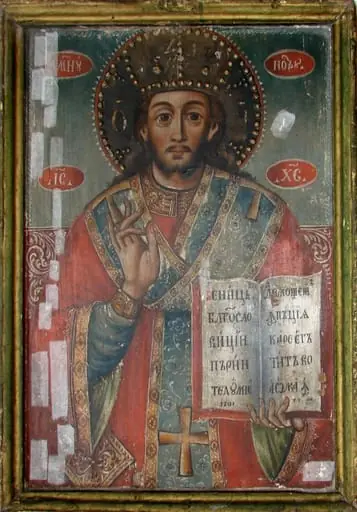
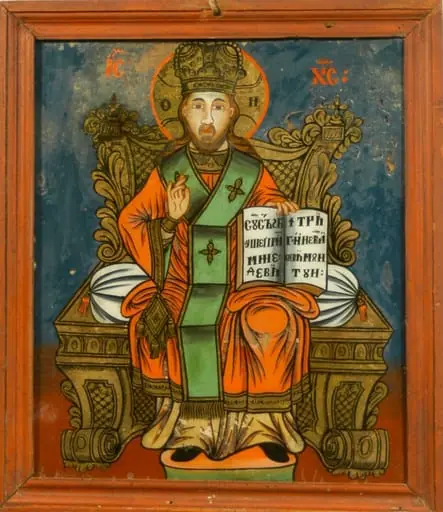
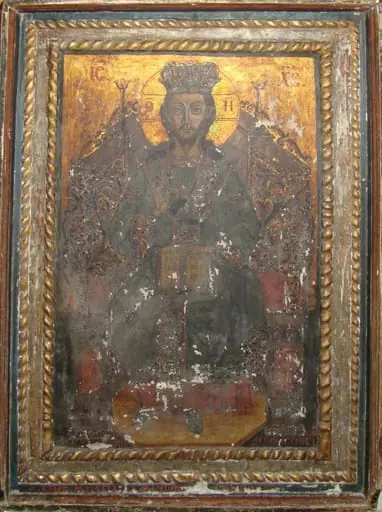
Christ is portrayed with attributes of spiritual authority: a golden crown signifies divine kingship, while the raised hand conveys blessing. The staff, or pastoral crook, denotes his role as shepherd of the faithful. The scroll in his other hand likely contains sacred text, reinforcing his identity as Teacher. The glowing nimbus around his head bears Greek letters, an abbreviation for 'Jesus Christ,' a standard iconographic convention in Orthodox tradition.
Technique & Style
The painting employs rich pigments—especially vermilion robes and gold leaf—to create visual contrast against a dark, ornate background. Details in the background, possibly architectural or vegetal motifs, are rendered schematically rather than naturallyistically. The face is idealized, with a luminous halo, and surface wear suggests age and devotional use. The style blends Byzantine conventions with local folk sensibilities, avoiding Western naturalism.
History & Provenance
Created in 1806, the work likely originated in a church or monastery in Moldavia or Wallachia, regions under Ottoman influence but culturally tied to Orthodox traditions. It entered the Museum of Ethnography’s collection as part of a broader effort to preserve religious artifacts from rural communities. Its preservation reflects its significance as a devotional object rather than a purely artistic one.
Context
In early 19th-century Romanian principalities, religious imagery served both liturgical and educational purposes, especially among populations with limited literacy. Artists like Borșoș worked within established iconographic models but introduced subtle regional variations. This painting aligns with a broader trend of localizing Orthodox iconography, adapting it to vernacular aesthetics while maintaining doctrinal accuracy.
Legacy
The painting remains a representative example of pre-modern Romanian religious art, illustrating the continuity of Byzantine traditions in a peripheral Christian context. It contributes to scholarly understanding of how Orthodox iconography evolved in the absence of centralized ecclesiastical oversight. Its preservation in an ethnographic museum underscores its cultural rather than purely artistic value.
Artist & collection
Artist
Moise Borșoș made religious paintings in 1806, during a time when icon traditions were strong in Romanian churches.
Museum
Alba Iulia Unification National Museum
Continue through works from the same source collection.
 Iisus Hristos Mare Arhiereu și Învățător
 Iisus Hristos Mare Arhiereu și Învățător
 Iisus Hristos Mare Arhiereu și Învățător
 Iisus Hristos Mare Arhiereu și Învățător
 Iisus Hristos Mare Arhiereu și Învățător
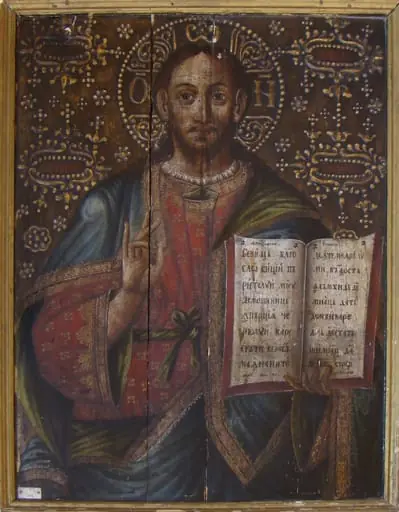 Iisus Hristos Învățător
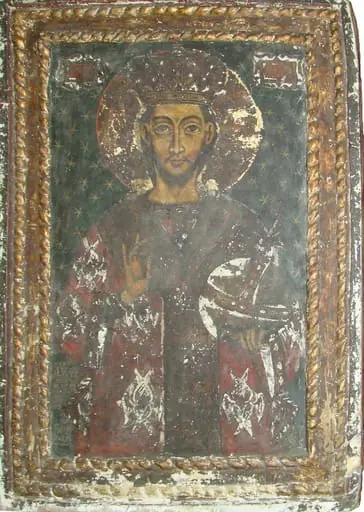 Iisus Hristos Pantocrator
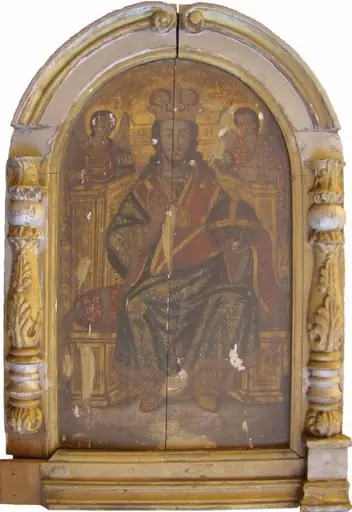 Iisus Hristos Mare Arhiereu
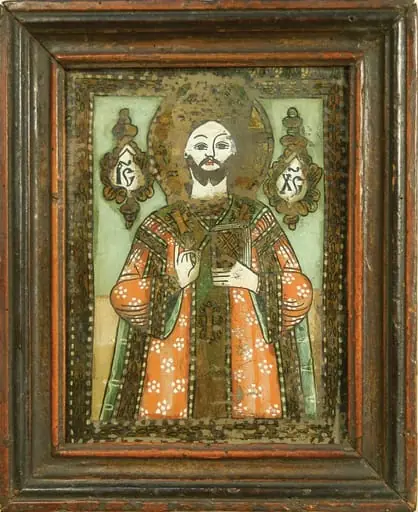 Iisus Hristos Mare Arhiereu și Învățător
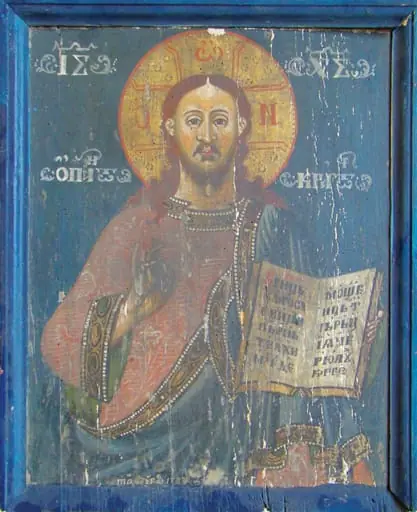 Iisus Hristos Învățător
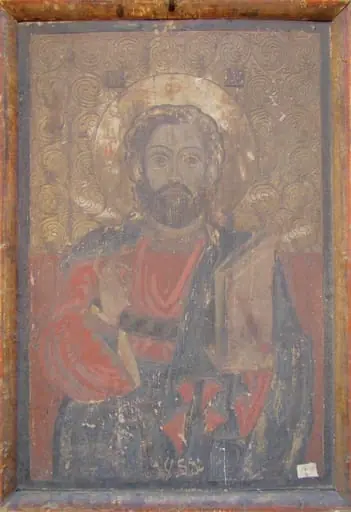 Iisus Hristos Învățător
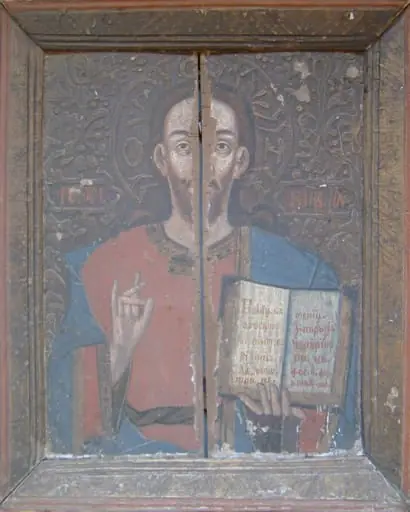 Iisus Hristos Învățător