Artwork
Maica Domnului cu Pruncul
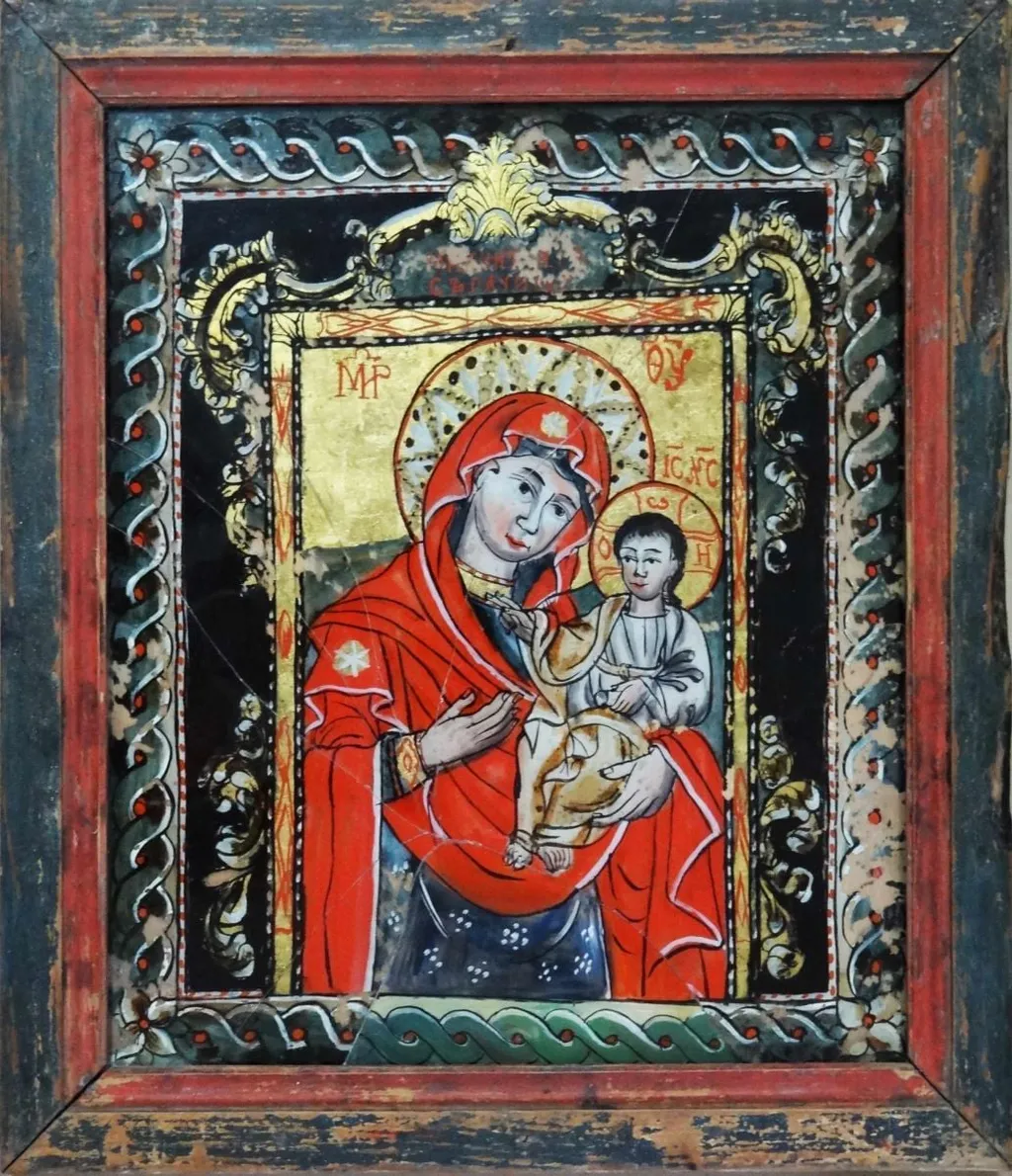
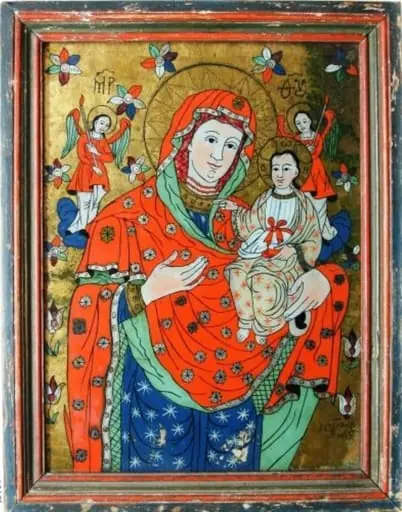
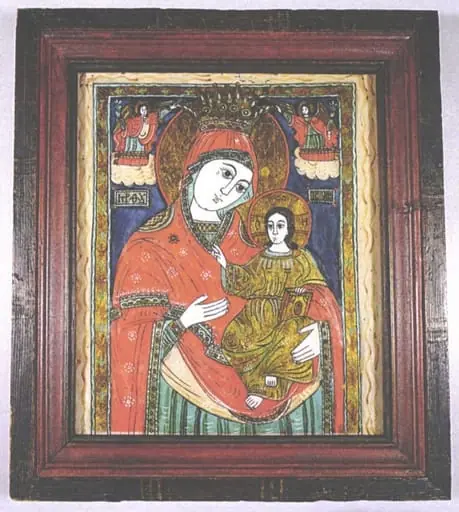
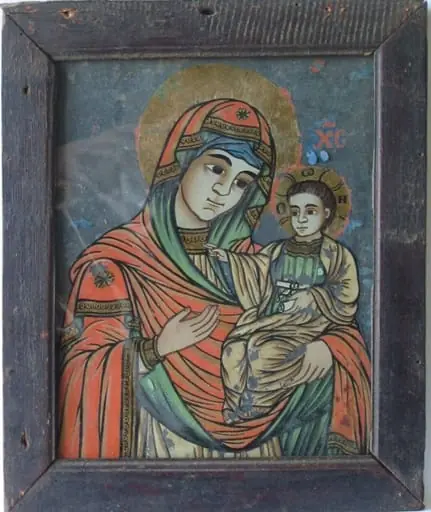
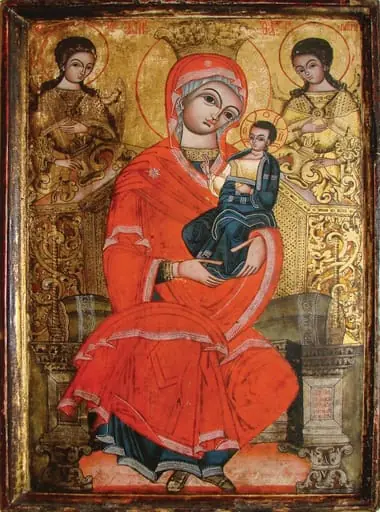
Maica Domnului cu Pruncul is an unspecified painting by the Byzantine icon painting artist Popa Sandu. It dates from 1833 and is held in the collection of the Alba Iulia Orthodox Archdiocese.
About this work
Overview
The composition follows traditional iconographic conventions while incorporating stylistic elements of early 19th-century Romanian religious painting.
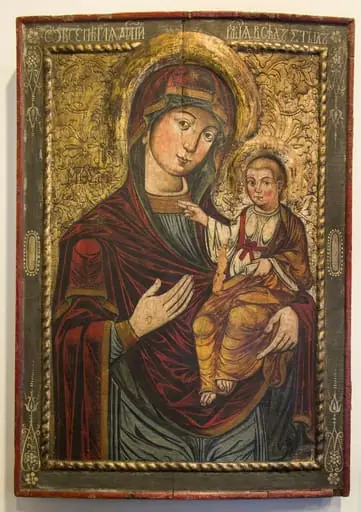
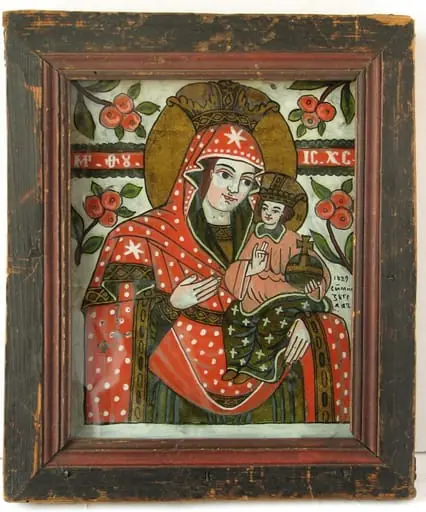
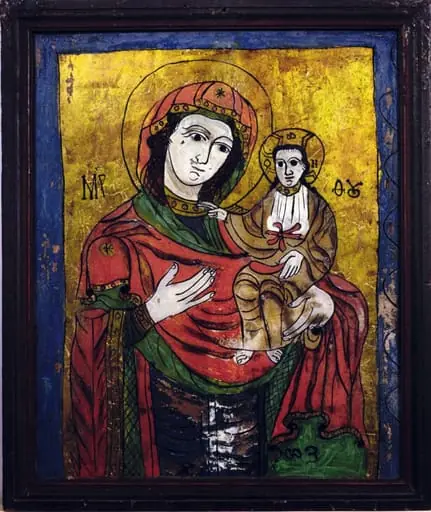
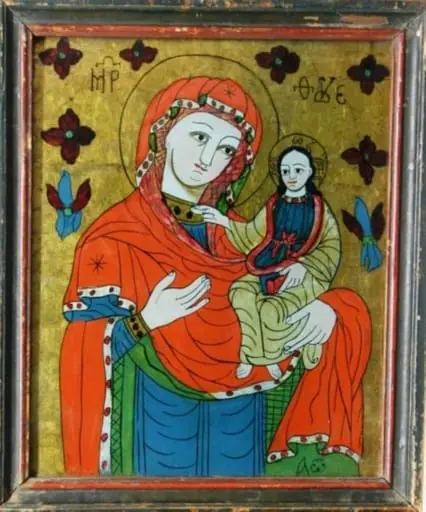
Painted in 1833 by Popa Sandu, this devotional image portrays the Virgin Mary holding the infant Jesus. Executed in oil on canvas, it resides in the Museum of Ethnography. The composition follows traditional iconographic conventions while incorporating stylistic elements of early 19th-century Romanian religious painting. Its intimate scale and focused subject reflect its use in private or liturgical contemplation.
Subject & Meaning
The Virgin Mary, depicted in a rich red garment, cradles the sleeping Christ Child, a common motif in Eastern Christian iconography symbolizing divine tenderness and human vulnerability. Her head covered by the robe’s fold suggests humility and devotion, while the child’s stillness evokes peace and prefigured sacrifice. The image serves as a focal point for prayer, emphasizing maternal care as a conduit of sacred presence.
Technique & Style
The artist employs soft modeling and muted highlights to render the figures with gentle realism, contrasting with the flat, dark background that isolates the subjects. The red robe is rendered with layered pigments to achieve depth, while the child’s white swaddling provides luminous contrast. Decorative framing with ornamental patterns aligns with regional Romantic-era aesthetics, blending folk motifs with ecclesiastical formality.
History & Provenance
Created during a period of renewed interest in national religious identity under Ottoman influence, the painting likely originated in a Moldavian or Wallachian parish. It entered the Museum of Ethnography’s collection in the late 19th or early 20th century, where it was preserved as an example of vernacular religious art rather than high ecclesiastical production, reflecting evolving scholarly priorities.
Context
In early 19th-century Romanian principalities, religious imagery remained central to domestic and communal life, even as Western artistic trends began to influence local workshops. Popa Sandu’s work bridges Byzantine traditions with emerging Romantic sensibilities—emotional restraint, naturalistic detail, and decorative framing—offering insight into how faith was visually sustained outside urban academies.
Legacy
The painting contributes to the documented corpus of Romanian religious art from the pre-unification era. It illustrates how local artisans adapted canonical themes using accessible materials and regional stylistic cues. Today, it stands as a quiet testament to the persistence of devotional imagery in everyday spiritual life, valued more for its cultural continuity than its artistic innovation.
Artist & collection
Artist
Popa Sandu made religious paintings in early 1800s Romania. His two known works here show crowned Mary receiving a blue halo in Încoronarea Fecioarei and a calm Virgin holding the Christ child in Maica Domnului cu…
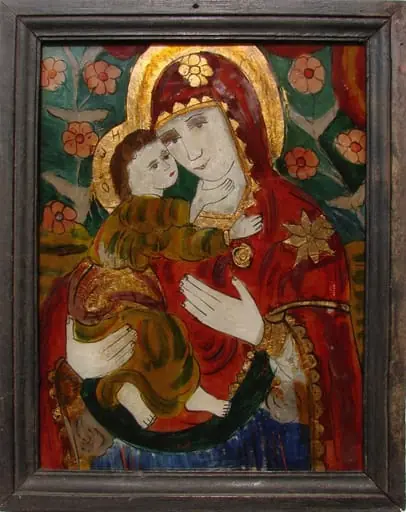 Maica Domnului cu Pruncul
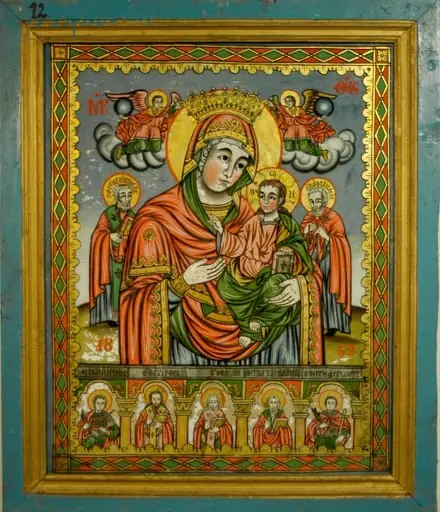 Maica Domnului cu Pruncul
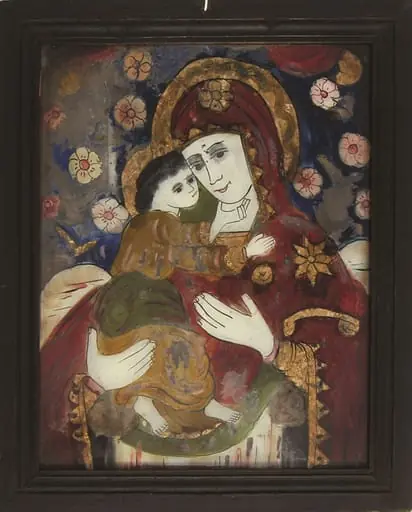 Maica Domnului cu Pruncul
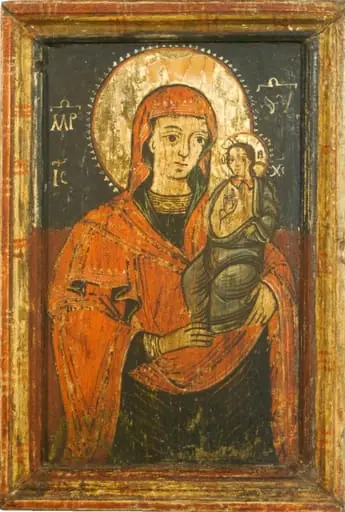 Maica Domnului cu Pruncul
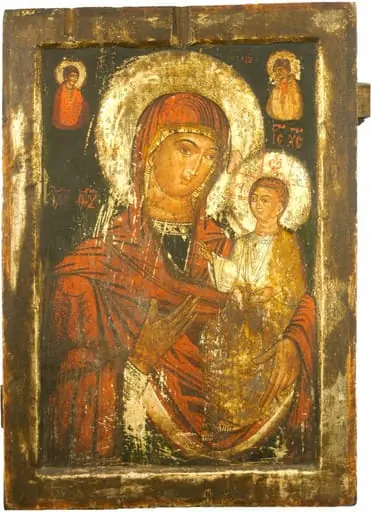 Maica Domnului cu Pruncul
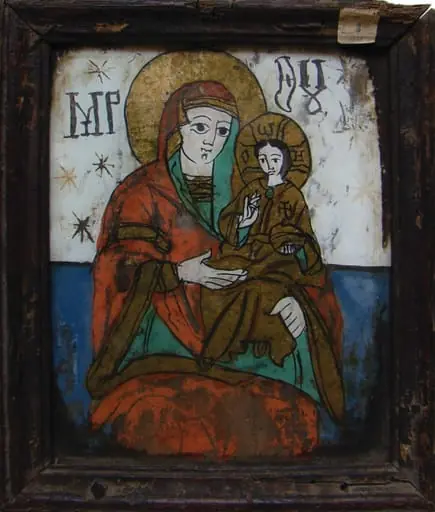 Maica Domnului cu Pruncul
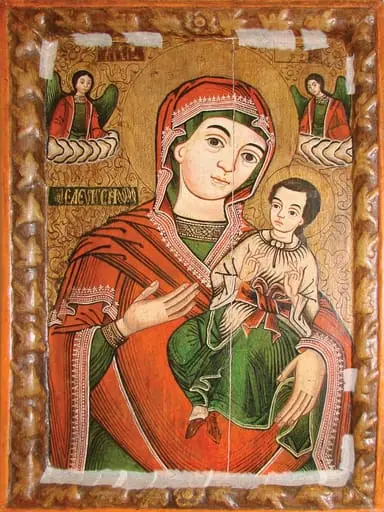 Maica Domnului cu Pruncul
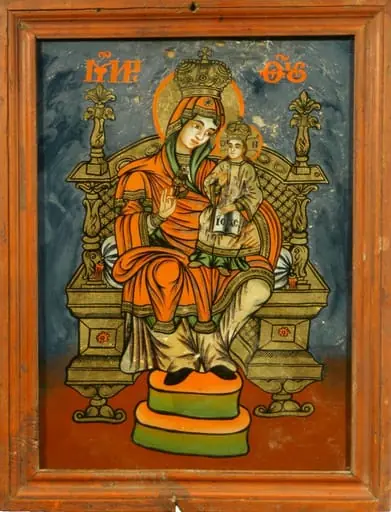 Maica Domnului cu Pruncul, floarea nevestejită
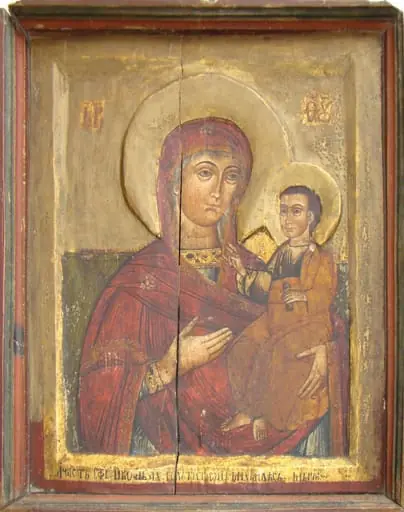 Maica Domnului cu Pruncul
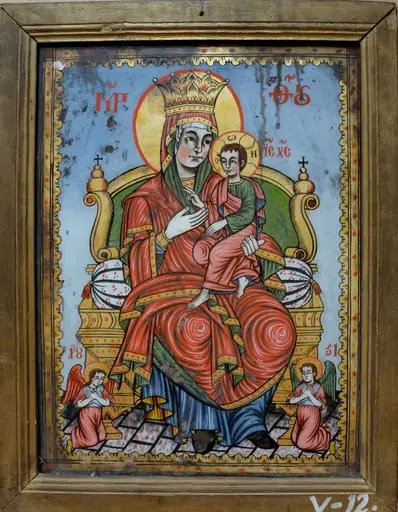 Maica Domnului cu Pruncul
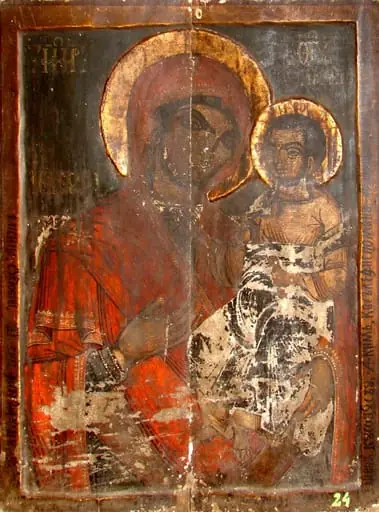 Maica Domnului cu Pruncul
 Maica Domnului cu Pruncul