Artwork
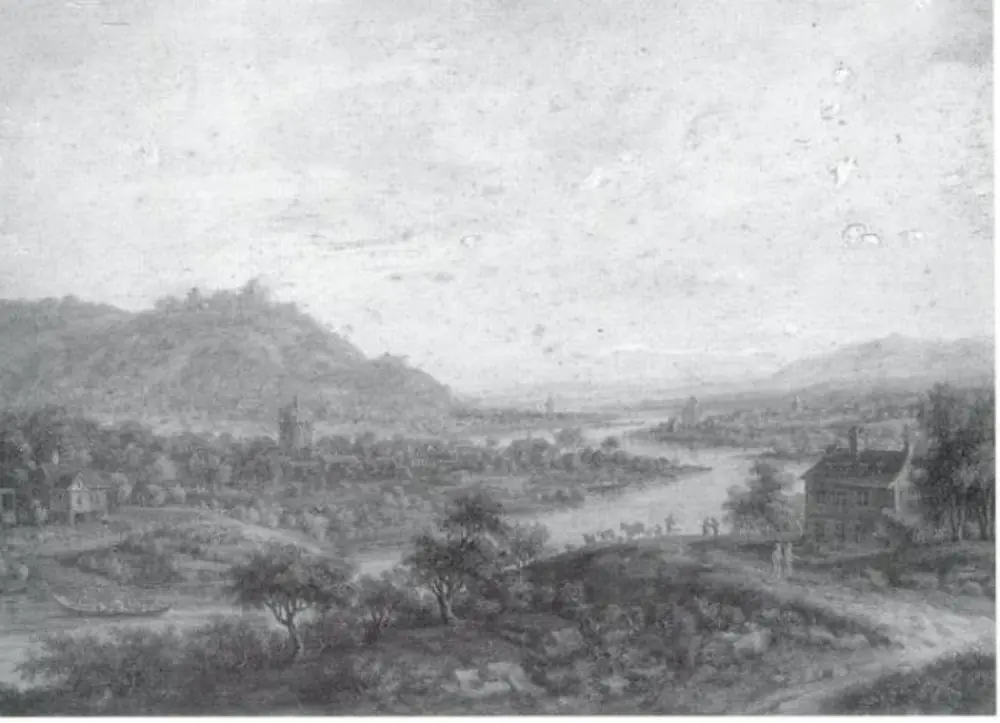
Güzel Hisar and the River Maeander, from the East
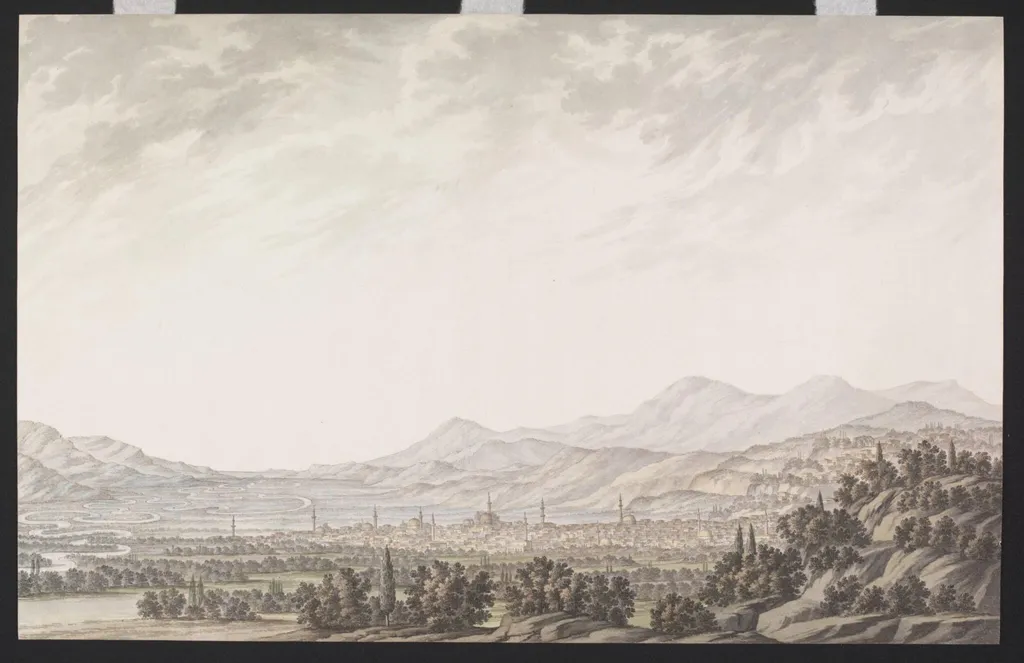
Güzel Hisar and the River Maeander, from the East is a watercolor work on paper by the Rococo painting artist Giovanni Battista Borra. It dates from 1751 and is held in the collection of the Victoria and Albert Museum.
About this work
Overview
Giovanni Battista Borra’s 1751 watercolour presents a view of Güzel Hisar—today known as Aydın—and the Maeander River as seen from the east. The composition balances a tranquil foreground of trees and gentle hills with distant mountains and the winding river, rendered in a soft, muted palette.
Subject & Meaning
The scene records the town’s setting on the fertile plain beside the river, with the faint outlines of ancient ruins rising on the hillside to the right. Borra’s depiction reflects the 18th‑century interest in documenting classical sites, even though the location was mistakenly identified as the ancient city of Magnesia ad Maeander rather than Tralles.
Technique & Style
Executed in watercolour, the work relies on delicate washes and subtle tonal transitions to convey atmosphere. The artist’s restrained use of colour and fine linear detail creates a calm, almost lyrical quality, aligning the piece with the early Romantic sensibility toward landscape as a vehicle for contemplation.
History & Provenance
The drawing derives from a sketch Borra produced during a September 1750 expedition, when his party ascended a nearby hill to survey the area. After passing through the collection of W. T. Spencer, the watercolour entered the museum’s holdings in 1966, where it remains part of the European prints and drawings collection.
Artist & collection
Artist
Giovanni Battista Borra spent years sketching ruins and rivers on the road, notebook always in hand.

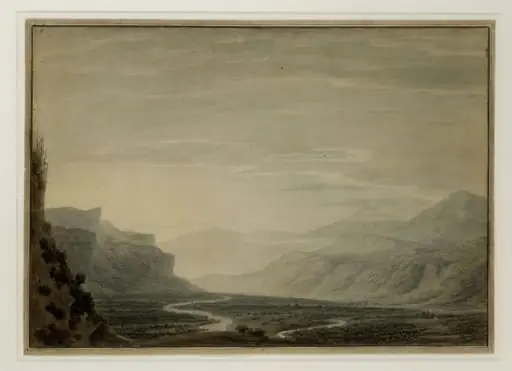 Valley with winding streams, a range of mountains in the background, and a village on the left
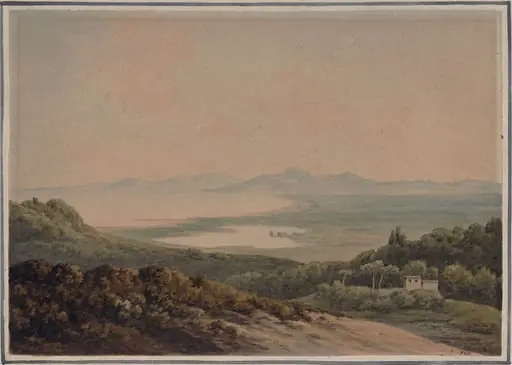 The Campagna, with the Lucrine Lake, from Cumae
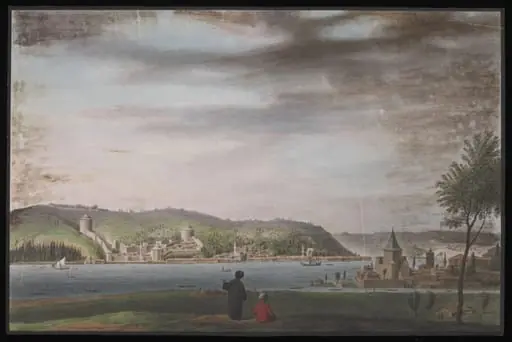 The Castles of Europe and Asia, Istanbul
 Vederea castelului Teleki
 Yedikule, or the Castle of the Seven Towers, Istanbul
 Italian Landscape
 Panoramic View across a Terraced Park
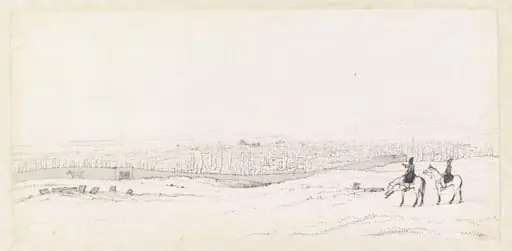 Tabriz
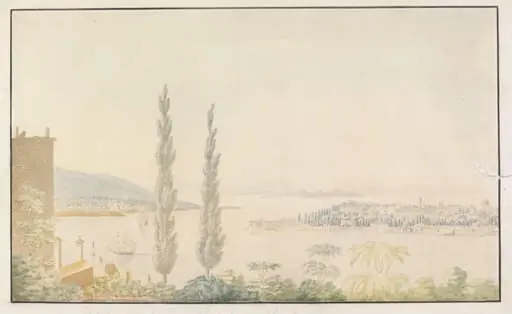 Üsküdar and Saray Burnu from Galata, with the Sea of Marmara in the distance
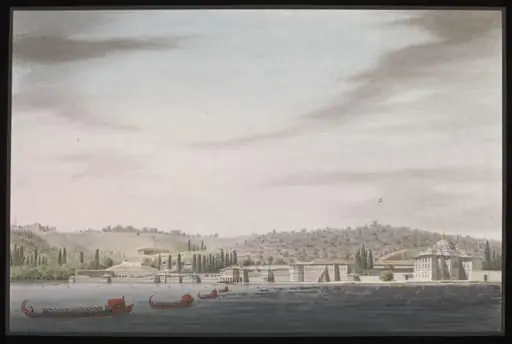 Besiktas on the Bosphorus
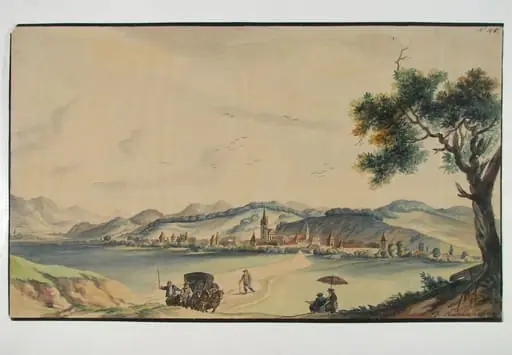 Vedere din Bistrița
 Landscape with the River Main