Artwork
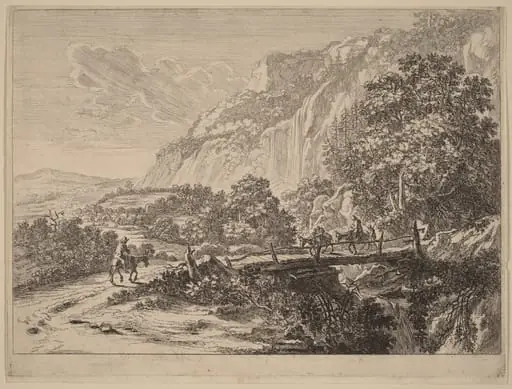
The Wooden Bridge at Sulmona near Tivoli
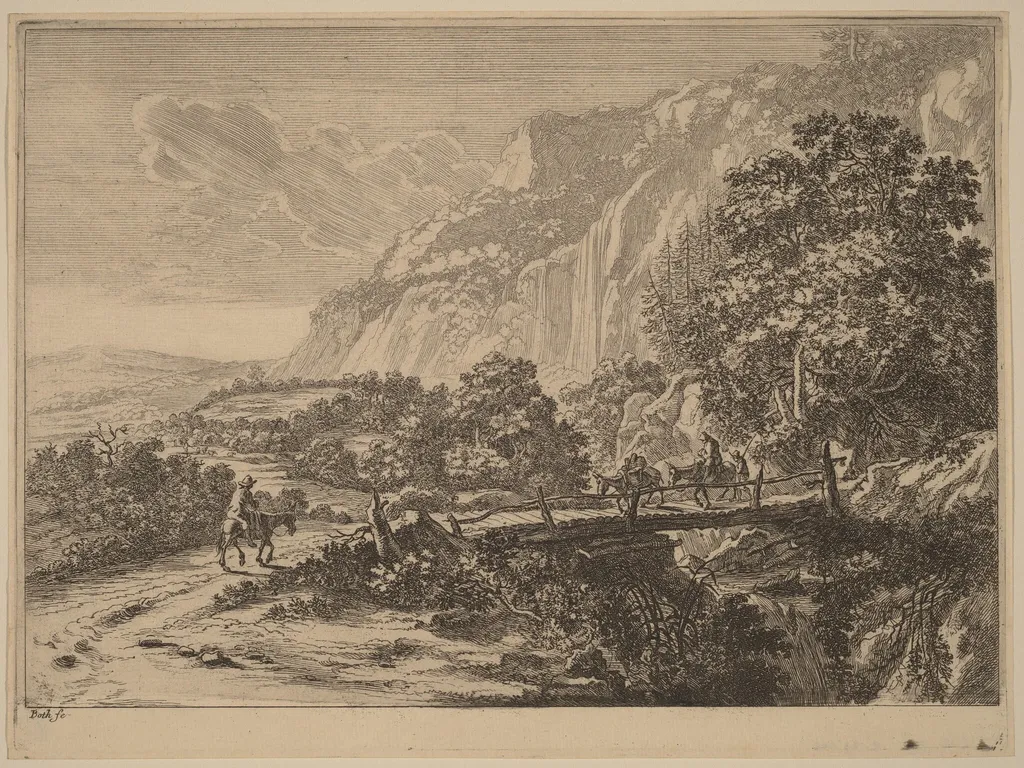
The Wooden Bridge at Sulmona near Tivoli is an ink print by the Baroque artist Jan Both. It is held in the collection of the National Gallery of Art.
About this work
Overview
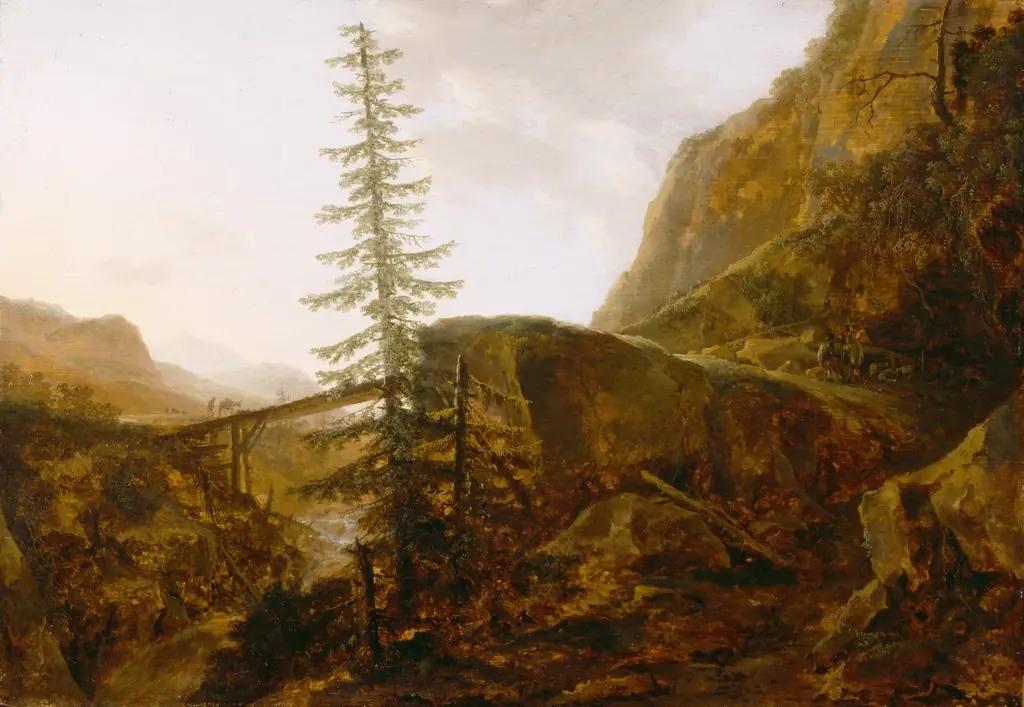
Created circa 1700, this etching portrays a modest wooden bridge spanning a tranquil river in the Italian countryside near Sulmora and Tivoli. The composition is anchored by the bridge, flanked by densely detailed trees and a gently rolling landscape that recedes toward distant hills and a faint waterfall. The scene conveys a calm, everyday moment within a pastoral setting.
Subject & Meaning
The work captures a slice of rural life, with a few figures strolling along the path beside the bridge, suggesting ordinary travel and communal interaction. The surrounding foliage and water are rendered to emphasize the harmony between human structures and the natural environment, reflecting an appreciation for the serene beauty of the Italian landscape.
Technique & Style
Executed in etching, the artist employs fine, controlled lines to differentiate textures: smooth, flowing strokes suggest the river’s surface, while sharper, angular lines define the trees’ leaves and trunks. This contrast creates a sense of depth and atmospheric perspective, characteristic of Dutch‑Italianate landscape conventions that blend northern detail with southern light.
History & Provenance
The piece is attributed to Jan Both, a Dutch painter and etcher noted for integrating Italianate motifs into his work after his travels in Italy. Though the original plate’s ownership record is limited, the print has been documented in several European collections, confirming its circulation among connoisseurs of early 18th‑century landscape prints.
Own this work as a print
Artist & collection

Artist
Jan Dirksz Both was a Dutch painter, draughtsman, and etcher, who made an important contribution to the development of Dutch Italianate landscape painting.

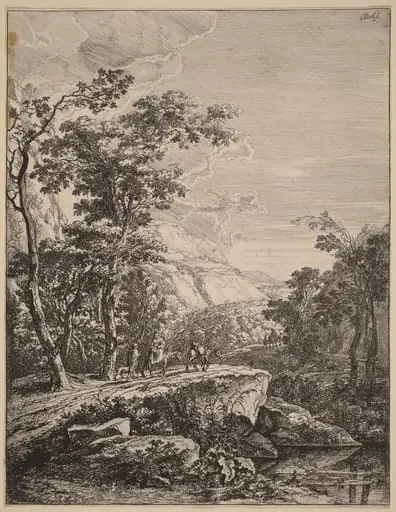 The Woman on the Hinny
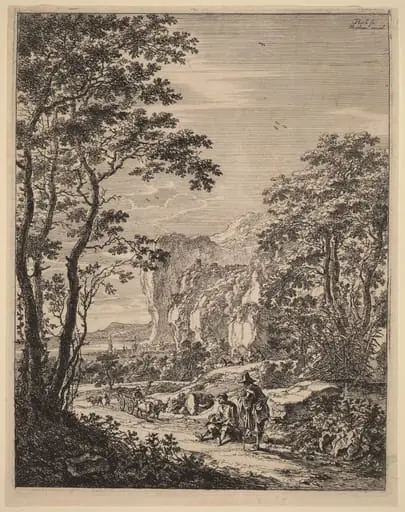 The Ox-Cart: View between Ancona and Sinigaglia
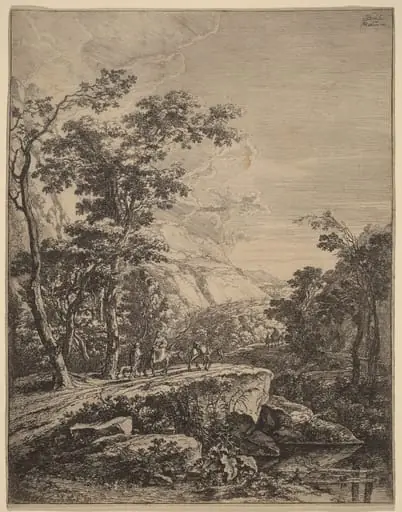 The Woman on the Hinny
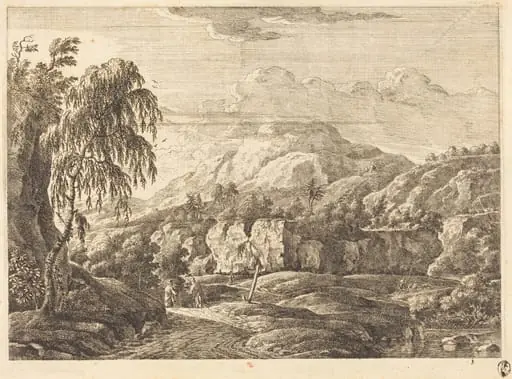 Landscape with Cross and Figures
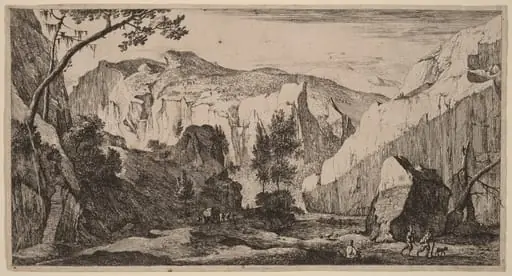 Rocky Landscape: pl.2
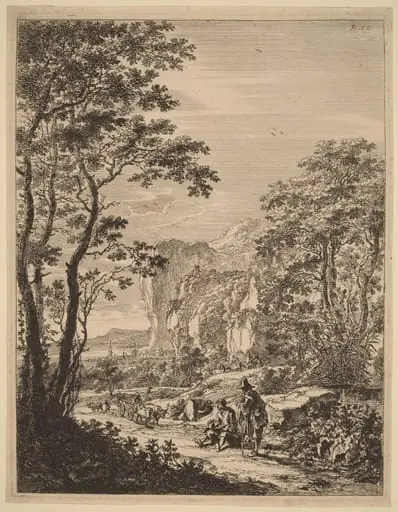 The Ox-Cart: View between Ancona and Sinigaglia
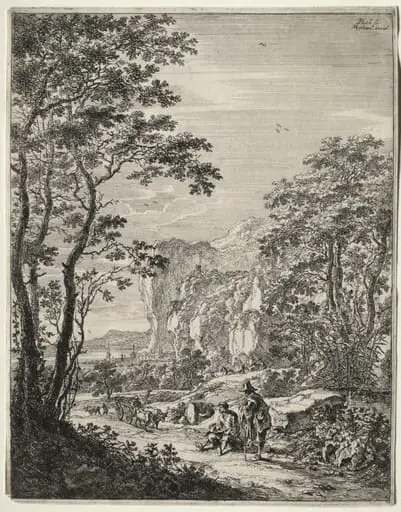 Ox-Cart. View between Ancona and Sinigaglia
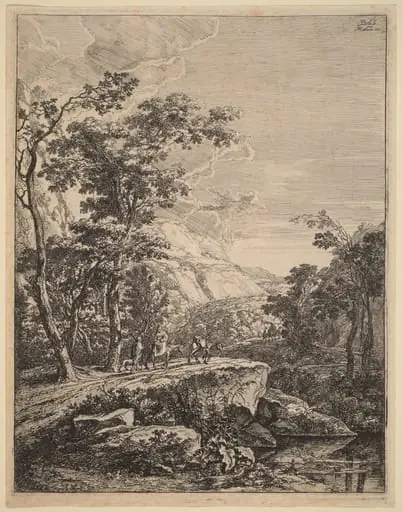 The Woman on the Hinny
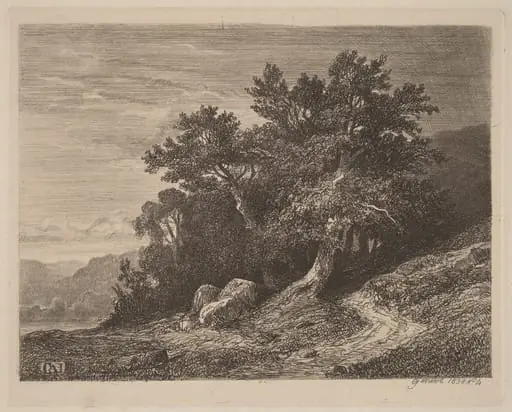 Ancient Trees on a Hillside
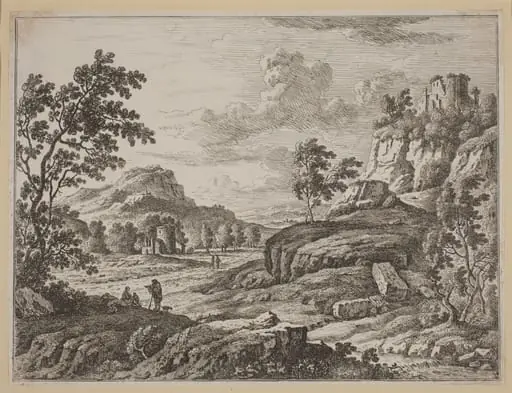 Landscape with Two Ruined Towers
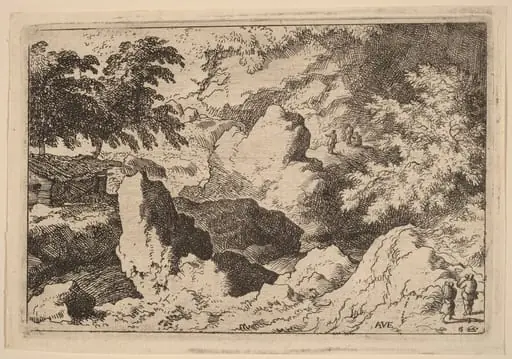 Three Men on a Rock
 The Wooden Bridge at Sulmona, near Tivoli