Artwork
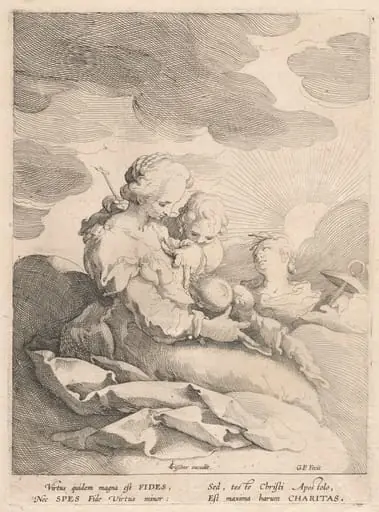
Faith and Charity
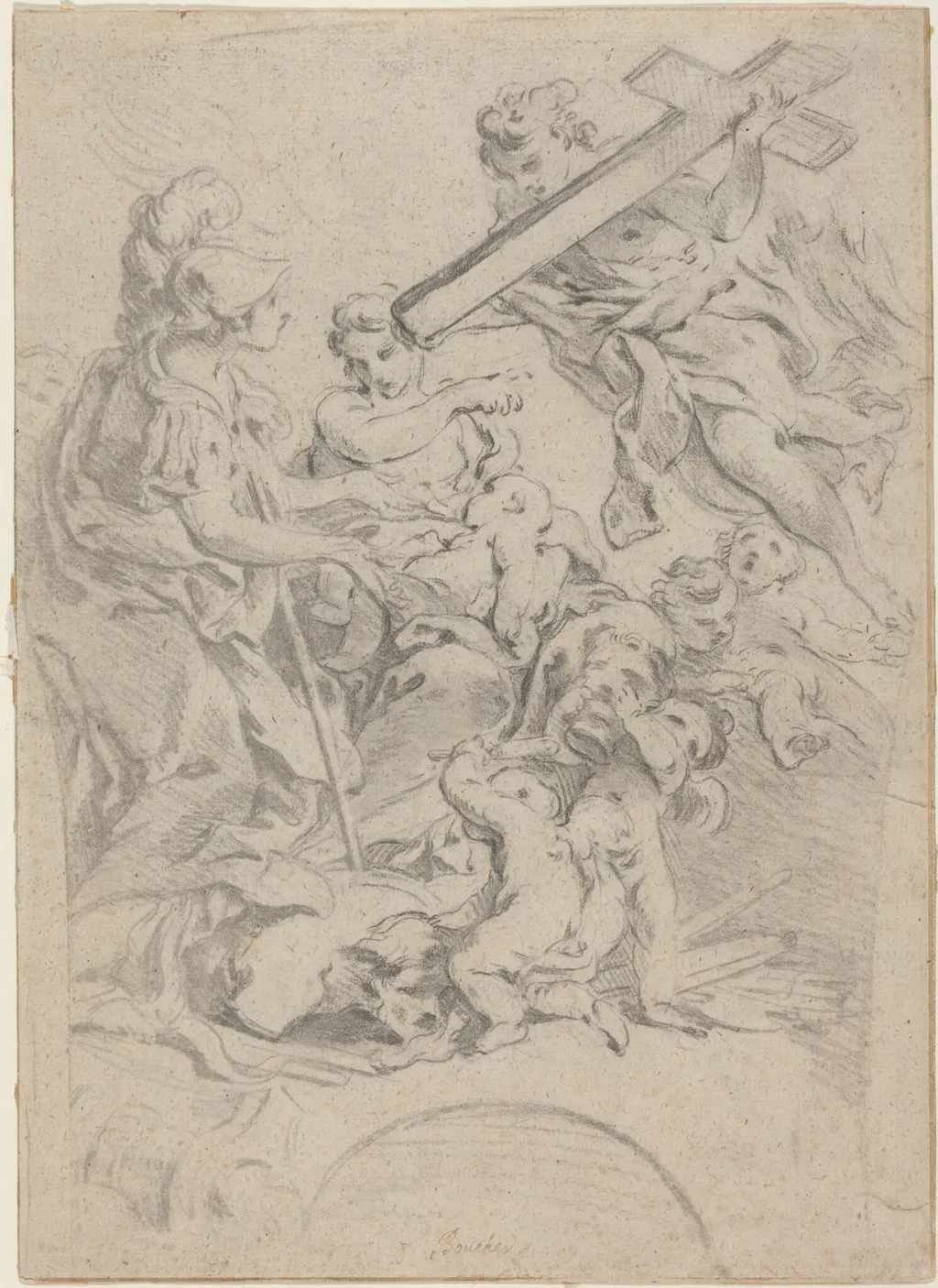
Faith and Charity is a chalk drawing by the Baroque artist François Boucher. It dates from 1730 and is held in the collection of the National Gallery of Art.
About this work
Overview
The technique involved transferring the original drawing to a second sheet, resulting in a reversed image with softened contours.
Created in 1730, this drawing by François Boucher is a counterproof made with black chalk on oatmeal-colored paper. The technique involved transferring the original drawing to a second sheet, resulting in a reversed image with softened contours. Its delicate tonal gradations and intimate scale reflect Boucher’s mastery of draftsmanship and his interest in the tactile qualities of chalk on textured surfaces.
Subject & Meaning
The composition depicts two female figures, one cradling a child, likely representing the virtues of Faith and Charity as personified in Christian allegory. Their serene expressions and flowing drapery evoke moral grace rather than narrative drama. Boucher treats the subject with quiet dignity, avoiding overt symbolism in favor of gentle, humanized forms that invite contemplation over doctrinal instruction.
Technique & Style
Boucher employed black chalk to achieve subtle shifts in light and shadow, using fine, fluid lines to define form and soft smudging to suggest volume. The oatmeal paper’s warm, granular surface enhanced the chalk’s matte texture, contributing to the work’s tactile warmth. As a counterproof, the image is reversed—a byproduct of its creation process—offering a rare glimpse into the artist’s working method.
History & Provenance
The drawing originates from Boucher’s personal studio practice, likely made as a study or preparatory transfer for a larger work. Its survival as a standalone piece is uncommon, as counterproofs were typically ephemeral. It remained within French collections through the 18th and 19th centuries, eventually entering a public institution where its technical uniqueness drew scholarly attention.
Context
In early 18th-century France, allegorical drawings were common tools for artists exploring moral or mythological themes. Boucher’s approach aligned with the Rococo preference for elegance and emotional subtlety over grandeur. While religious subjects were often treated with solemnity elsewhere, Boucher infused them with a pastoral gentleness, reflecting broader cultural shifts toward intimate, personal expression.
Legacy
This drawing exemplifies Boucher’s ability to elevate minor techniques into expressive ends. Its preservation highlights the value placed on preparatory works in his circle, challenging the notion that only finished paintings held artistic merit. Later scholars have cited it as evidence of his nuanced handling of light and form, influencing perceptions of Rococo draftsmanship beyond its ornamental reputation.
Artist & collection
Artist
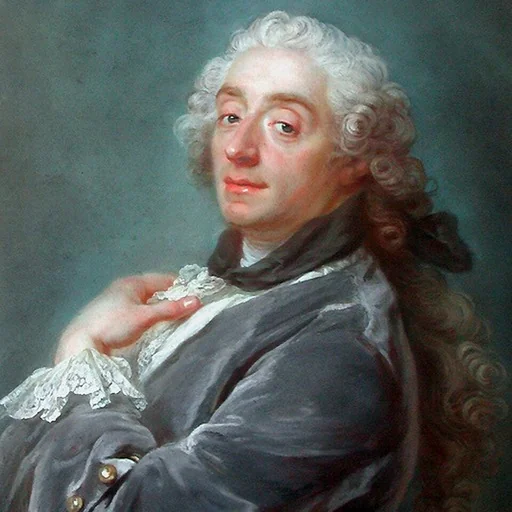
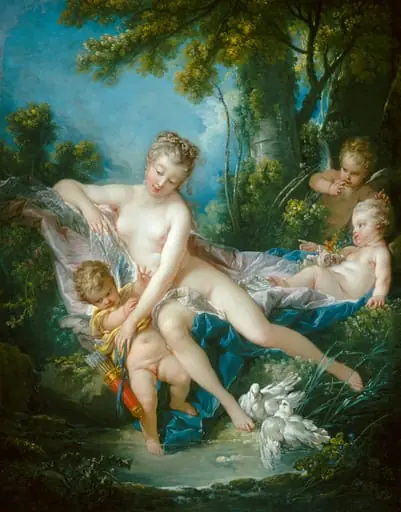
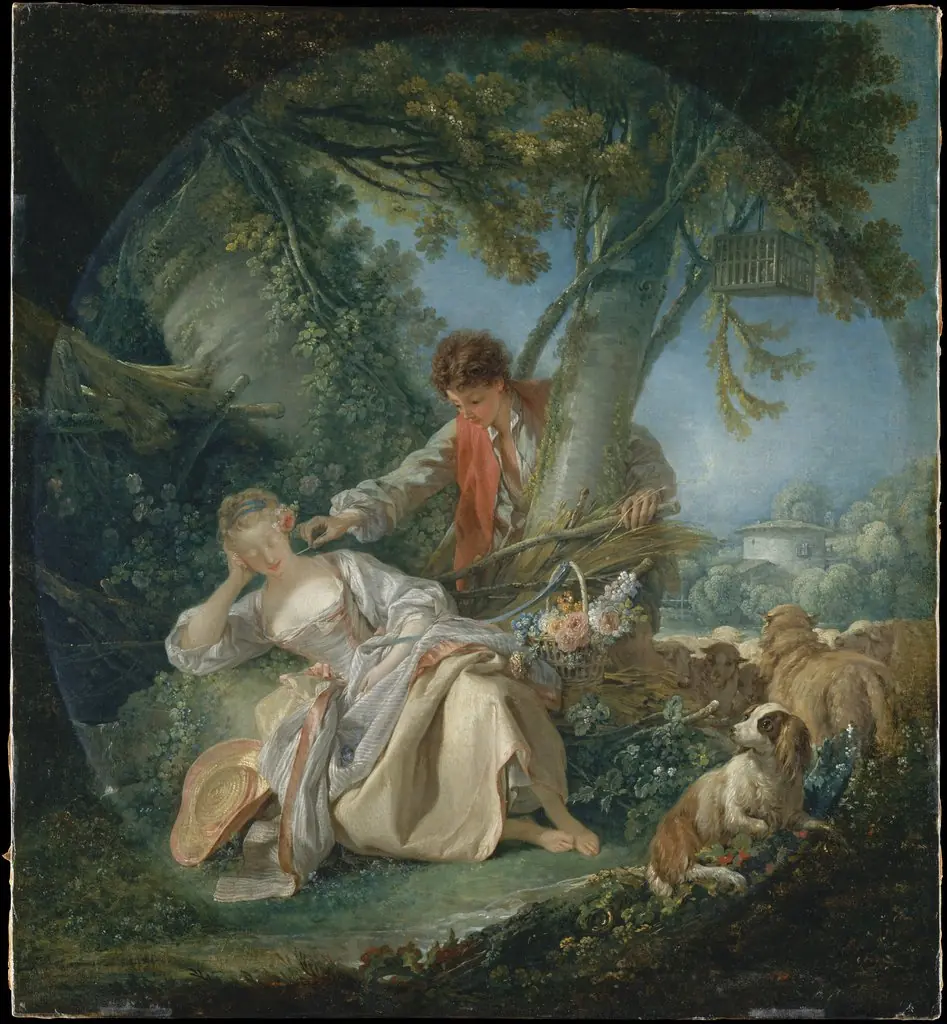
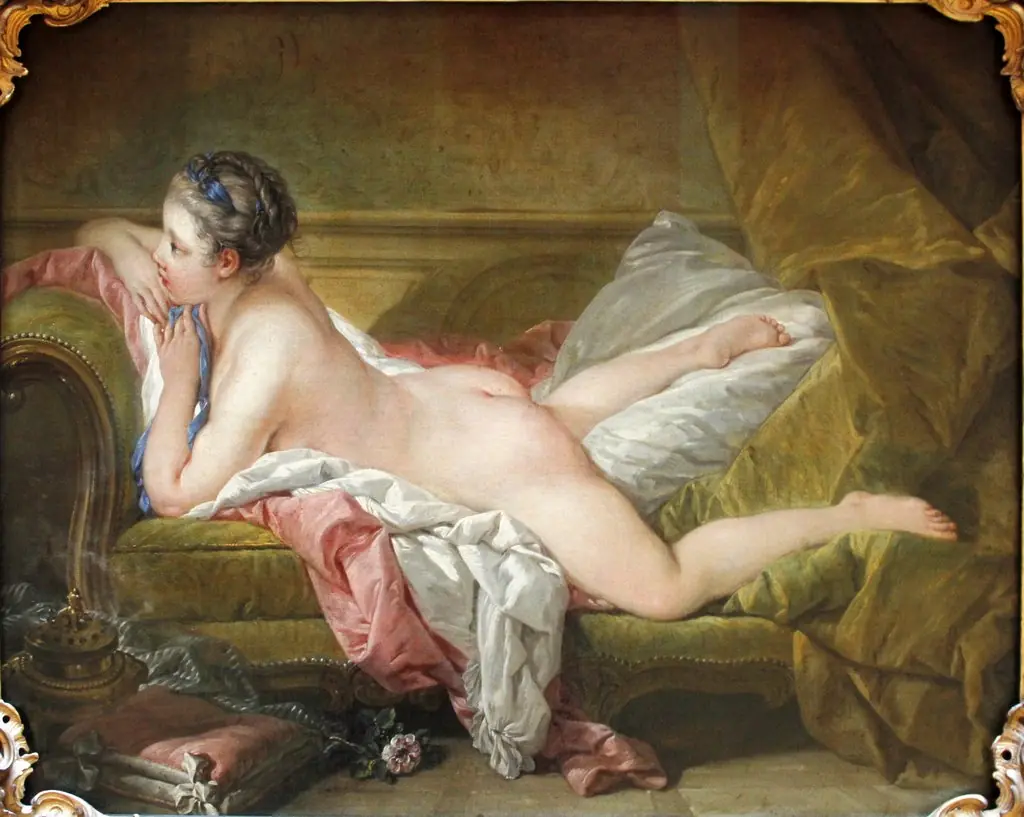
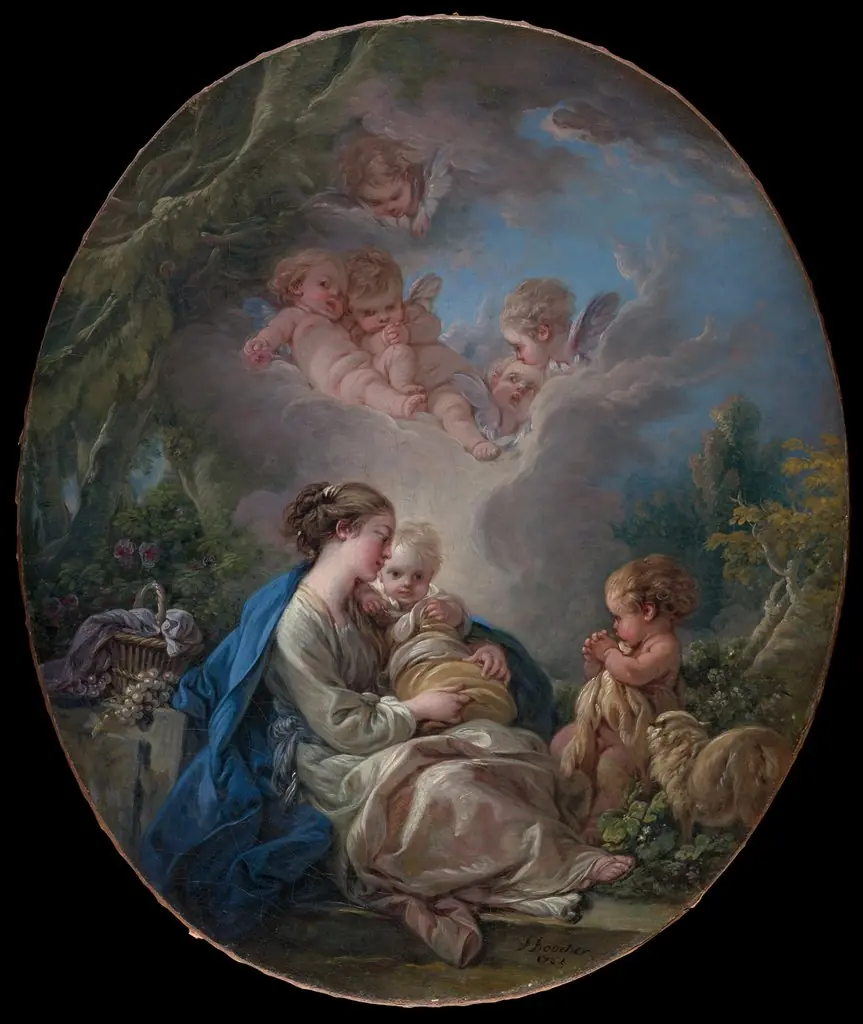
François Boucher was a French painter, draughtsman and etcher, who worked in the Rococo style.

 The Madonna of the Rosary
![Sacrifice [recto], by Giuseppe Cades](https://artifactworldgallery.com/img/giuseppe-cades--sacrifice-recto--e241efd578d18f6e-w320.webp) Sacrifice [recto]
Sacrifice [recto] Madonna and Child with Angels
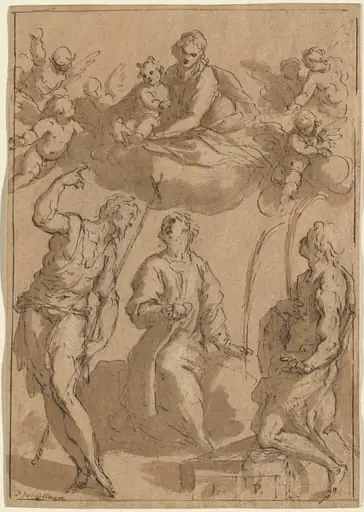 Madonna and Child in Glory with Saints John the Baptist, Stephen, and Lawrence
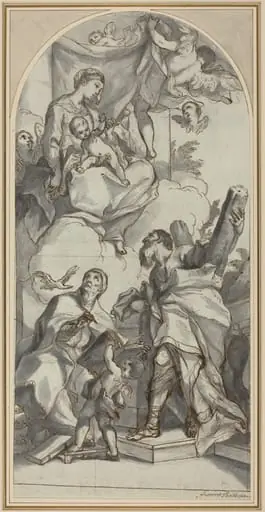 The Madonna and Child in Glory with Saints Gregory the Great and Andrew
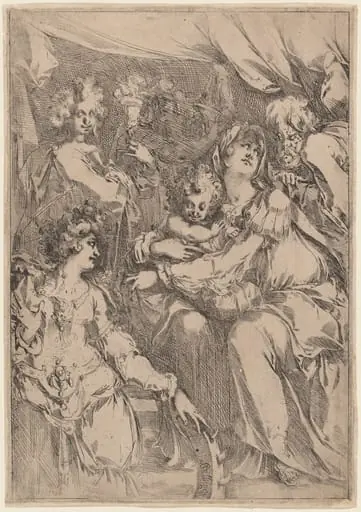 The Holy Family with Saint Catherine, Saint John the Evangelist, and an Angel
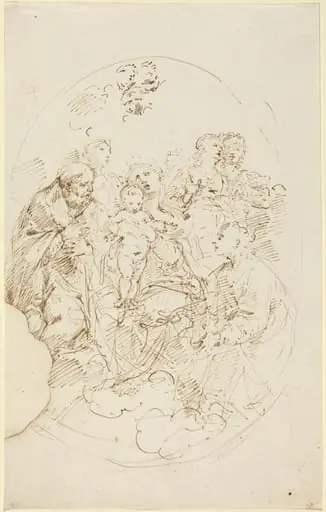 Virgin and Child with Five Saints
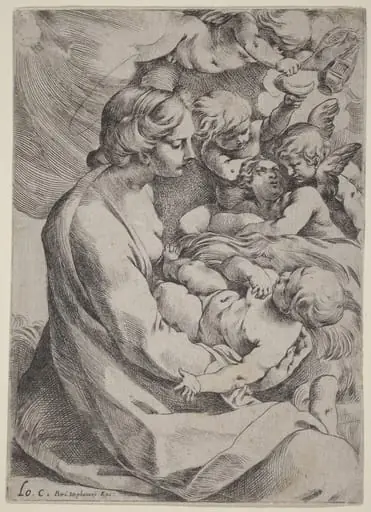 Madonna and Child with Angels
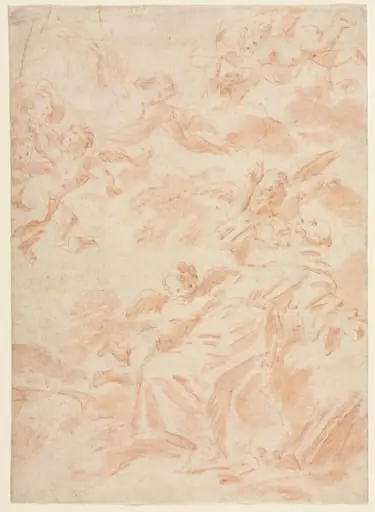 The Stigmatization of Saint Francis
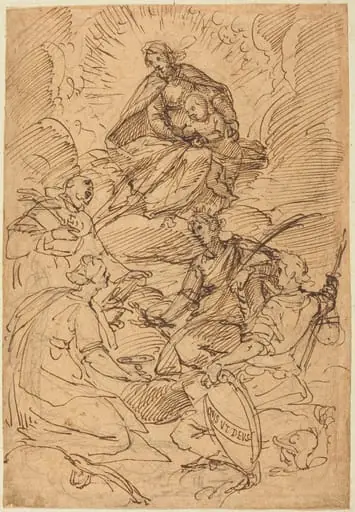 The Madonna and Child in Glory Adored by Saints
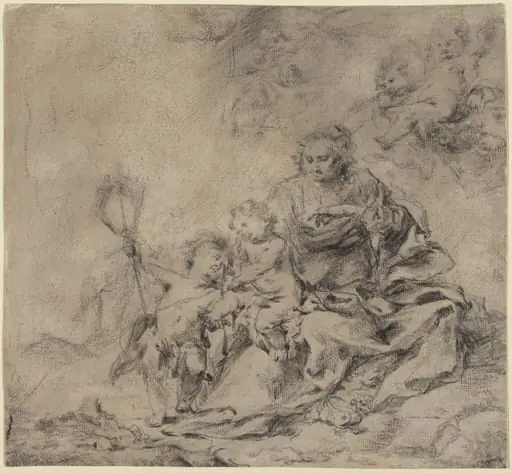 The Virgin and Child with John the Baptist
 Charity with Faith and Hope