Artwork
Sacrifice [recto]
![Sacrifice [recto], by Giuseppe Cades, ink, 1774](https://artifactworldgallery.com/img/giuseppe-cades--sacrifice-recto--e241efd578d18f6e-w1024.webp)
Sacrifice [recto] is an ink drawing by the Romanticist artist Giuseppe Cades. It dates from 1774 and is held in the collection of the National Gallery of Art.
About this work
Overview
Sacrifice [recto] is a drawing created in 1774 by Giuseppe Cades, a Roman-based Italian artist associated with the Neoclassical movement. Executed in pen and brown ink with brown wash on laid paper, the work showcases Cades' skill in capturing dramatic scenes through precise yet expressive techniques.
Subject & Meaning
The drawing depicts a intense sacrificial scene with two robed figures: one kneeling with an object, the other standing with arms raised. The composition suggests a moment of high emotional and possibly symbolic significance, inviting interpretation of the narrative or emotional context.
Technique & Style
Cades employed loose, expressive pen strokes and brown wash to convey movement and emotion. The interplay of shadows and light adds depth to the figures, while the overall raw, unfinished quality indicates a likely quick study rather than a finished work.
History & Provenance
Created in 1774, the drawing reflects Cades' contribution to the Neoclassical movement in late 18th-century Rome. Specific provenance details are not provided.
Context
Within the broader art historical context, Sacrifice [recto] aligns with the Neoclassical emphasis on classical themes and emotional restraint, yet its expressive technique also prefigures aspects of the subsequent Romantic movement.
Legacy
While not individually renowned as a landmark piece, Sacrifice [recto] contributes to the understanding of Cades' practice and the transitional artistic currents of late 18th-century Rome.
Artist & collection

Artist
Giuseppe Cades was a neo-classicist Italian draftsman, painter, engraver and sculptor, based in Rome.

 Alexander the Great in the Workshop of Apelles
 The Meeting of Gautier, Count of Antwerp, and his Daughter, Violante
![Designs for Vases [verso], by Giuseppe Cades](https://artifactworldgallery.com/img/giuseppe-cades--designs-for-vases-verso--e4733d1cf07d063d-w320.webp) Designs for Vases [verso]
Designs for Vases [verso] The Martyrdom of the Blessed Signoretto Alliata
 The Meeting of Gautier, Count of Antwerp, and his Daughter, Violante
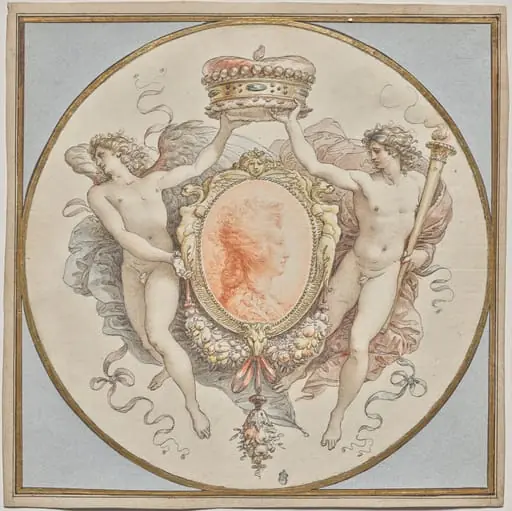 Portrait of a Lady with an Elaborate Cartouche
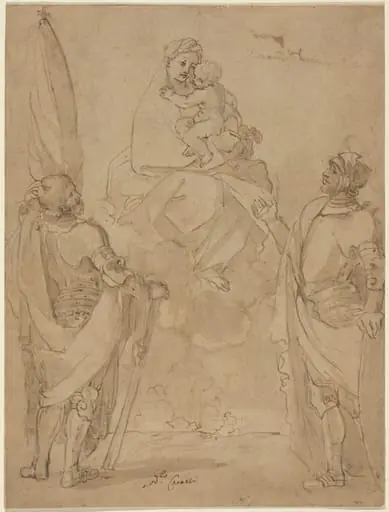 The Virgin and Child Appearing to Saints George and William
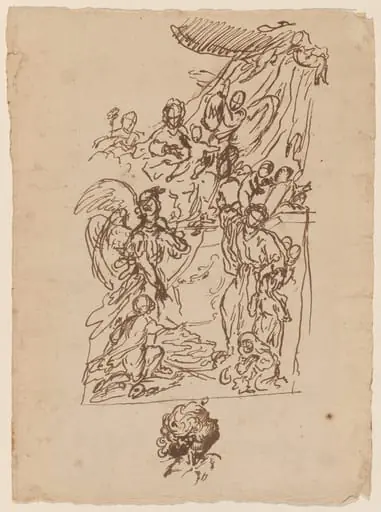 The Madonna and Child Seated on a Dais with Tobias and the Angel and a Saint Presenting Two Children
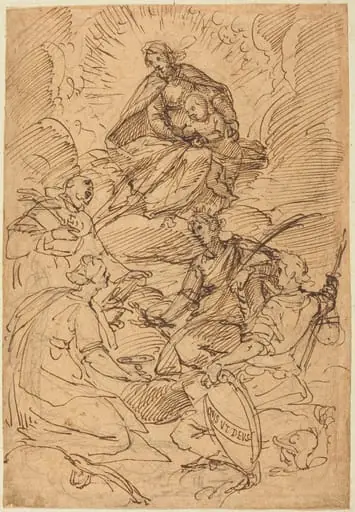 The Madonna and Child in Glory Adored by Saints
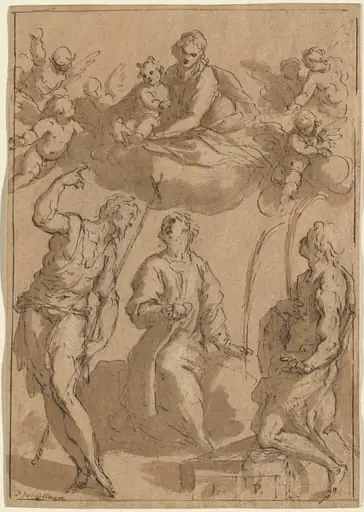 Madonna and Child in Glory with Saints John the Baptist, Stephen, and Lawrence
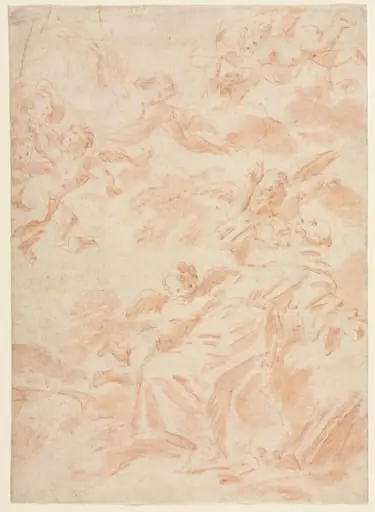 The Stigmatization of Saint Francis
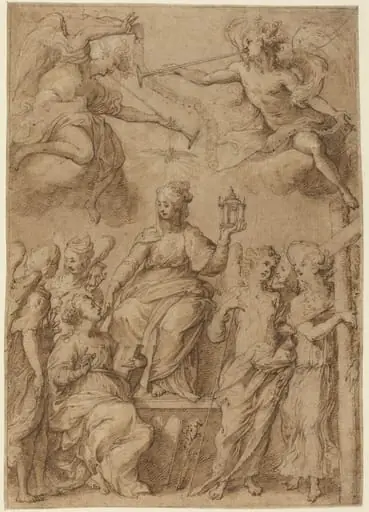 Ecclesia Surrounded by Angels Holding the Instruments of the Passion
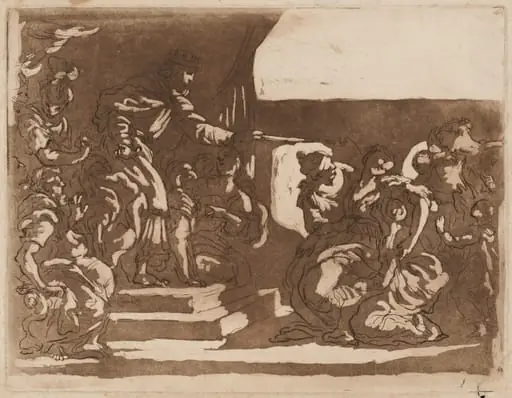 Esther before Ahasuerus
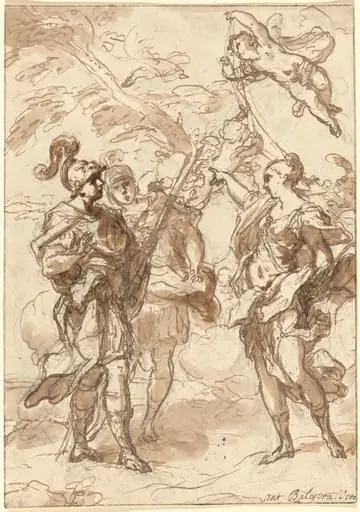 Venus as a Huntress Appearing to Aeneas and Achates
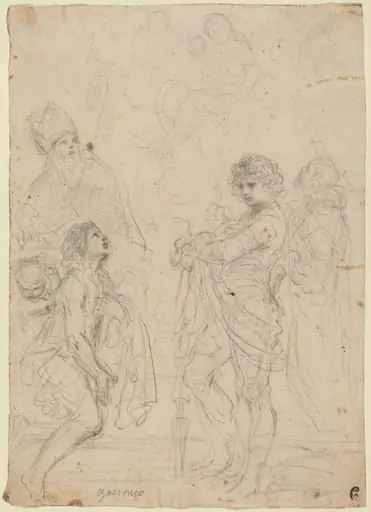 Madonna and Child with Saints Gimignano, John the Baptist, George and Peter Martyr
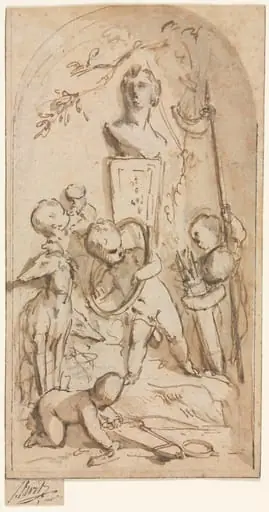 Bust of Diana with Putti and Hunting Attributes
![Female Saint Carrying a Banner [recto], by Baldassare Franceschini](https://artifactworldgallery.com/img/baldassare-franceschini--female-saint-carrying-a-banner-recto--7b0a38585a5ad76d-w320.webp) Female Saint Carrying a Banner [recto]
Female Saint Carrying a Banner [recto]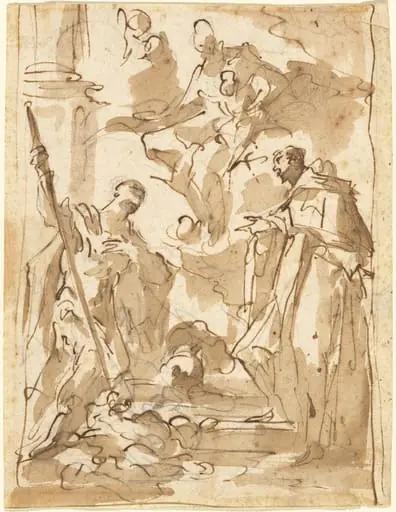 The Madonna and Child in Glory with Saint Theodore and a Monastic Saint