Artwork
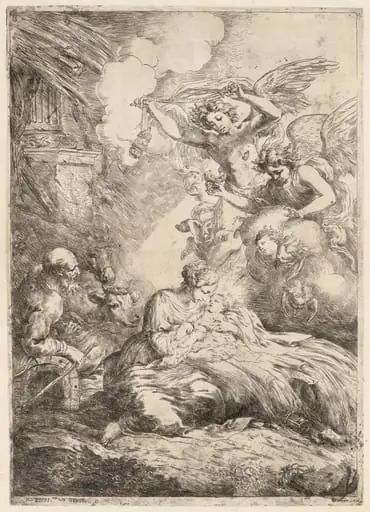
The Adoration of the Shepherds
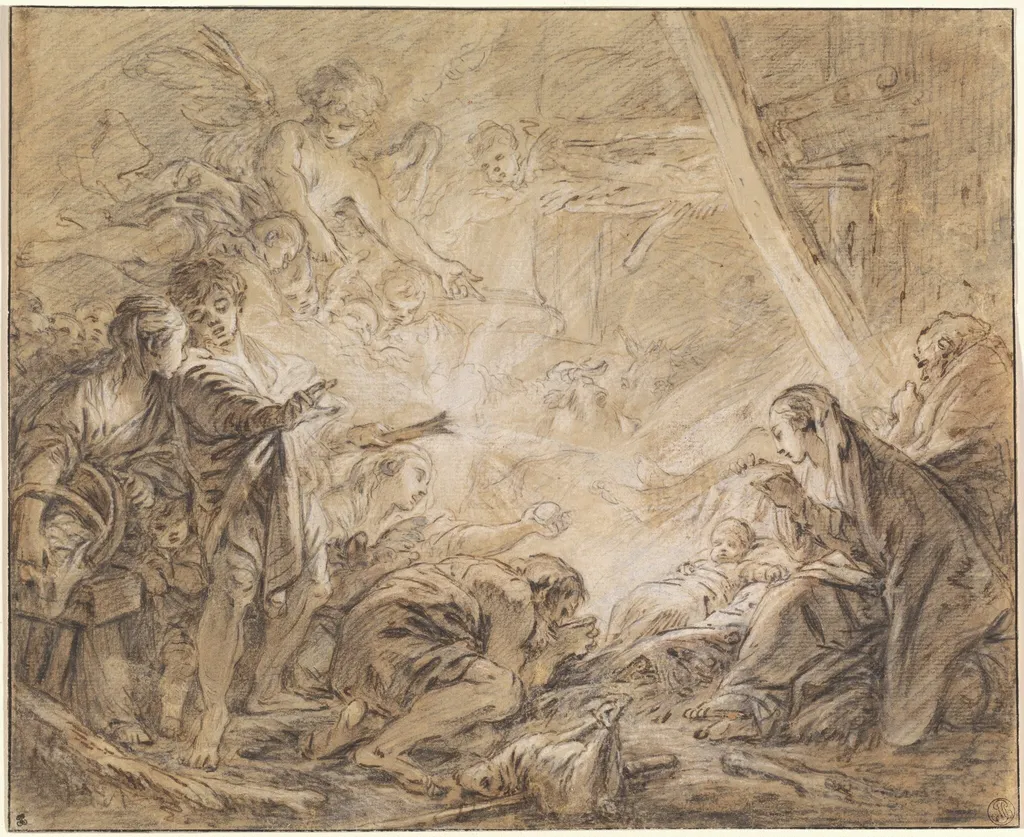
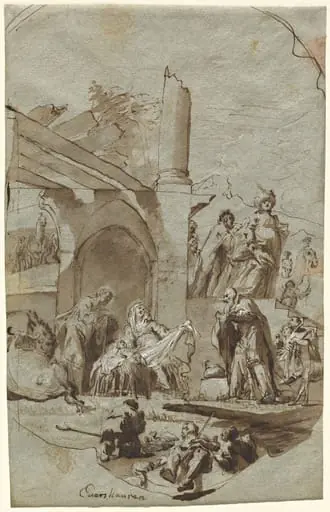
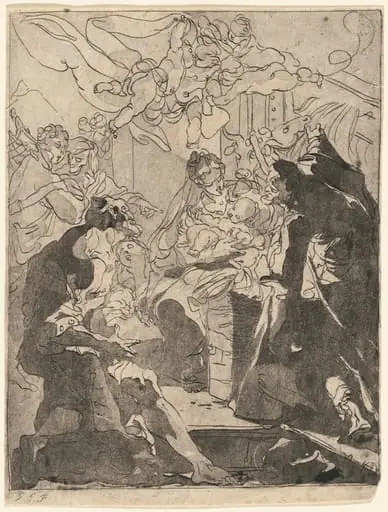
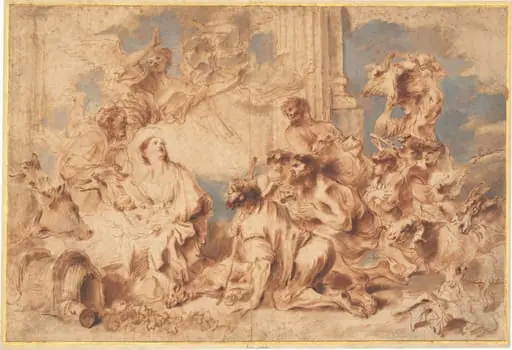
The Adoration of the Shepherds is a chalk drawing by the Romanticist artist François Boucher. It dates from 1759 and is held in the collection of the National Gallery of Art.
About this work
Overview
Applied to cream laid paper and later mounted, the work exemplifies Boucher’s mastery of mixed media in draftsmanship.
Created in 1759, this drawing by François Boucher is a religious composition executed in black chalk, pen and brown ink, with brown wash and selective highlights in white gouache and white chalk. Applied to cream laid paper and later mounted, the work exemplifies Boucher’s mastery of mixed media in draftsmanship. Its delicate handling and tonal nuance reflect his skill in translating luminous effects into intimate, tactile form.
Subject & Meaning
The scene portrays shepherds arriving to pay homage to the infant Christ, a traditional Nativity moment rooted in the Gospel of Luke. Boucher renders the event with quiet reverence rather than grandeur, emphasizing human tenderness over divine spectacle. The figures are grouped closely, their gestures subdued, inviting contemplation rather than awe, aligning with the Rococo preference for intimate, emotionally resonant narratives.
Technique & Style
Boucher employed layered materials to achieve subtle texture and light: black chalk defines form with softness, pen ink outlines structure with precision, and brown wash establishes depth. White gouache and chalk lift key areas—faces, fabric folds, and halos—creating luminous contrast against the muted ground. The interplay of materials produces a tactile richness, characteristic of his decorative yet refined approach to drawing.
History & Provenance
The drawing was made during Boucher’s tenure as a favored artist of the French court, shortly before his appointment as Premier Peintre du Roi. It likely served as a preparatory study or independent work for a larger commission. Its preservation in good condition suggests it was valued early on, possibly within aristocratic or ecclesiastical collections, though its specific early ownership remains undocumented.
Context
In mid-18th-century France, religious subjects were often treated with elegance and grace, even in sacred contexts. Boucher’s interpretation reflects a broader trend where piety was softened by pastoral charm and aesthetic refinement. His use of delicate materials and gentle lighting aligns with Rococo ideals, distinguishing his devotional works from the dramatic intensity favored in earlier Baroque traditions.
Legacy
This drawing exemplifies how French Rococo artists elevated draftsmanship to a refined art form, blending technical precision with emotional subtlety. While Boucher is better known for his paintings, works like this reveal his command of line and tone. It remains a key example of how religious themes were reimagined through the lens of 18th-century sensibility, influencing later generations of draftsmen.
Artist & collection

Artist
François Boucher was a French painter, draughtsman and etcher, who worked in the Rococo style.

![A Young Woman Overcome by Love [recto], by Jean-Baptiste Deshays](https://artifactworldgallery.com/img/jean-baptiste-deshays--a-young-woman-overcome-by-love-recto--8f8b1d64ee16ec55-w320.webp)