Artwork
Title Page
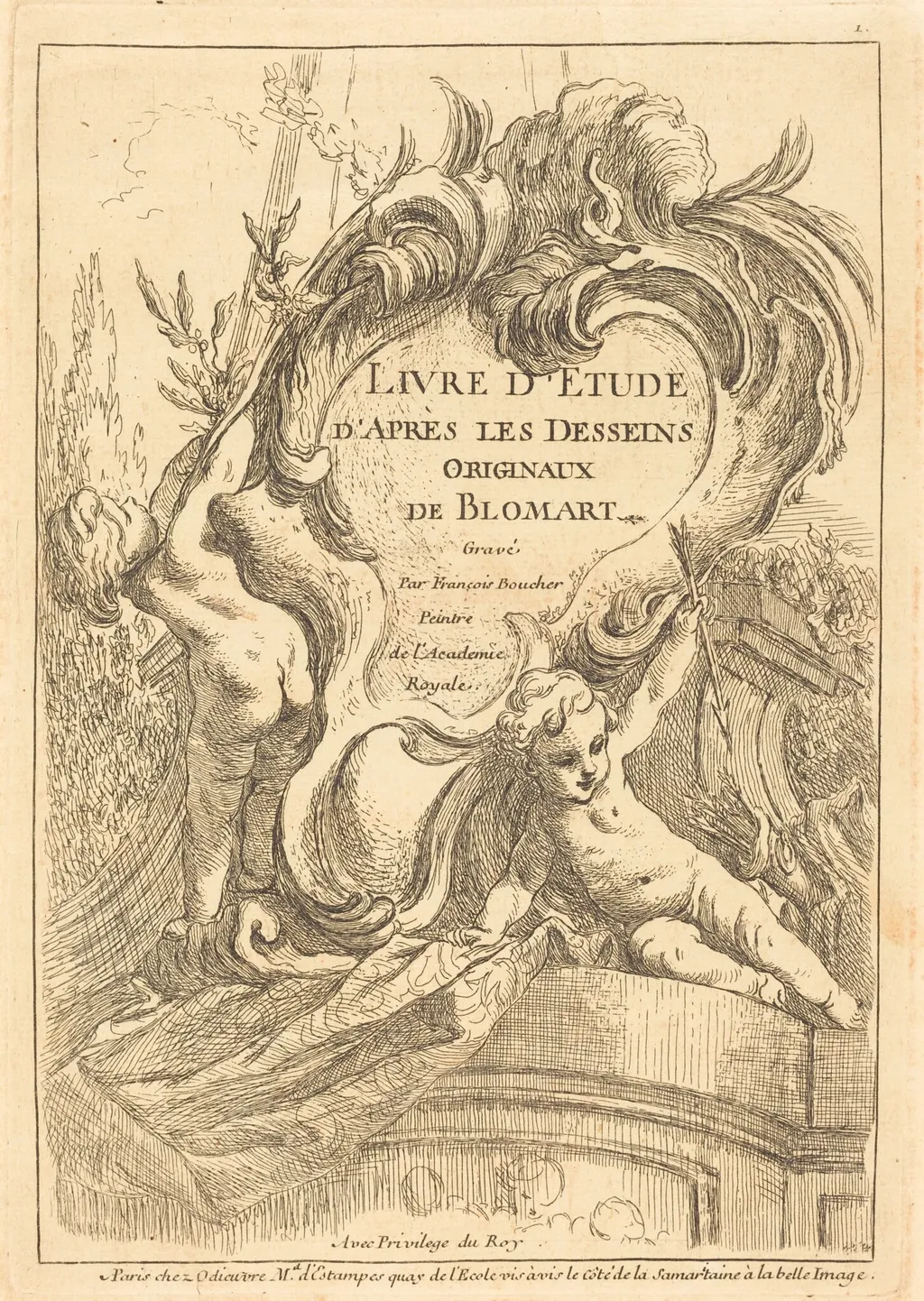
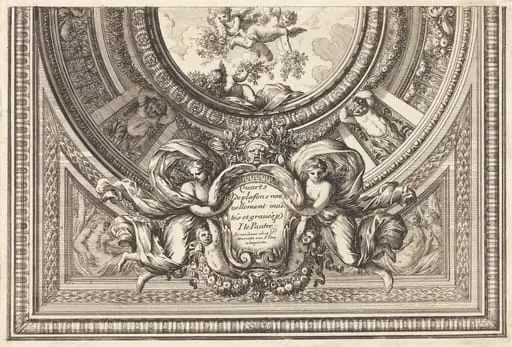
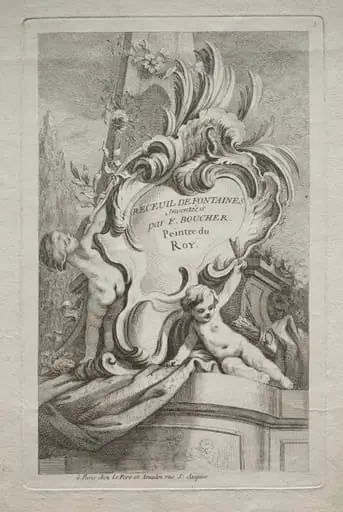
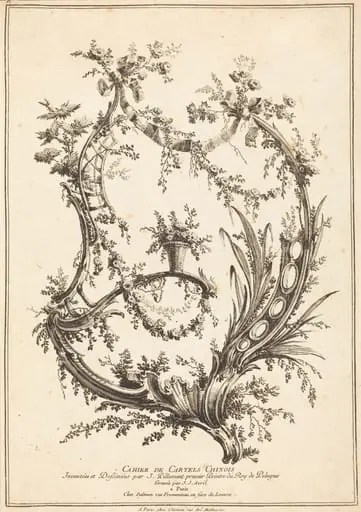
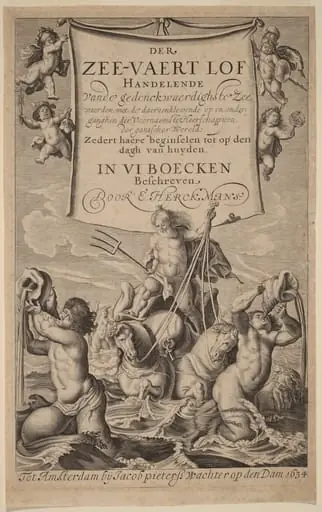
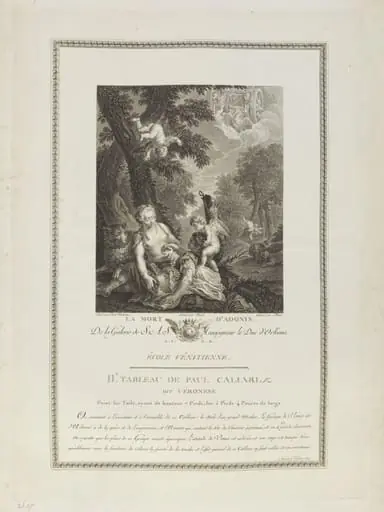
Title Page is an ink print by the Baroque artist François Boucher. It dates from 1735 and is held in the collection of the National Gallery of Art.
About this work
Overview
The print was not a standalone artwork but a functional element in a pedagogical volume, guiding students in the imitation of elaborate compositional forms.
This 1735 etching on laid paper, attributed to François Boucher, serves as the title page for a workbook intended for artistic study. Designed as a decorative frontispiece, it combines classical motifs with fluid, ornamental lines typical of early Rococo sensibilities. The print was not a standalone artwork but a functional element in a pedagogical volume, guiding students in the imitation of elaborate compositional forms.
Subject & Meaning
The composition centers on a female figure with flowing hair, holding a scroll, symbolizing learning or artistic inspiration. Below her, a cherub rides a goat while a lion rests passively, evoking a mythic harmony between nature and intellect. Vines and foliage encircle the scene, framing the imagery as an allegory of artistic cultivation. The Latin inscription 'Livre d’Étude' confirms its role as a model for apprentices to study and replicate.
Technique & Style
Boucher employed etching to achieve fine, sinuous lines that mimic the spontaneity of draftsmanship. The plate’s delicate cross-hatching and swirling contours reflect his mastery of linear rhythm, characteristic of his decorative approach. The absence of tone emphasizes the precision of the engraved lines, allowing the intricate interplay of figures and foliage to dominate the composition without distraction.
History & Provenance
Created during Boucher’s early career, the print was likely part of a series produced for art academies or private studios in Paris. Such volumes circulated among students seeking to internalize the Rococo aesthetic. While the original workbook is now lost, this etching survives as evidence of how artistic training was visually structured in mid-18th-century France.
Context
In 1730s France, printmaking served as a vital medium for disseminating artistic models beyond the confines of the Academy. Boucher’s role as both painter and printmaker positioned him at the intersection of fine art and pedagogy. This title page reflects a broader trend in which decorative motifs from myth and pastoral life were standardized for educational use, reinforcing stylistic norms among emerging artists.
Legacy
Though not widely exhibited today, this etching exemplifies how Boucher’s decorative language extended beyond canvas into the realm of artistic instruction. Its survival underscores the importance of print culture in transmitting visual conventions across generations. The work remains a quiet testament to the mechanisms of artistic transmission in the 18th century.
Artist & collection

Artist
François Boucher was a French painter, draughtsman and etcher, who worked in the Rococo style.

 Title Page
 Title Page
 No. 1: Title Page
 The Three Goddesses
 Title Page
 The Martyrdom of St. Apollonia
 Title Page
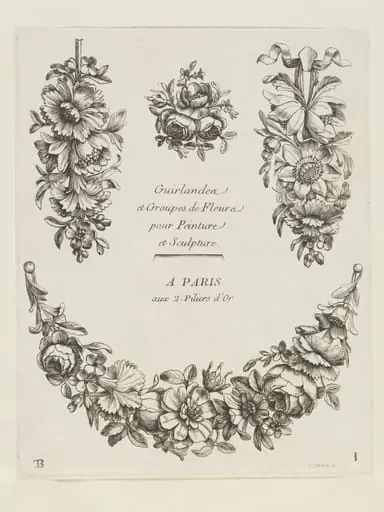 Guirlandes et Groupes de Fleurs pour Peinture et Sculpture
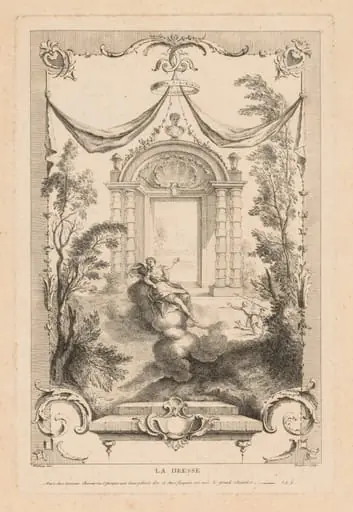 The Goddess, Diana on the Clouds
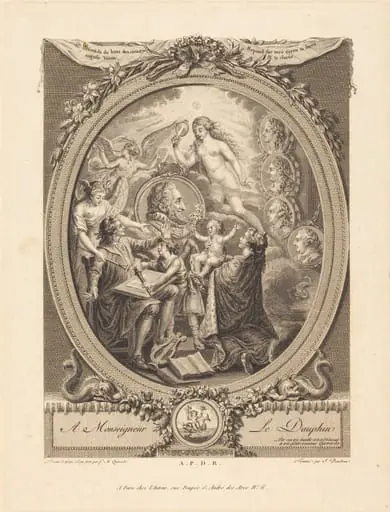 Allegory in Honor of Henri IV
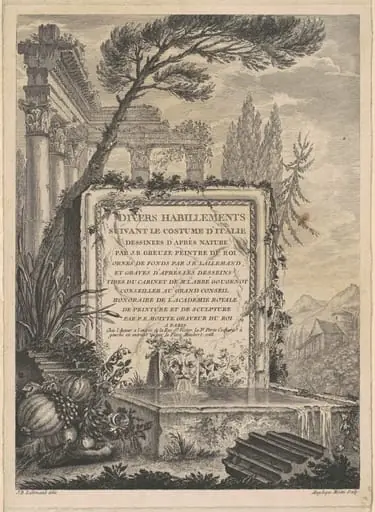 Architectural Fantasy of Roman Ruins with an Inscription Plaque
 Death of Adonis