Artwork
Happy Valley
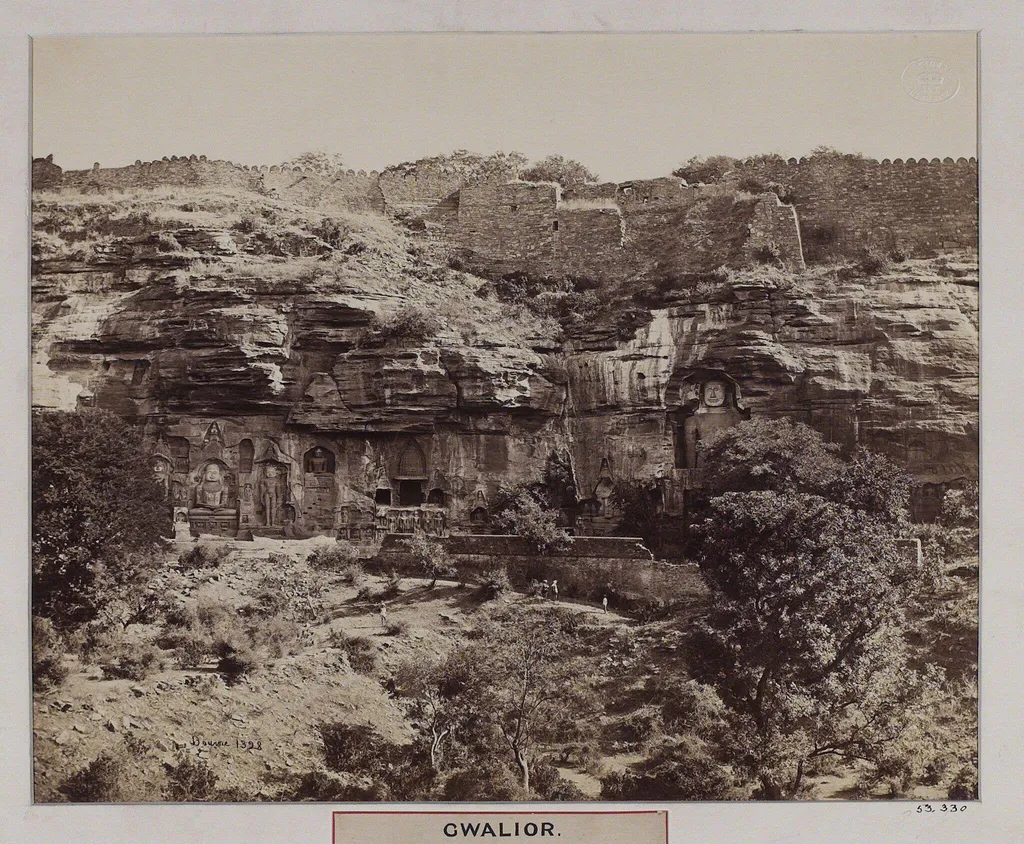
Happy Valley is a photographic photography by the Impressionist artist Samuel Bourne. It dates from 1866 and is held in the collection of the Victoria and Albert Museum.
About this work
Overview
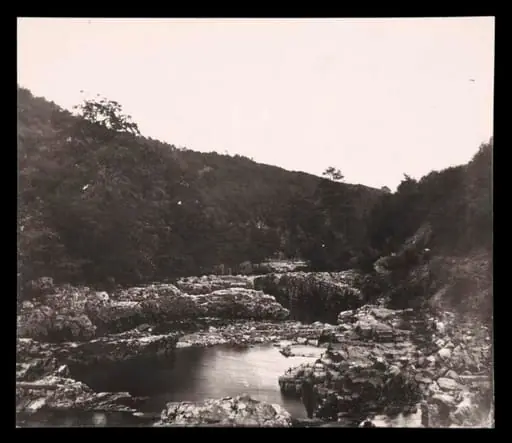
Taken in 1866, this albumen print by Samuel Bourne captures a secluded garden landscape in India, featuring weathered stone structures amid natural terrain.
Taken in 1866, this albumen print by Samuel Bourne captures a secluded garden landscape in India, featuring weathered stone structures amid natural terrain. The image was made during Bourne’s extensive photographic survey of the subcontinent, undertaken for European viewers interested in colonial-era scenery. Its quiet composition and distant perspective reflect a deliberate framing of India’s built environment as tranquil and timeless.
Subject & Meaning
The photograph centers on a fortified stone structure surrounded by cultivated vegetation and scattered figures. Rather than emphasizing architectural detail, Bourne presents the site as an integrated part of the landscape, reinforcing contemporary European notions of India as an ancient, exotic realm. The presence of small human figures underscores scale and solitude, suggesting a place removed from daily life, suited to contemplation rather than activity.
Technique & Style
Bourne employed the albumen printing process, known for its fine tonal range and durability. The image’s soft focus and muted contrasts reflect the limitations of 19th-century equipment and long exposure times. Compositionally, the structure is placed centrally but subtly, allowing the natural elements to dominate. The distant viewpoint and lack of sharp detail prioritize atmosphere over documentary precision.
History & Provenance
Bourne, originally a banker, turned to photography after arriving in India in the 1860s. He produced hundreds of images before returning to England in 1870. This photograph was likely made as part of a commercial series intended for sale in Britain. It later entered the collection of the Victoria and Albert Museum, where it remains as part of a broader archive of colonial-era Indian photography.
Context
During the mid-19th century, British photographers in India often framed local sites through a lens of romanticized antiquity, catering to domestic tastes shaped by Orientalist ideals. Bourne’s work, while technically precise, aligned with this trend by presenting monuments and gardens as serene relics, detached from contemporary political or social realities. His images helped define how British audiences perceived India’s heritage.
Legacy
Bourne’s photographs, including this one, remain valuable records of 19th-century Indian architecture and landscape. Though shaped by imperial perspectives, they preserve visual evidence of sites that have since changed or deteriorated. Today, they are studied not only for their aesthetic qualities but also as artifacts of colonial visual culture and the complex ways history was represented to foreign audiences.
Artist & collection
Artist

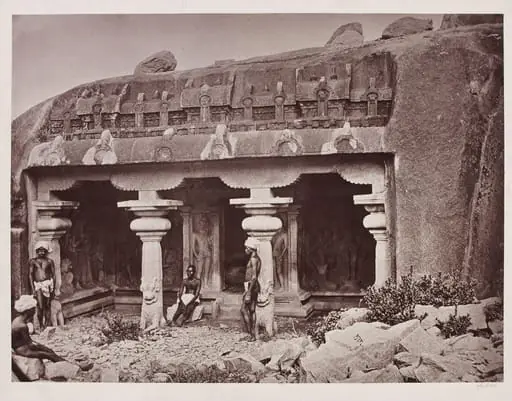 Cave sanctuary at Mahabalipuram
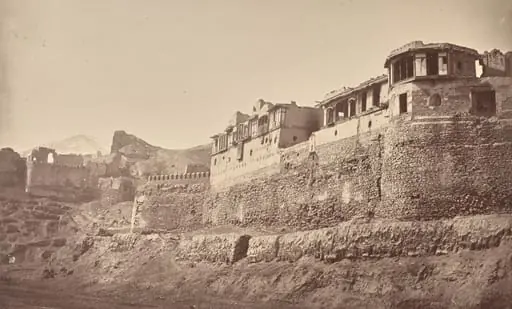 South Wall, Bala Hissar & Residency
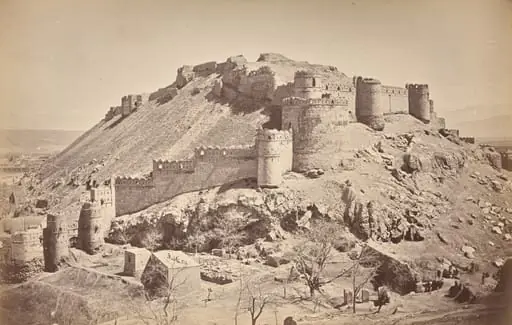 Upper Bala Hissar, from West
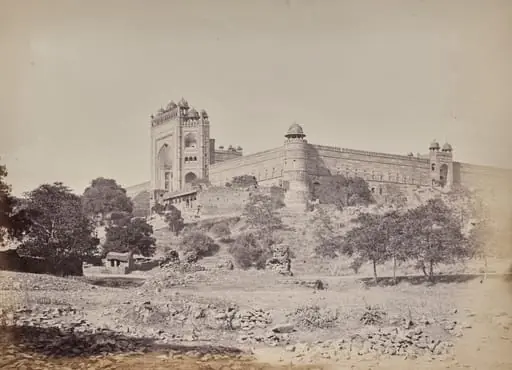 Fort of Futheypoor Sikre near Agra. The Residence of the Emperor Akbar
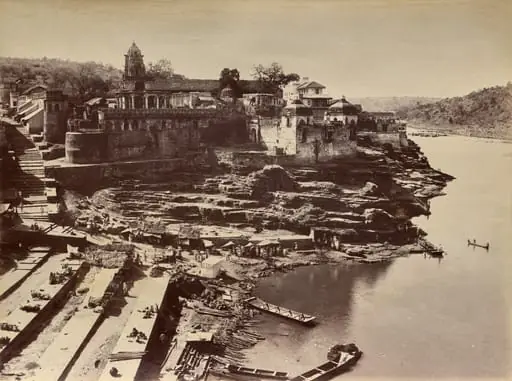 View of the Riverbank of the Narmada at Omkareshwar
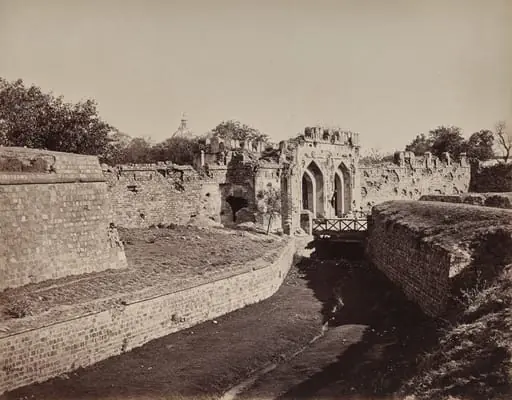 Delhi. The Kashmire Gate. The Scene of Some Very Hard Fighting in 1857
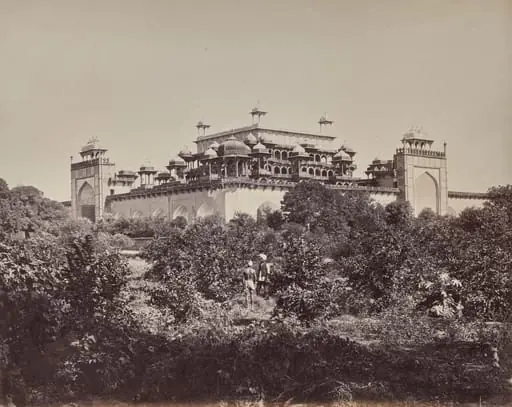 Secundra Near Agra. The Mausoleum of the Emperor Akbar
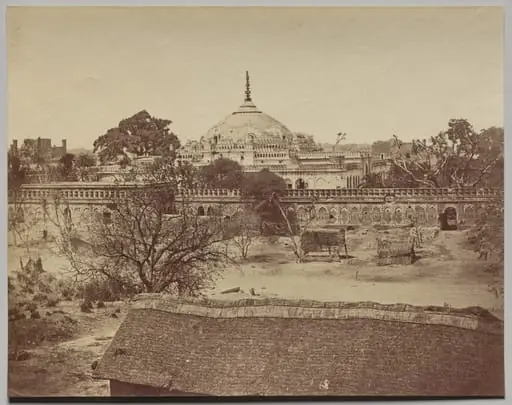 The Shah Nyjuff or Najaf
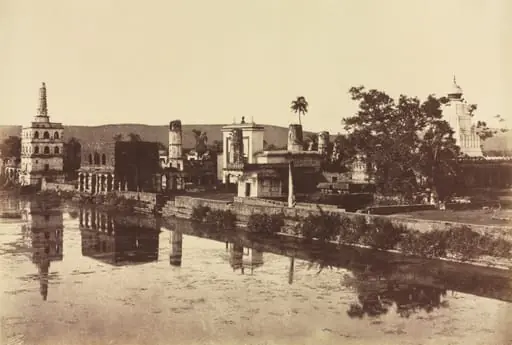 Tank and Temples at Bunshunkuree
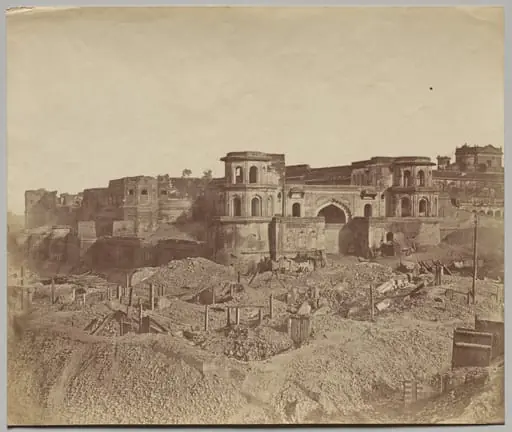 The Mucha Bawn, or the Old Citadel of Lucknow
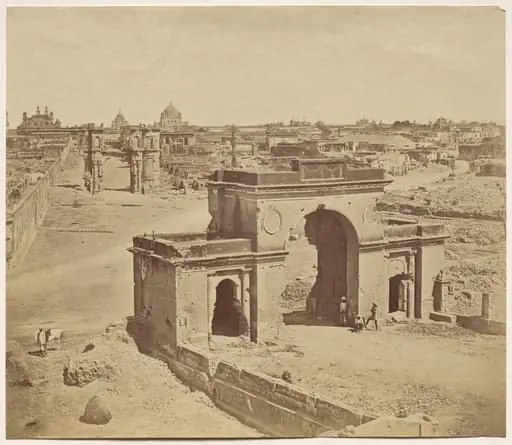 Bailee Guard Gate, Taken from the Inside, Showing the Clock Tower