Artwork
Untitled
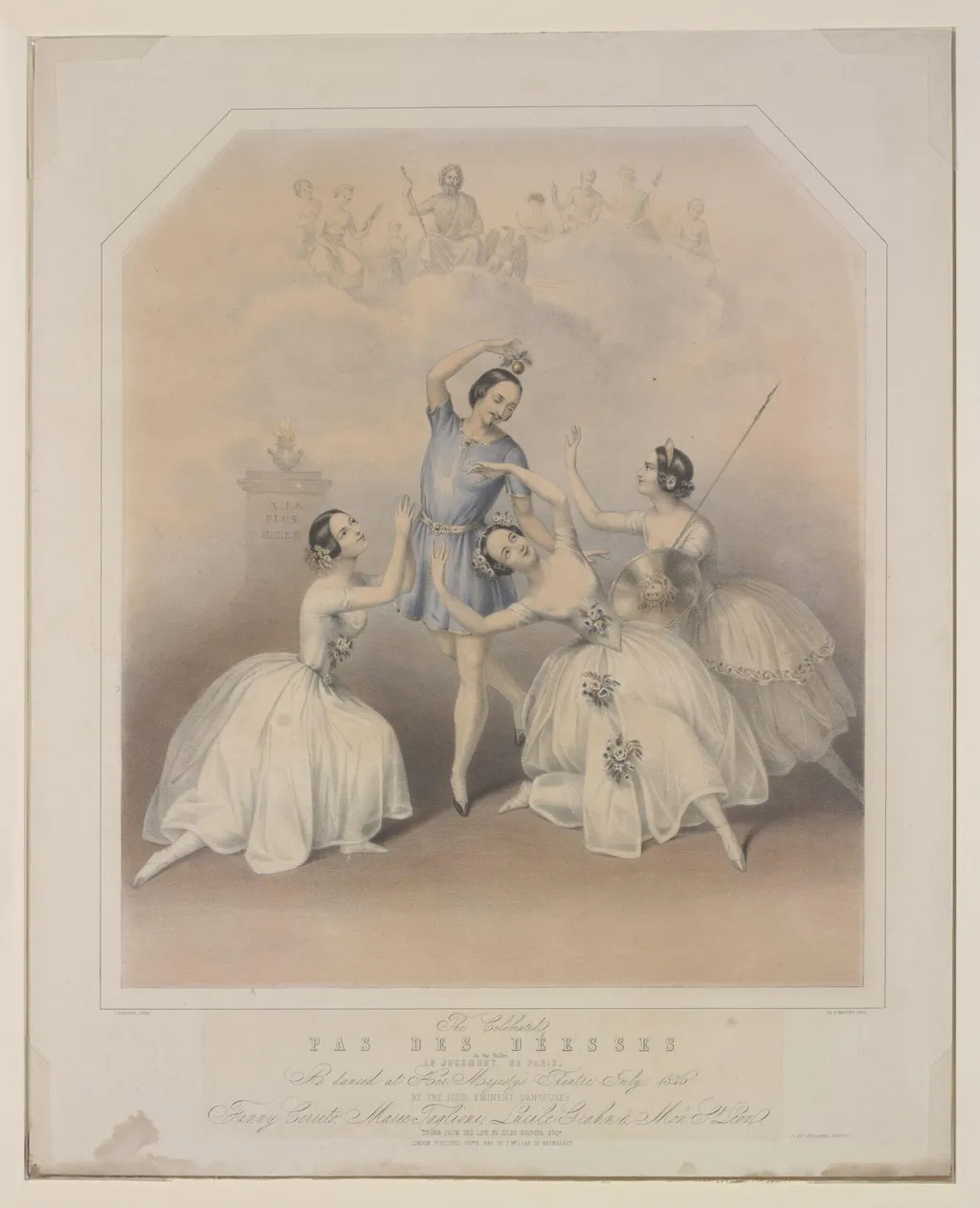
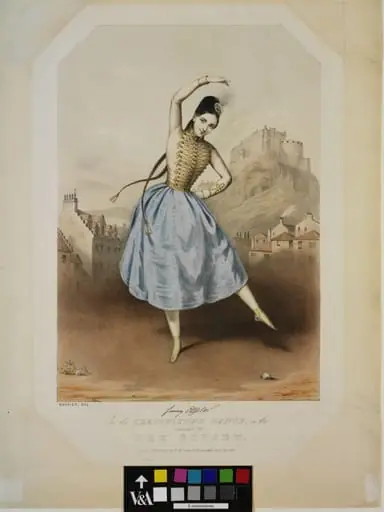
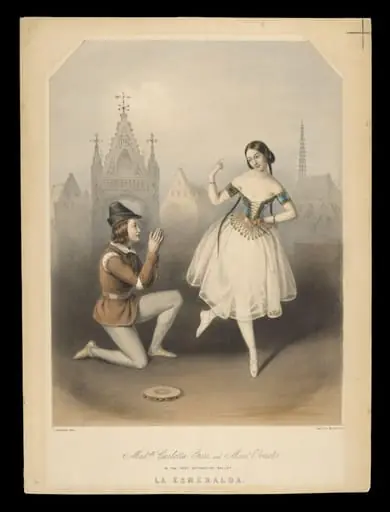
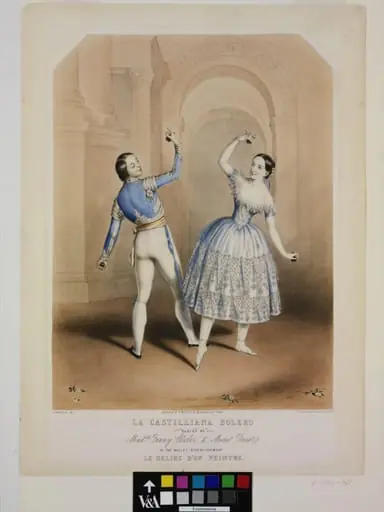
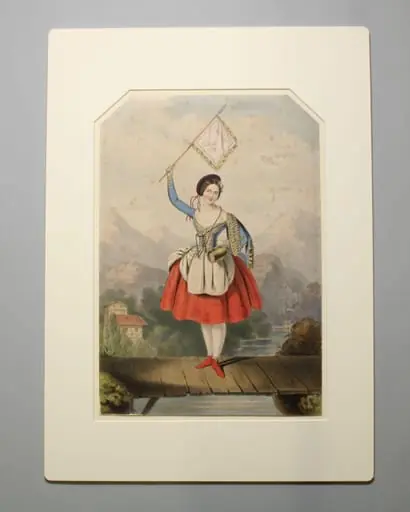
Untitled is a print by the Romanticist artist Jules Bouvier. It dates from 8 and is held in the collection of the Victoria and Albert Museum.
About this work
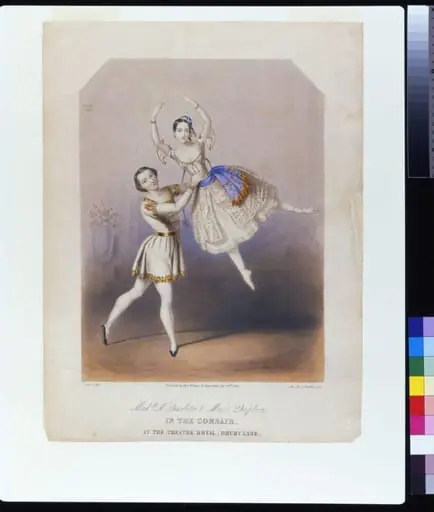
Jules Bouvier made this print in 1846 for a ballet called Le Jugement de Paris. It shows the moment when the dancer Saint-Léon, playing Paris, holds the golden apple.
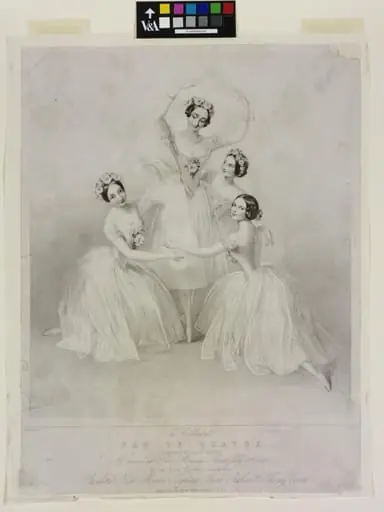
The print was designed to match an earlier lithograph of the Pas de Quatre. Both prints share the same size and type style.
Look up the Victoria and Albert Museum next.
Overview
The image captures the moment Paris, portrayed by dancer Arthur Saint-Léon, holds the golden apple, poised to award it to one of the goddesses.
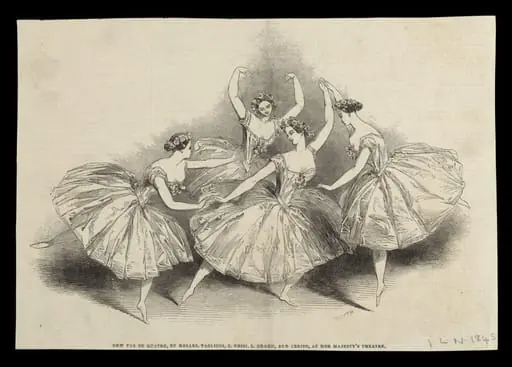
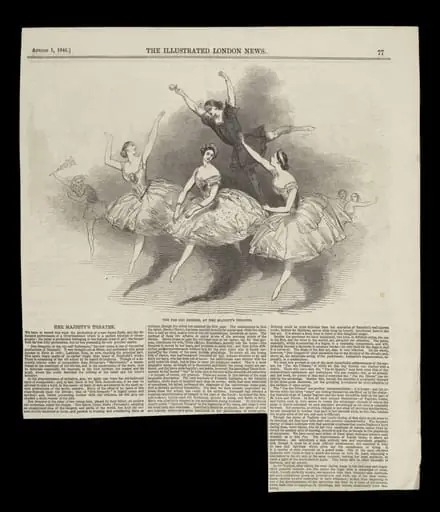
A lithographic print from 1846 by Jules Bouvier depicts a scene from the ballet Le Jugement de Paris, performed at Her Majesty’s Theatre. The image captures the moment Paris, portrayed by dancer Arthur Saint-Léon, holds the golden apple, poised to award it to one of the goddesses. The print was produced to complement an earlier 1845 lithograph of the Pas de Quatre, matching its dimensions and typographic style as part of a deliberate visual pairing.
Subject & Meaning
The scene illustrates the mythological Judgement of Paris, reimagined as a ballet climax. Saint-Léon as Paris evaluates three goddesses—represented by ballerinas Taglioni, Cerrito, and Grahn—with Venus, portrayed by Taglioni, positioned as the favored recipient. The narrative frames the dancers’ fame as divine figures, elevating their stage personas to mythic status while reinforcing the ballet’s role as spectacle rooted in classical allegory.
Technique & Style
The print employs fine-line lithography to render delicate details of costume and gesture, characteristic of mid-19th-century theatrical portraiture. Its composition centers the figures in a shallow stage space, with minimal background, focusing attention on the interaction between Paris and Venus. The typography and scale align precisely with the 1845 Pas de Quatre print, suggesting a unified publishing strategy for documenting ballet’s leading performers.
History & Provenance
Created in 1846 for the ballet Le Jugement de Paris, the print was part of a commercial effort by impresario Benjamin Lumley to capitalize on the popularity of the 1845 Pas de Quatre. It features three of the same principal dancers—Taglioni, Cerrito, and Grahn—reunited in a new narrative. The print’s design and production were likely overseen by the theatre’s publishing arm, intended for sale to audiences as a memento of the performance.
Context
The ballet emerged during a period when theatrical spectacle and celebrity culture converged in London’s dance scene. Lumley sought to replicate the success of the Pas de Quatre by assembling star ballerinas in a mythological framework, blending classical mythology with contemporary star power. The print’s existence reflects the growing market for visual souvenirs tied to live performance, bridging ephemeral stage events with enduring printed media.
Legacy
Though the ballet itself faded from repertory, the print endures as a document of mid-Victorian ballet aesthetics and the cult of the ballerina. Its pairing with the Pas de Quatre lithograph highlights early efforts to curate and commodify dance imagery. Today, it remains a key artifact in understanding how ballet’s stars were visually constructed and circulated beyond the stage.
Artist & collection
Artist
Jules Bouvier made 19th-century lithographs that turned leading ballet dancers into star prints.