Artwork
Untitled
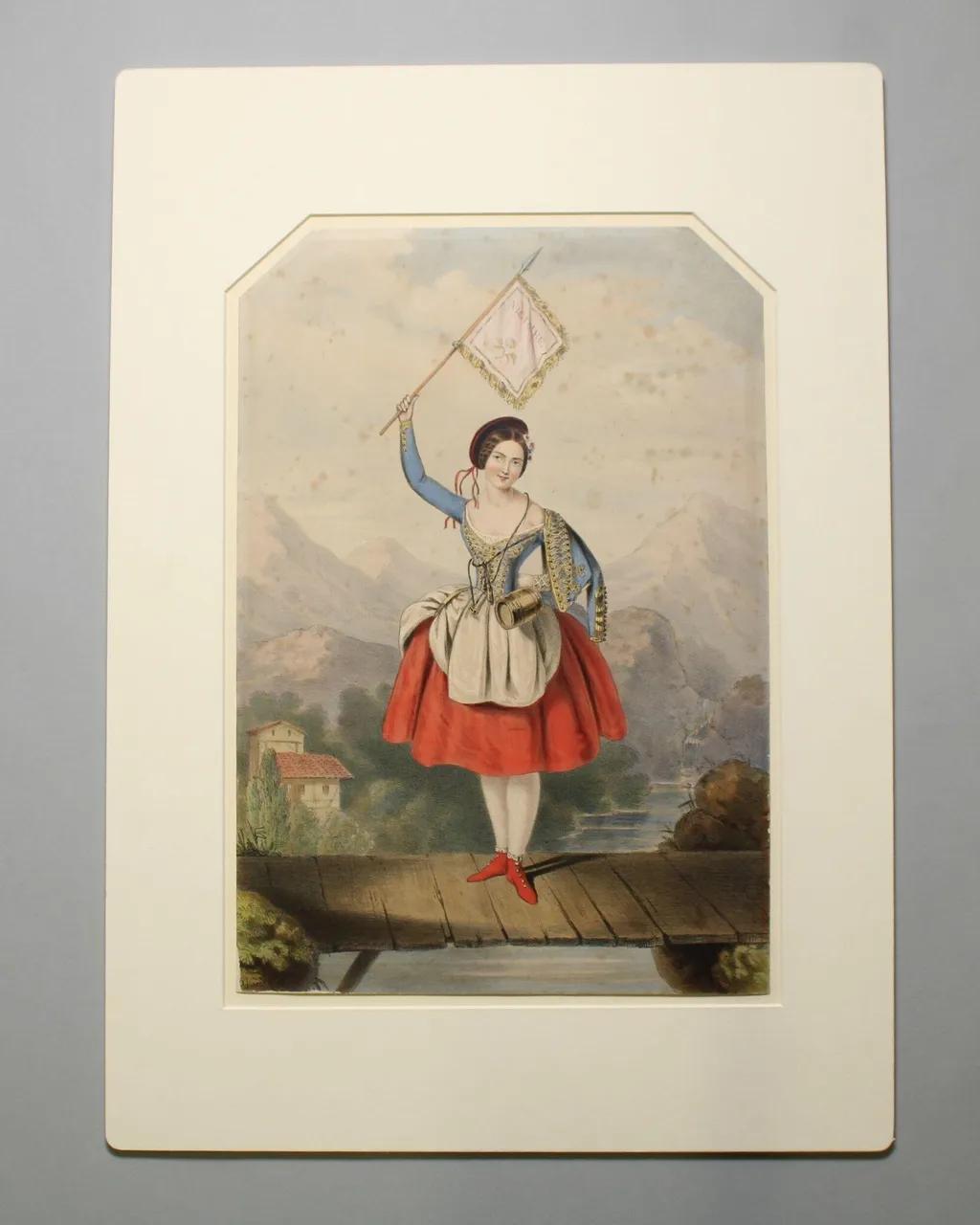
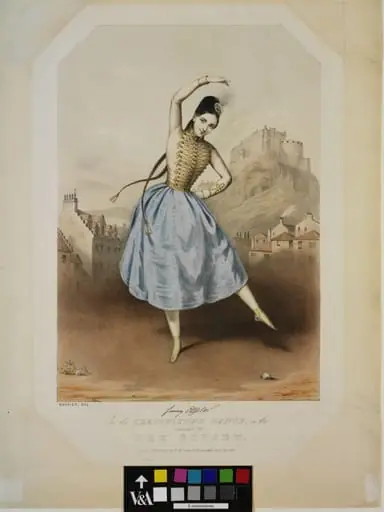
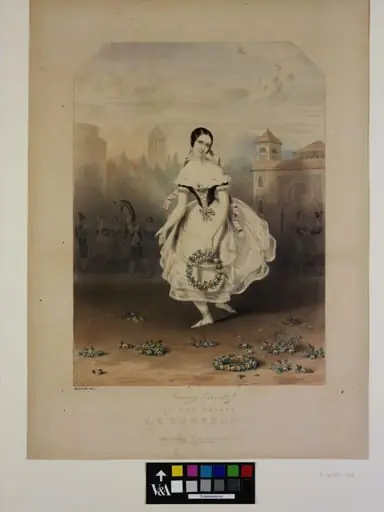
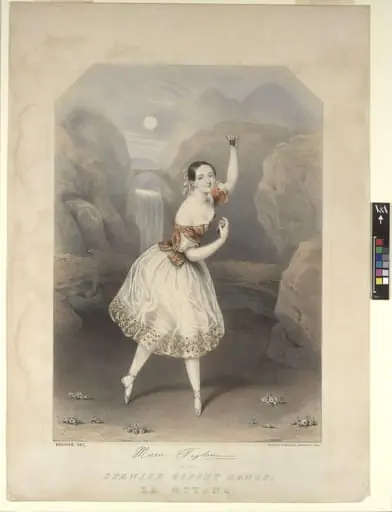
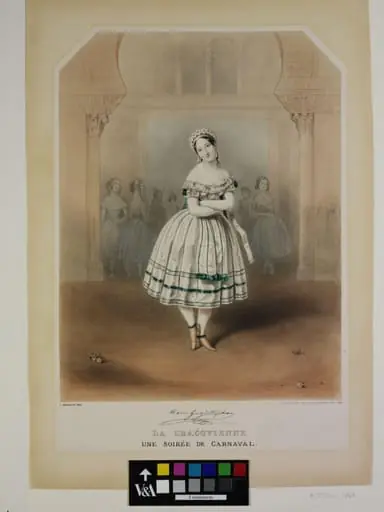
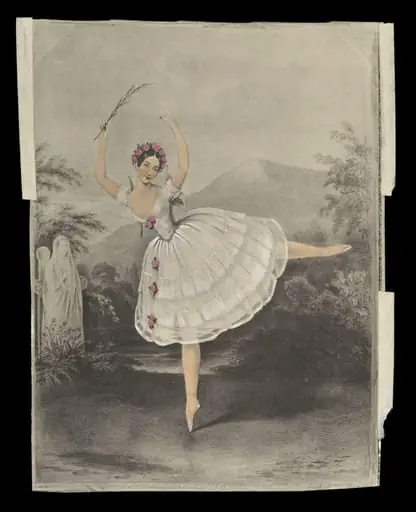
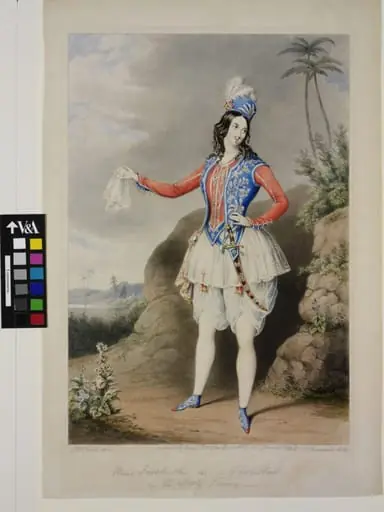
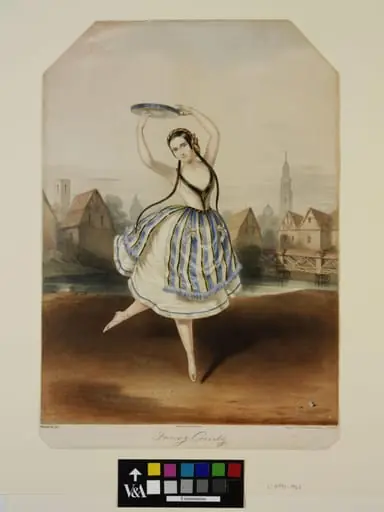
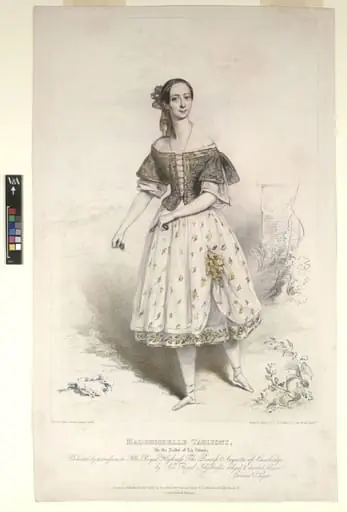
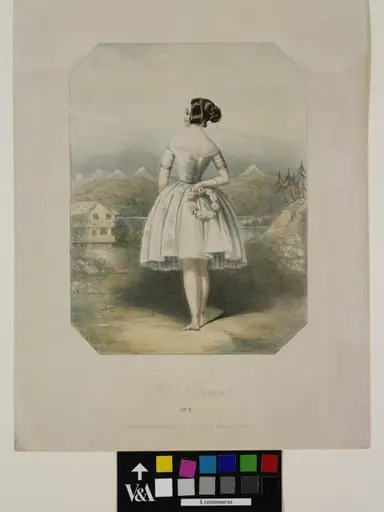
Untitled is a print by the Romanticist artist Jules Bouvier. It dates from 1845 and is held in the collection of the Victoria and Albert Museum.
About this work
Overview
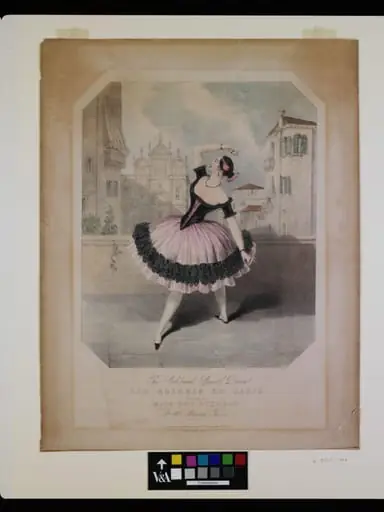
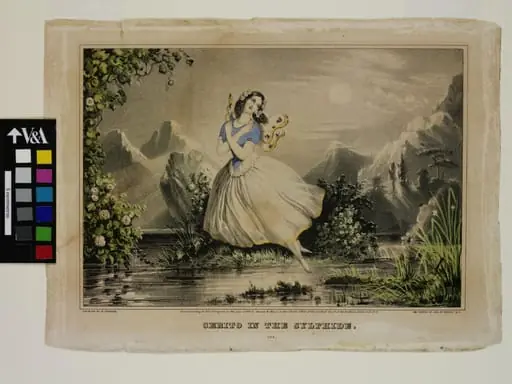
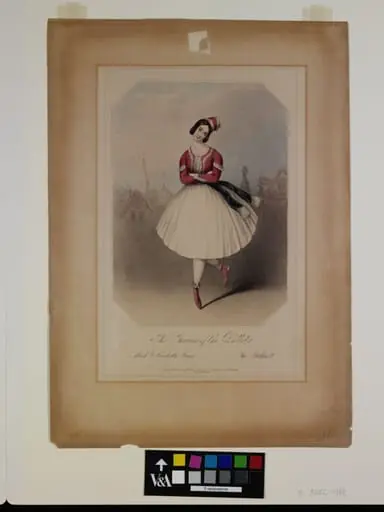
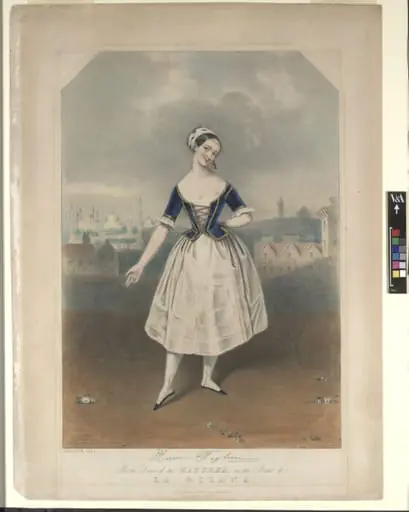
This print captures Fanny Cerrito, a prominent 19th-century dancer, portrayed in a theatrical costume inspired by vivandières—women who supported military units by supplying provisions, including alcohol. The attire blends Hungarian folk elements with balletic staging, reflecting a broader 1840s fascination with foreign cultures as interpreted through European stagecraft.
Subject & Meaning
Cerrito is depicted not as a soldier but as a vivandière, a figure rooted in real military logistics yet transformed into a romanticized stage archetype.
Cerrito is depicted not as a soldier but as a vivandière, a figure rooted in real military logistics yet transformed into a romanticized stage archetype. The keg at her waist signals her role as a supplier of liquor, while the asymmetrical jacket with gold trim evokes Hungarian national dress. This fusion of utility and spectacle served to exoticize the everyday, aligning her with Romantic ideals of the foreign and the picturesque.
Technique & Style
The print employs fine linear detail to render the intricate braiding of the jacket and the texture of fabric, typical of lithographic techniques of the period. The composition emphasizes verticality and gesture, directing attention to Cerrito’s poised stance and ornate costume. Minimal background detail focuses the viewer on the figure, reinforcing the theatricality of the portrayal.
History & Provenance
Created during Cerrito’s peak popularity in the 1840s, the print likely originated as a promotional image tied to her performances in Paris or London. Vivandières were a recurring motif in ballets of the era, and Cerrito’s association with such roles helped cement her reputation. The print’s circulation among theatergoers and collectors reflects the commercialization of dance celebrity during the Romantic period.
Context
The 1840s saw a surge in ballets drawing on national dances from Eastern Europe, the Iberian Peninsula, and beyond. These works capitalized on growing European interest in distant cultures, often simplifying or stylizing traditions for stage appeal. Hungary, in particular, became a symbol of romanticized folk identity, its dress and rhythms adapted into ballets like La Sylphide and others that framed the exotic as both familiar and thrilling.
Legacy
Cerrito’s portrayal as a vivandière exemplifies how ballet of the era constructed identity through costume and dance, blending ethnographic curiosity with artistic invention. While the specific production may have faded, the image endures as a record of how 19th-century audiences perceived foreignness—not as authentic representation, but as a curated spectacle shaped by Romantic sensibilities.
Artist & collection
Artist
Jules Bouvier made 19th-century lithographs that turned leading ballet dancers into star prints.