Artwork
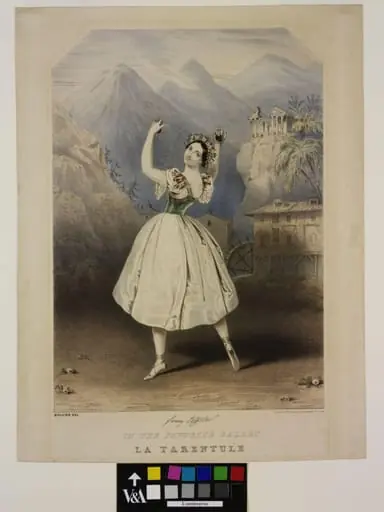
Fanny Elssler dancing the Cracovienne from The Gipsy
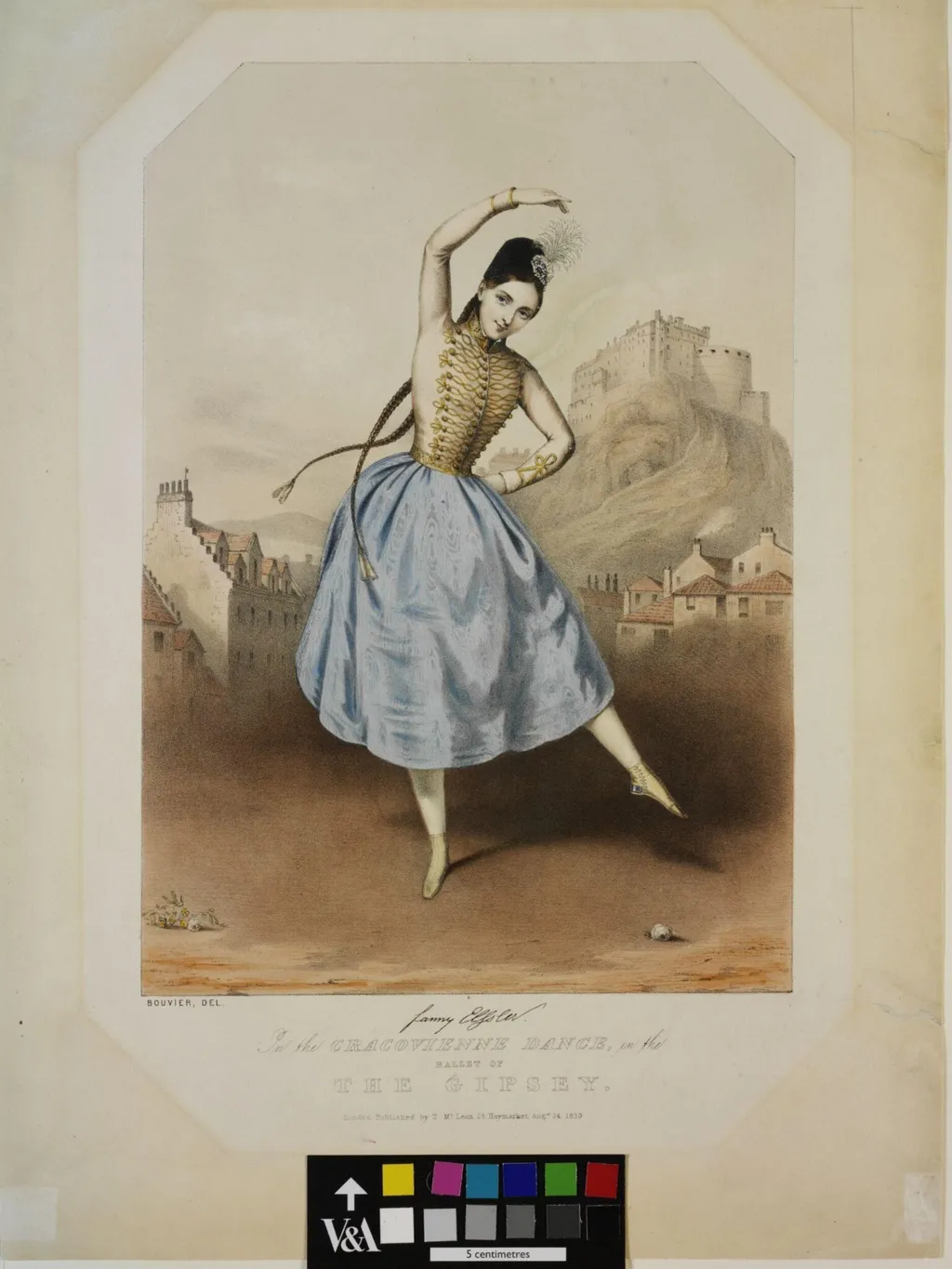
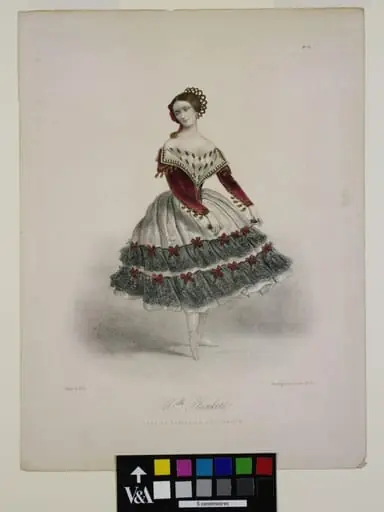
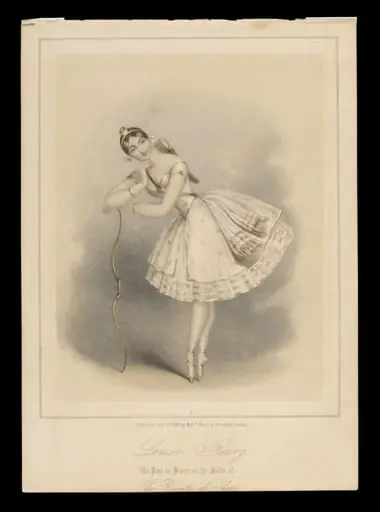
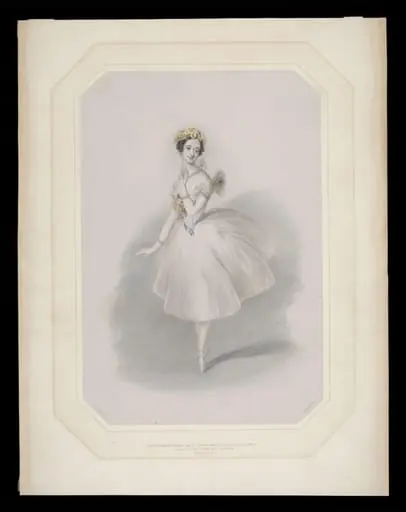
Fanny Elssler dancing the Cracovienne from The Gipsy is a print by the Romanticist artist Jules Bouvier. It dates from 24 and is held in the collection of the Victoria and Albert Museum.
About this work
Overview
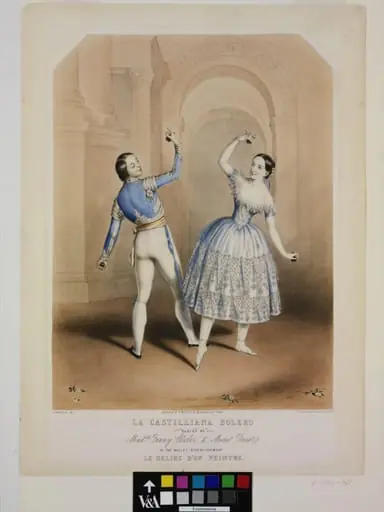
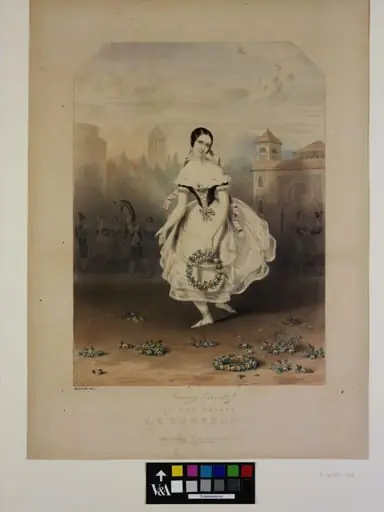
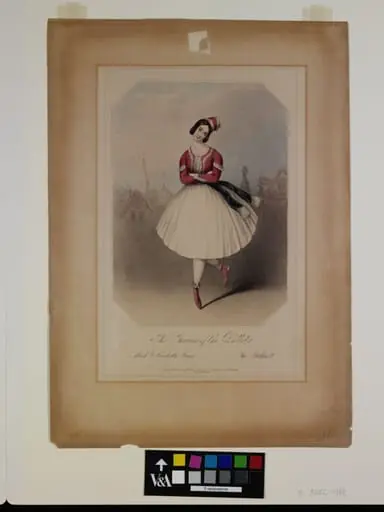
This print captures Fanny Elssler in performance as she executes the Cracovienne, a Polish folk dance, against the backdrop of Edinburgh Castle.
This print captures Fanny Elssler in performance as she executes the Cracovienne, a Polish folk dance, against the backdrop of Edinburgh Castle. Though the setting is Scottish, the costume and movement evoke Eastern European traditions, reflecting Romantic-era fascination with exoticized national identities. Elssler’s portrayal blends theatricality with cultural hybridity, positioning her as both performer and symbol of cross-border artistic appeal.
Subject & Meaning
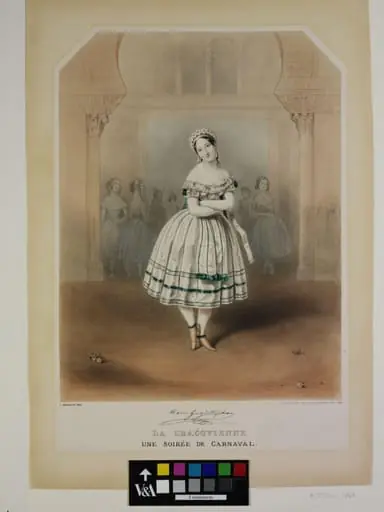
Elssler portrays a vivandière—a woman who accompanied armies with supplies and liquor—wearing a stylized military-inspired outfit adapted for female dancers. This role, rooted in real historical figures, was reimagined for the stage to convey vigor and earthy charisma. Unlike the ethereal ideal of her rival Taglioni, Elssler’s character radiated physical presence and sensuality, embodying a more grounded, human form of theatrical expression.
Technique & Style
The print highlights Elssler’s use of spurs on her heels, which produced sharp metallic clicks synchronized with her steps, enhancing rhythmic precision. These instruments functioned like heel castanets, adding texture to the dance’s tempo. Contemporary accounts describe her movement as a blend of athletic agility and effortless grace, where each step seemed both controlled and spontaneously joyful, creating an effect that defied verbal description.
History & Provenance
The print originates from a performance in Edinburgh during Elssler’s 1830s European tour, when her rendition of the Cracovienne became a sensation. It was repeated nightly due to overwhelming audience demand. The image likely derives from a sketch or lithograph made during or shortly after her appearance, preserving the visual impact of a dance that was celebrated for its immediacy and physicality rather than narrative depth.
Context
The Romantic era favored dramatic contrasts: the sublime versus the earthly, the distant versus the familiar. By merging Scottish landmarks with Polish dance, the print taps into a broader cultural trend of romanticizing foreign traditions. Elssler’s performance capitalized on this, offering audiences an exotic yet accessible spectacle that fused geography, costume, and movement into a singular, emotionally charged experience.
Legacy
Elssler’s Cracovienne became a defining moment in 19th-century dance, shifting perceptions of female performers from passive spirits to dynamic, physically expressive artists. Her ability to command attention through rhythm and bodily control influenced later choreographers and helped expand the expressive range of ballet. The print endures as a record of a performance that challenged aesthetic norms and redefined the possibilities of stage presence.
Artist & collection
Artist
Jules Bouvier made 19th-century lithographs that turned leading ballet dancers into star prints.