Artwork
Constantine
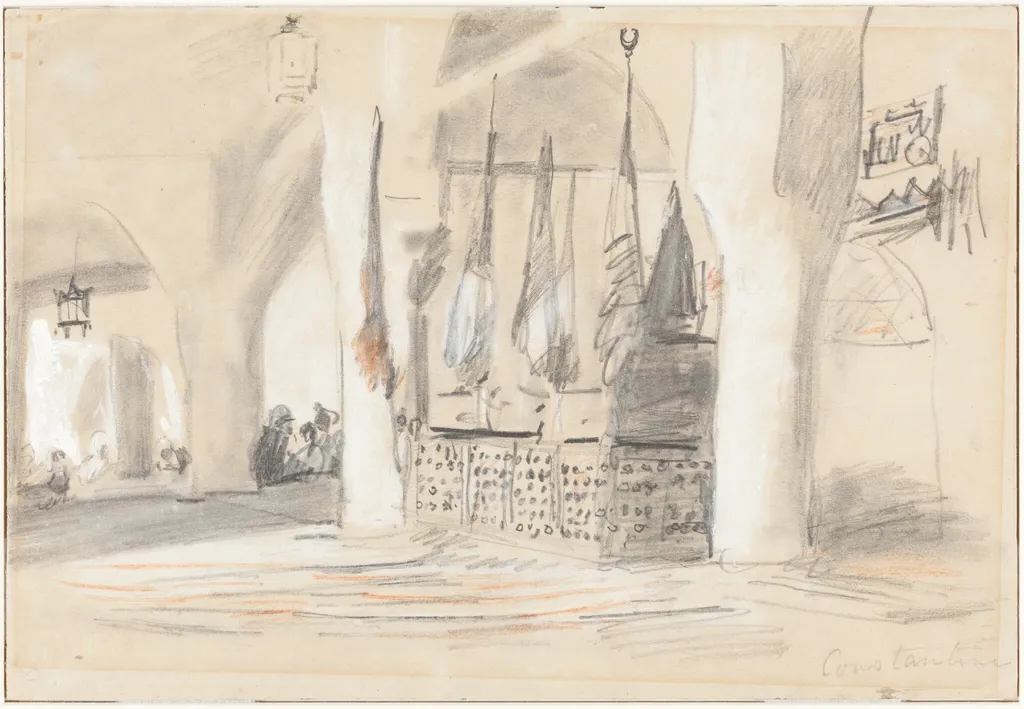
Constantine is a graphite drawing by the Impressionist artist Hercules Brabazon Brabazon. It dates from 1867 and is held in the collection of the National Gallery of Art.
About this work
Overview
Created around 1867 by English artist Hercules Brabazon Brabazon, this drawing combines graphite, red and white chalks, and white gouache on wove paper.
Created around 1867 by English artist Hercules Brabazon Brabazon, this drawing combines graphite, red and white chalks, and white gouache on wove paper. Though Brabazon was known for watercolor landscapes, this piece demonstrates his adaptability with dry and opaque media. The composition captures an interior scene with an unusual architectural illusion: two ships appear enclosed within a dimly lit space, suggesting a symbolic or imaginative setting rather than a literal one.
Subject & Meaning
The scene depicts an ambiguous interior, possibly a dockside warehouse or a metaphorical space, with two tall, flag-adorned ships suspended in shadow. Figures huddle faintly in the foreground, their forms barely defined by chalk. The absence of human activity on deck and the lantern’s weak glow evoke stillness and isolation. The ships’ placement indoors may imply memory, decay, or the weight of history—elements recurring in Brabazon’s contemplative works.
Technique & Style
Brabazon employed rapid, economical lines in graphite and chalk to suggest form without detail, leaving large areas of paper bare to imply darkness and depth. White gouache was used sparingly to highlight the lantern’s glow and the ships’ rigging, creating soft luminosity. The technique mirrors watercolor principles—translucency, atmospheric tone, and restrained contrast—adapted to dry media, emphasizing mood over precision.
History & Provenance
The drawing dates from the later phase of Brabazon’s career, following his association with the Turner tradition. It was likely made as a study or personal exercise, not a commissioned work. Its survival suggests it was retained by the artist or a close associate. No public record of early ownership exists, and it entered institutional collections in the 20th century, valued for its quiet experimentation with light and space.
Context
In mid-19th-century Britain, artists increasingly explored subjective interpretations of space and light beyond topographical accuracy. Brabazon, influenced by Turner’s atmospheric effects, pushed beyond conventional landscape into psychological interiors. This drawing aligns with a broader trend of sketch-based works that prioritized mood and suggestion, reflecting a shift from narrative clarity to emotional resonance in Victorian art.
Legacy
Though not widely exhibited, *Constantine* exemplifies Brabazon’s quiet innovation in mixed-media drawing. Its use of gouache to modulate light, and its enigmatic subject matter, anticipate later modernist experiments with ambiguity and material restraint. The work remains a subtle testament to an artist who extended watercolor sensibilities into other media, influencing a niche but persistent lineage of British draftsmen.
Artist & collection
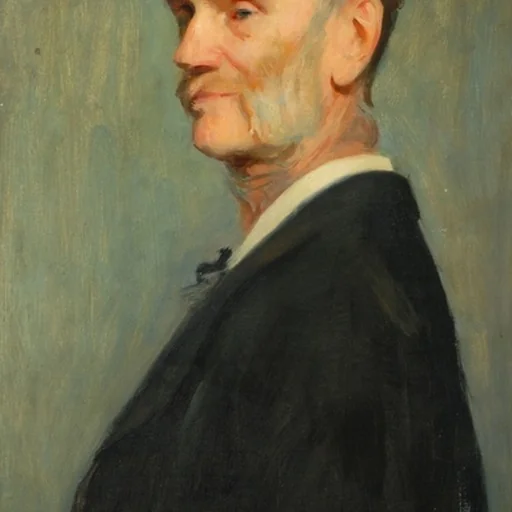
Artist
Hercules Brabazon Brabazon (born Hercules Brabazon Sharpe; 27 November 1821 – 14 May 1906) was an English artist, accomplished in Turner-manner watercolours.

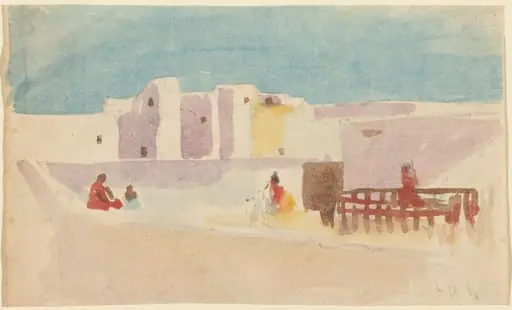 Walls of a North African City
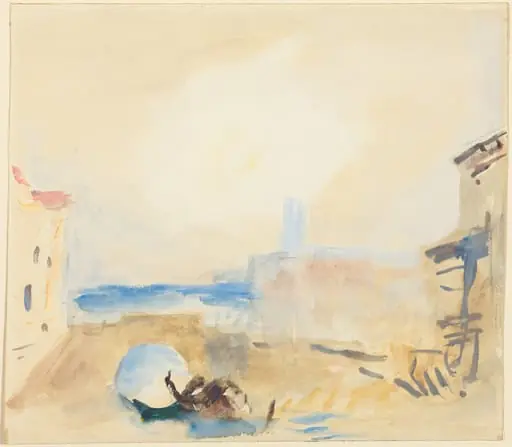 A Gondola Passing Under a Bridge in Venice
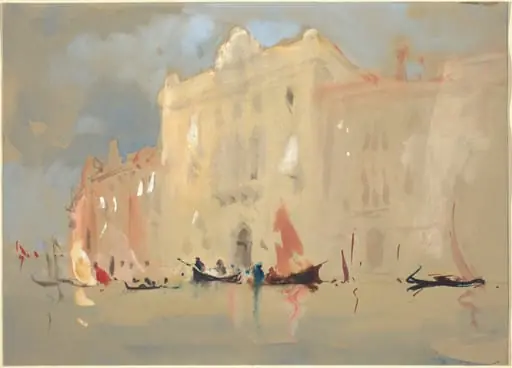 Gondolas Before a Palace on the Grand Canal in Venice
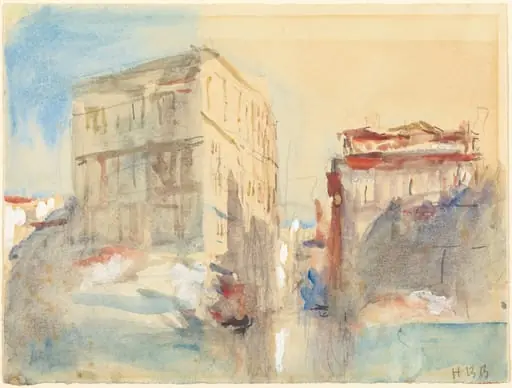 Palaces on the Grand Canal in Venice
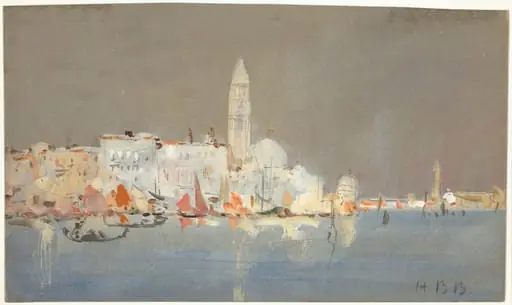 Venetian Capriccio with a Campanile
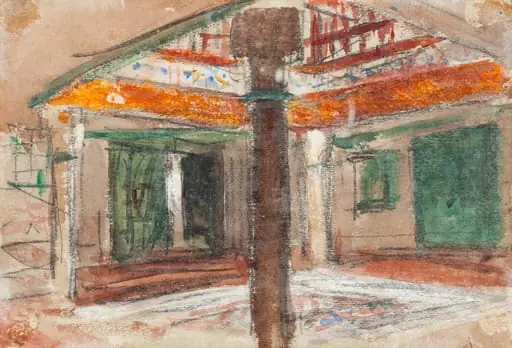 Interior of an Exotic Palace
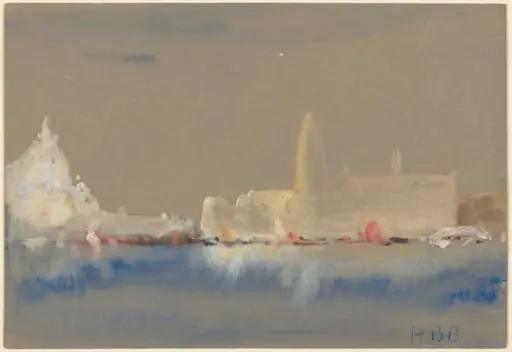 The Salute and the Palazzo Ducale from the Bacino di San Marco
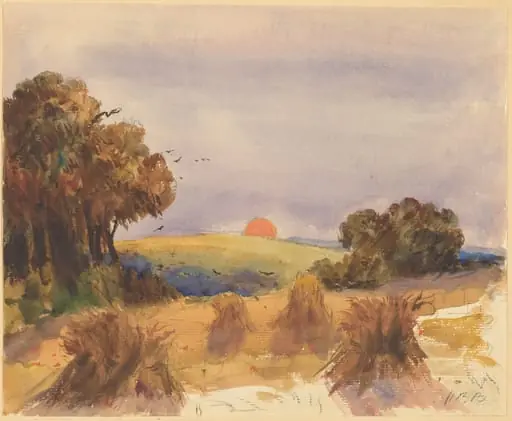 A Cornfield at Sunset
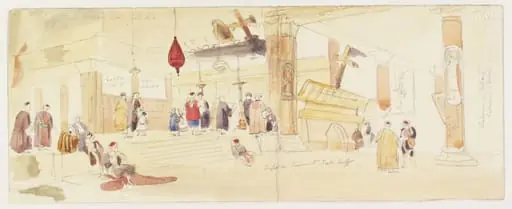 Chancel of the Church of the Nativity, Bethlehem.
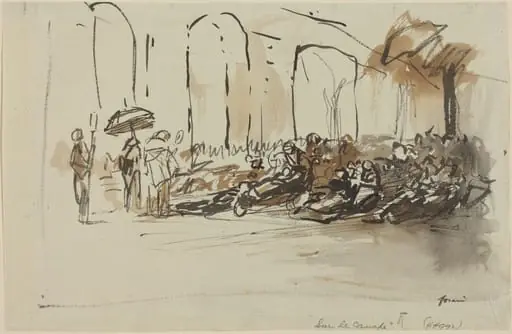 Sur le canape
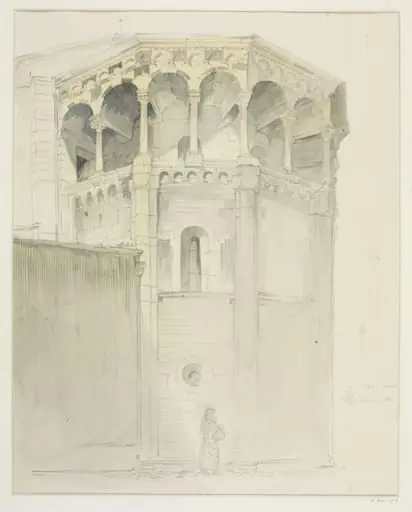 Architectural drawing
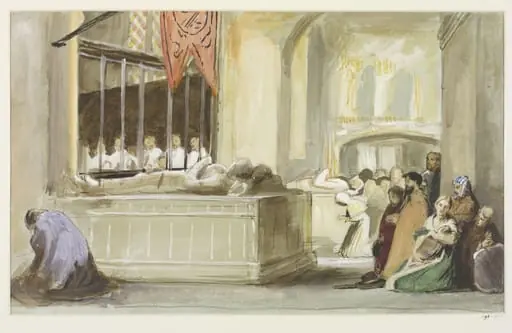 Untitled
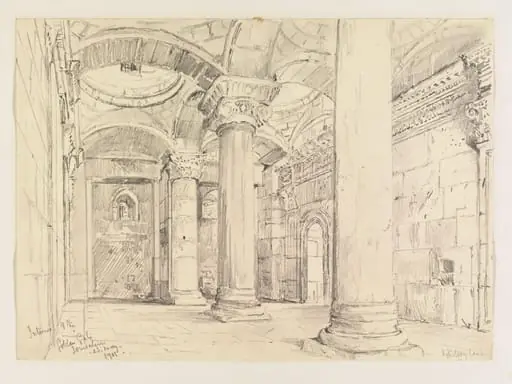 Interior of the Golden Gate Jerusalem
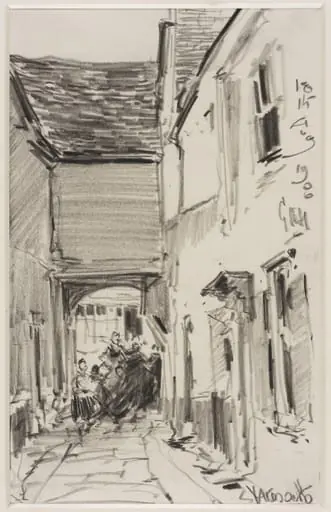 A Row, Great Yarmouth.
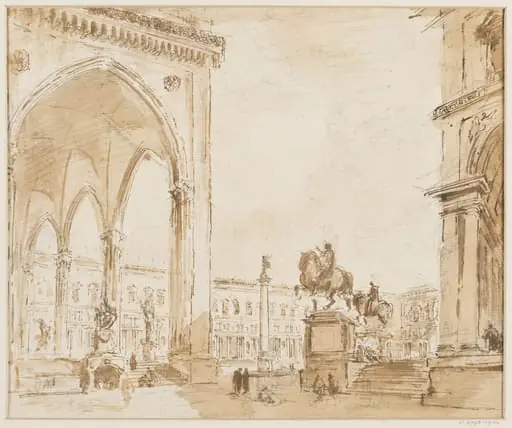 Drawing
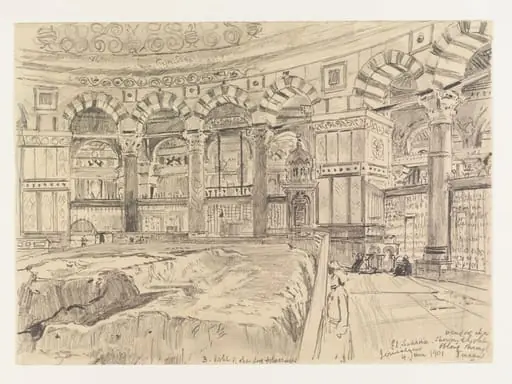 El Sakhra Jerusalem
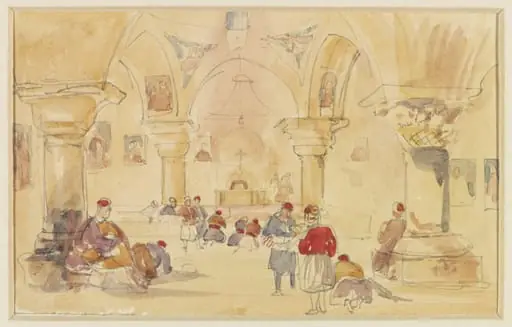 Chapel of St. Helena, Crypt of the Holy Sepulchre, Jerusalem
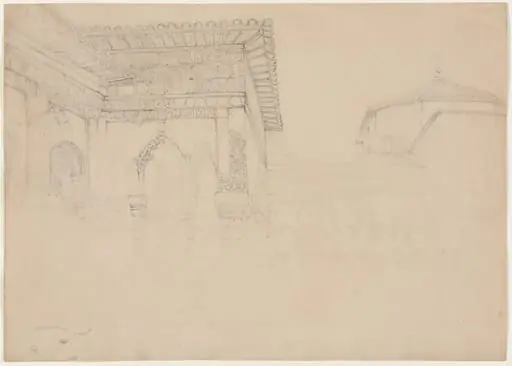 The Court of the Lions, Alhambra
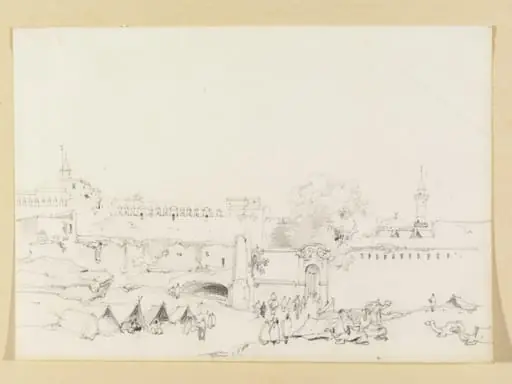 Outside the walls of Sétif, Algeria
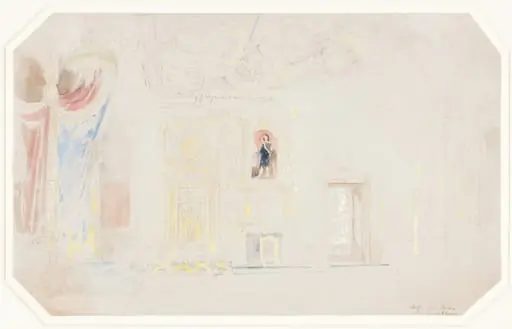 The Throne Room at Fontainebleau