Artwork
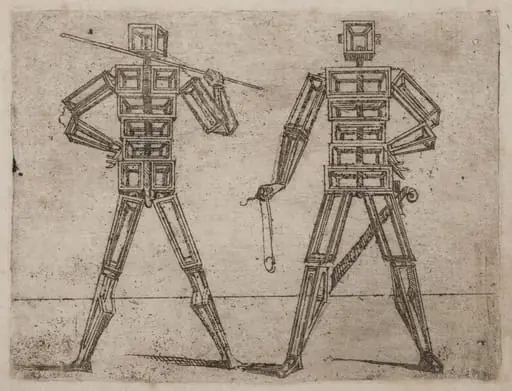
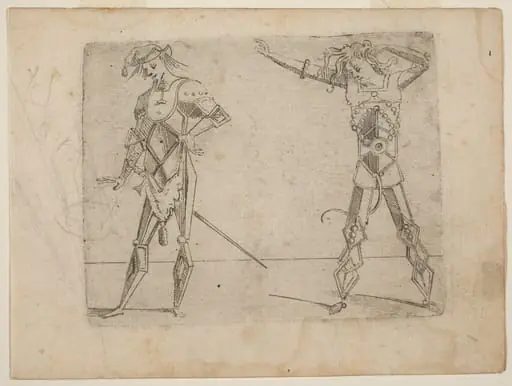
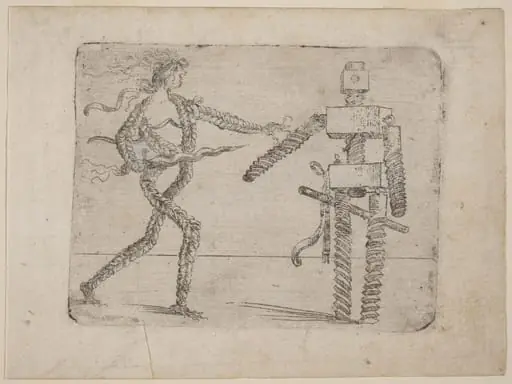
From "Bizzarie di varie Figure"
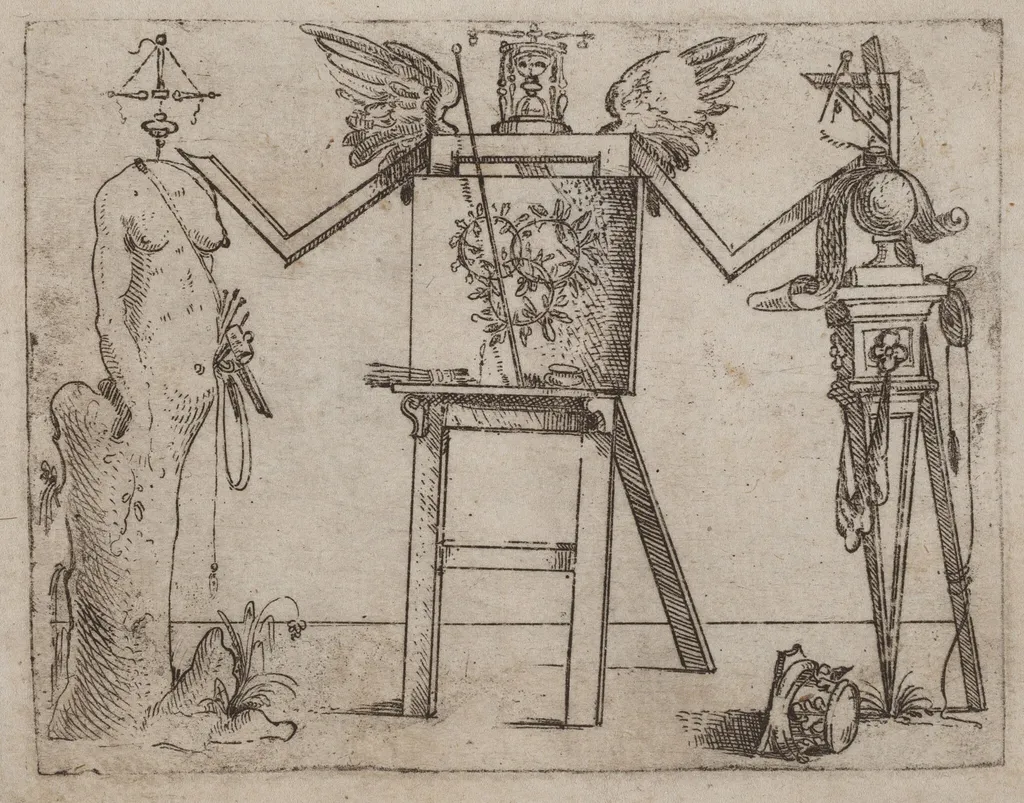
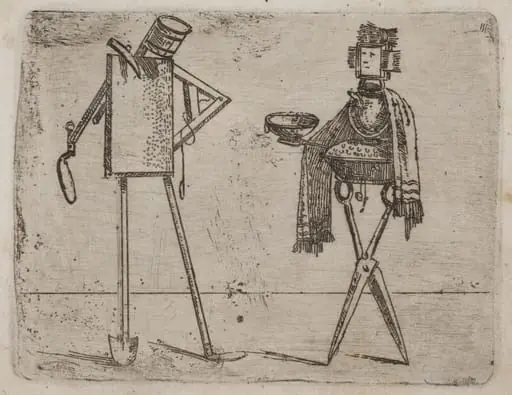
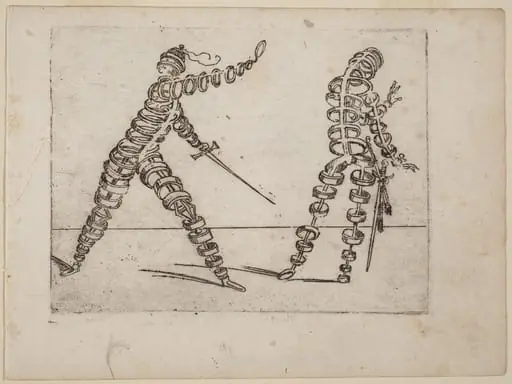
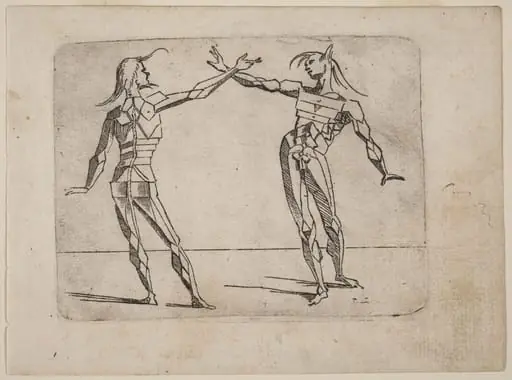
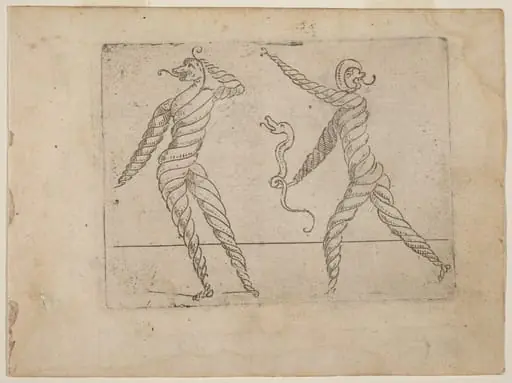
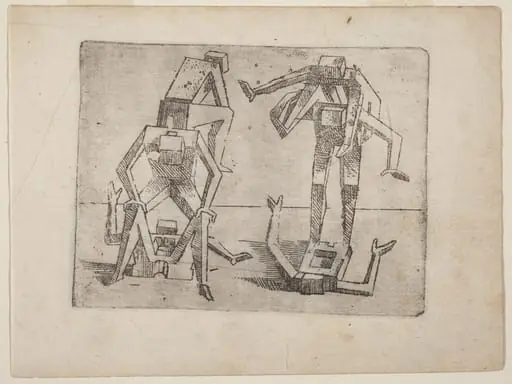
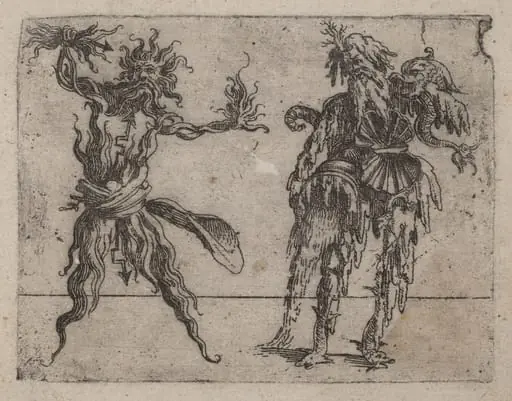
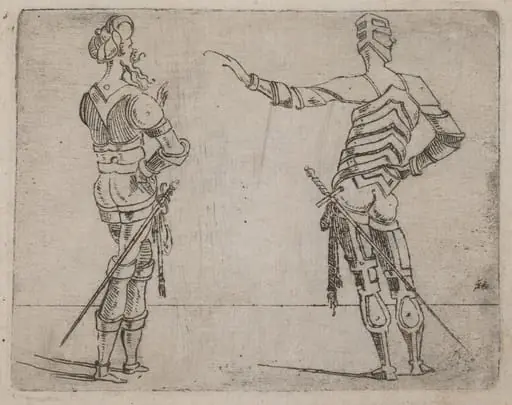
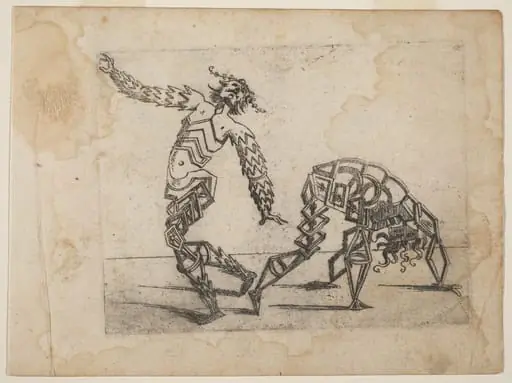
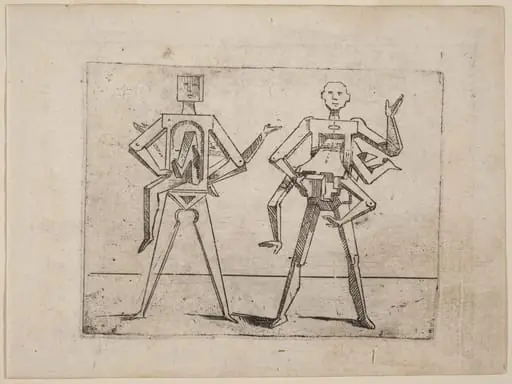
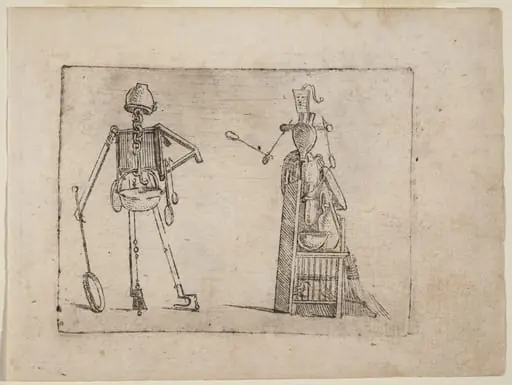
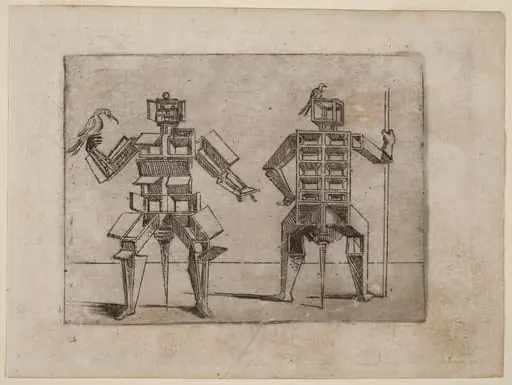
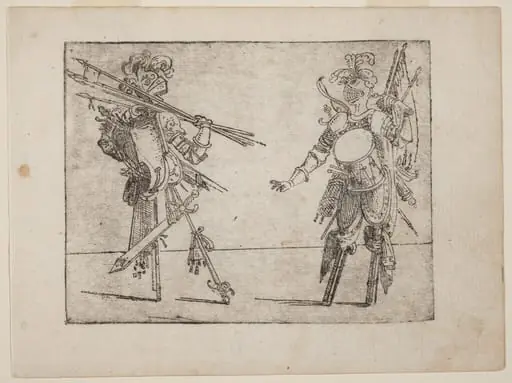
From "Bizzarie di varie Figure" is an ink print by the Baroque artist Giovanni Battista Bracelli. It dates from 1624 and is held in the collection of the National Gallery of Art.
About this work
Overview
Giovanni Battista Bracelli's 1624 etching, *From "Bizzarie di varie Figure"*, is a representative work from his series of imaginative compositions that fuse human and mechanical elements, characteristic of the Baroque era.
Subject & Meaning
The etching depicts two tall, slender figures with crowned heads and disproportionately large hands, collectively lifting a box. The box contains a small, winged, masked face, blending human and avian traits. This surreal imagery invites viewers to question perceptions, aligning with 17th-century symbolic practices that encouraged interpretive scrutiny.
Technique & Style
Executed in etching, the work showcases Bracelli's mastery of the medium, with intricate lines carved into metal to achieve detailed, fantastical forms. The style is marked by elongated bodies, exaggerated features, and dreamlike symbolism, hallmarks of Bracelli's inventive Baroque approach.
History & Provenance
Active in central Italy from circa 1616 to 1649, Bracelli created this piece in 1624 as part of his *Bizzarie di varie Figure* series, reflecting the era's fascination with the bizarre and the unknown.
Context
Emerging within the Baroque period, this etching reflects the era's penchant for the dramatic, the unusual, and the intellectually challenging, positioning Bracelli among artists who explored the boundaries of reality and fantasy.
Artist & collection

Artist
Giovanni Battista Bracelli or Braccelli is the name of more than one engraver and painter active in central Italy in the Baroque period, between about 1616 and 1649.