Artwork
From "Bizzarie di varie Figure"
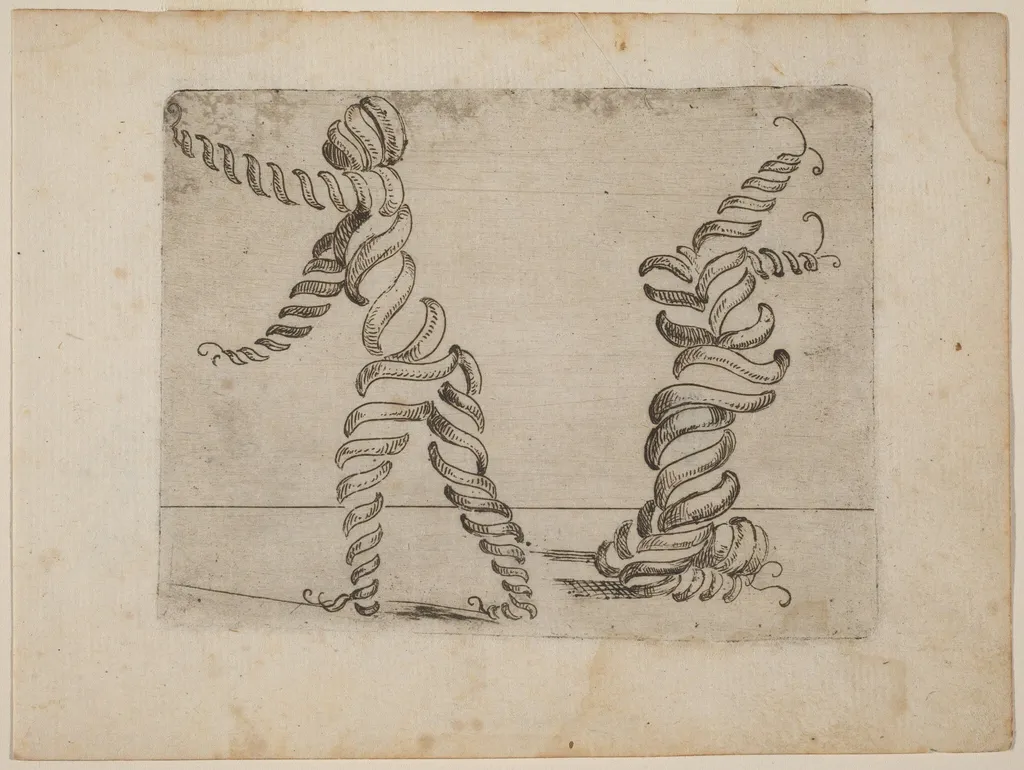
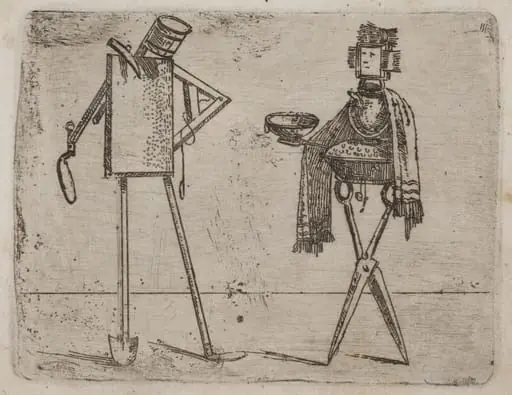
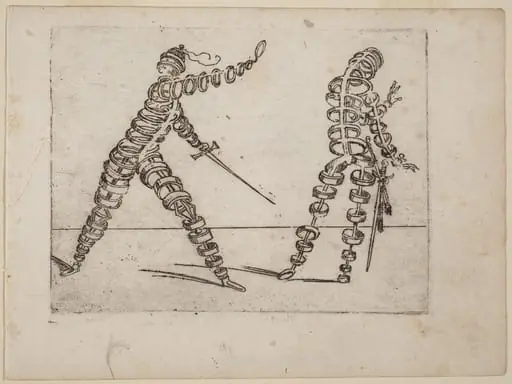
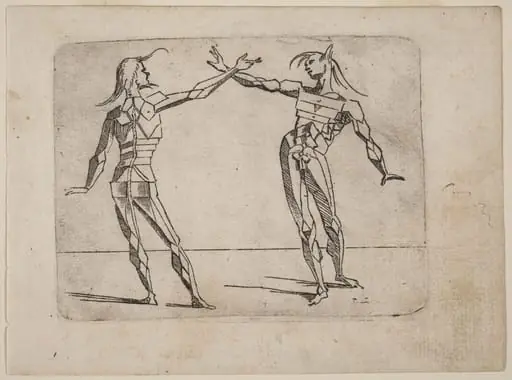
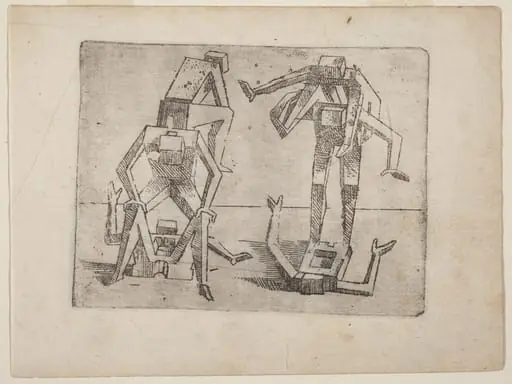
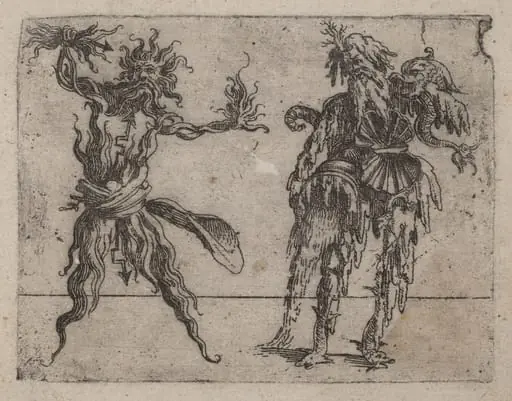
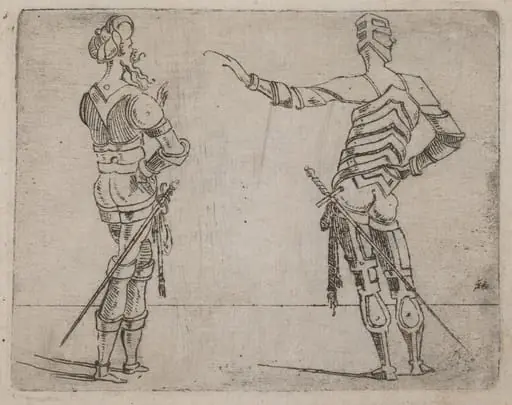
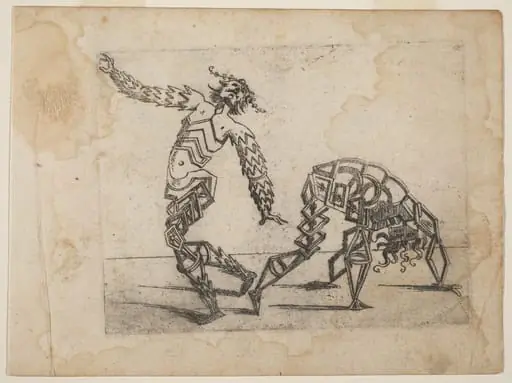
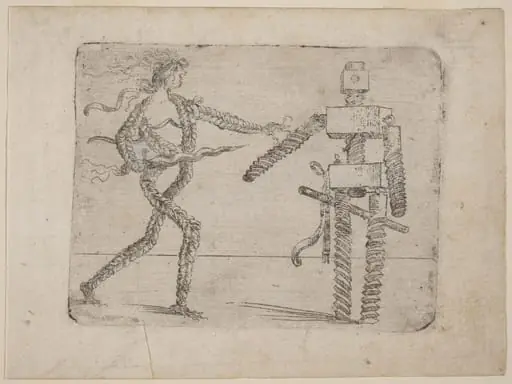
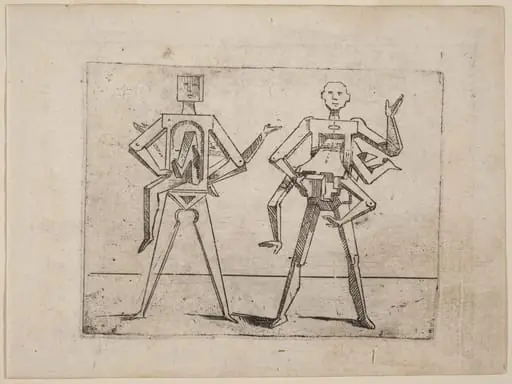
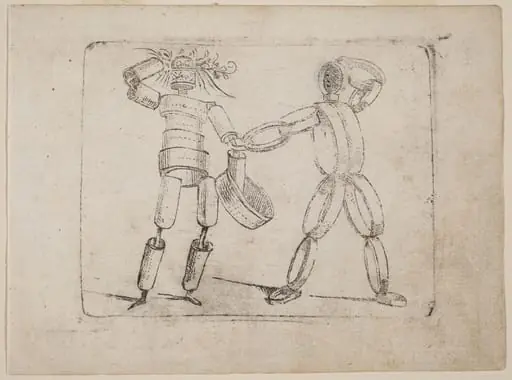
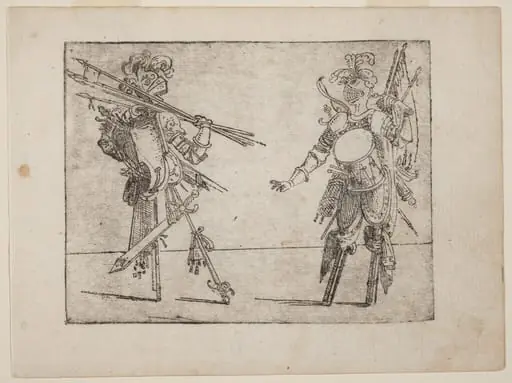
From "Bizzarie di varie Figure" is an ink print by the Baroque artist Giovanni Battista Bracelli. It dates from 1624 and is held in the collection of the National Gallery of Art.
About this work
Overview
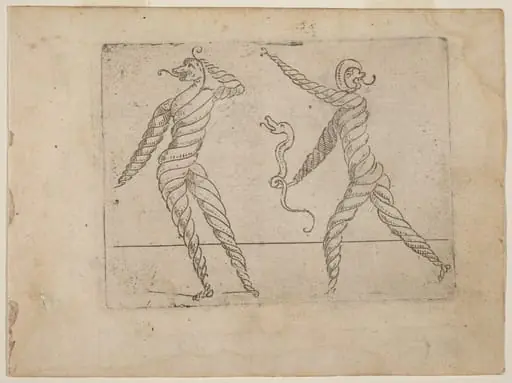
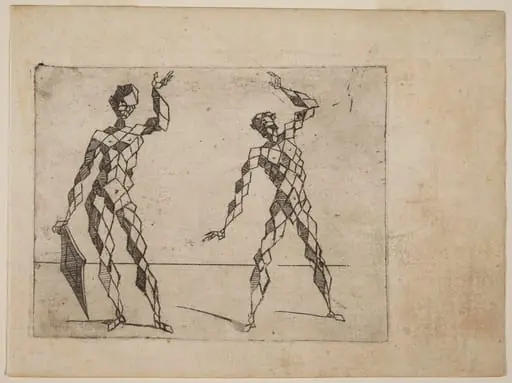
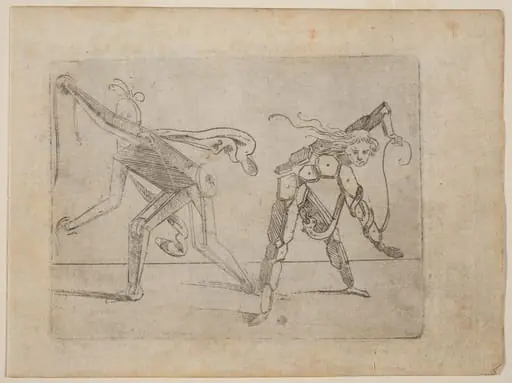
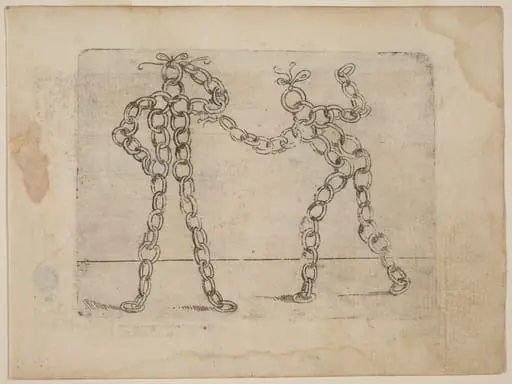
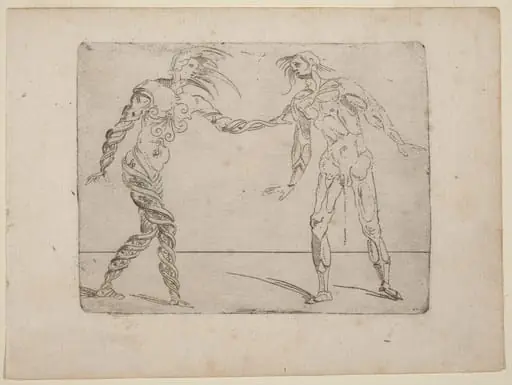
Giovanni Battista Bracelli’s 1624 etching, taken from the series titled “Bizzarie di varie Figure,” presents a pair of sinuous, rope‑like forms perched on diminutive legs. Their bodies coil in a serpentine rhythm while the heads resemble bulbous fruits, rendered in stark, precise lines that stand out against an unadorned background.
Subject & Meaning
The composition juxtaposes organic and mechanical motifs, merging twisting, rope‑like bodies with exaggerated, fruit‑like heads. This hybridization reflects a Baroque fascination with the uncanny and the imaginative, inviting viewers to contemplate the boundary between natural form and engineered invention.
Technique & Style
Bracelli employed the etching process, incising a metal plate with a resist and allowing acid to bite the exposed lines. The resulting sharp, dark strokes convey a sense of movement and texture, while the clean background emphasizes the intricate, fragmented figures characteristic of experimental Baroque printmaking.
History & Provenance
Active in central Italy between roughly 1616 and 1649, Bracelli worked as both engraver and painter, with documented ties to Genoese artist Giovanni Battista Paggi. The etching forms part of a broader series of inventive compositions that explored fantastical forms, a theme recurring throughout his mid‑seventeenth‑century output.
Artist & collection

Artist
Giovanni Battista Bracelli or Braccelli is the name of more than one engraver and painter active in central Italy in the Baroque period, between about 1616 and 1649.