Artwork
The Sawmill of Bas-Meudon
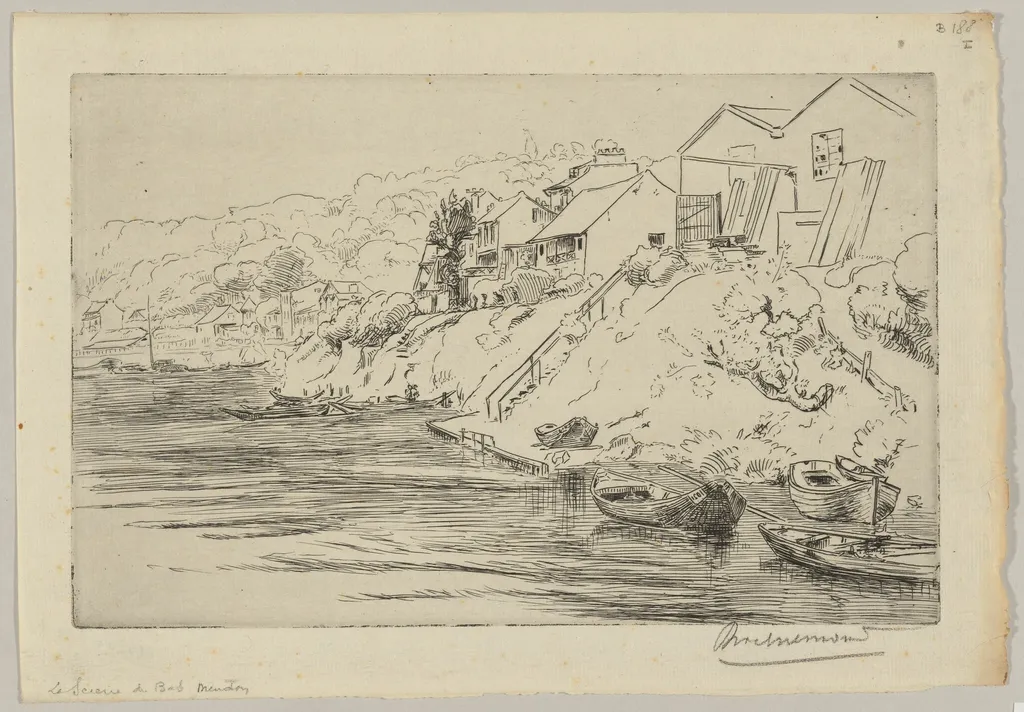
The Sawmill of Bas-Meudon is an ink print by the Impressionist artist Félix Bracquemond. It dates from 1868 and is held in the collection of the National Gallery of Art.
About this work
Overview
Félix Henri Bracquemond produced *The Sawmill of Bas-Meudon* in 1868 as an etching on laid paper, capturing a quiet industrial site near Paris.
Félix Henri Bracquemond produced *The Sawmill of Bas-Meudon* in 1868 as an etching on laid paper, capturing a quiet industrial site near Paris. Though primarily known as a painter and printmaker, Bracquemond distinguished himself through his technical precision in etching and his interest in modern subjects. The work belongs to the National Gallery of Art in Washington, D.C., and reflects his broader engagement with the evolving landscape of 19th-century France.
Subject & Meaning
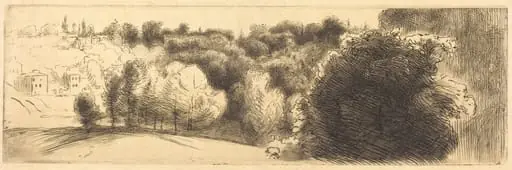
The scene portrays a modest sawmill nestled along a riverbank, its wooden structures and machinery integrated into the natural environment. Rather than emphasizing labor or industry’s disruption, Bracquemond presents the mill as a harmonious element within the landscape. The still water, moored boats, and dense foliage suggest a contemplative pause, inviting observation over narrative drama. The subject aligns with a broader shift toward depicting everyday, unidealized spaces.
Technique & Style
Bracquemond employed fine, controlled etching lines to render texture in wood, foliage, and water, using subtle tonal gradations to suggest depth and atmosphere. The composition balances architectural detail with organic forms, avoiding overt contrast in favor of muted, atmospheric tones. His approach to light and shadow is restrained, emphasizing quiet realism rather than dramatic effect. The paper’s laid texture enhances the tactile quality of the image, reinforcing its intimate scale.
History & Provenance
Created in 1868, the etching emerged during a period when Bracquemond was actively promoting printmaking as a serious artistic medium. He was instrumental in reviving interest in etching among French artists and was influenced by Japanese prints, though this work shows little direct stylistic borrowing. The piece entered the National Gallery of Art’s collection through established acquisition channels, reflecting its recognized place in the history of 19th-century printmaking.
Context
In the late 1860s, French artists increasingly turned to contemporary life as subject matter, moving away from historical or mythological themes. Bracquemond’s focus on a working sawmill aligns with this trend, paralleling the interests of emerging Impressionists. While not a member of their circle, his attention to light, atmosphere, and ordinary scenes resonated with their aesthetic. The work stands as a quiet counterpoint to the more radical experiments of his contemporaries.
Legacy
Though less widely known than his peers, Bracquemond’s technical innovations in etching influenced a generation of printmakers. *The Sawmill of Bas-Meudon* exemplifies his commitment to elevating printmaking through careful draftsmanship and thoughtful composition. Its preservation in a major public collection underscores its significance as a representative work of mid-century French print culture, valued for its restraint and observational clarity.
Artist & collection

Artist
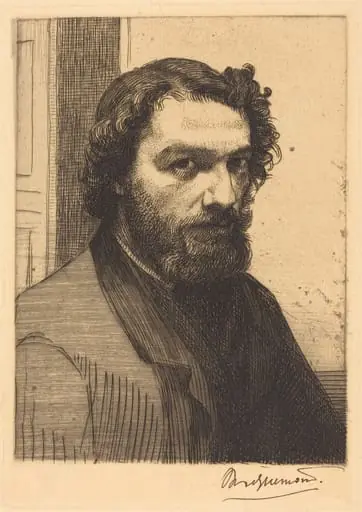
Félix Henri Bracquemond (French pronunciation: ; 22 May 1833 – 29 October 1914) was a French painter, etcher, and printmaker.

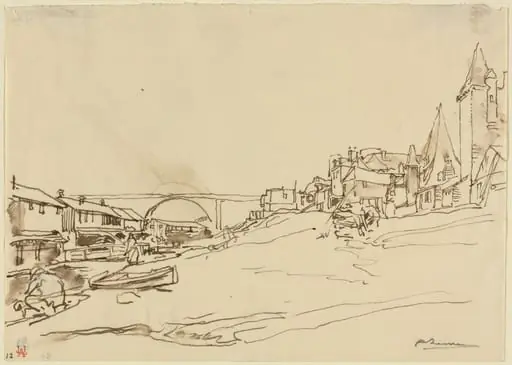 The House of the King of Poland (Angers)
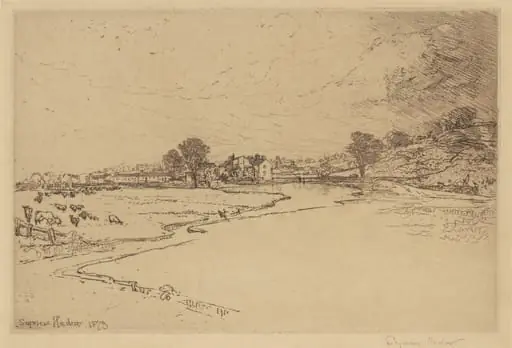 Sawley Abbey
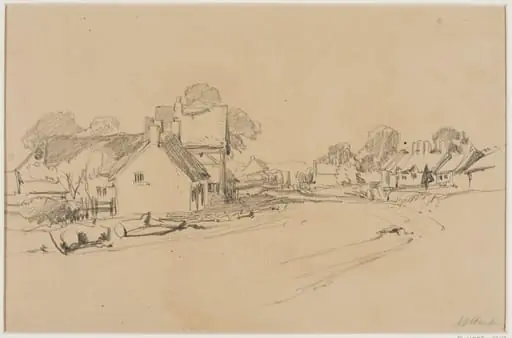 A village street
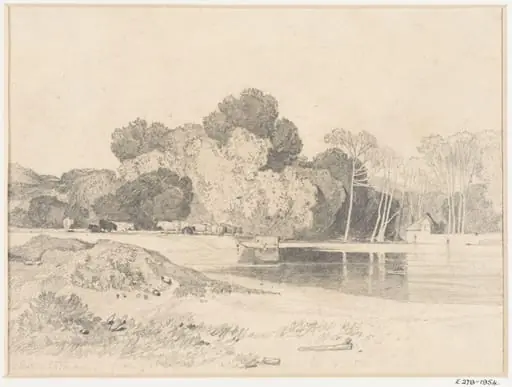 Cattle grazing beside a lake
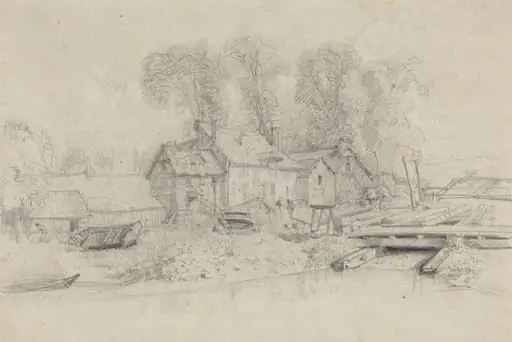 River Landscape with Buildings, Boats, and Figures
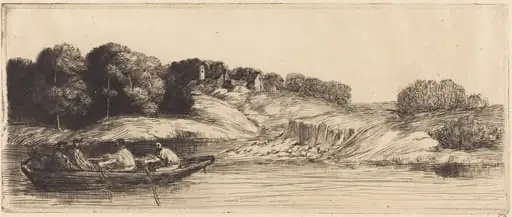 Landscape with Boat, 1st plate (Le paysage au bateau)
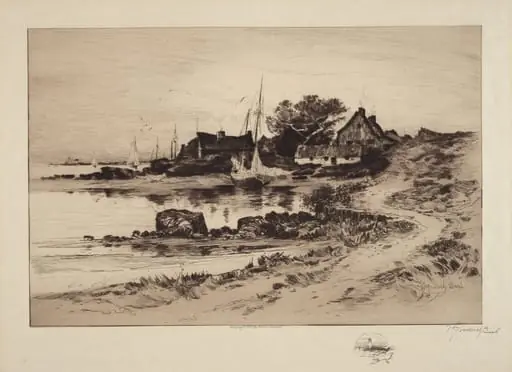 Old Gloucester Shore
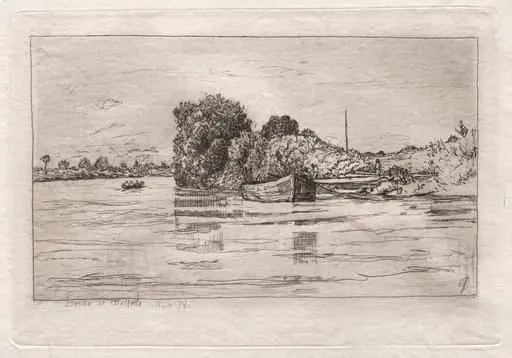 Danube at Walhalla
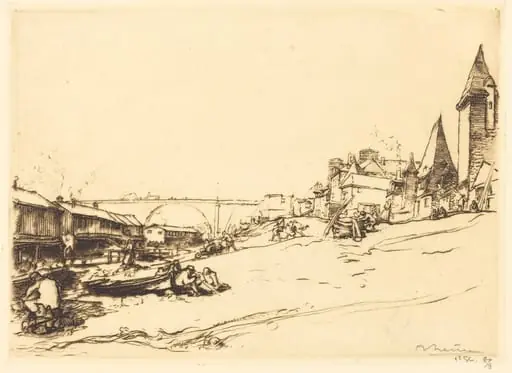 Angers - The House of the King of Poland (Angers - La maison du roi de Pologne)
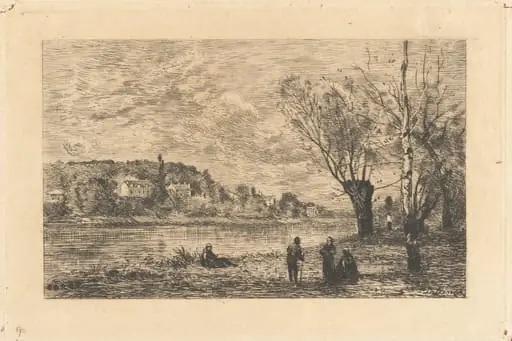 Ville d’Avray