Artwork
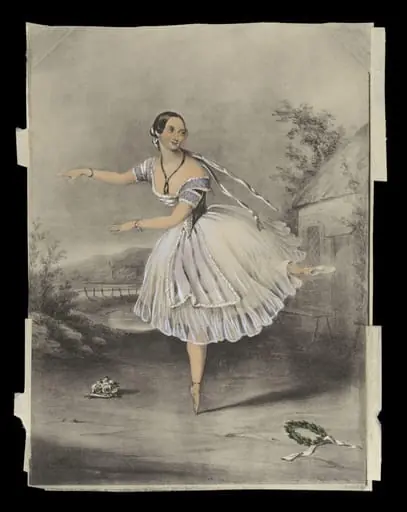
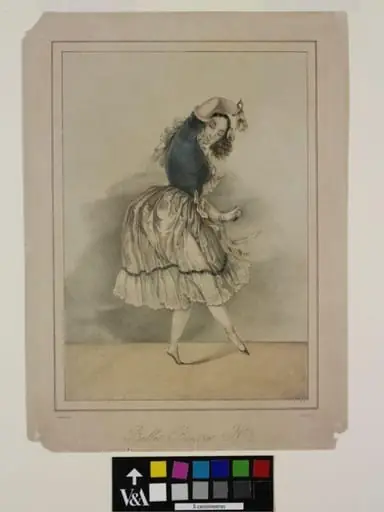
Print of Arthur Saint-Léon in La Esmeralda
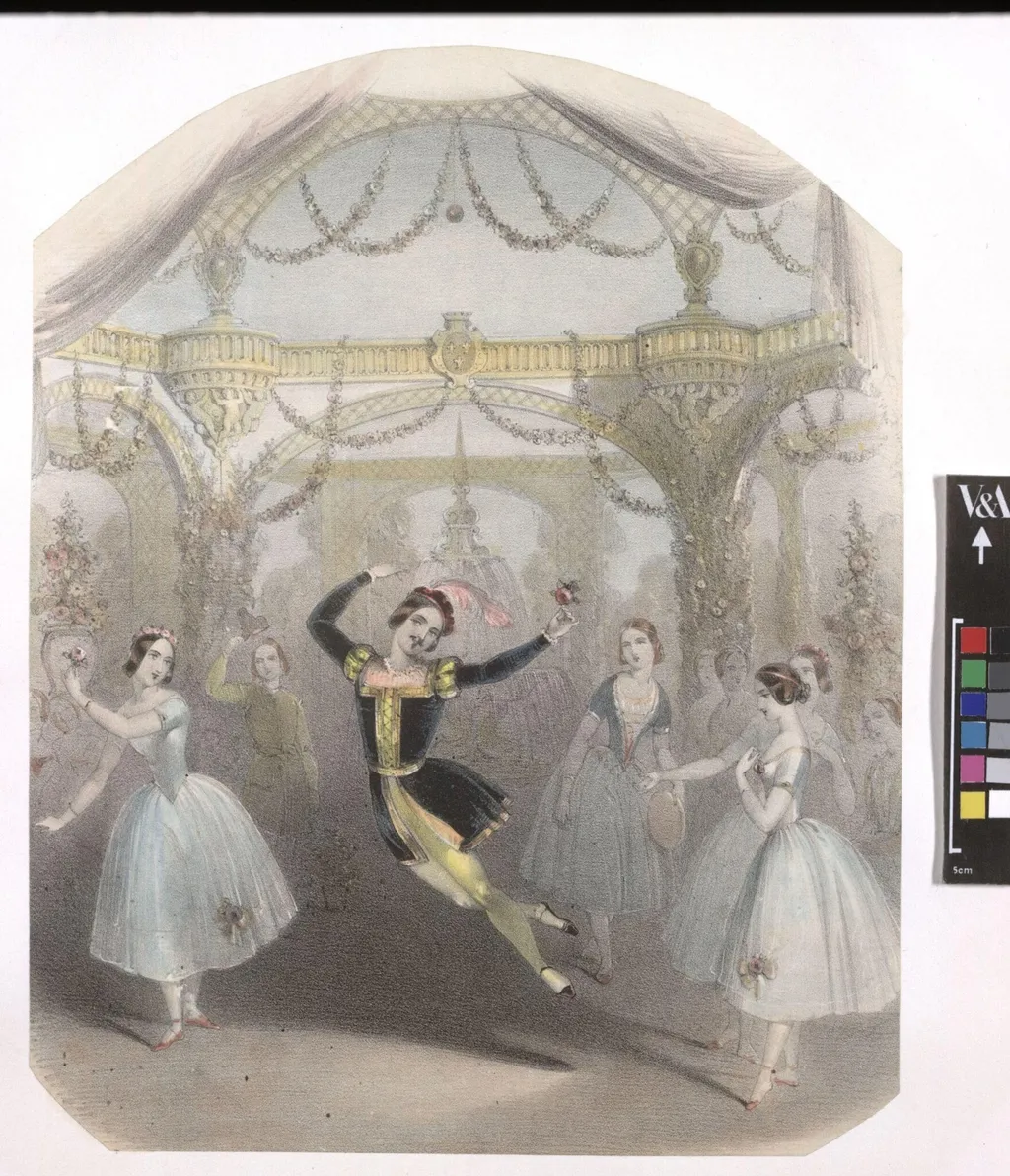
Print of Arthur Saint-Léon in La Esmeralda is a print by the Romanticist artist John Brandard. It dates from 1845 and is held in the collection of the Victoria and Albert Museum.
About this work
This print is titled "Print of Arthur Saint-Léon in La Esmeralda". It's a work by John Brandard, created around 1845.
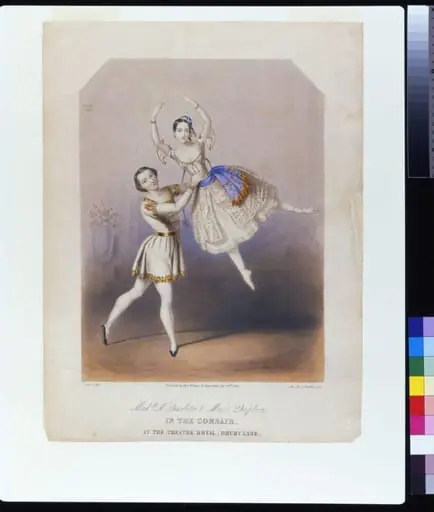
The print depicts a scene from a performance, showcasing Arthur Saint-Léon, a notable dancer of the time. He was known for his impressive jumps and masculine style.
To learn more about the artistic style of this period, look up the movement: Romanticism.
Overview
John Brandard’s lithograph, dated circa 1845, captures a solitary figure on stage: the celebrated dancer Arthur Saint‑Léon performing in the ballet La Esmeralda. The image is a rare example of mid‑nineteenth‑century printmaking that focuses exclusively on a male performer, a departure from the era’s usual emphasis on ballerinas.
Subject & Meaning
Saint‑Léon is portrayed in a moment of heightened elevation, emphasizing his reputation for powerful jumps and a distinctly masculine presence. At a time when male dancers were often relegated to supportive roles, the print foregrounds his virtuosity and the awe he inspired in contemporary audiences.
Technique & Style
Executed as a lithograph, the work employs the crisp lines and tonal contrasts characteristic of Romantic‑era printmaking. Brandard’s handling of light accentuates the dancer’s poised silhouette, while the limited palette underscores the dramatic atmosphere of the performance.
History & Provenance
The image was produced shortly after Saint‑Léon’s acclaimed appearances in La Esmeralda, a ballet that premiered in 1844. It circulated among theatre patrons and was likely distributed as a souvenir of the production, reflecting the growing market for celebrity‑focused visual ephemera.
Context
During the early nineteenth century, the ballerina had become the focal point of ballet, relegating male dancers to secondary, supportive functions. Saint‑Léon’s extraordinary leaps and aerial technique challenged this norm, prompting critics to remark on his “aerial” qualities and to liken him to a “living aerostat.”
Legacy
The lithograph stands as a visual testament to Saint‑Léon’s impact on the evolution of male dance, marking a moment when a male performer could command the stage’s full attention. It also illustrates the broader Romantic fascination with height, movement, and the sublime in the performing arts.
Artist & collection
Artist
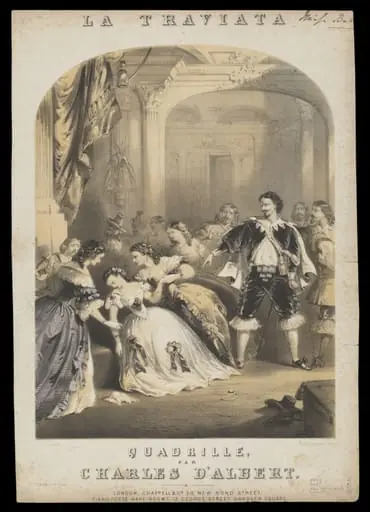
John Brandard made detailed prints for the theater world in the 1830s–1850s, turning operas and ballets into eye-catching sheet music covers and playbills.