Artwork
H Beard Print Collection
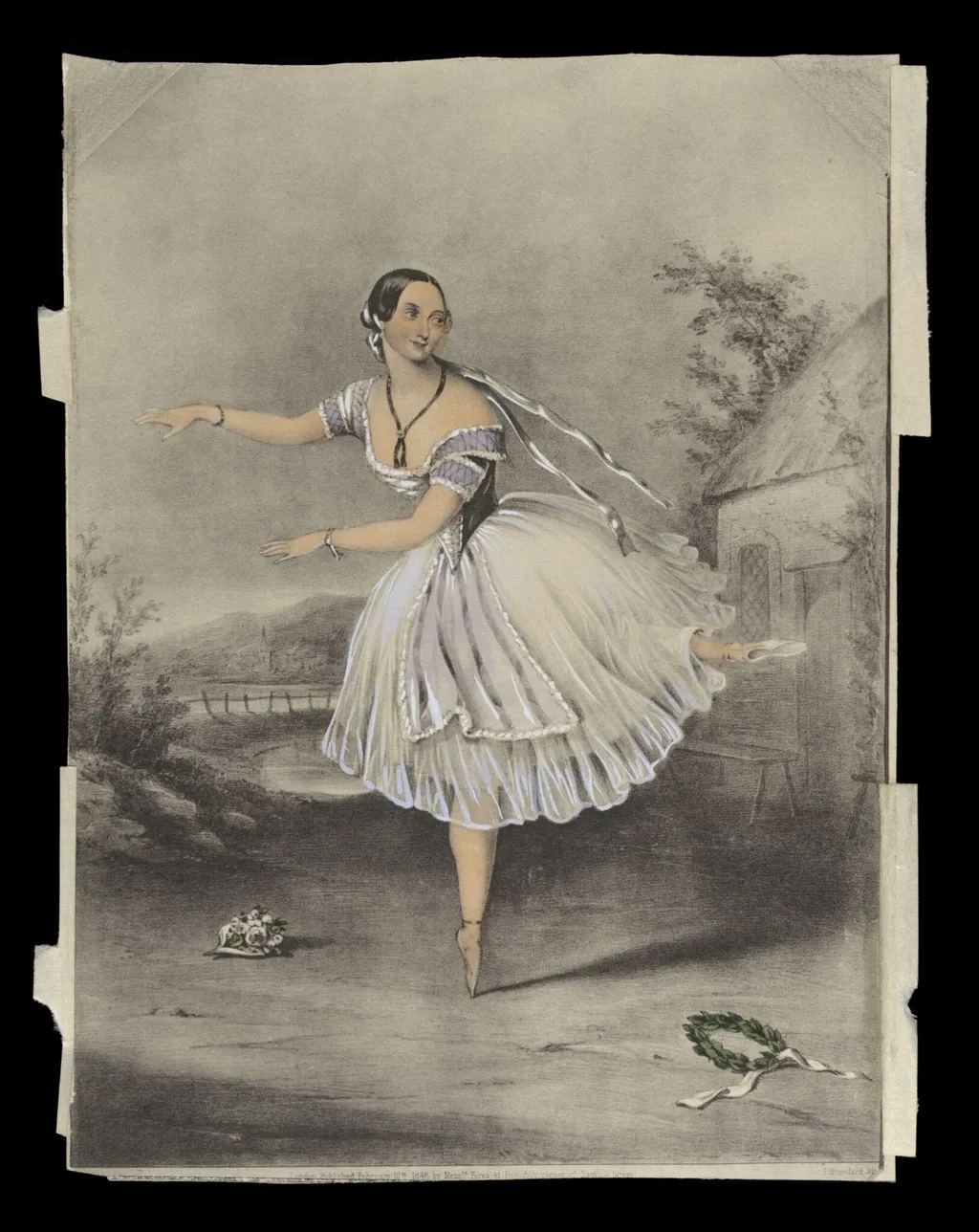
H Beard Print Collection is a print by the Romanticist artist John Brandard. It dates from 10 and is held in the collection of the Victoria and Albert Museum.
About this work
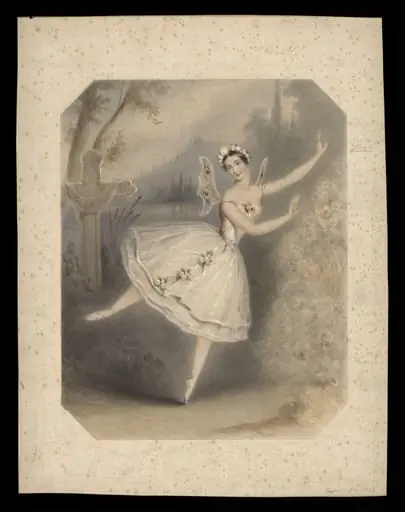
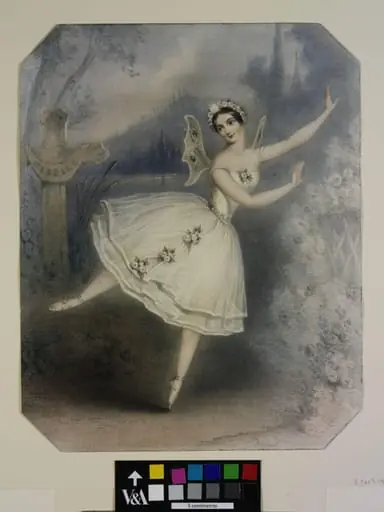
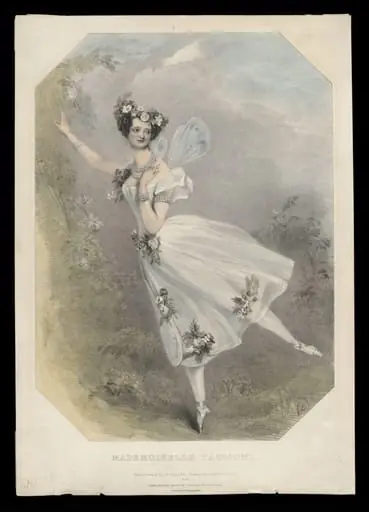
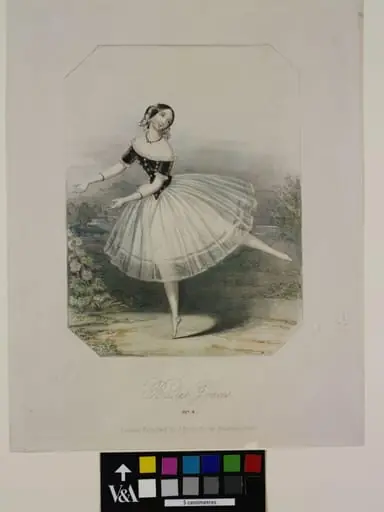
This print shows a dancer in a white and blue dress standing on one toe in a made-up countryside. Soft hills and a cottage sit behind her. Flowers and leaves lie around her feet in the grass.
The dancer wears her hair in a low bun with a long fabric strip. It was made the same year as the print’s date, 1846.
Look up the artist Brandard, John next.
Overview
The work is a full‑length, coloured lithograph dated 1846, depicting a solitary dancer poised en‑pointe in an arabesque amid an imagined rural setting. The background features gentle hills and a modest cottage, while a scattering of flowers and leaf garlands rests at her feet.
Subject & Meaning
The figure represents Flore Fabbri, a performer associated with the ballet "The Devil to Pay (La Diable à Quatre)." Dressed in a white and blue, full‑skirted costume with a low bun and a trailing strip of fabric, she embodies the grace and theatricality of mid‑nineteenth‑century dance.
Technique & Style
Executed as a coloured lithograph, the image combines precise line work with soft washes of hue, typical of mid‑1800s printmaking. The lithographic process allows delicate rendering of the dancer’s pose and the pastoral landscape, while the colour palette emphasizes the contrast between the white‑blue costume and the earth tones of the scenery.
History & Provenance
A pencil inscription on the reverse identifies the sitter and title, confirming its association with the Harry Beard collection. The print was produced in the same year as its date, 1846, and has remained within the Beard holdings, providing a documented link to its original context.
Context
The lithograph reflects the popularity of ballet scenes in Victorian visual culture, where theatrical subjects were often rendered for a broader audience through prints. Its depiction of an imagined countryside aligns with Romantic ideals of nature as a backdrop for human expression.
Artist & collection
Artist
John Brandard made detailed prints for the theater world in the 1830s–1850s, turning operas and ballets into eye-catching sheet music covers and playbills.