Artwork
Print Collection
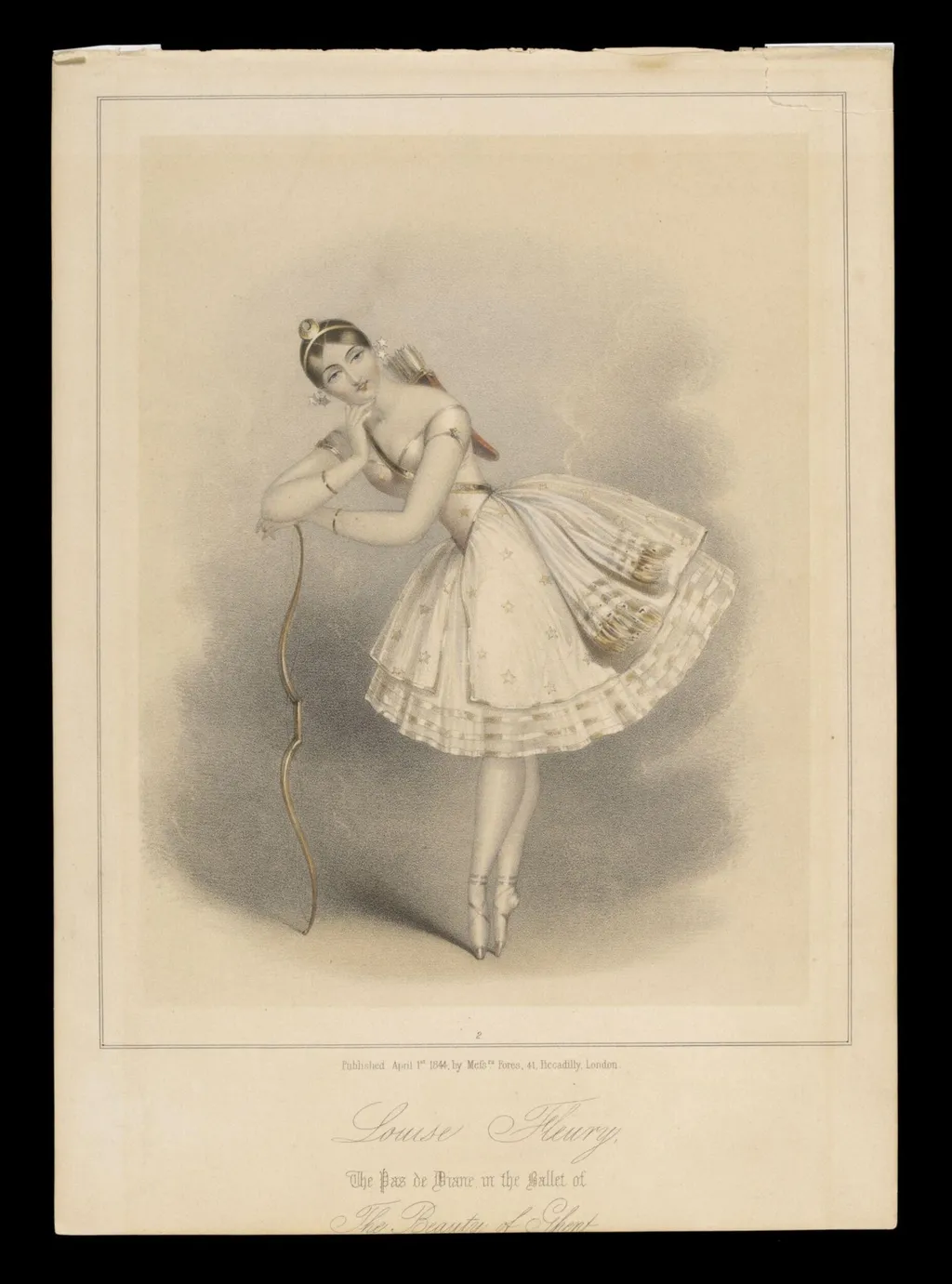
Print Collection is a print by the Romanticist artist John Brandard. It dates from 1 and is held in the collection of the Victoria and Albert Museum.
About this work
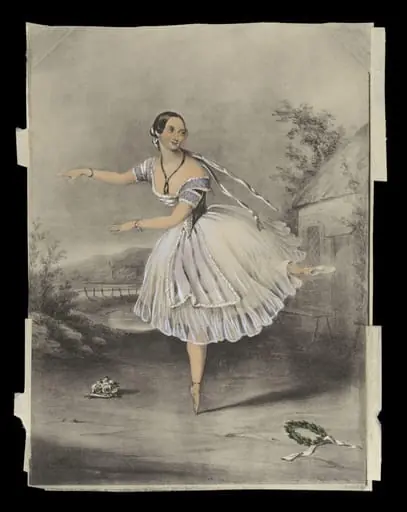
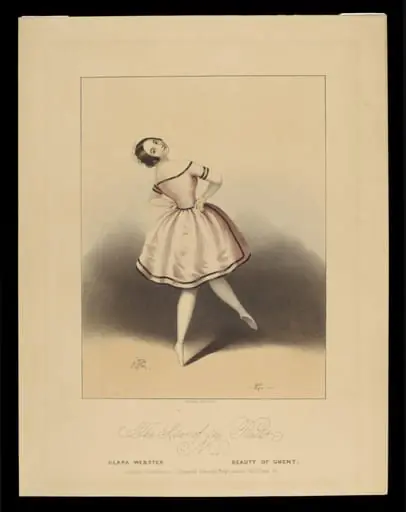
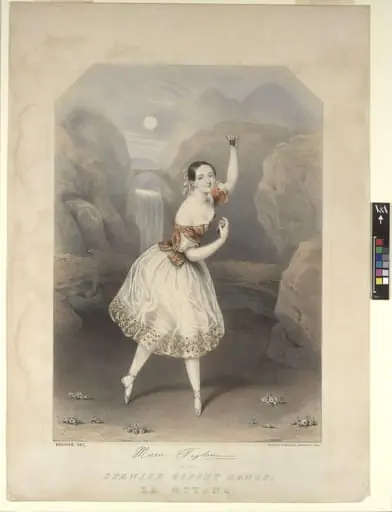
This print shows Louise Fleury as Beatrix in a scene from the ballet *The Beauty of Ghent*. Brandard used ink on paper to capture her pose. The image records a ballet moment from 1844 London.
Fleury balances on pointe, a new ballet trick at the time. The crescent moon and arrows mark her as Diana, goddess of the hunt. This print was published in London by Messrs Fores.
Look up Brandard, John.
Overview
The image captures a moment from the ballet’s London premiere, illustrating Fleury’s performance in the celebrated pas de Diane.
A lithographic print by John Brandard, published in London on April 1, 1844, depicts dancer Louise Fleury in character as Beatrix from the ballet La Jolie fille de Gand. The image captures a moment from the ballet’s London premiere, illustrating Fleury’s performance in the celebrated pas de Diane. Published by Messrs Fores, the print serves as a visual record of early 19th-century ballet staging and the rising prominence of pointe work in female dance roles.
Subject & Meaning
Fleury portrays Beatrix, the heroine of the ballet, dressed as Diana—the Roman goddess of the moon and hunt. Her pose, with bow, quiver, and crescent moon, evokes classical mythology, aligning the character with divine grace and ethereal power. This symbolism elevates the ballet’s narrative, transforming a romantic plot into an allegory of purity and otherworldly beauty, common in Romantic-era stage productions.
Technique & Style
Brandard rendered the image in ink on paper using lithography, a popular medium for theatrical portraiture. Fleury is shown en pointe, her weight balanced on the tips of her toes, a technique still relatively new in 1844. The delicate lines emphasize her slender form and the lightness of her movement, while the minimal detail in costume and background directs focus to her posture and mythological attributes.
History & Provenance
The print was produced to commemorate the London debut of La Jolie fille de Gand at the Theatre Royal, Drury Lane, where Fleury danced the role of Beatrix. It was issued by Messrs Fores, a known publisher of theatrical prints. The image preserves a fleeting stage moment, documenting Fleury’s performance before the ballet’s run ended and before pointe technique evolved with reinforced shoes later in the century.
Context
By the 1840s, pointe work had transitioned from novelty to standard in female ballet roles, especially in Romantic-era productions. Choreographers used it to convey supernatural qualities, as seen in the pas de Diane. The ballet’s popularity in London reflected broader European fascination with mythic heroines and the idealized female dancer. This print captures a moment when dance technique and theatrical storytelling were becoming increasingly intertwined.
Legacy
The print stands as an early visual document of pointe dancing’s artistic integration into ballet narrative. Though Fleury’s performance was ephemeral, Brandard’s image preserved her pose for wider circulation, influencing public perception of the ballerina as both athlete and mythic figure. It reflects the growing market for theatrical imagery and the role of print in shaping cultural memory of performance.
Artist & collection
Artist
John Brandard made detailed prints for the theater world in the 1830s–1850s, turning operas and ballets into eye-catching sheet music covers and playbills.

 Print Collection
 Print Collection
 Melle Fiocre
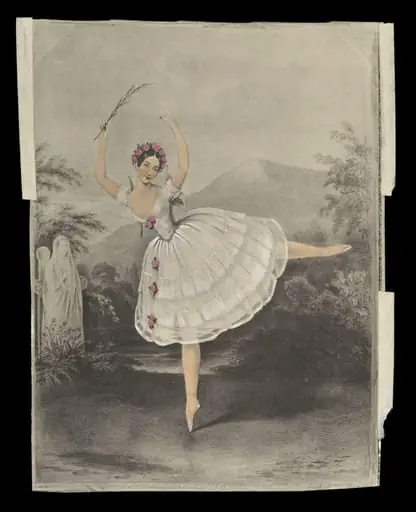 H Beard Print Collection
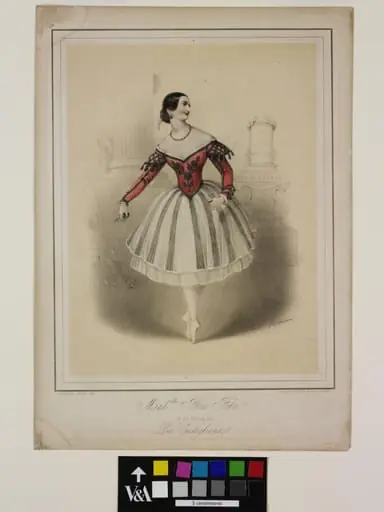 Madlle Flora Fabri,(sic)
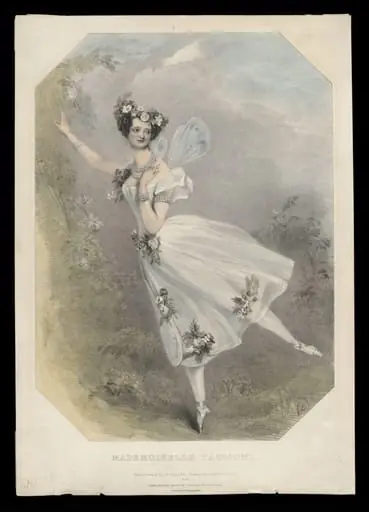 Print Collection
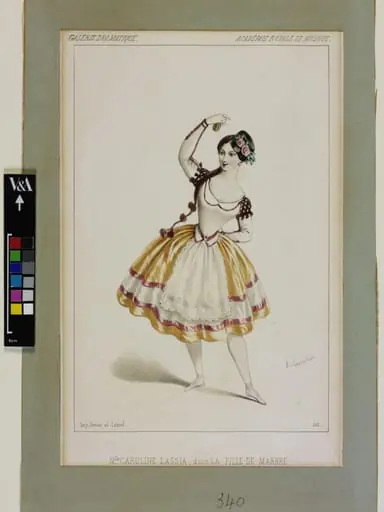 Mlle Caroline Lassia, dans La Fille de marbre. (sic)
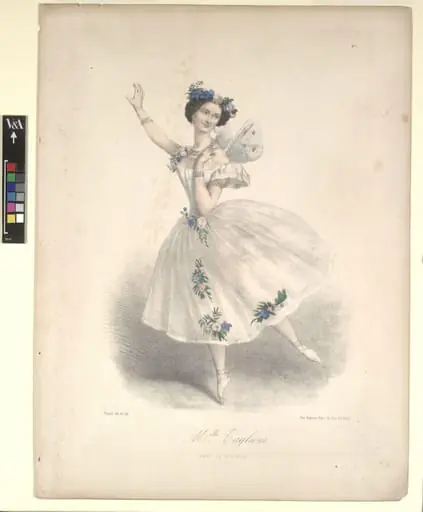 Melle Taglioni
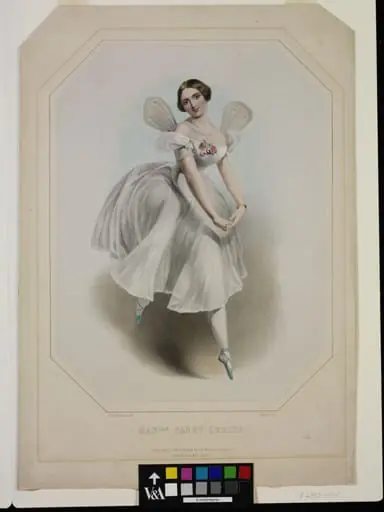 Madlle Fanny Cerito (sic)
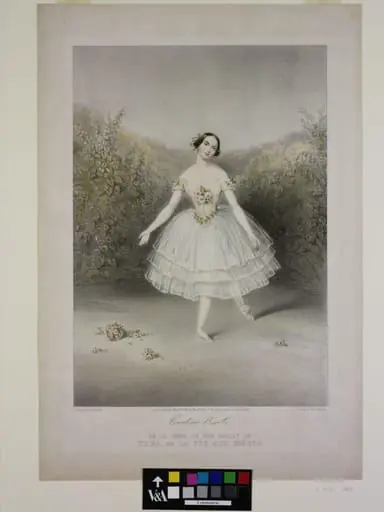 Carolina Rosati (facsimile signature)
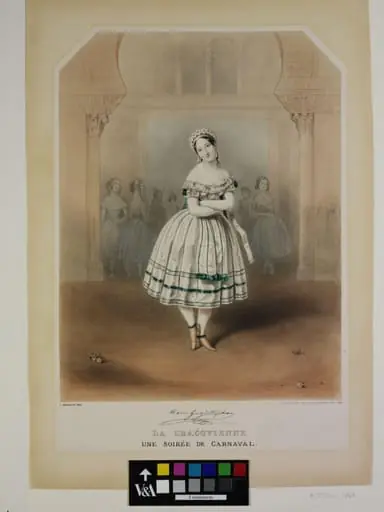 Marie Guy Stephan (facsimile signature)
 Marie Taglioni (facsimile signature)