Artwork
Pe gânduri
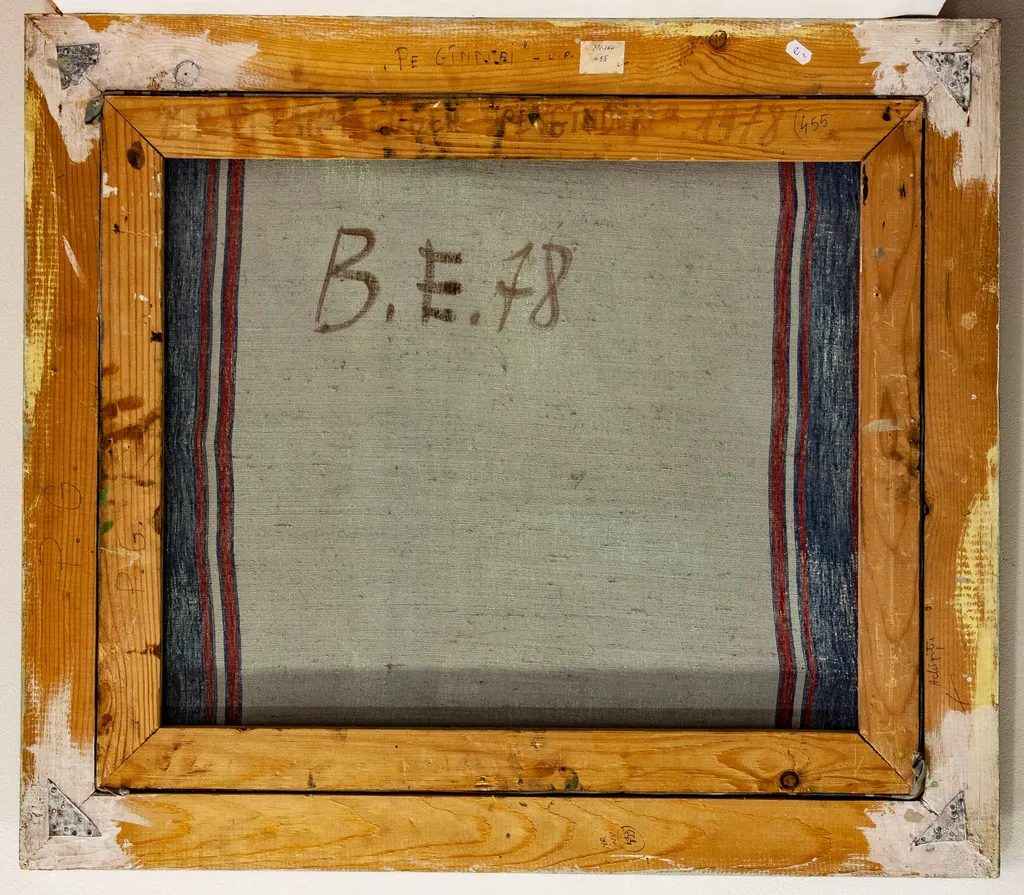
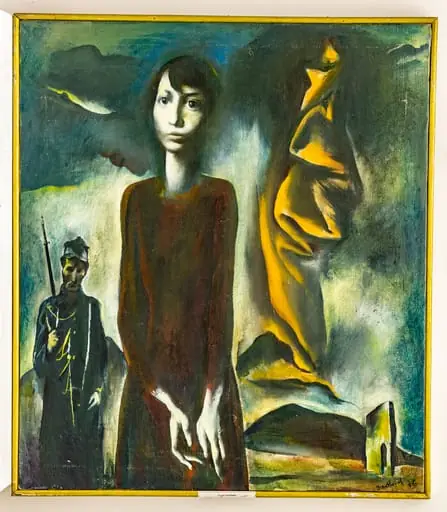
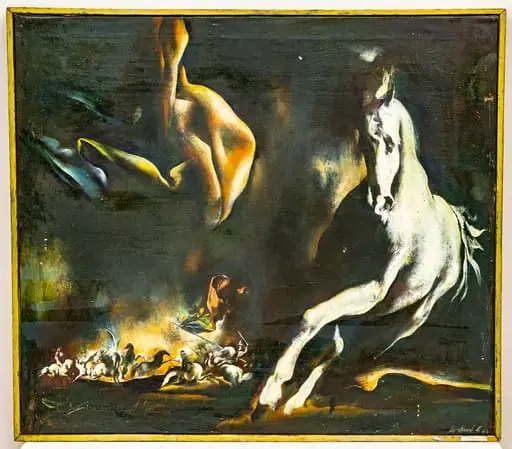
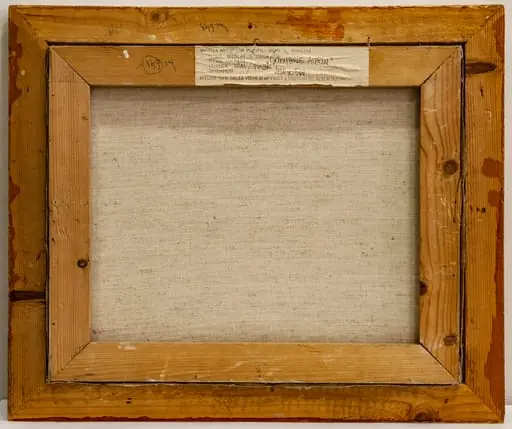
Pe gânduri is an unspecified painting by Eugen Bratfanof. It is held in the collection of the Gavrila Simion Eco-Museum Research Institute Tulcea. A faintly preserved painting on canvas, housed in a weathered wooden frame, presents an almost entirely blank surface.
About this work
Overview
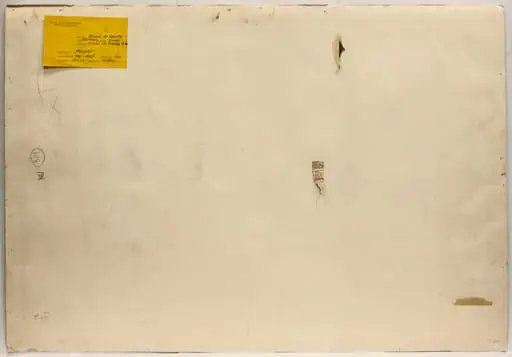
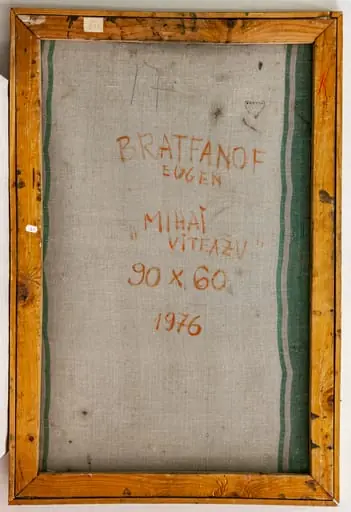
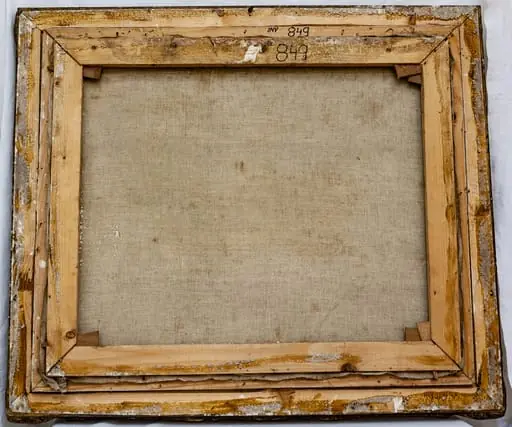
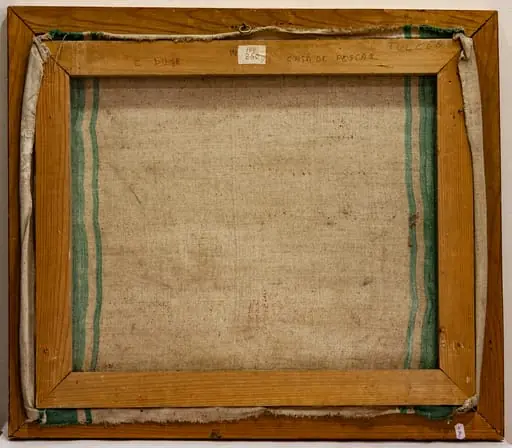
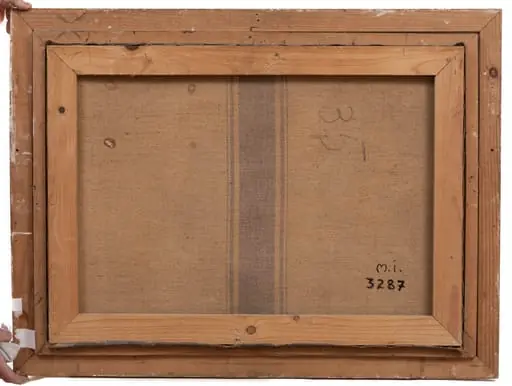
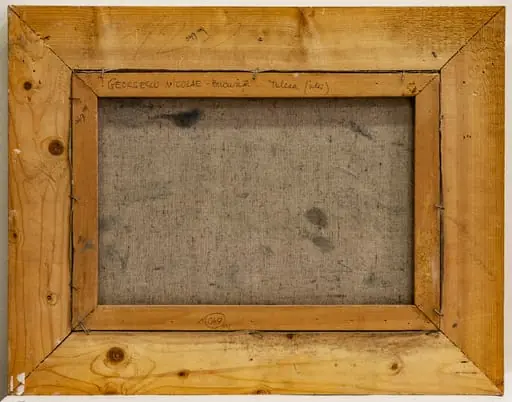
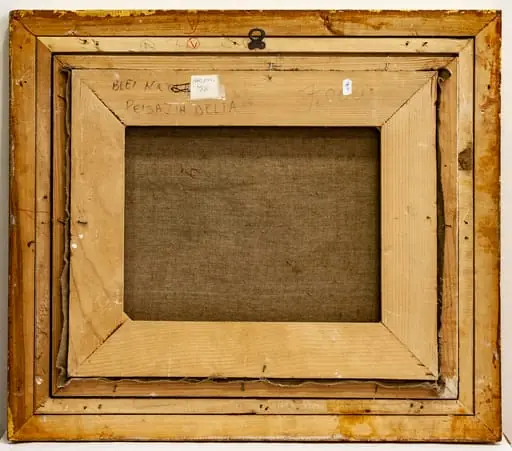
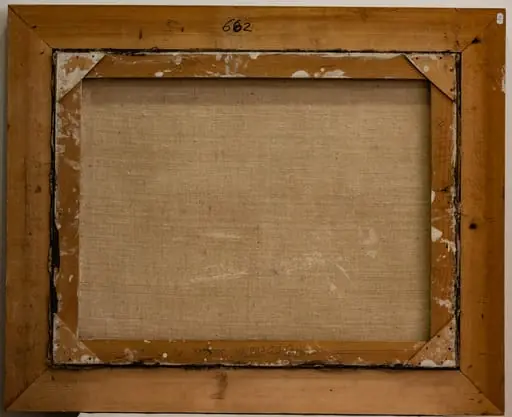
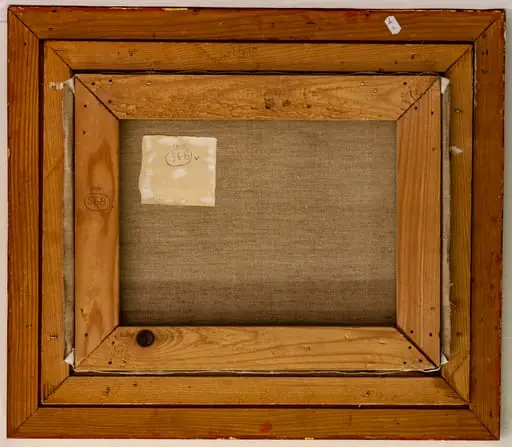
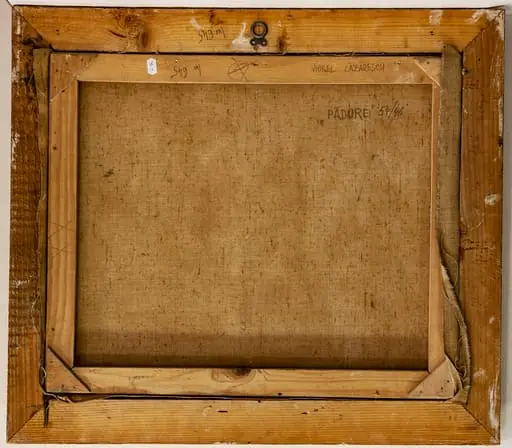
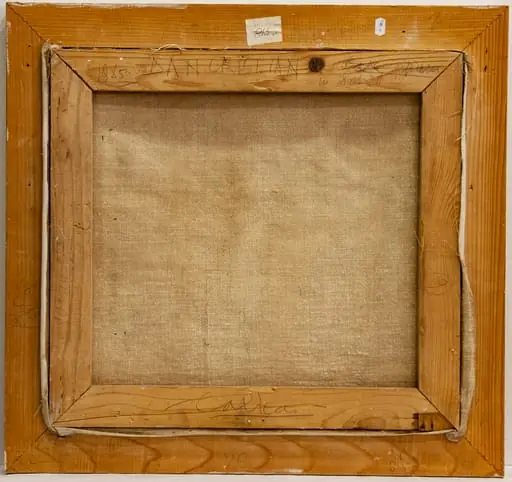
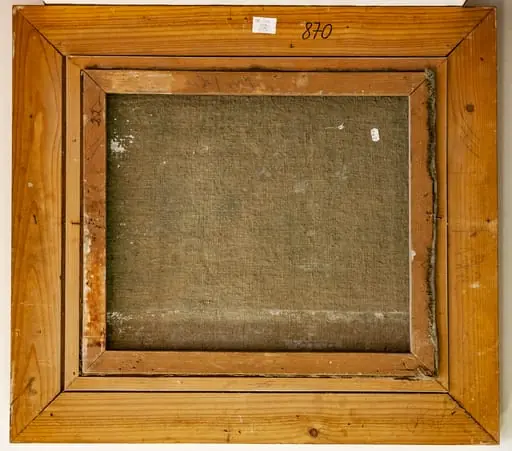
The frame exhibits visible wear—chipped paint and adhesive labels on the reverse suggest long-term handling or display.
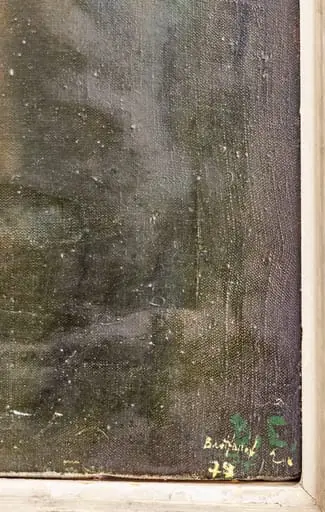
A faintly preserved painting on canvas, housed in a weathered wooden frame, presents an almost entirely blank surface. Centered on the surface are the initials 'B.E.79,' rendered in casual script. The frame exhibits visible wear—chipped paint and adhesive labels on the reverse suggest long-term handling or display. The work’s minimalism invites speculation about intent, absence, or erasure, resisting conventional interpretation.
Subject & Meaning
The absence of imagery contrasts sharply with the presence of the initials 'B.E.79,' which may reference the artist Eugen Bratfanof and the year 1979. Without additional context, the notation could be a signature, a date, a private marker, or an abandoned composition’s remnant. The work’s emptiness does not convey silence so much as a suspended question—what was removed, or never begun?
Technique & Style
The painting’s surface is largely unworked, with no discernible brushwork beyond the handwritten letters. The technique appears deliberate in its restraint, avoiding texture, color, or composition. The frame’s deterioration and the canvas’s fading suggest the piece was not treated as a finished object, but perhaps as a note, a placeholder, or an experiment in negation.
History & Provenance
The frame’s labels and wear indicate prior ownership and display, though no documented exhibition or collection history is known. The initials 'B.E.' align with Eugen Bratfanof, an artist whose other works from the late 1970s include sparse, text-based pieces. This work may have been part of a private series exploring identity and impermanence, but its origin remains undocumented beyond these physical traces.
Context
Created in the late 1970s, the piece emerges during a period when Eastern European artists increasingly used minimalism and conceptual gestures to navigate censorship and scarcity. Blank canvases and cryptic inscriptions became subtle acts of resistance or introspection. This work fits within that trend—not as protest, but as quiet inquiry into presence, authorship, and the limits of art.
Legacy
The work survives without critical commentary or institutional recognition, existing primarily as a physical artifact. Its significance lies in its ambiguity—offering no resolution, only a trace. It invites viewers to consider the value of absence in art and the quiet persistence of personal marks left behind when larger narratives are lost or unrecorded.
Artist & collection
Artist
Eugen Bratfanof created sculptures like Pescari, drawings such as Păpușarii, and prints including Io, Mircea voievod and Mihai Viteazul.
Museum
Gavrila Simion Eco-Museum Research Institute Tulcea
Continue through works from the same source collection.