Artwork
Study Revealing Anatomy to Medicine and Art
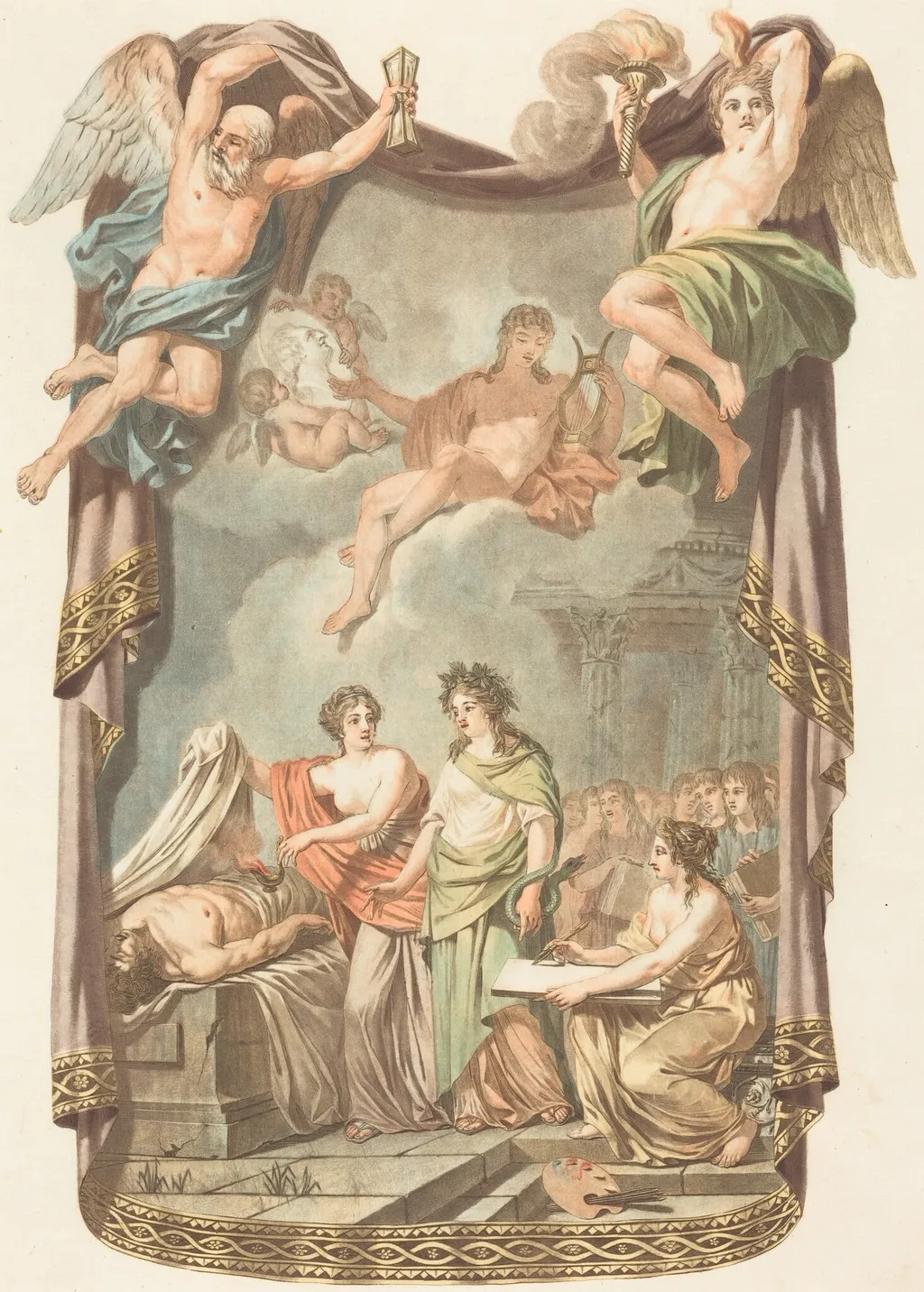
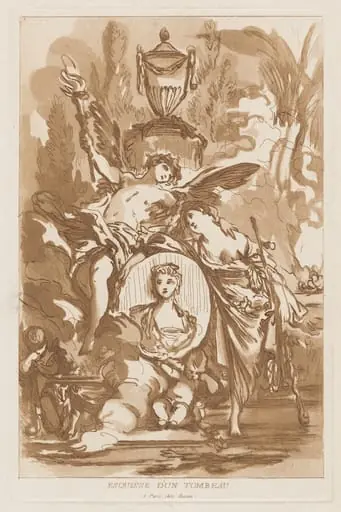
Study Revealing Anatomy to Medicine and Art is an ink print by the Romanticist artist Alexandre Briceau. It dates from 1786 and is held in the collection of the National Gallery of Art.
About this work
Overview
Created in 1786 by Alexandre Briceau, this multicolored wash print—produced with green, red, blue, violet, yellow, brown and orange inks—depicts a densely populated tableau. The composition is organized vertically, with a pair of winged figures hovering above a reclining male subject, while a crowd of attendants and smaller winged beings fills the lower registers.
Subject & Meaning
The central reclining figure appears to be the focus of anatomical observation, surrounded by observers who examine his form. The presence of winged entities suggests an allegorical dimension, possibly linking the study of the human body to both divine inspiration and artistic practice.
Technique & Style
Briceau employed a wash manner, using layered ink washes to achieve soft yet vivid coloration. Clean, precise line work defines the figures, while cross‑hatching in the shadows creates depth, exemplifying the printmaking methods of late‑eighteenth‑century French academies.
History & Provenance
The work was produced as a study intended for both medical and artistic audiences, reflecting contemporary efforts to bridge scientific anatomy and visual art education. Its original circulation was likely limited to academic circles, though specific ownership records remain scarce.
Context
In the 1780s, French academies emphasized the importance of anatomical knowledge for artists. Briceau’s print aligns with this pedagogical trend, serving as a visual aid that merges anatomical accuracy with allegorical symbolism, a common approach in Enlightenment-era instructional materials.
Artist & collection


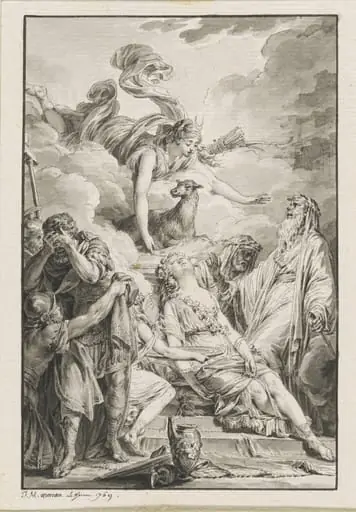 The Sacrifice of Iphigenia
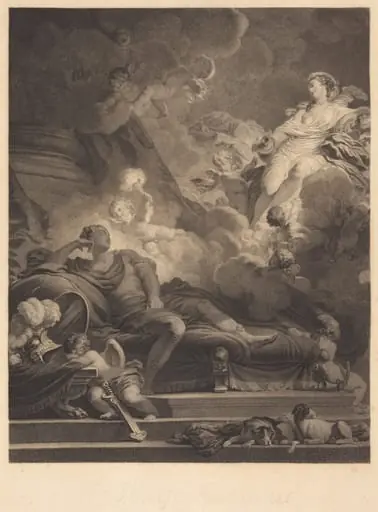 Le Songe d'Amour (Love's Dream)
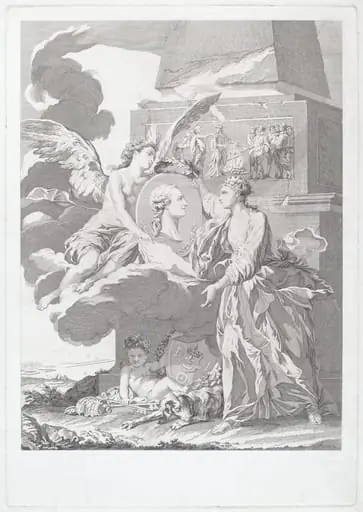 Allegorical Portrait of Pierre Buirette de Belloy
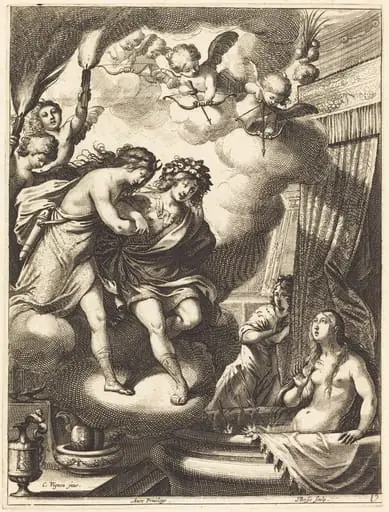 Illustration to Jean Desmarets' "L'Ariane"
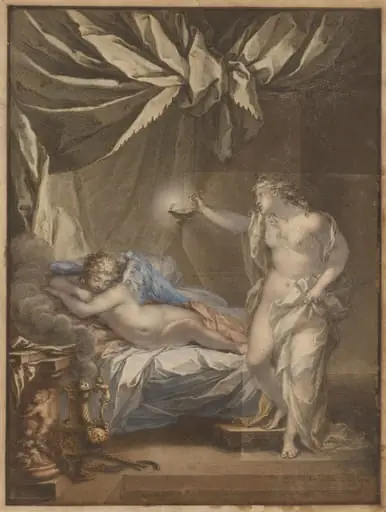 Cupid and Psyche
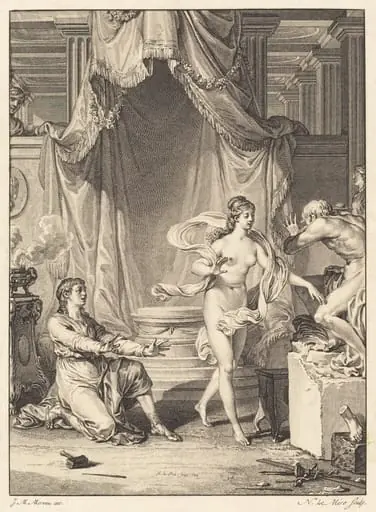 Pygmalion
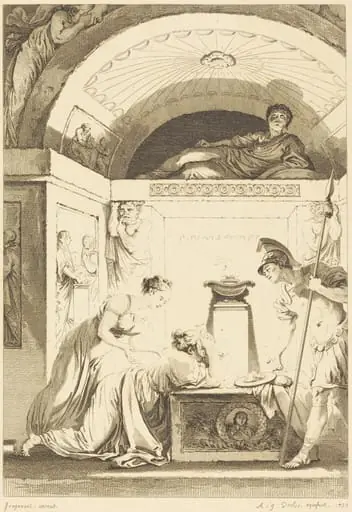 La matrone d'Ephese
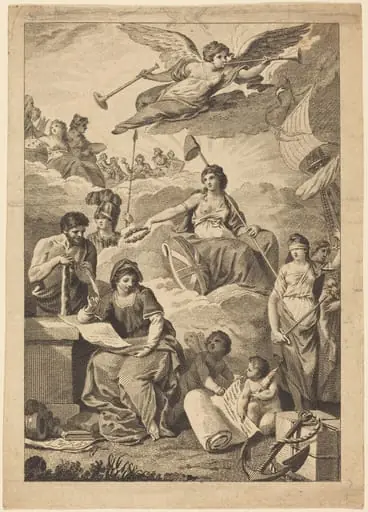 Britannia Crowning History
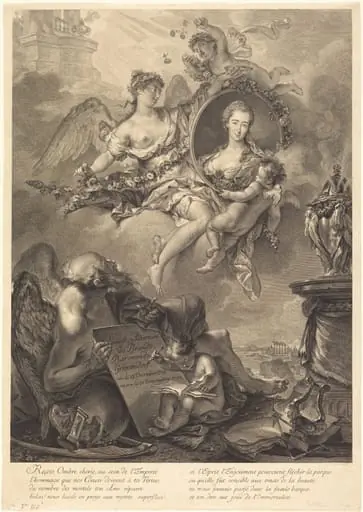 Louise Albertine de Brandt, Baroness von Grapendorf
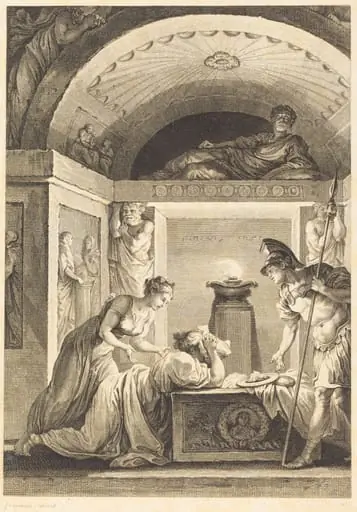 La matrone d'Ephese
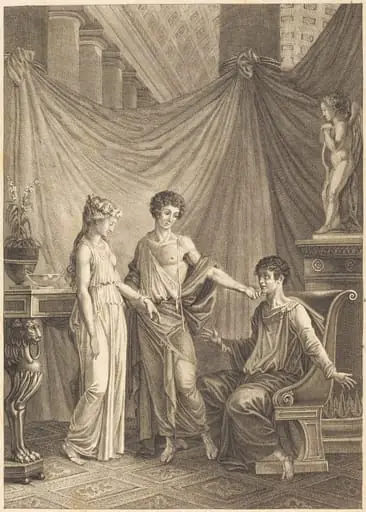 Les deux amis
 Esquisse d’un tombeau (Sketch for a Tomb)