Artwork
The Four Seasons
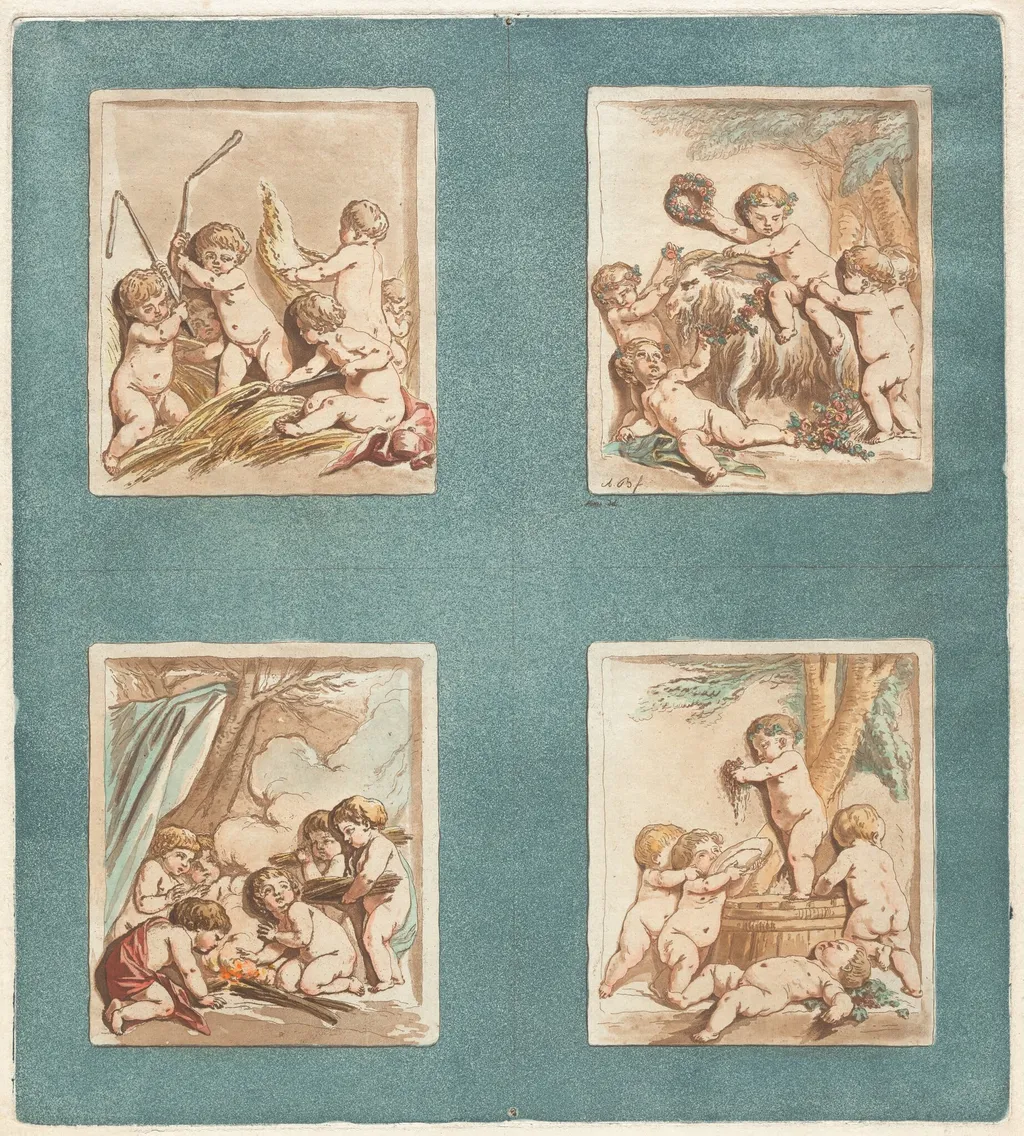
The Four Seasons is an ink print by the Romanticist artist Alexandre Briceau. It dates from 1784 and is held in the collection of the National Gallery of Art.
About this work
Overview
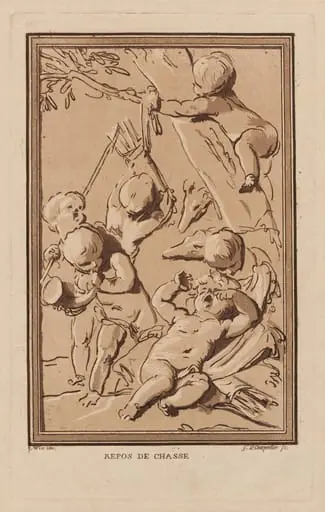
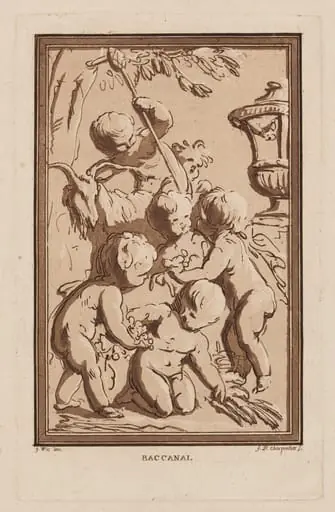
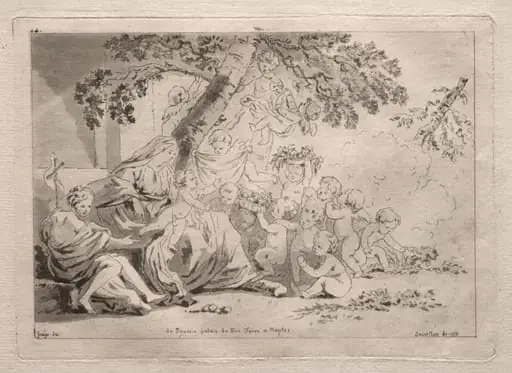
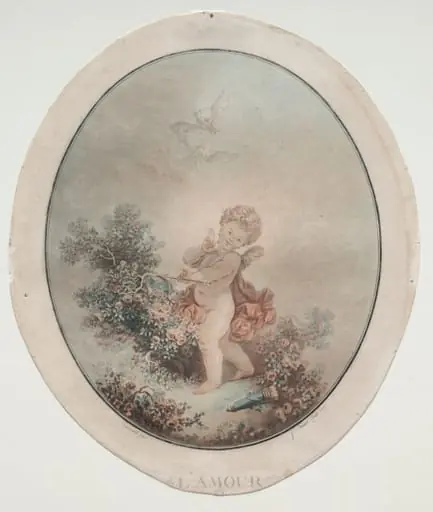
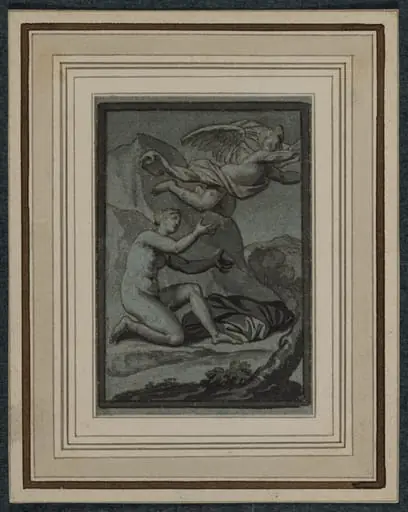
Created around 1784, The Four Seasons is a small series of four prints by French artist Alexandre Briceau. Each print portrays a seasonal allegory in the form of a female figure, rendered in a limited palette of brown and blue tones with hand‑applied color on laid paper.
Subject & Meaning
The spring figure clutches a bouquet of blossoms, summer bears a sickle, autumn cradles a cluster of grapes, and winter embraces a stark, leafless branch. These attributes identify the traditional personifications of the four seasons and convey the cyclical passage of time.
Technique & Style
Briceau combined etching with aquatint, using acid to incise lines and tonal areas on a metal plate. After printing, he enhanced each image with hand‑applied watercolor, creating subtle variations in hue while retaining the overall brown‑blue scheme.
History & Provenance
Only a few impressions of the set have survived, underscoring its rarity. The prints are part of the collection at the National Gallery of Art in Washington, where they are catalogued under Briceau’s name.
Context
The work reflects late‑18th‑century French interest in allegorical representation and the technical experimentation with printmaking methods that allowed artists to produce limited, hand‑colored editions for a discerning market.
Artist & collection