Artwork
Peisaj cu case
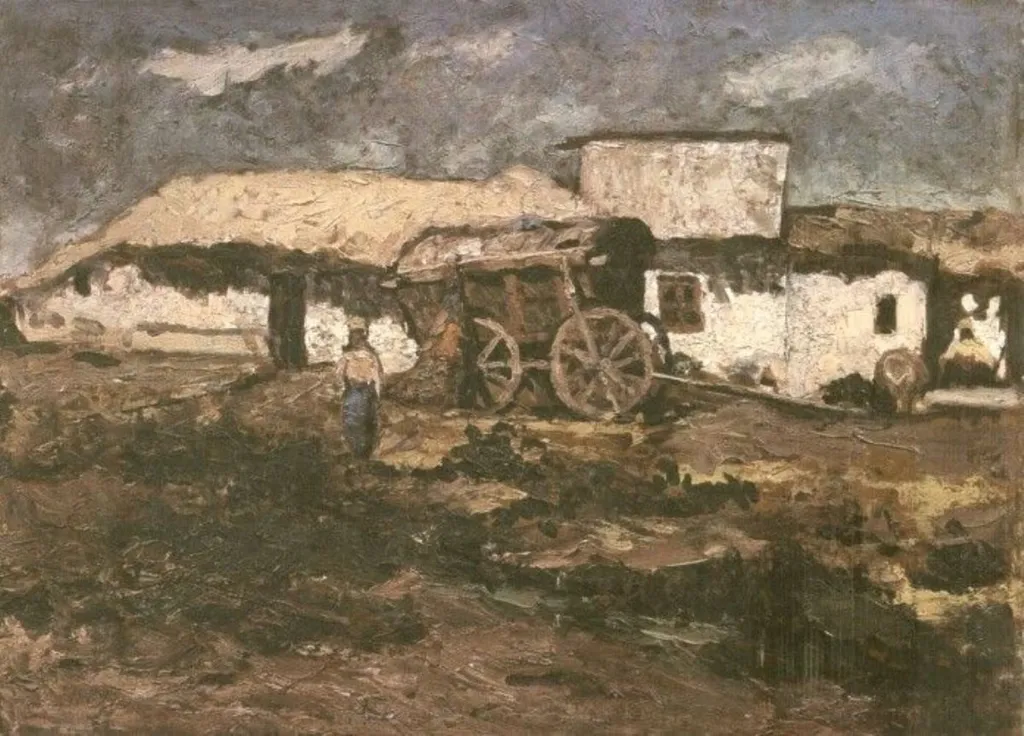
Peisaj cu case is an unspecified painting by Otto Briese. It dates from 1927 and is held in the collection of the National Museum of Art of Romania.
About this work
Overview
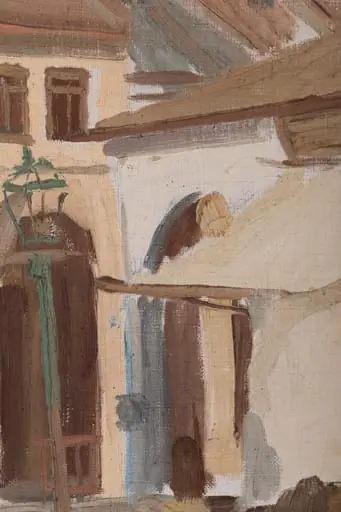
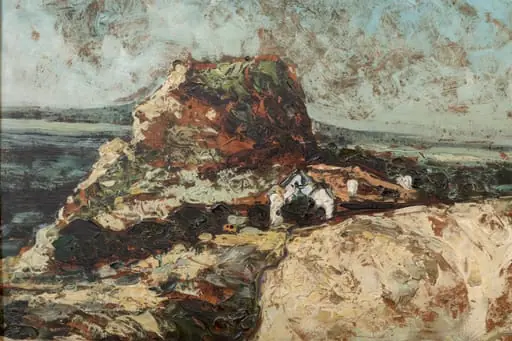
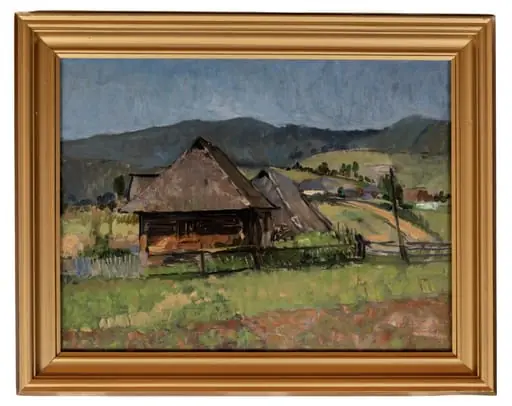
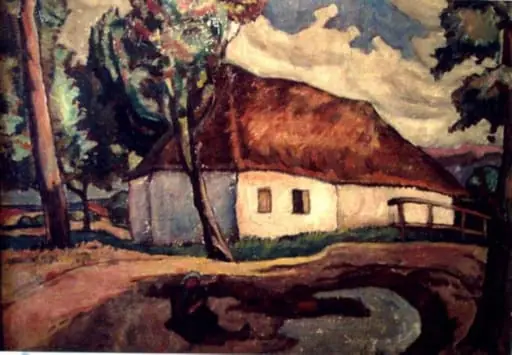
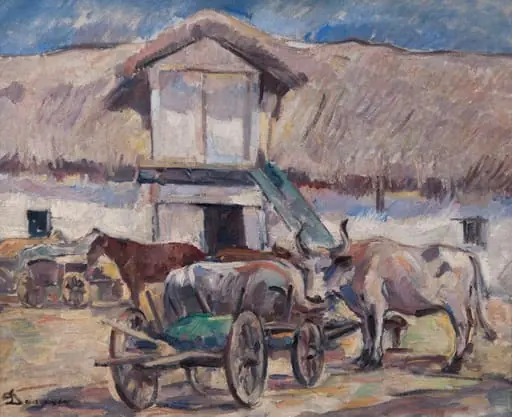
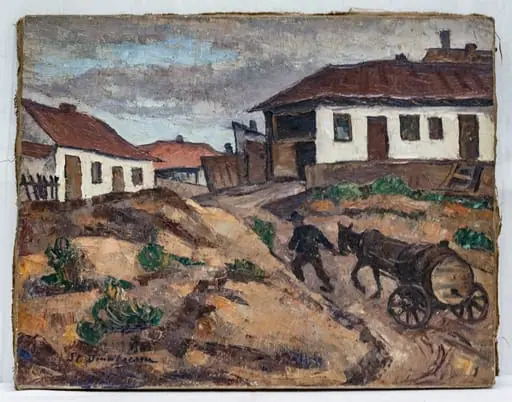
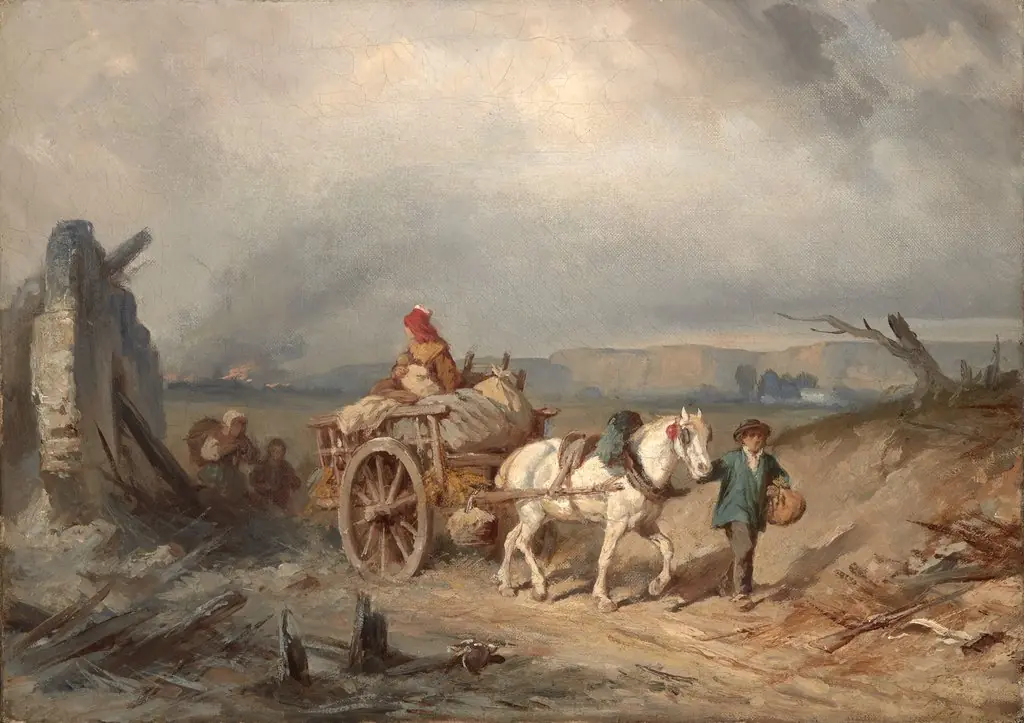
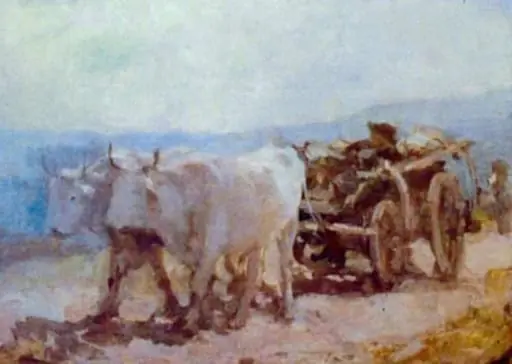
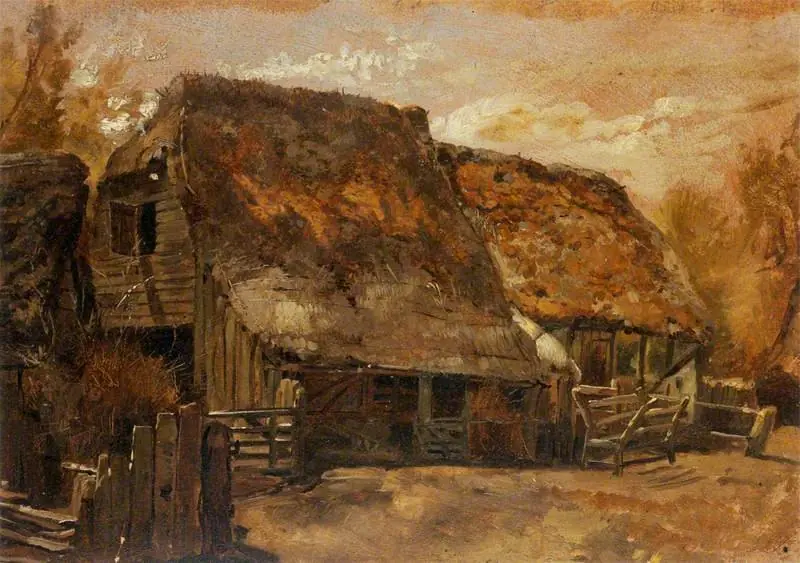
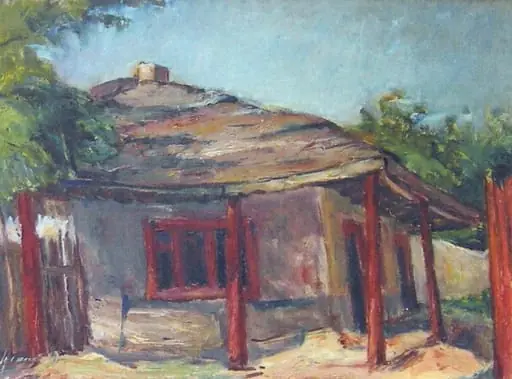
Painted in 1927 by Otto Briese, this landscape depicts a modest rural scene with a weathered house, a covered wagon, and a solitary figure near the vehicle. The setting is rendered in muted tones under a brooding sky, emphasizing the quiet isolation of the moment. The work avoids idealization, instead focusing on the physicality of the environment and the subdued presence of its inhabitants.
Subject & Meaning
The painting captures a moment of stillness in an agricultural setting, where daily life unfolds without ceremony.
The painting captures a moment of stillness in an agricultural setting, where daily life unfolds without ceremony. The figure near the wagon, holding an indistinct object, suggests a pause in labor or travel. The barren, muddy yard and the house’s worn condition imply hardship or economic constraint, yet the scene is presented without judgment, inviting quiet contemplation rather than narrative interpretation.
Technique & Style
Briese employed thick, textured brushwork, applying paint with a tactile urgency that emphasizes the wet, uneven ground and the rough surfaces of the structures. The impasto technique gives the surface a physical depth, reinforcing the rawness of the environment. The sky and ground blend in loose, unrefined strokes, avoiding smooth transitions and enhancing the sense of immediacy and emotional weight.
History & Provenance
Created during Briese’s active period in Eastern Europe, the painting reflects his engagement with regional rural life. It remained in private hands for much of the 20th century, with limited public exposure. Documentation is sparse, but its stylistic consistency with Briese’s other works from the late 1920s supports its attribution and dating.
Context
In the late 1920s, many European artists turned away from urban modernism to depict rural existence with unvarnished realism. Briese’s work aligns with this trend, echoing the regionalist sensibilities of contemporaries who sought to capture the dignity and hardship of peasant life. The painting’s subdued palette and lack of sentimentality reflect a broader artistic shift toward authenticity over ornamentation.
Legacy
Though not widely exhibited, Peisaj cu case contributes to the understanding of Briese’s commitment to unembellished observation. It stands as a quiet example of interwar regional painting that prioritized emotional resonance over dramatic effect. Its preservation offers insight into how lesser-known artists interpreted the rhythms of rural life during a time of social change.
Artist & collection
Artist
Textile artist Otto Briese made woven portraits and landscapes in the early 1900s.