Artwork
Interior of Crystal Palace, Egyptian Court, columns from the Temple of Karnak
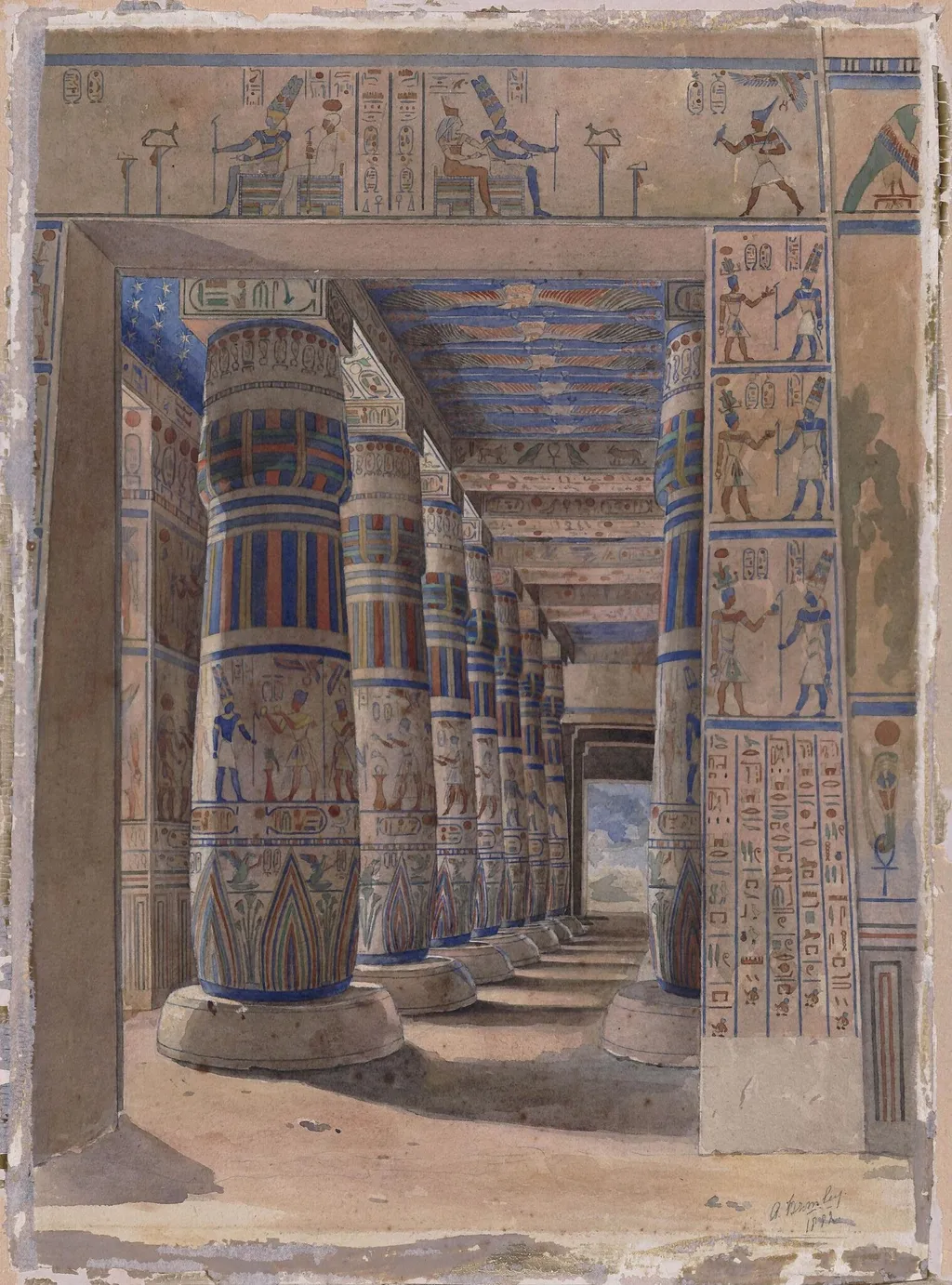
Interior of Crystal Palace, Egyptian Court, columns from the Temple of Karnak is a watercolor work on paper by the Impressionist artist Alice Brinsley. It dates from 1882 and is held in the collection of the Victoria and Albert Museum.
About this work
Overview
Alice Brinsley created this watercolour on card in 1882, capturing the Egyptian Court within the Crystal Palace at Sydenham. The work is signed and dated by the artist, with her name also inscribed on the reverse. It documents a reconstructed interior that displayed authentic architectural fragments from the Temple of Karnak, recontextualized within a Victorian exhibition space.
Subject & Meaning
The scene presents a curated version of ancient Egyptian architecture, assembled from original columns and decorative elements relocated from Karnak.
The scene presents a curated version of ancient Egyptian architecture, assembled from original columns and decorative elements relocated from Karnak. Brinsley’s depiction emphasizes the artificiality of the setting: the columns, though genuine, are framed by a fabricated interior designed to evoke an exotic past. The composition reflects 19th-century efforts to make ancient culture accessible through staged display rather than archaeological authenticity.
Technique & Style
Rendered in watercolour on card, the piece employs flat planes of vivid blue, red, and gold to replicate the original polychromy of the temple fragments. Hieroglyphs and figural reliefs are rendered with precise detail but lack spatial depth, mirroring the decorative, two-dimensional aesthetic of the court’s design. The style aligns with Owen Jones’s principles of pattern and colour, prioritizing visual harmony over naturalistic illusion.
History & Provenance
The watercolour was made during the period when the Crystal Palace housed the Fine Art Courts, a project led by Owen Jones and Matthew Digby Wyatt. These courts displayed architectural relics in reconstructed environments for public education. Brinsley’s work is one of several contemporary records of these installations, preserving their appearance before later alterations and eventual demolition.
Context
In the late 19th century, European museums and exhibitions increasingly used reconstructed spaces to present non-Western artefacts. The Egyptian Court at Sydenham was part of this trend, blending archaeological fragments with imaginative design. Brinsley’s watercolour reflects both the fascination with ancient Egypt and the Victorian impulse to control and frame the past for public consumption.
Legacy
Brinsley’s work contributes to the visual archive of 19th-century exhibition practices, illustrating how ancient monuments were reinterpreted for modern audiences. While the Crystal Palace no longer stands, her watercolour remains a tangible record of how cultural heritage was visually mediated during an era of imperial collecting and public spectacle.
Artist & collection
Artist
Alice Brinsley painted bright watercolours of the Crystal Palace interiors in the 1880s.

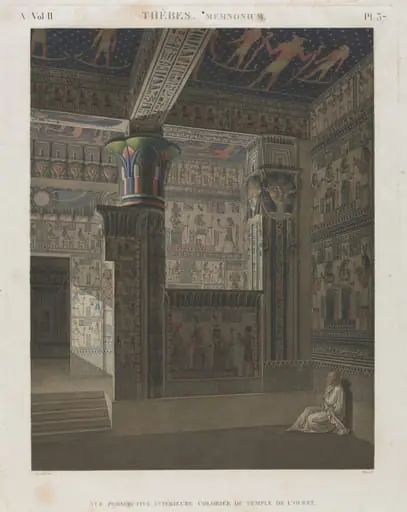 Description of Egypt: Thebes. Memnonium, Vol. II, Pl. 37
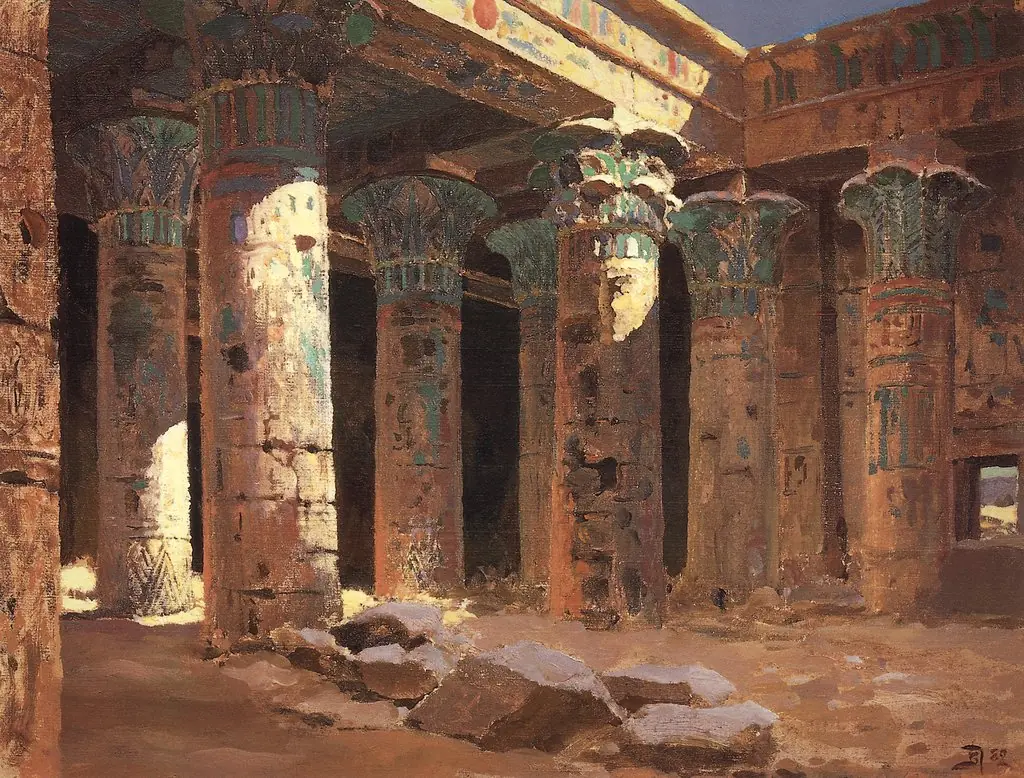 Temple of Isis, Philae
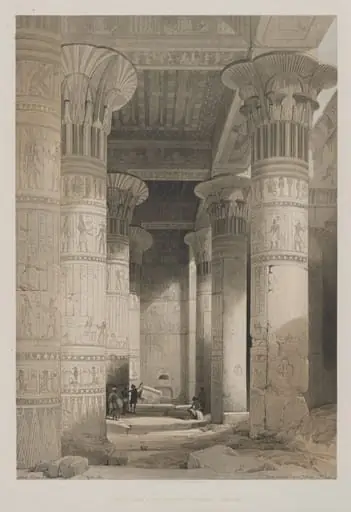 Egypt and Nubia, Volume I: View Under the Grand Portico of the Temple, Philae
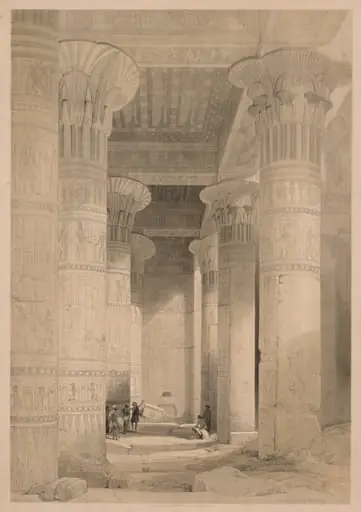 Egypt and Nubia: Volume I - Frontispiece, View under the Grand Portico, Philae
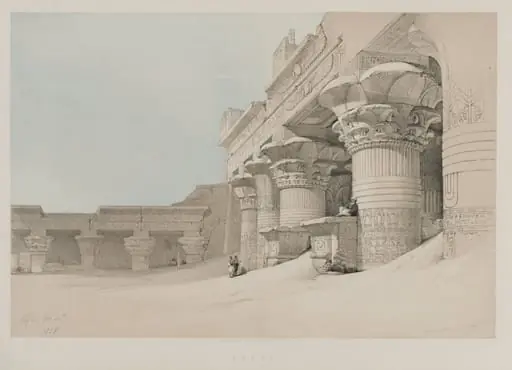 Egypt and Nubia, Volume II: Edfou
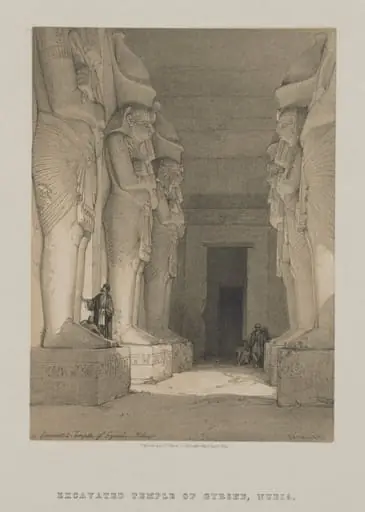 Egypt and Nubia, Volume I: Excavated Temple of Gyrshe, Nubia
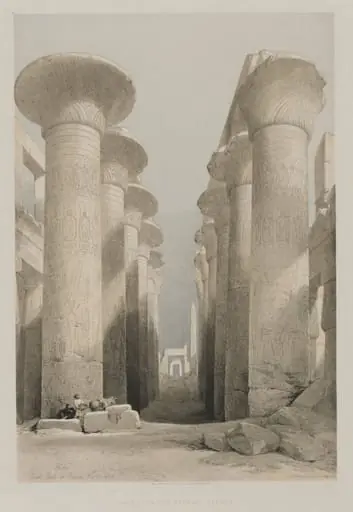 Egypt and Nubia, Volume I: Thebes, Great Hall at Karnac
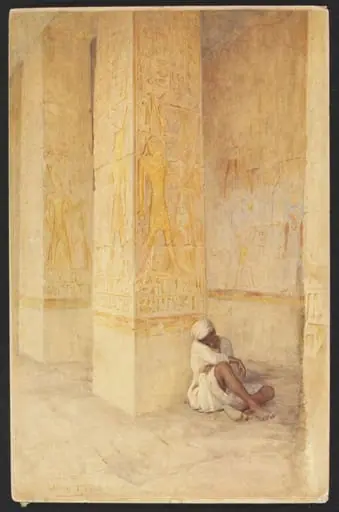 The Temple of Hatshepsoo at Thebes
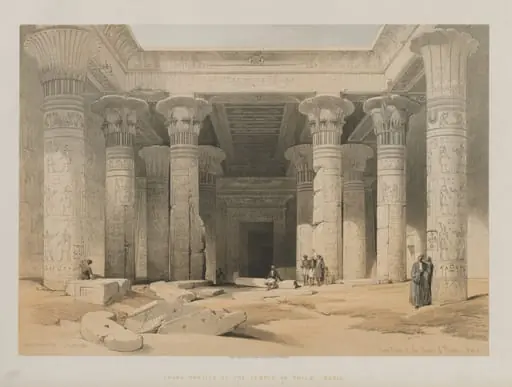 Egypt and Nubia, Volume I: Grand Portico of the Temple of Philae, Nubia
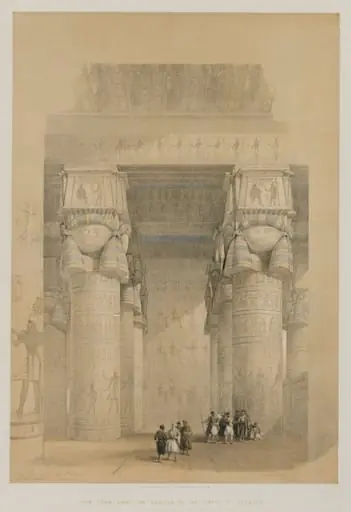 Egypt and Nubia, Volume II: View from Under the Portico of the Temple of Dendera