Artwork
The Coronation of Cosimo I de' Medici
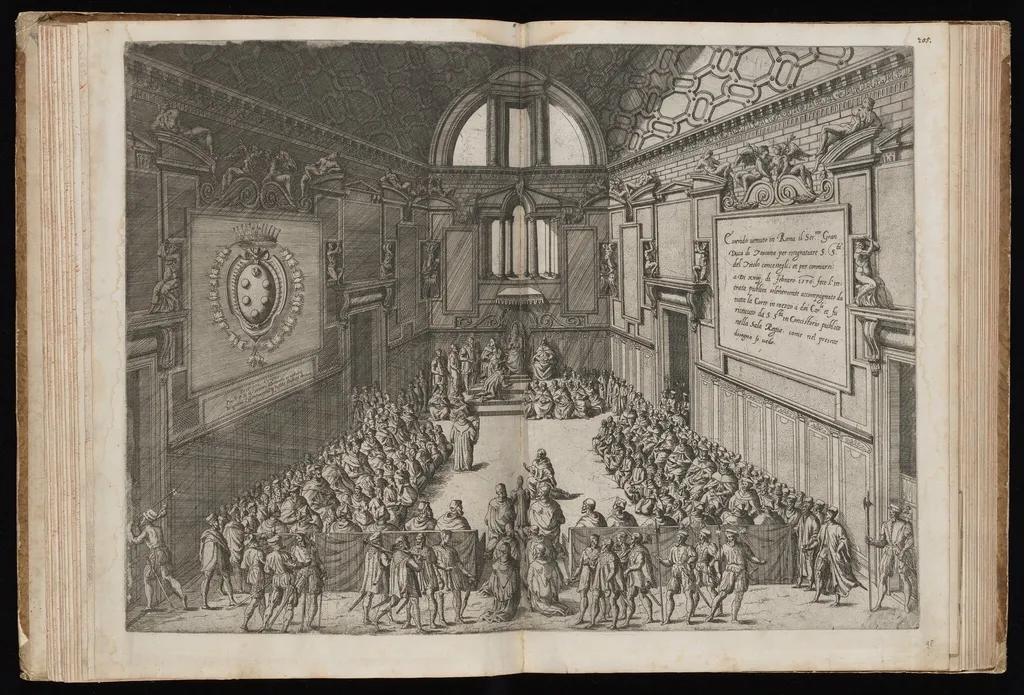
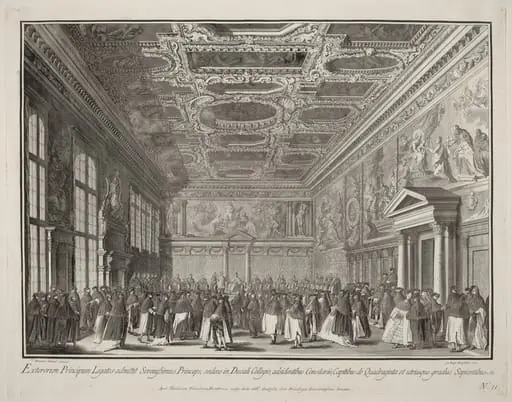
The Coronation of Cosimo I de' Medici is an ink print by the Renaissance artist Étienne Dupérac. It is held in the collection of the National Gallery of Art.
About this work
Overview
Created around 1570, this black-and-white etching by Étienne Dupérac documents the ceremonial coronation of Cosimo I de' Medici as Grand Duke of Tuscany.
Created around 1570, this black-and-white etching by Étienne Dupérac documents the ceremonial coronation of Cosimo I de' Medici as Grand Duke of Tuscany. Rendered with meticulous line work, the print captures a formal indoor procession beneath ornate architecture. Its precision and scale suggest it was intended as a documentary record rather than a decorative piece, aligning with Renaissance practices of visually preserving state rituals for wider circulation among elites.
Subject & Meaning
The scene depicts Cosimo I ascending to his new title in a lavish hall, surrounded by courtiers, clergy, and officials. The centralized throne and prominent Medici coat of arms emphasize legitimacy and dynastic authority. The orderly procession of figures toward the ruler reinforces hierarchical order, while the kneeling and standing groups reflect the structured social roles of the Florentine court. The image functions as a visual affirmation of Medici power following their transition from dukes to grand dukes.
Technique & Style
Dupérac employed fine, controlled etching lines to render intricate details—individual facial expressions, layered textiles, and architectural ornamentation. The monochrome palette enhances clarity and depth through tonal variation rather than color. The composition is densely packed yet carefully organized, guiding the viewer’s eye along the procession toward the throne. The inclusion of a vertical text panel on the right suggests the print was meant to be read as well as seen, combining visual and written testimony.
History & Provenance
The etching was produced shortly after Cosimo I’s formal elevation to Grand Duke in 1569, likely commissioned to commemorate the event for diplomatic or archival purposes. Dupérac, a French artist active in Rome and Florence, was known for his architectural and ceremonial prints. The work circulated among European courts and collectors, serving as both historical documentation and a symbol of Medici prestige. Its survival in multiple institutional collections attests to its enduring significance as a record of political ritual.
Context
In late 16th-century Italy, printed images of state ceremonies were increasingly used to project authority beyond the immediate audience. Etching allowed for wider dissemination than painted altarpieces or frescoes. Dupérac’s work reflects a broader trend in which rulers employed visual media to legitimize new titles and consolidate power. The detailed rendering of architecture and dress also aligns with Renaissance humanist interests in recording material culture and ceremonial protocol with accuracy.
Legacy
This etching remains a key example of how printmaking served political documentation in early modern Europe. Its technical precision influenced later artists documenting royal events, and its compositional structure became a model for ceremonial prints across the continent. Today, it is studied not only for its artistic merit but as a primary source for understanding the visual rhetoric of power in Renaissance Italy.
Artist & collection


![View of the Tiber; Copy of a Roman Sculpture of a Bacchante [verso], by Étienne Dupérac](https://artifactworldgallery.com/img/etienne-duperac--view-of-the-tiber-copy-of-a-roman-sculpture-of-a-bacchante-v--102e2a97a120fe3b-w320.webp) View of the Tiber; Copy of a Roman Sculpture of a Bacchante [verso]
View of the Tiber; Copy of a Roman Sculpture of a Bacchante [verso]![View of the Castle Sant'Angelo and the Ospedale di Santo Spirito [recto], by Étienne Dupérac](https://artifactworldgallery.com/img/etienne-duperac--view-of-the-castle-sant-angelo-and-the-ospedale-di-santo-spi--b09ebaffc1ffa770-w320.webp) View of the Castle Sant'Angelo and the Ospedale di Santo Spirito [recto]
View of the Castle Sant'Angelo and the Ospedale di Santo Spirito [recto]![Orthographia Partis Interioris Templi Divi Petri [Interior View of Saint Peter's Basilica], by Étienne Dupérac](https://artifactworldgallery.com/img/etienne-duperac--orthographia-partis-interioris-templi-divi-petri-interior-vi--59b448ec2f3049cc-w320.webp) Orthographia Partis Interioris Templi Divi Petri [Interior View of Saint Peter's Basilica]
Orthographia Partis Interioris Templi Divi Petri [Interior View of Saint Peter's Basilica]![Orthographia Partis Exterioris Templi Divi Petri [Exterior View of Saint Peter's Basilica], by Étienne Dupérac](https://artifactworldgallery.com/img/etienne-duperac--orthographia-partis-exterioris-templi-divi-petri-exterior-vi--97a194b60abe7fac-w320.webp) Orthographia Partis Exterioris Templi Divi Petri [Exterior View of Saint Peter's Basilica]
Orthographia Partis Exterioris Templi Divi Petri [Exterior View of Saint Peter's Basilica]![Areae et Palatii Pontificii Vaticani Topographia [A Papal Blessing in Saint Peter Square], by Étienne Dupérac](https://artifactworldgallery.com/img/etienne-duperac--areae-et-palatii-pontificii-vaticani-topographia-a-papal-ble--d33d6f094b73f039-w320.webp) Areae et Palatii Pontificii Vaticani Topographia [A Papal Blessing in Saint Peter Square]
Areae et Palatii Pontificii Vaticani Topographia [A Papal Blessing in Saint Peter Square]![Capitolii Sciographia [View of the Roman Capitol], by Étienne Dupérac](https://artifactworldgallery.com/img/etienne-duperac--capitolii-sciographia-view-of-the-roman-capitol--e85f3f07c1ca1e5c-w320.webp) Capitolii Sciographia [View of the Roman Capitol]
Capitolii Sciographia [View of the Roman Capitol]![Ichnographia Templi Divi Petri [Plan of Saint Peter's Basilica in Rome], by Étienne Dupérac](https://artifactworldgallery.com/img/etienne-duperac--ichnographia-templi-divi-petri-plan-of-saint-peter-s-basilic--f1844fd1b6664111-w320.webp) Ichnographia Templi Divi Petri [Plan of Saint Peter's Basilica in Rome]
Ichnographia Templi Divi Petri [Plan of Saint Peter's Basilica in Rome] Narcissus
 The Banquet of the Piacevoli
 James I in Parliament
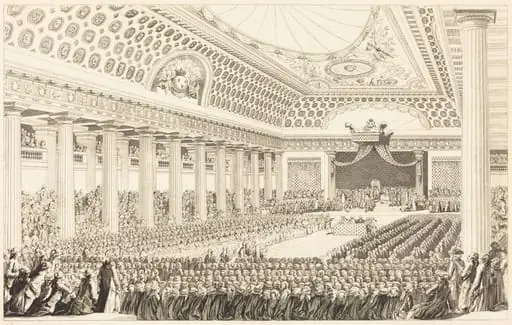 Ouverture des Etats-Généraux à Versailles, le 5 mars 1789
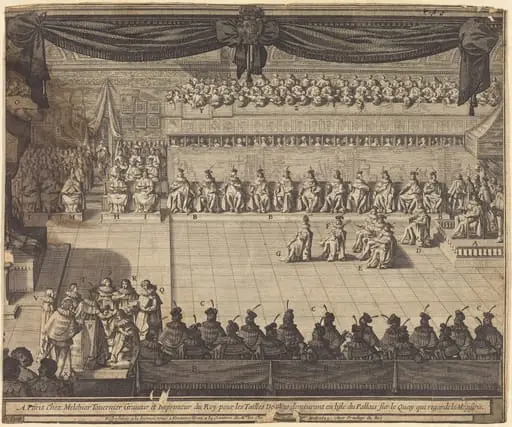 Meeting in the Chapel at Fontainebleau
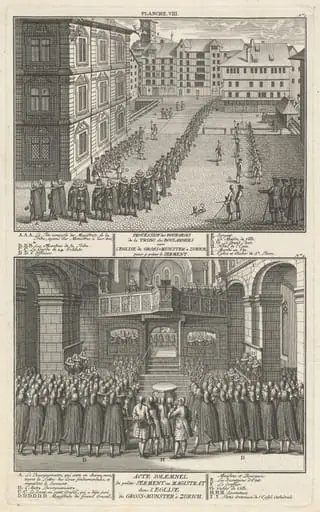 Procession des Bourgeois de la Tribu des Boulangers vers l’Eglise du Grossmunster à Zurich, pour y prêter le Serment; Acte Solemnel de prêter Serment au Magistrat dans l’eglise du Grossmunster à Zurich (Procession and Sermon at the Grossmunster)
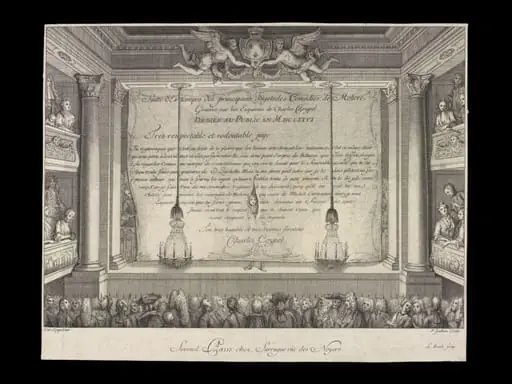 H Beard Print Collection
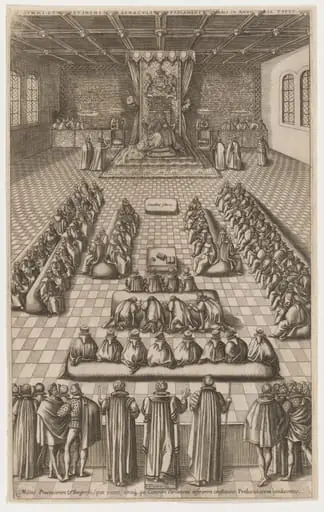 Queen Elizabeth in Parliament
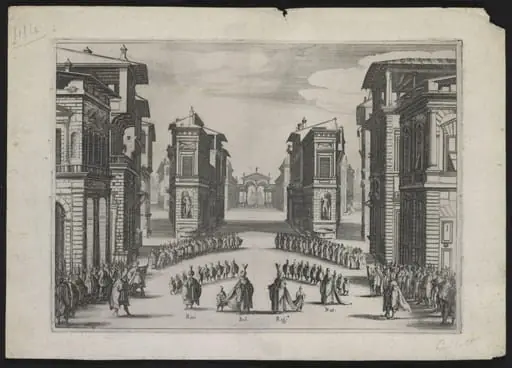 H Beard Print Collection
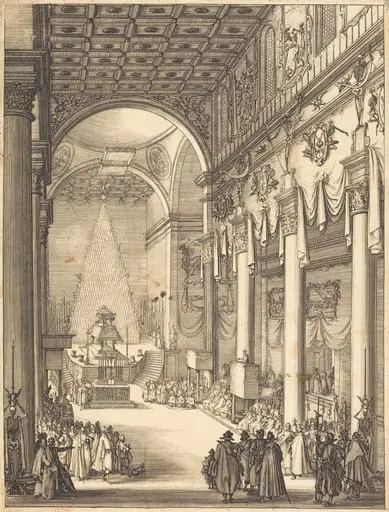 The Catafalque of the Emperor Mathias
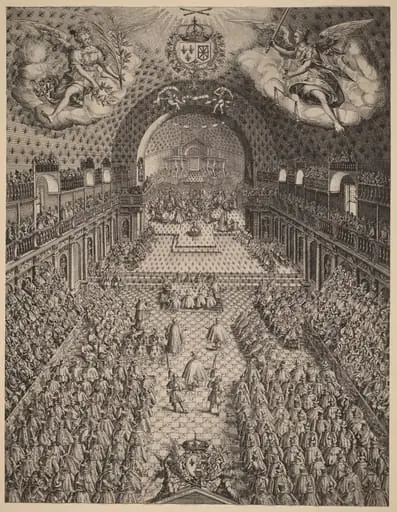 The States General of France (Les Etats Generaux de France)
 Reception by the Doge of Foreign Ambassadors in the Sala del Collegio