Artwork
Frontispiece
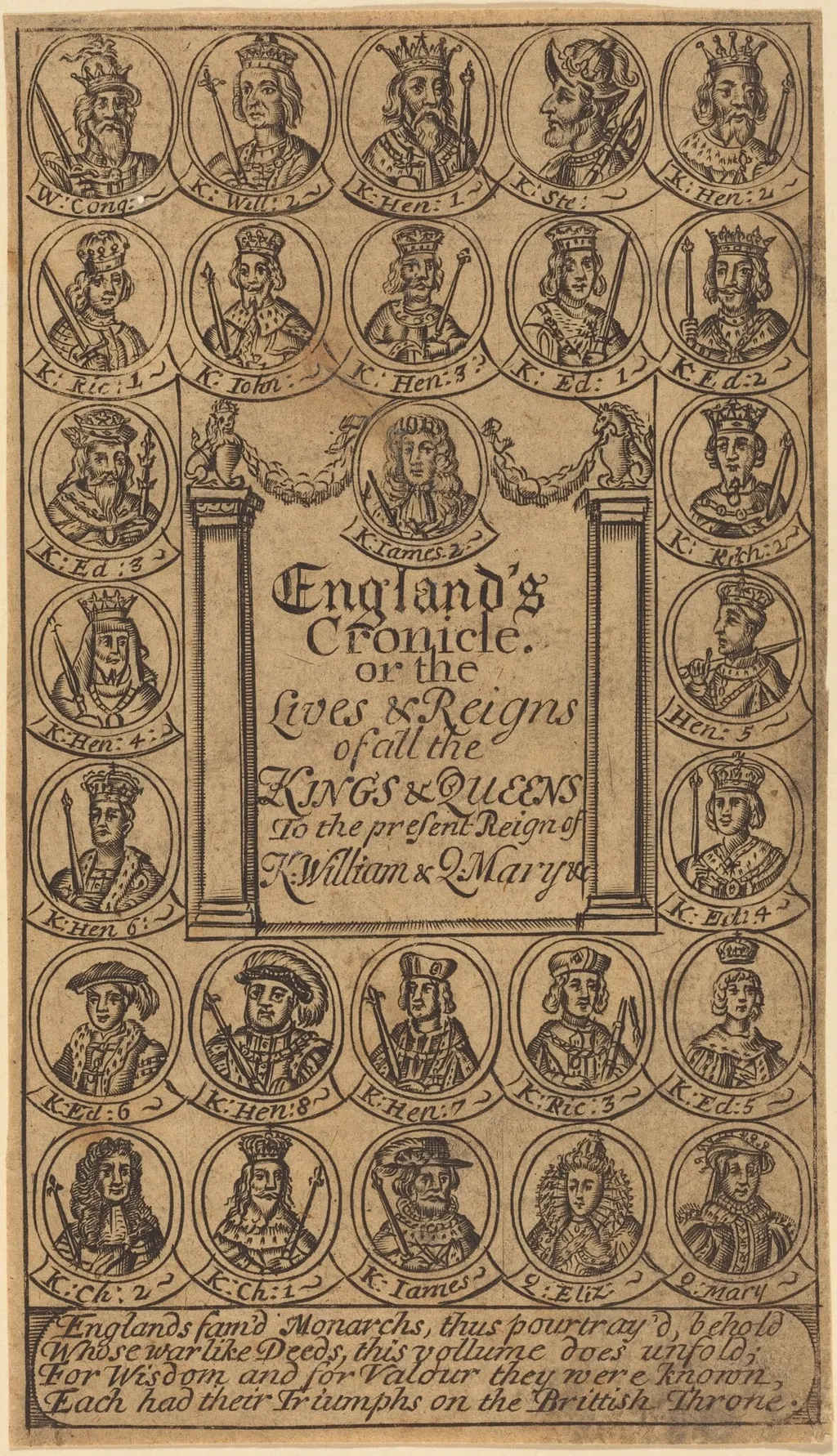
Frontispiece is an ink print by the Baroque artist British 17th Century. It dates from 1650 and is held in the collection of the National Gallery of Art.
About this work
Overview
At the center, a larger portrait is crowned by a banner inscribed 'England’s Chronicle,' signaling the work’s thematic focus.
This engraving serves as a frontispiece, likely intended for a historical volume chronicling English monarchs. Twenty-four small, uniformly framed portraits are arranged in orderly rows, each depicting a ruler with solemn expression. At the center, a larger portrait is crowned by a banner inscribed 'England’s Chronicle,' signaling the work’s thematic focus. Below, a textual promise of royal narratives reinforces its function as a title page.
Subject & Meaning
The portraits represent successive English sovereigns, identified by regalia such as crowns, swords, and globes—symbols of authority, military power, and dominion. The central figure, enlarged and prominently placed, likely signifies a key monarch or the idealized continuity of the crown. The banner and accompanying text frame the image as a visual prologue to a historical record, emphasizing lineage and legitimacy.
Technique & Style
The artist employed fine, precise engraving lines to model facial features and textures, creating subtle gradations of light and shadow. Each portrait is enclosed in a rounded frame, unifying the composition while allowing individual distinction through costume and gesture. The overall aesthetic is formal and restrained, prioritizing clarity and dignity over ornamentation, typical of early modern printed title pages.
History & Provenance
Though the exact publication date and printer are unspecified, the format aligns with mid-16th to early 17th-century English printed histories. Similar frontispieces appeared in chronicles and genealogical texts commissioned by publishers seeking to legitimize royal narratives through visual hierarchy. Its survival suggests it was part of a circulated, if not widely owned, scholarly or aristocratic volume.
Context
In an era when printed books were becoming tools of political and historical education, such frontispieces functioned as visual summaries of power structures. The arrangement of rulers in sequence reinforced the idea of unbroken monarchy, countering periods of instability. Engraved portraits like these helped standardize public imagery of royalty before widespread photography.
Legacy
This print exemplifies how early modern publishers used graphic design to convey authority and continuity. Its structured composition influenced later historical volumes and royal genealogies. Though no longer widely recognized today, it remains a representative artifact of how visual order was employed to narrate political history in print.
Artist & collection

Artist
This artist made detailed engravings and etchings in 17th-century Britain, often for book pages.

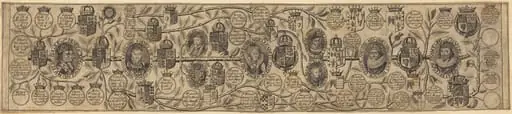
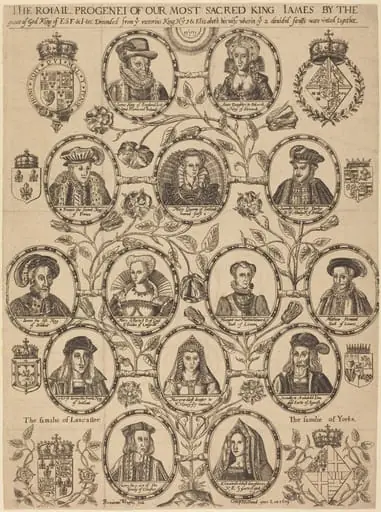 Royal Progeny of King James
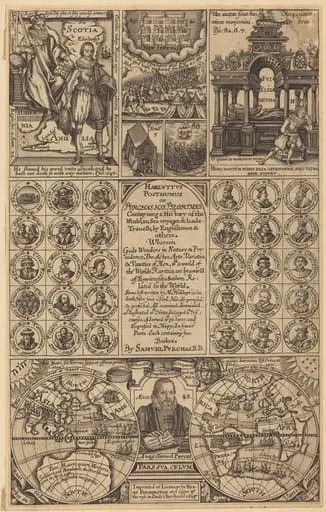
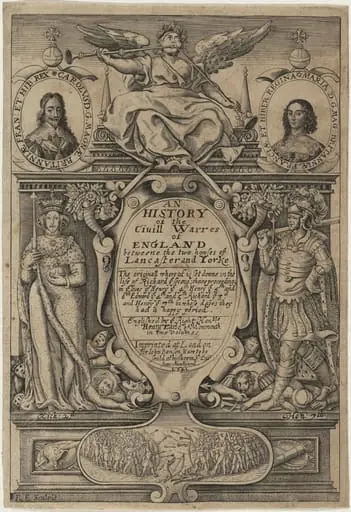 Title page, An History of the Civill Warres of England
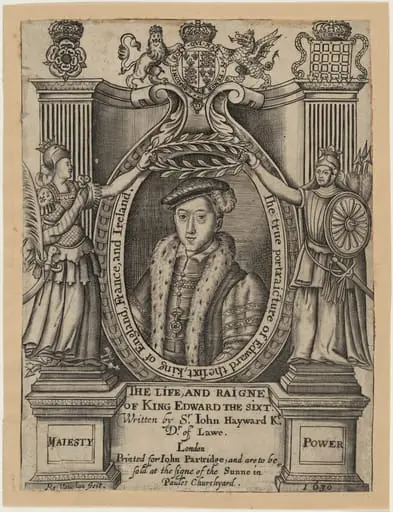 Title Plate to John Hayward, Life and Reigne of King Edward the Sixth
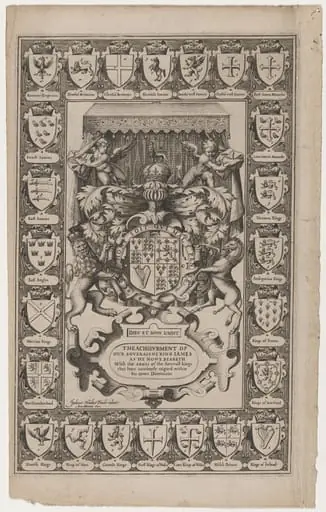 Title Page for the Achievement of our Soveraigne King James
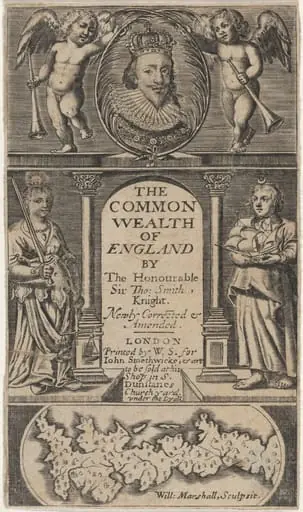 Title Page to Sir Thomas Smith, The Commonwealth of England
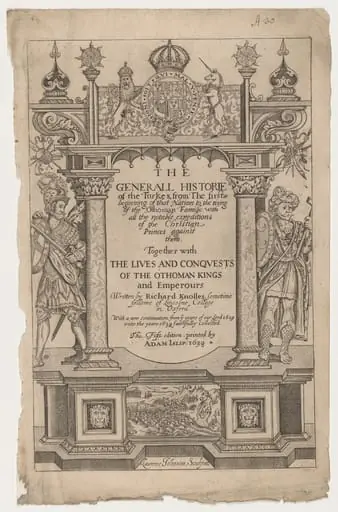 Title Page for R. Knolles Generall Historie of the Turkes
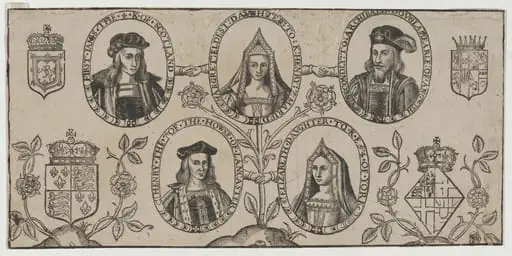 James IV of Scotland, Margaret, Daughter of Henry VII, Archibald Douglas, Earl of Angus, Henry VII, Elizabeth of York
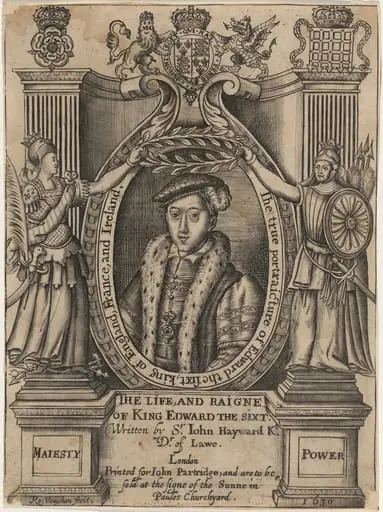 Title Plate to John Hayward, Life and Reigne of King Edward the Sixth
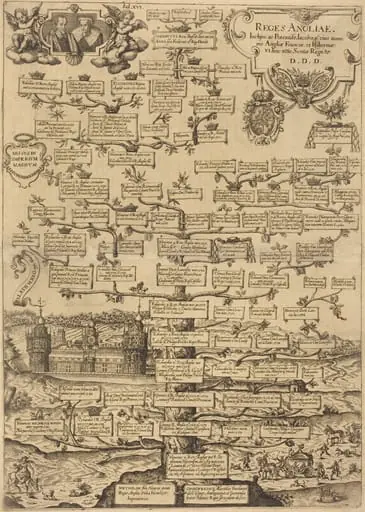
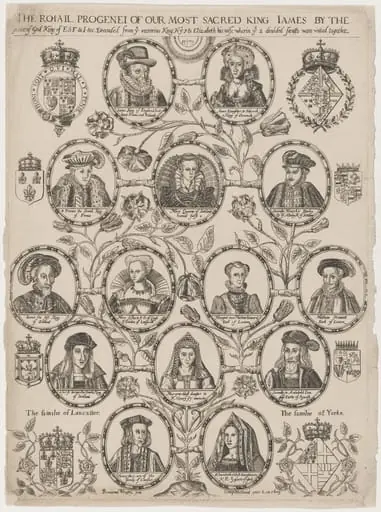 The Royal Progenei of our Most Sacred King James
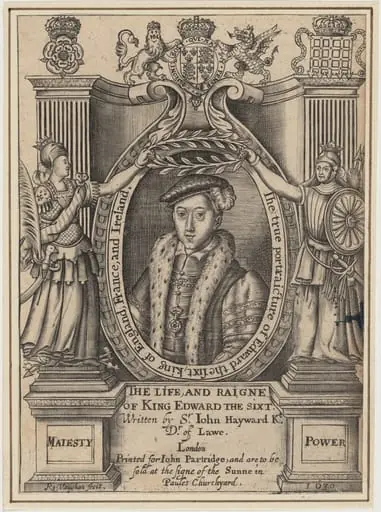 Title Plate to John Hayward, Life and Reigne of King Edward the Sixth