Artwork
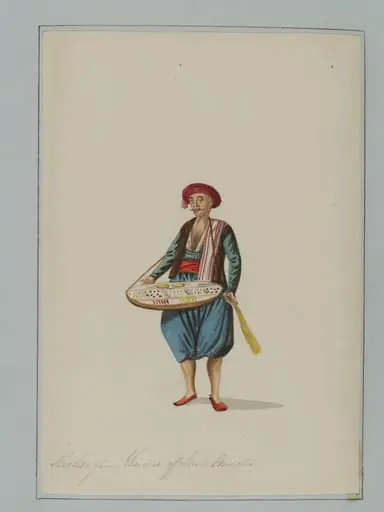
Chiboukge-: Pipe Bearer
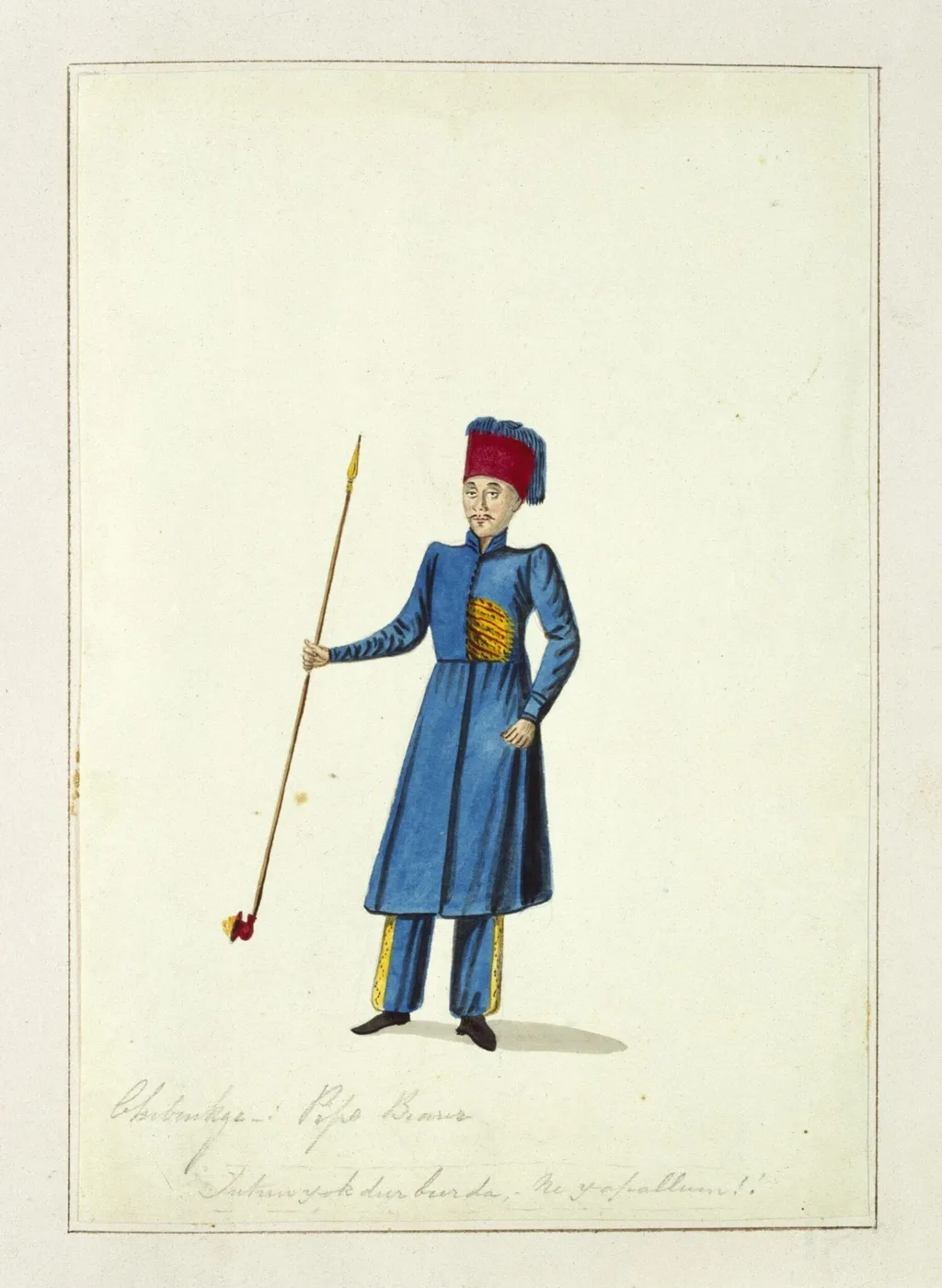
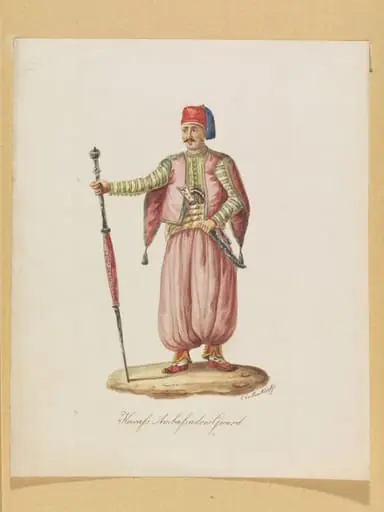
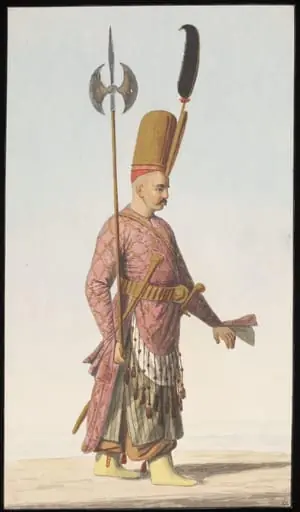
Chiboukge-: Pipe Bearer is a watercolor work on paper by the Romanticist artist Charles Frederick Brockdorff. It dates from 1832 and is held in the collection of the Victoria and Albert Museum.
About this work
Overview
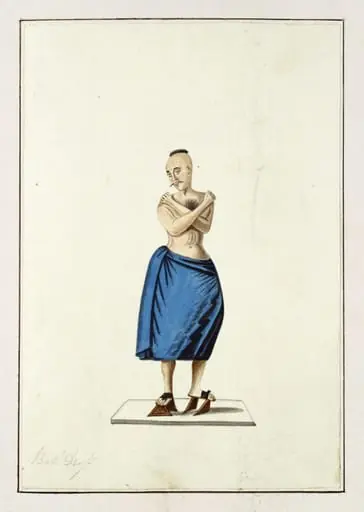
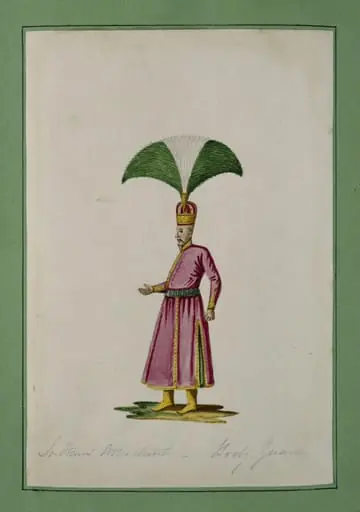
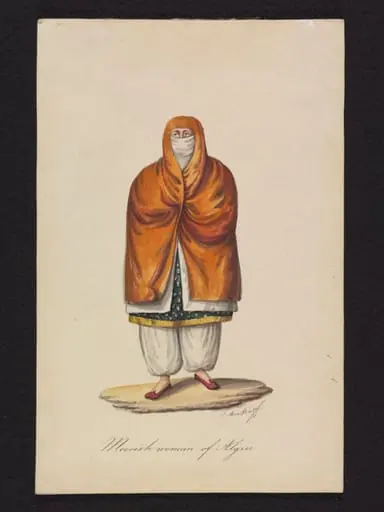
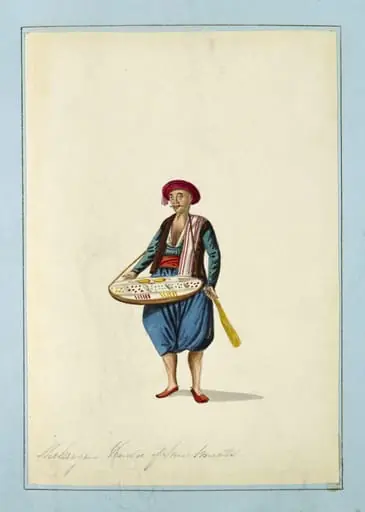
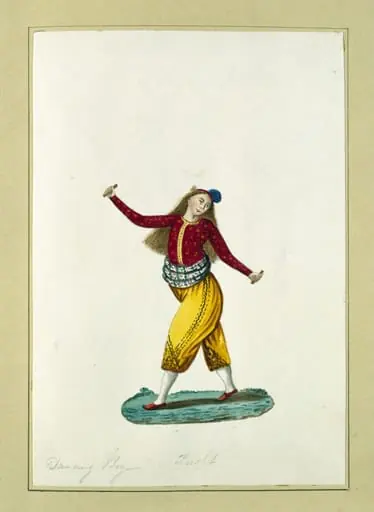
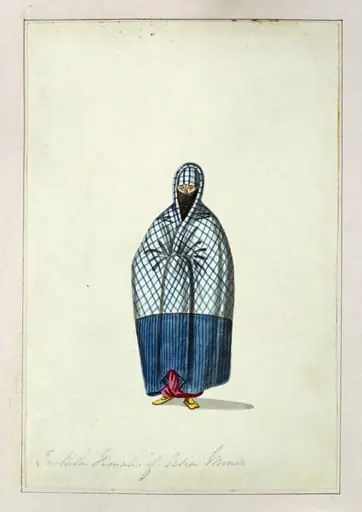
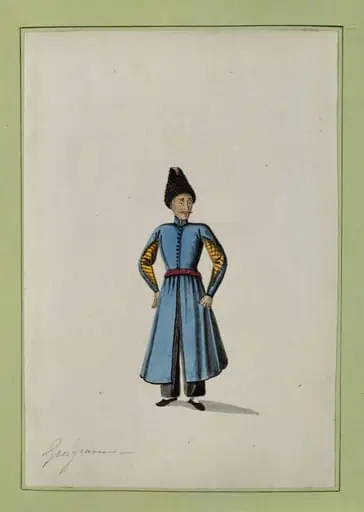
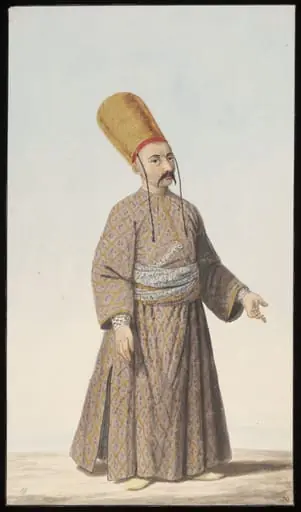
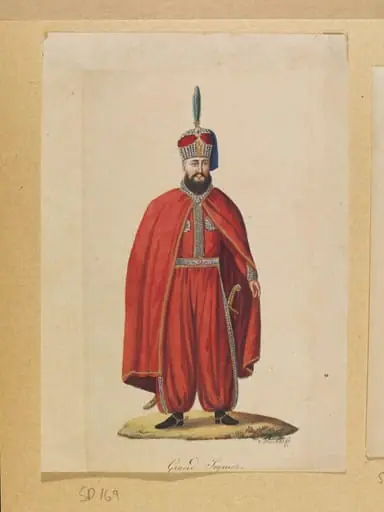
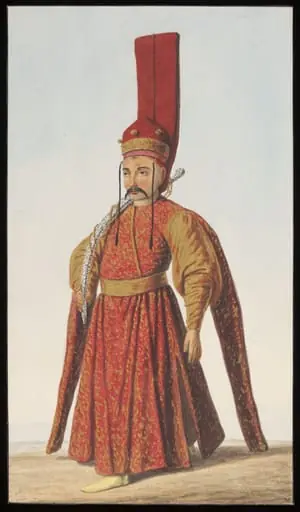
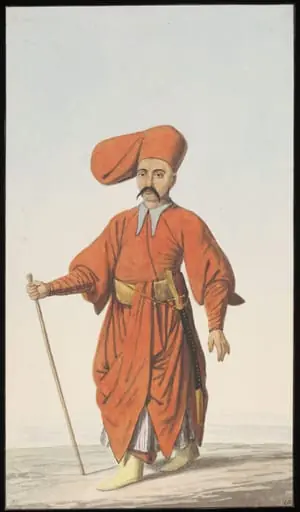
Chiboukge-: Pipe Bearer is a watercolour sketch from a bound album of 54 drawings documenting Ottoman figures and accoutrements.
Chiboukge-: Pipe Bearer is a watercolour sketch from a bound album of 54 drawings documenting Ottoman figures and accoutrements. Created by Charles Frederick Brockdorff, it forms part of a larger collection where 41 works are his, and 13 are by other hands. The album, bound in half-morocco leather with gilt lettering, presents each image mounted on varied-coloured paper across 116 pages, with bilingual titles in French and Turkish Arabic script.
Subject & Meaning
The figure depicts a ceremonial attendant, likely a pipe bearer or guard, dressed in a formal blue uniform with a red-tipped spear, a red hat adorned with a blue tassel, and a yellow sash across the chest. His upright posture and direct gaze convey solemn authority. The absence of a detailed background isolates the figure, emphasizing his role as a symbol of Ottoman military or courtly dignity rather than a specific individual.
Technique & Style
Executed in watercolour on paper, the work employs restrained tonal modulation and clear outlines to define form and fabric. The flat, off-white background directs focus to the subject’s attire and stance. While detailed in costume elements, the rendering avoids excessive ornamentation, reflecting a documentary intent. The style aligns with early 19th-century European travel sketches, prioritizing observation over dramatic expression.
History & Provenance
The album was compiled during Brockdorff’s time in the Ottoman Empire, likely in the 1820s–1830s, as part of a broader European interest in Ottoman culture. It shares formal similarities with albums by Lt. Col. Charles Hamilton Smith and an anonymous collection at the Victoria and Albert Museum. Its binding and bilingual labelling suggest it was intended for scholarly or aristocratic circulation in Europe.
Context
This work emerged amid European fascination with the Ottoman Empire, fueled by diplomatic missions and military campaigns. Artists like Brockdorff documented local figures not as exotic curiosities but as subjects of ethnographic interest. The album’s structure—systematic, labeled, and mounted—reflects Enlightenment-era classification practices, aligning with contemporary efforts to catalog global cultures through visual means.
Legacy
The sketch contributes to a corpus of 19th-century Orientalist drawings that inform modern understandings of Ottoman visual culture. Though not widely exhibited, its presence in institutional collections underscores its value as a primary record of dress, posture, and ceremonial roles. It remains a reference point for scholars studying cross-cultural representation in European travel art of the period.
Artist & collection
Artist
Charles Frederick Brockdorff painted detailed watercolours of North African life and costume in the 1830s.