Artwork
Dancing Boy - Pusht -
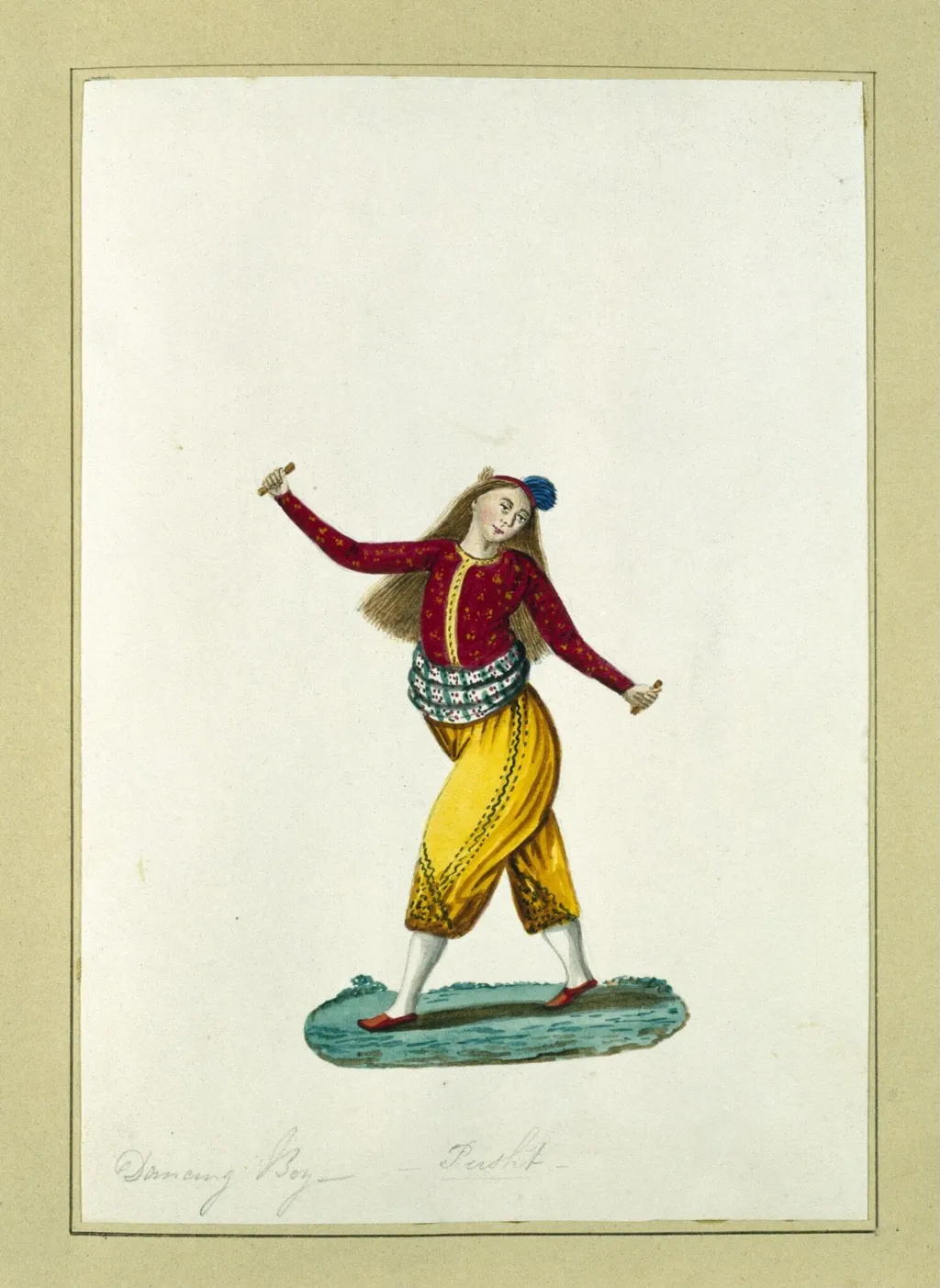
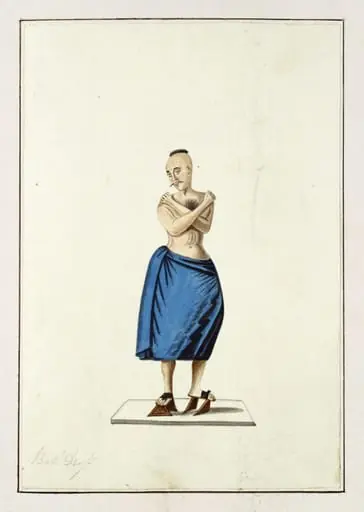
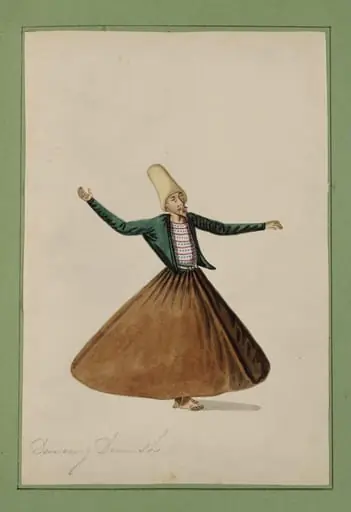
Dancing Boy - Pusht - is a watercolor work on paper by the British Romanticist artist Charles Frederick Brockdorff. It dates from 1832 and is held in the collection of the Victoria and Albert Museum.
About this work
Overview
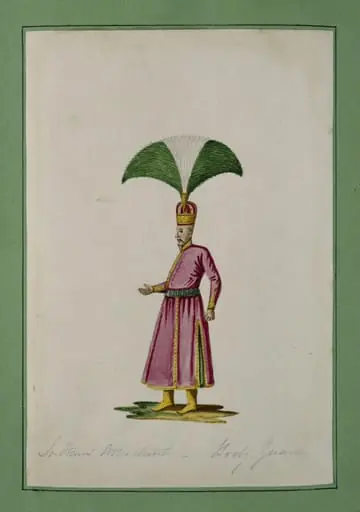
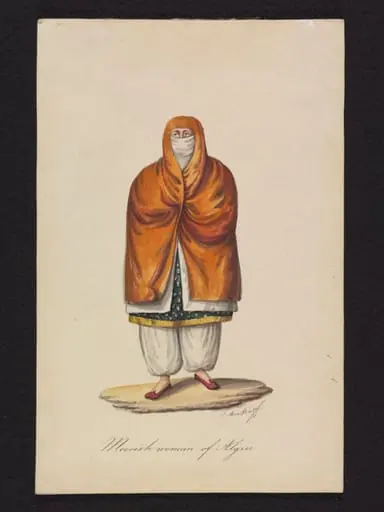
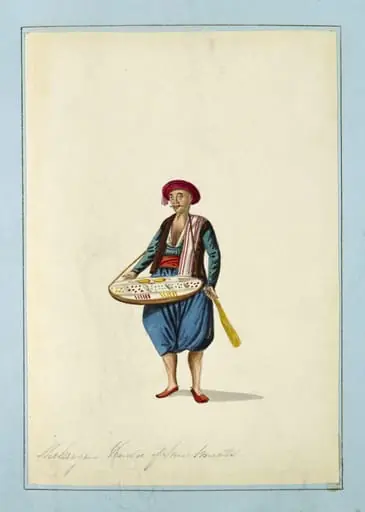
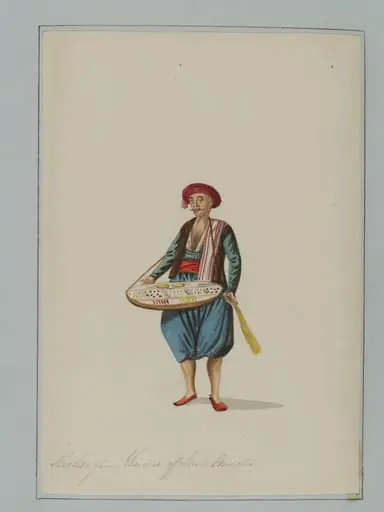
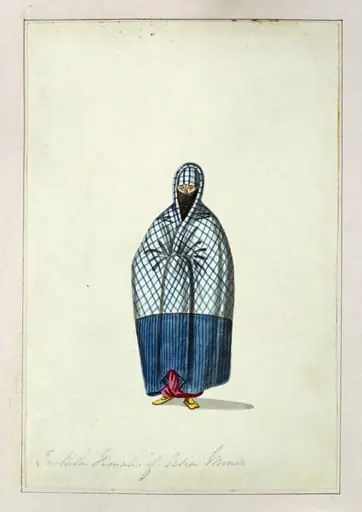
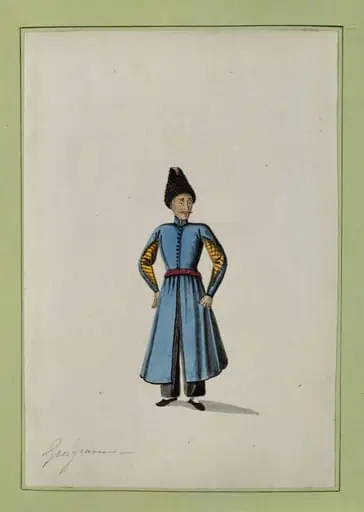
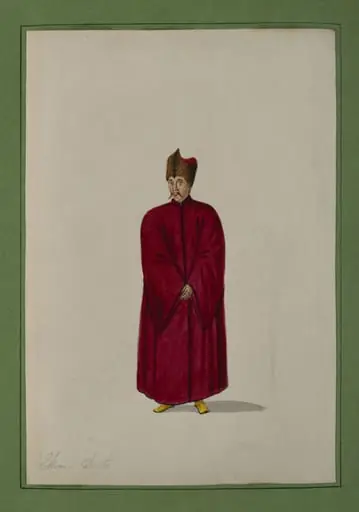
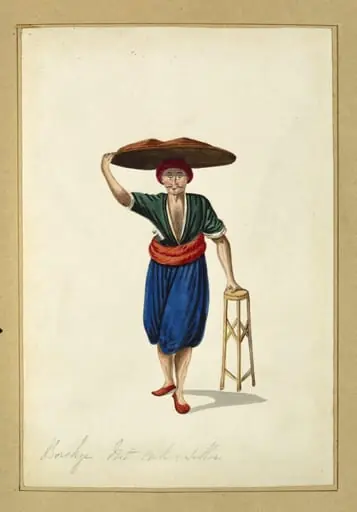
Created in 1832 by Charles Frederick Brockdorff, this watercolour is one of 54 sketches in a bound album documenting Turkish figures and cultural details.
Created in 1832 by Charles Frederick Brockdorff, this watercolour is one of 54 sketches in a bound album documenting Turkish figures and cultural details. The album, comprising 116 pages, includes works by Brockdorff and other artists, mounted on coloured papers. Its half-morocco binding with gilt lettering reflects the period’s interest in curated visual records of the Ottoman world, compiled during a time of heightened European curiosity about Eastern customs.
Subject & Meaning
The image captures a young male dancer mid-motion, one leg raised, arms extended, balancing on a narrow surface. His vivid red tunic, yellow patterned trousers, and red footwear suggest regional dress, while the flowing hair and dynamic posture imply a traditional performance. The title 'Pusht' may reference a local dance form, though its exact cultural context remains unverified. The absence of background elements directs attention to the figure’s movement and attire.
Technique & Style
Brockdorff employed loose, fluid brushwork and unblended washes to convey motion and texture. Bright, unmodulated colours—red, yellow, and black—enhance the dancer’s energy without shading or depth. The paper’s texture and varied mounts contribute to a tactile, assembled quality. This approach aligns with early 19th-century travel sketches, prioritizing immediacy and observation over idealized composition.
History & Provenance
The album containing this watercolour is part of a broader group of works by Brockdorff and contemporaries, some held in the Victoria and Albert Museum. Titles appear in both French and Turkish rendered in Arabic script, indicating multilingual documentation. The album’s construction suggests it was assembled for private or scholarly use, possibly as a reference for European audiences unfamiliar with Ottoman visual culture.
Context
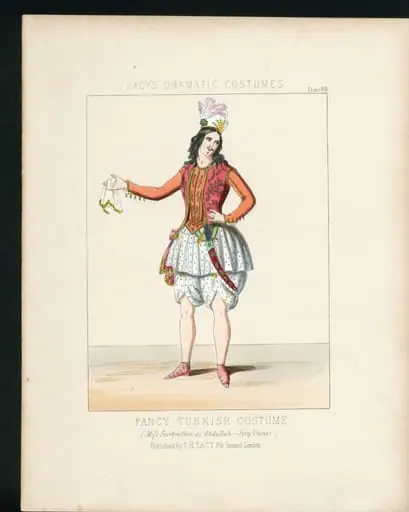
Produced during the Romantic era, the work reflects a broader European fascination with the Ottoman Empire’s customs, often filtered through travel narratives and ethnographic interest. Brockdorff’s sketches, like those of other artists of the period, aimed to record perceived authenticity rather than interpret symbolism. The focus on dance and costume aligns with contemporary efforts to classify and preserve cultural practices through visual means.
Legacy
The album remains a resource for scholars studying cross-cultural representation in early 19th-century art. While not widely exhibited, its presence in institutional collections underscores its role as a documentary artifact. Brockdorff’s approach, though not avant-garde, contributes to a visual archive that captures fleeting moments of daily performance, offering insight into how outsiders perceived and recorded Eastern traditions.
Artist & collection
Artist
Charles Frederick Brockdorff painted detailed watercolours of North African life and costume in the 1830s.