Artwork
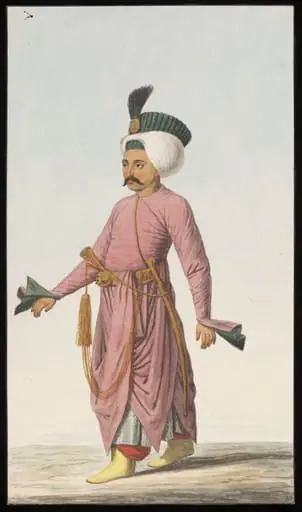
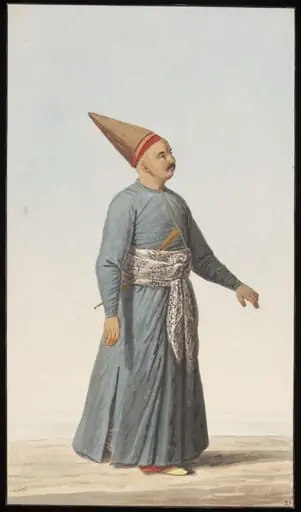
Silâhdar Aga, or sword bearer to the Sultan
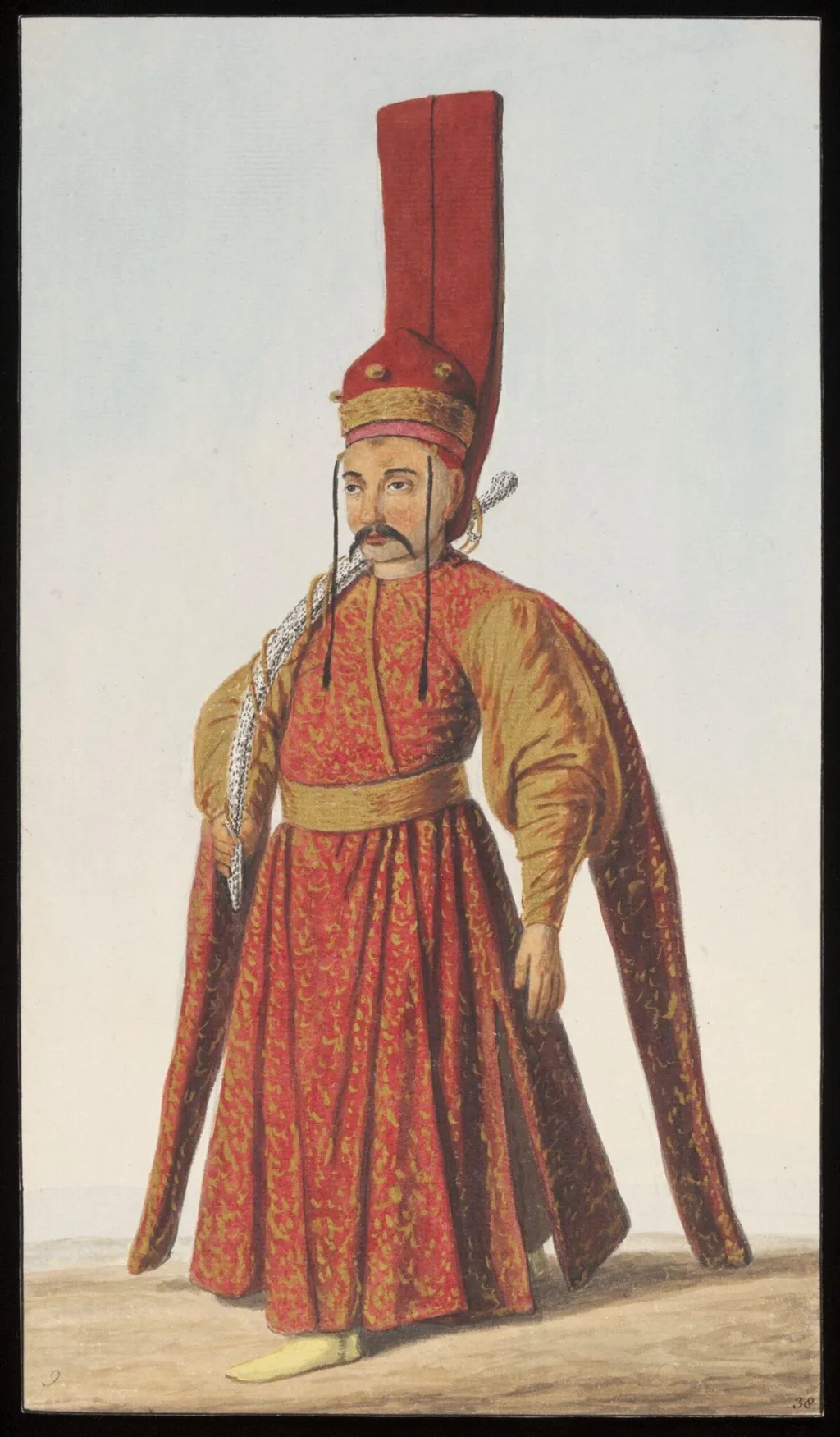
Silâhdar Aga, or sword bearer to the Sultan is a watercolor work on paper by the Romanesque artist Anonymous Greek artist. It dates from 1809 and is held in the collection of the Victoria and Albert Museum.
About this work
Overview
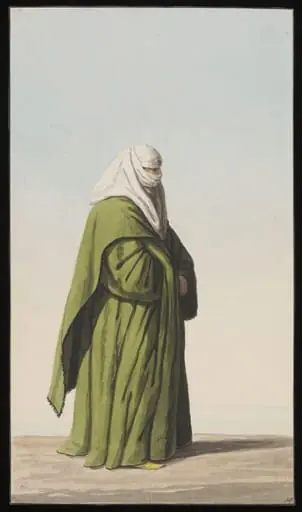
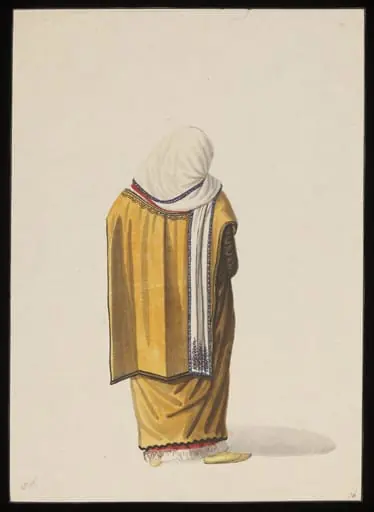
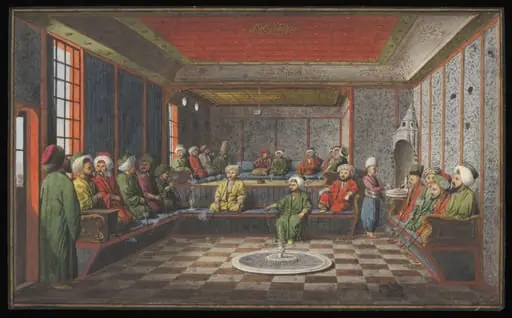
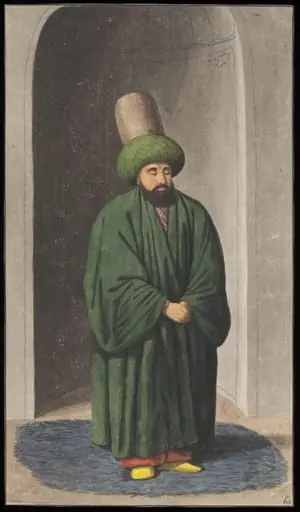
The work titled Silâhdar Aga, or Sword Bearer to the Sultan, is a watercolour created as part of a larger series of Ottoman scenes commissioned by the British diplomat Stratford Canning, later Viscount Stratford de Redcliffe (1786‑1880). The series was produced during Canning’s early posting in Istanbul, where he documented a wide range of Ottoman architecture, institutions and customs.
Subject & Meaning
The image depicts a silâhdar—a ceremonial sword‑bearer—standing before the Sultan, illustrating the ceremonial role and visual culture of the Ottoman court. By focusing on this figure, the drawing offers insight into the hierarchical and ritual aspects of Ottoman governance as observed by a foreign envoy.
Technique & Style
The watercolour combines the rich, saturated pigments typical of Ottoman miniature and body‑colour traditions with a European approach to perspective and spatial organization. Scholars suggest the hand behind the work belonged to a Greek artist linked to the workshop of Konstantin Kapidagli, whose style bridges Eastern decorative detail and Western representational conventions.
History & Provenance
The young neo‑classical architect Charles Cockerell met the same artist in 1810, later reproducing some of the views; those copies reside in the British Museum.
Stratford Canning commissioned the series after arriving in Istanbul in 1808, employing a local artist to record his observations. The young neo‑classical architect Charles Cockerell met the same artist in 1810, later reproducing some of the views; those copies reside in the British Museum. The original watercolours remained in Canning’s family until his daughter Charlotte sold them to the Victoria and Albert Museum in 1895.
Context
The drawings were produced at a time when European diplomats increasingly sought visual records of the Ottoman Empire, both for diplomatic purposes and for satisfying the growing curiosity of Western audiences about Eastern cultures. The series reflects a cross‑cultural exchange, merging Ottoman artistic techniques with the emerging European interest in accurate architectural documentation.
Artist & collection

![A Pasha travelling with his escort[?], by Anonymous Greek artist](https://artifactworldgallery.com/img/anonymous-greek-artist--a-pasha-travelling-with-his-escort--01de32b8fcf30843-w320.webp)
![A Dervish[?], by Anonymous Greek artist](https://artifactworldgallery.com/img/anonymous-greek-artist--a-dervish--3c8916f5a95abb6a-w320.webp)