Artwork
Bath Dress
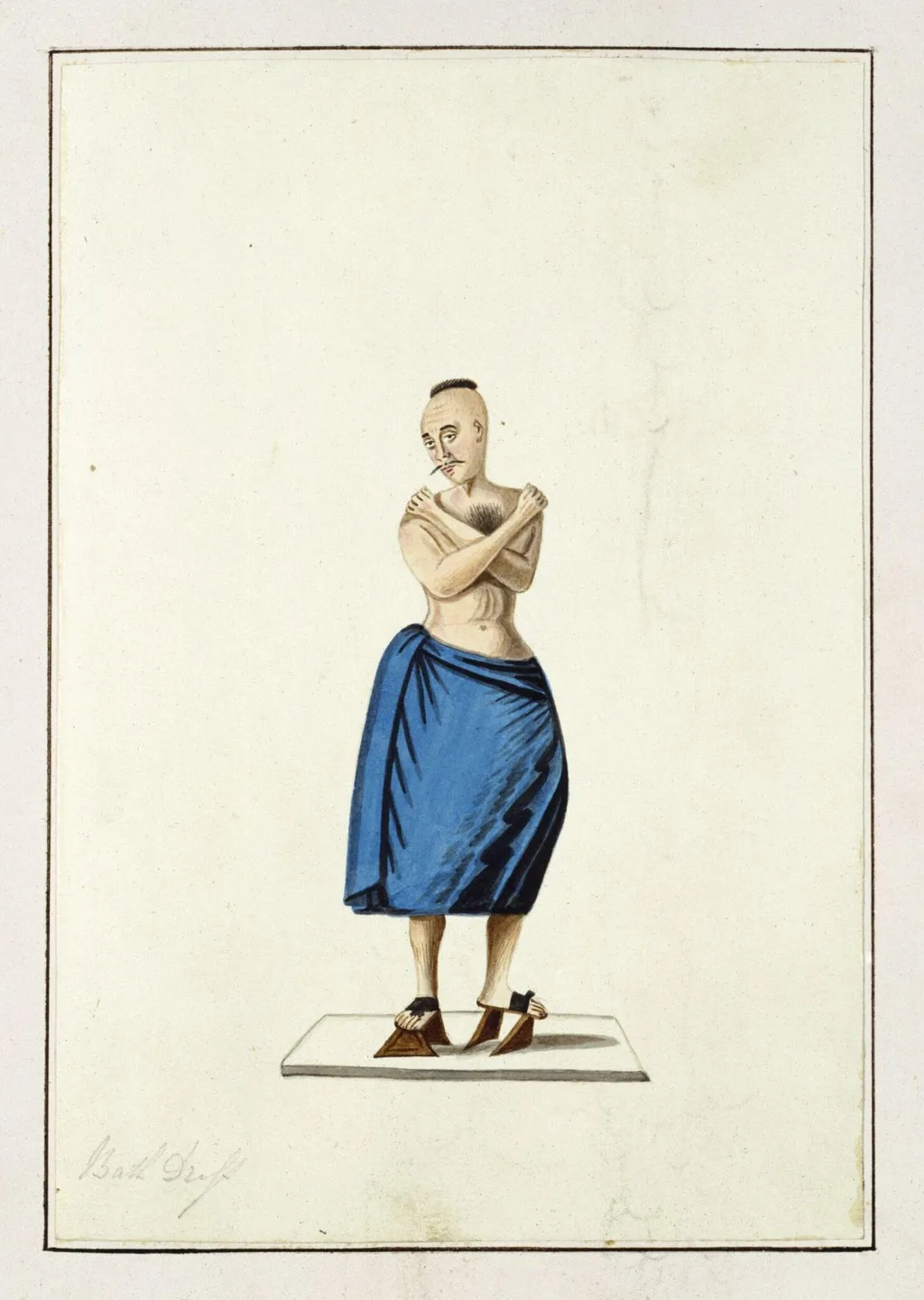
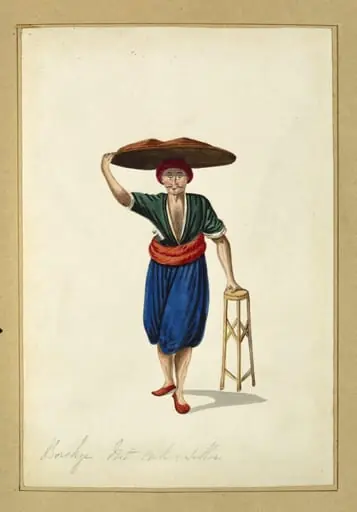
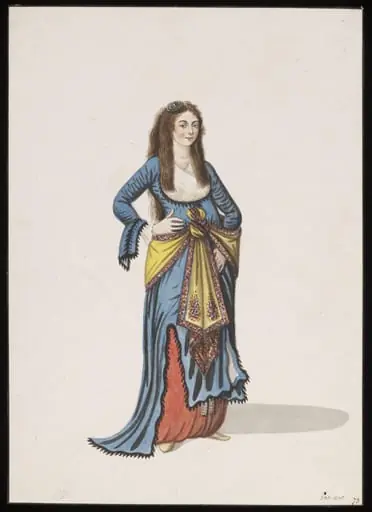
Bath Dress is a watercolor work on paper by the Biedermeier artist Charles Frederick Brockdorff. It dates from 1832 and is held in the collection of the Victoria and Albert Museum.
About this work
Overview
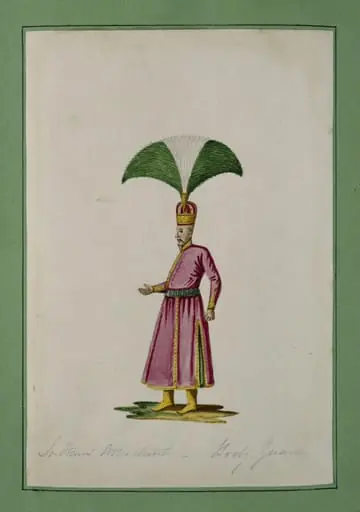
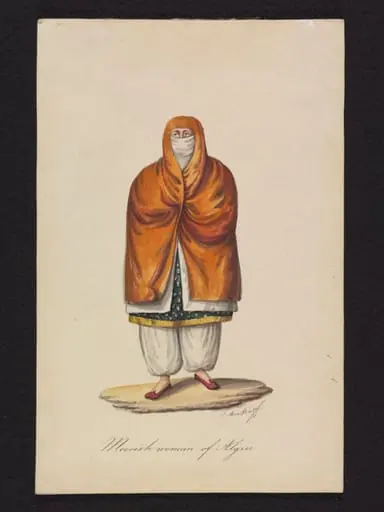
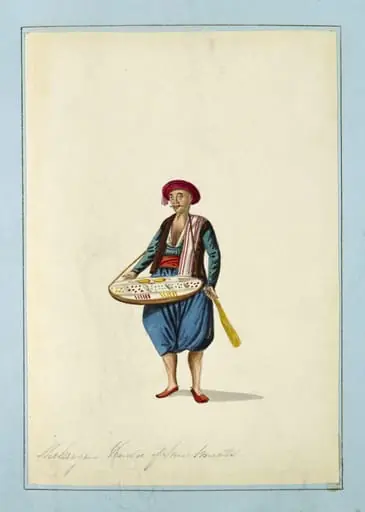
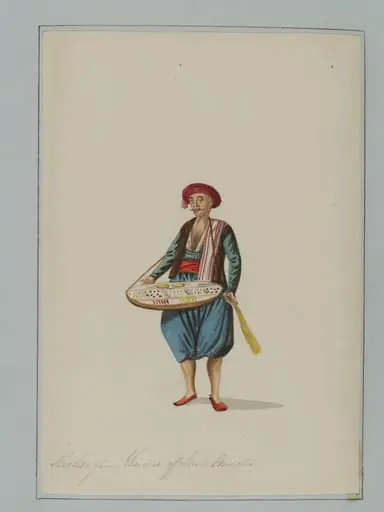
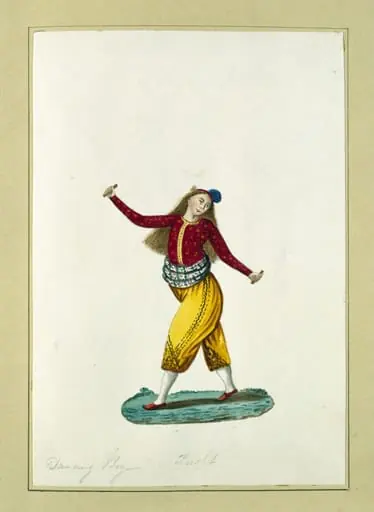
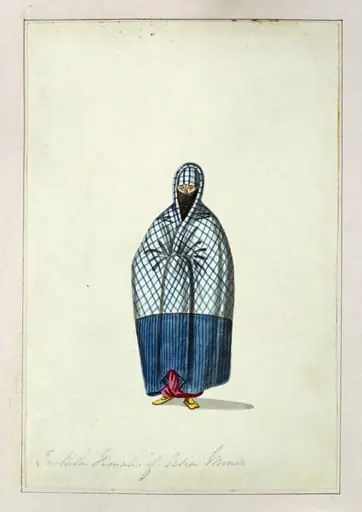
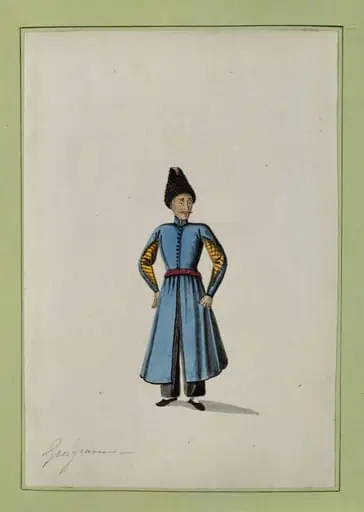
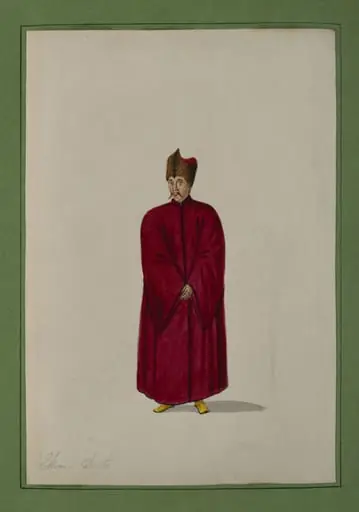
Charles Frederick Brockdorff’s watercolor *Bath Dress* is one of 54 sketches in a bound album documenting Turkish figures and attire.
Charles Frederick Brockdorff’s watercolor *Bath Dress* is one of 54 sketches in a bound album documenting Turkish figures and attire. The album, assembled under the auspices of Lt. Col. Charles Hamilton Smith, includes works by multiple artists, with Brockdorff contributing 41 pieces. This particular drawing is mounted on colored paper within a half-morocco binding adorned with gilt lettering, reflecting its function as a curated visual record rather than a finished exhibition piece.
Subject & Meaning
The figure depicted is a man standing on a low platform, dressed in a wrapped blue cloth around the waist and brown shoes with bows, his bare chest and thoughtful expression drawing attention to the garment’s drape. The pose suggests a study of clothing’s interaction with the body, emphasizing fit and form over individual identity. The absence of background or detailed rendering shifts focus to the textile’s structure, implying an ethnographic or costume-oriented purpose.
Technique & Style
Brockdorff employed light watercolor washes to define the contours of the garment, avoiding heavy shading or skin modeling. The plain white background isolates the figure, reinforcing the study’s functional intent. Brushwork is economical, capturing folds and weight of fabric with minimal strokes. The approach reflects observational precision rather than decorative flourish, aligning with the album’s role as a reference collection for dress and form.
History & Provenance
The album containing *Bath Dress* was compiled during the early 19th century, likely from sketches made during military or diplomatic travels in the Ottoman Empire. It became part of Lt. Col. Charles Hamilton Smith’s personal collection, known for its ethnographic interest in regional attire. The binding and mounting suggest careful preservation, indicating the album’s value as a documentary resource rather than a purely artistic endeavor.
Context
This work emerged during a period of heightened European interest in Ottoman culture, driven by military engagement and travel literature. Sketches like *Bath Dress* served as visual archives for military officers, diplomats, and antiquarians seeking to document foreign customs. Brockdorff’s contributions were part of a broader trend of systematic visual recording, prioritizing accuracy over aesthetic idealization.
Legacy
Though not widely exhibited, the album remains a resource for scholars studying 19th-century ethnographic art and Ottoman dress. Brockdorff’s sketches, including *Bath Dress*, offer insight into how Western observers recorded non-European attire with a blend of curiosity and restraint. Their value lies in their unembellished documentation, preserving details otherwise lost to time.
Artist & collection
Artist
Charles Frederick Brockdorff painted detailed watercolours of North African life and costume in the 1830s.