Artwork
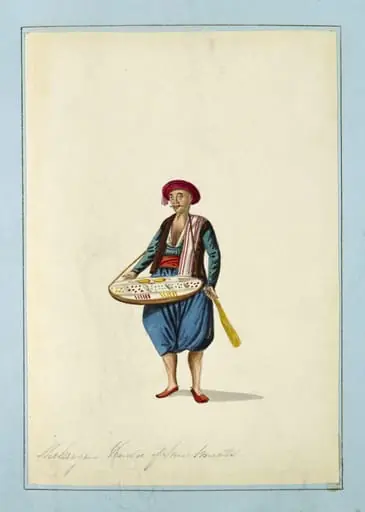
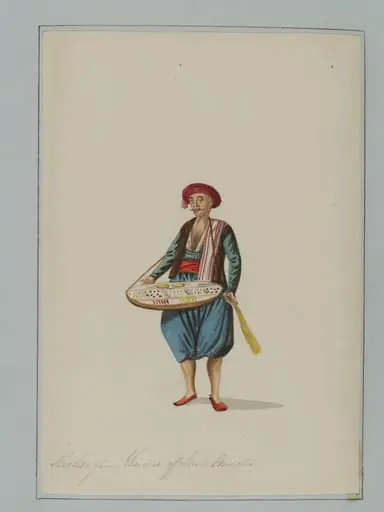
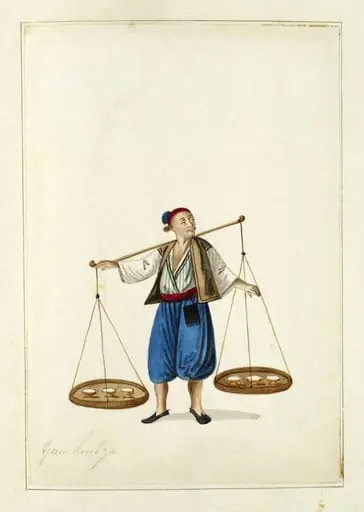
Borekgi Hot Cake Seller
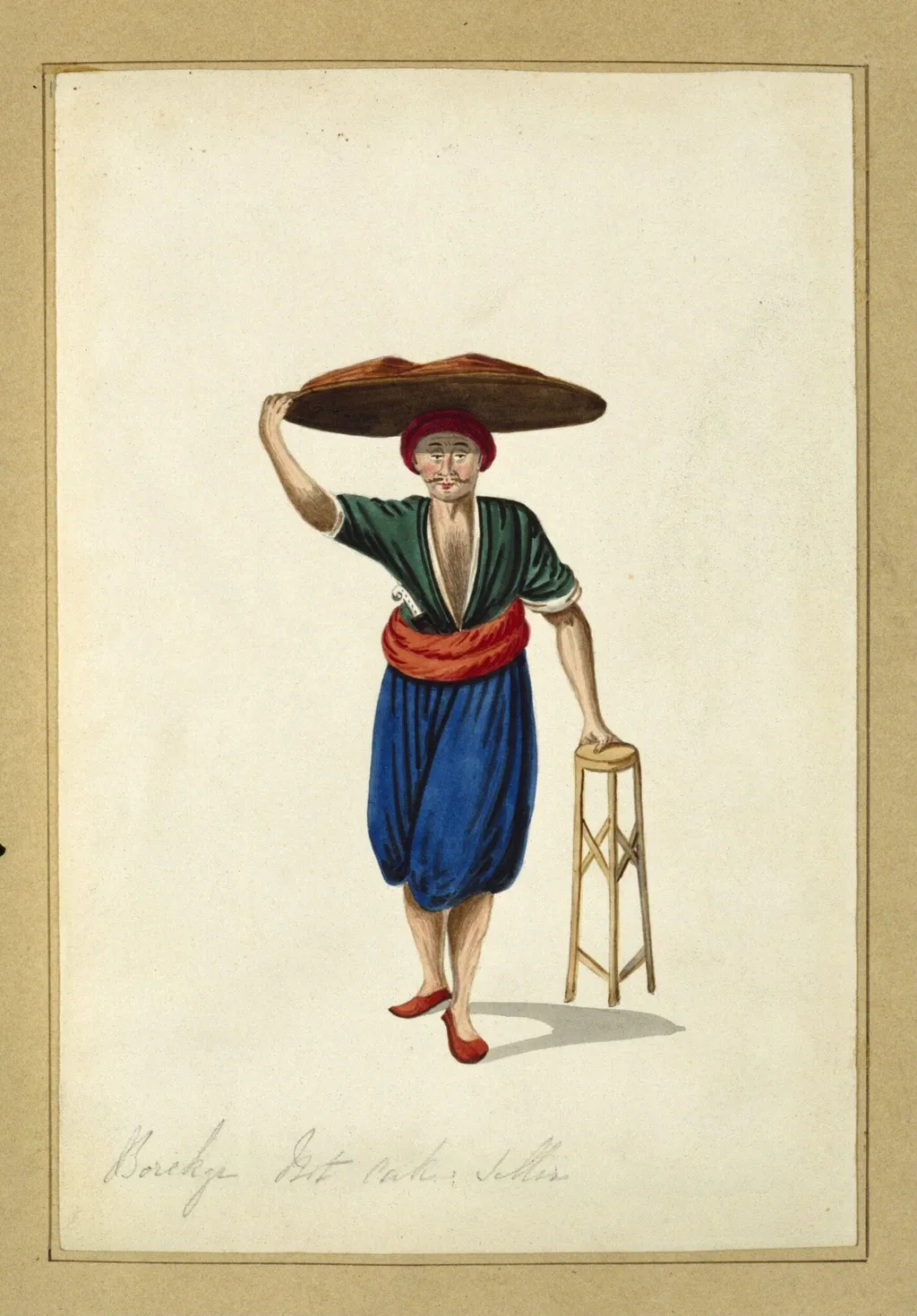
Borekgi Hot Cake Seller is a watercolor work on paper by the Romanticist artist Charles Frederick Brockdorff. It dates from 1832 and is held in the collection of the Victoria and Albert Museum.
About this work
Overview
Created in the early 18th century, the album features sketches mounted on varied coloured papers, reflecting a systematic approach to ethnographic observation.
Charles Frederick Brockdorff’s watercolour *Borekgi Hot Cake Seller* is one of 41 drawings in a bound album of 116 pages, documenting figures and objects from the Levant. Created in the early 18th century, the album features sketches mounted on varied coloured papers, reflecting a systematic approach to ethnographic observation. The work is part of a broader collection that circulated among European collectors interested in Ottoman daily life.
Subject & Meaning
The figure depicts a vendor of hot cakes, identified by an inscription below the image. He stands with one hand holding a wooden stool and the other lifting his hat in a gesture that suggests greeting or modest acknowledgment. His calm expression and slight smile convey a quiet dignity. The stool may serve as both seating and a display surface, hinting at the practicalities of street commerce in the region during this period.
Technique & Style
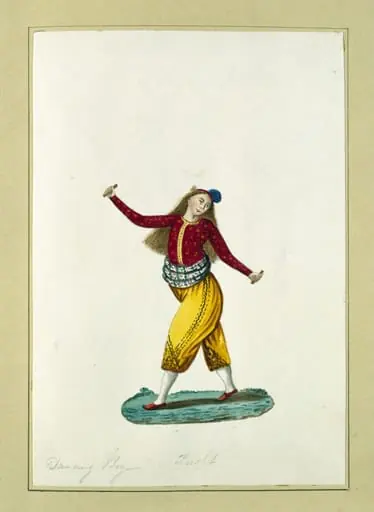
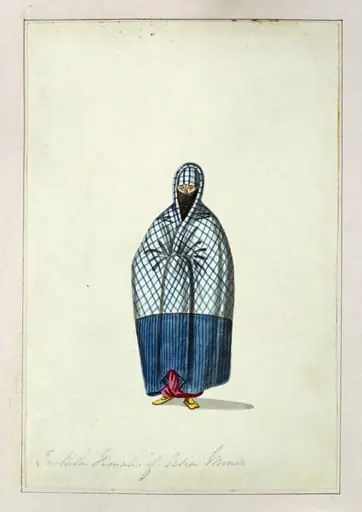
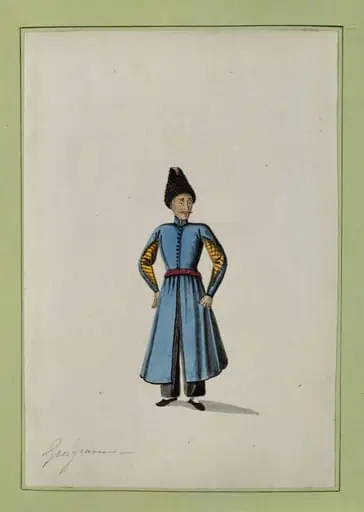
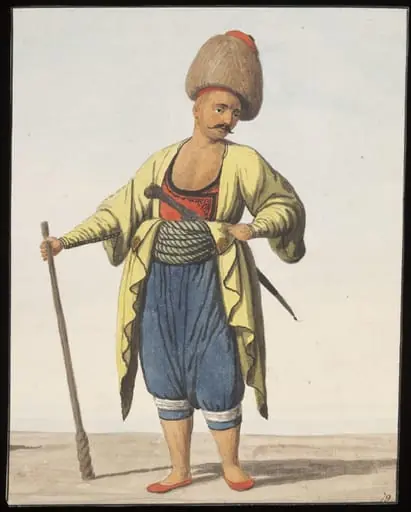
Rendered in watercolour, the drawing employs flat, unmodulated hues—green, blue, red—to define the figure’s attire against a blank background. The lack of shading or perspective focuses attention on costume and posture. Brushwork is deliberate but unadorned, prioritizing clarity over detail. This restrained style aligns with the album’s documentary intent, emphasizing recognizable types rather than individualized portraiture.
History & Provenance
The album containing this watercolour was compiled in the early 1700s and bound in half-morocco leather with gilt detailing. It includes 54 sketches, with 41 attributed to Brockdorff, a Danish artist active in the Ottoman Empire. The work was later referenced in Le Hay’s 1714–15 publication, which reproduced similar figures, suggesting the album circulated within scholarly and collector circles in Europe.
Context
This drawing emerged during a period of heightened European interest in Ottoman culture, fueled by diplomatic missions and travel literature. Artists like Brockdorff were often employed to record local customs and dress for audiences unfamiliar with the region. The focus on tradespeople reflects a fascination with everyday life, distinct from elite portraiture, and aligns with broader 18th-century ethnographic projects across the Mediterranean.
Legacy
The album remains a valuable record of visual ethnography from the early 18th century, preserved in the Victoria and Albert Museum’s collection. While Brockdorff’s individual output is limited, his contributions help document the visual language used by European artists to interpret Ottoman society. The work continues to inform studies on cross-cultural representation and the material culture of street vendors in the Levant.
Artist & collection
Artist
Charles Frederick Brockdorff painted detailed watercolours of North African life and costume in the 1830s.

![A Saka, or water carrier[?], by Anonymous Greek artist](https://artifactworldgallery.com/img/anonymous-greek-artist--a-saka-or-water-carrier--fea97d6d74c0c945-w320.webp)
![A Serbetci, or drinks seller[?], by Anonymous Greek artist](https://artifactworldgallery.com/img/anonymous-greek-artist--a-serbetci-or-drinks-seller--61bdf44039236f66-w320.webp)