Artwork
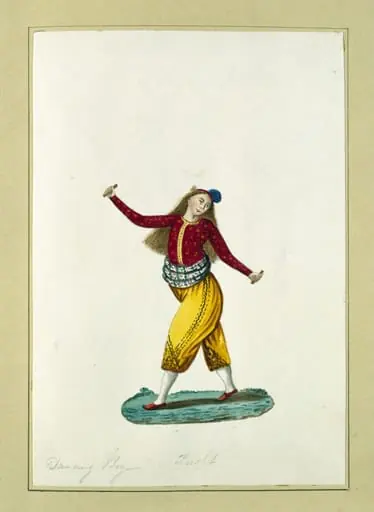
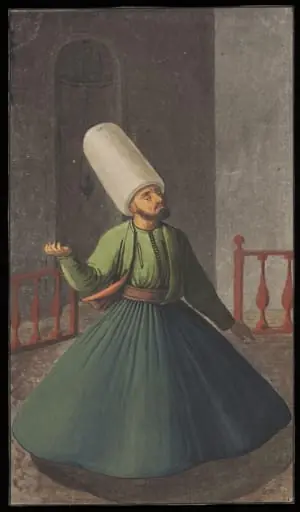
Dancing Dervish
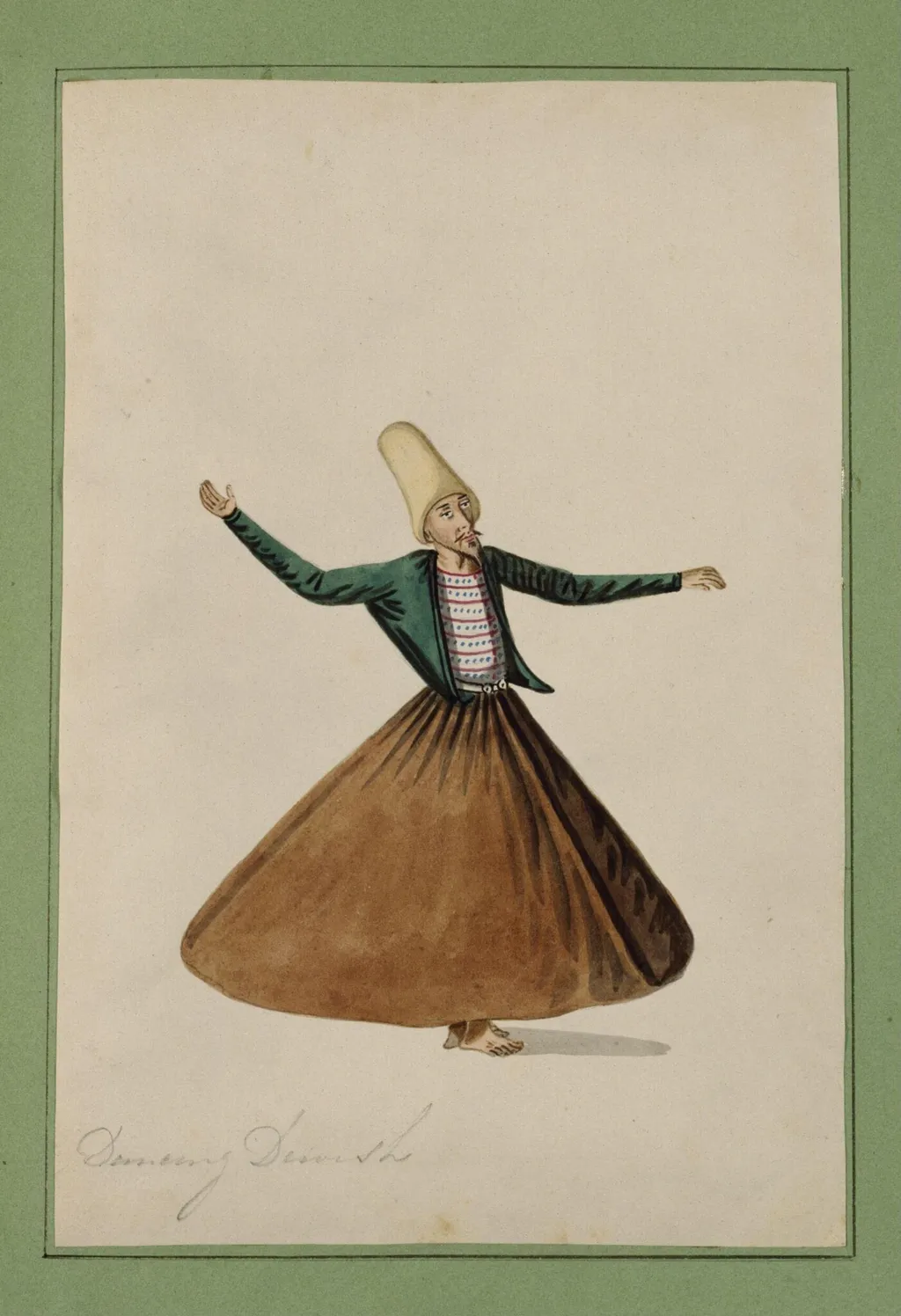
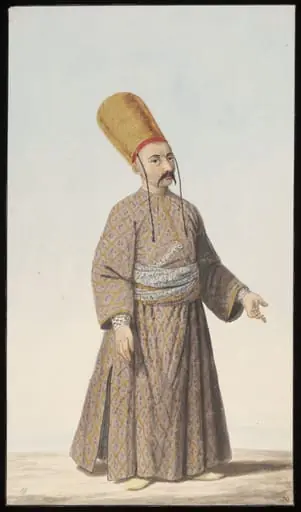
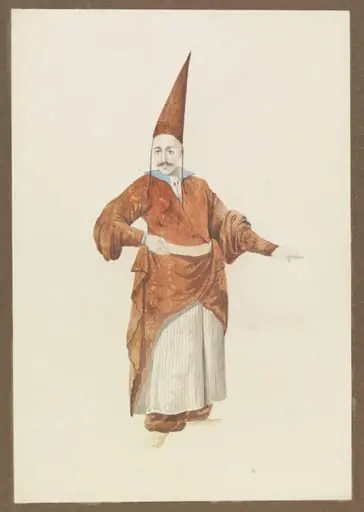
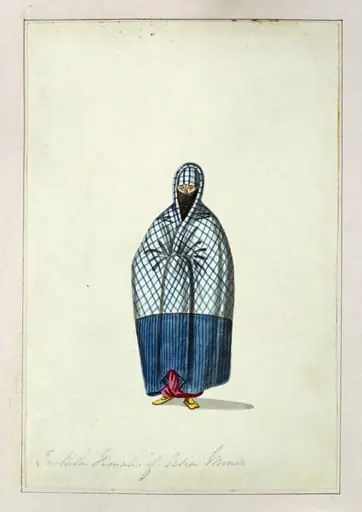
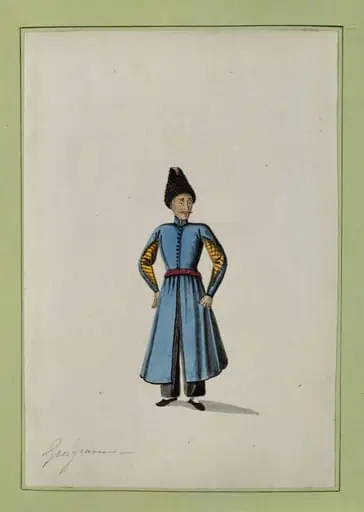
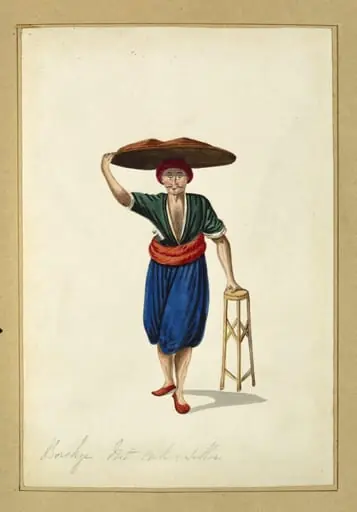
Dancing Dervish is a watercolor work on paper by the Romanticist artist Charles Frederick Brockdorff. It dates from 1832 and is held in the collection of the Victoria and Albert Museum. This watercolour is one of 54 sketches in a bound album documenting Turkish figures and cultural objects.
About this work
Overview
The drawing of the dancing dervish is attributed to Charles Frederick Brockdorff, one of the primary contributors to the collection.
This watercolour is one of 54 sketches in a bound album documenting Turkish figures and cultural objects. Created in the early 19th century, the album comprises 116 pages, with illustrations mounted on varied coloured papers and bound in morocco leather with gilt lettering. The drawing of the dancing dervish is attributed to Charles Frederick Brockdorff, one of the primary contributors to the collection.
Subject & Meaning
The figure depicts a member of the Mevlevi Sufi order engaged in the sema, a ritual dance symbolizing spiritual ascent. Arms outstretched, one hand turned upward to receive divine grace, the other downward to transmit it, the dancer’s swirling robe conveys motion and transcendence. The tall white hat represents the tombstone of the ego, while the plain background focuses attention on the ritual’s symbolic form.
Technique & Style
Rendered in watercolour on paper, the drawing employs loose, fluid brushwork to suggest the momentum of the dancer’s spin. The skirt’s folds are indicated with minimal strokes, while the patterned vest and dark jacket are rendered with subtle tonal contrasts. A green border frames the image, isolating the figure against a neutral ground to emphasize movement and spiritual focus.
History & Provenance
The album was assembled during the early 1800s, likely by British travelers or diplomats stationed in the Ottoman Empire. Brockdorff, a British artist and officer, contributed 41 of the illustrations. The collection was later acquired by the Victoria and Albert Museum, where it remains part of its South Asian and Islamic art holdings, reflecting European interest in Ottoman culture during the colonial era.
Context
The depiction aligns with a broader 18th- and 19th-century European fascination with Ottoman rituals, often viewed through exoticizing lenses. While the dervish dance was a deeply spiritual practice, Western collectors frequently treated such images as ethnographic curiosities. This album, though observational, preserves a visual record of a tradition that was both revered and misunderstood by foreign observers.
Legacy
The album serves as a historical archive of Ottoman visual culture, offering insight into how foreign artists interpreted religious practices. Though not intended as theological documentation, its precision in costume and gesture provides valuable reference for scholars studying Sufi rituals and cross-cultural representation in early 19th-century art.
Artist & collection
Artist
Charles Frederick Brockdorff painted detailed watercolours of North African life and costume in the 1830s.

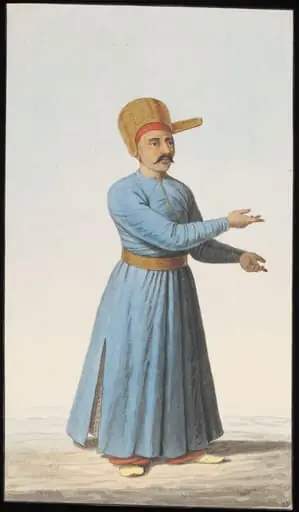
![A Baltaci[?], or Palace guard, by Anonymous Greek artist](https://artifactworldgallery.com/img/anonymous-greek-artist--a-baltaci-or-palace-guard--931aad5ea3918e2c-w320.webp)