Artwork
The Conversion of Saul
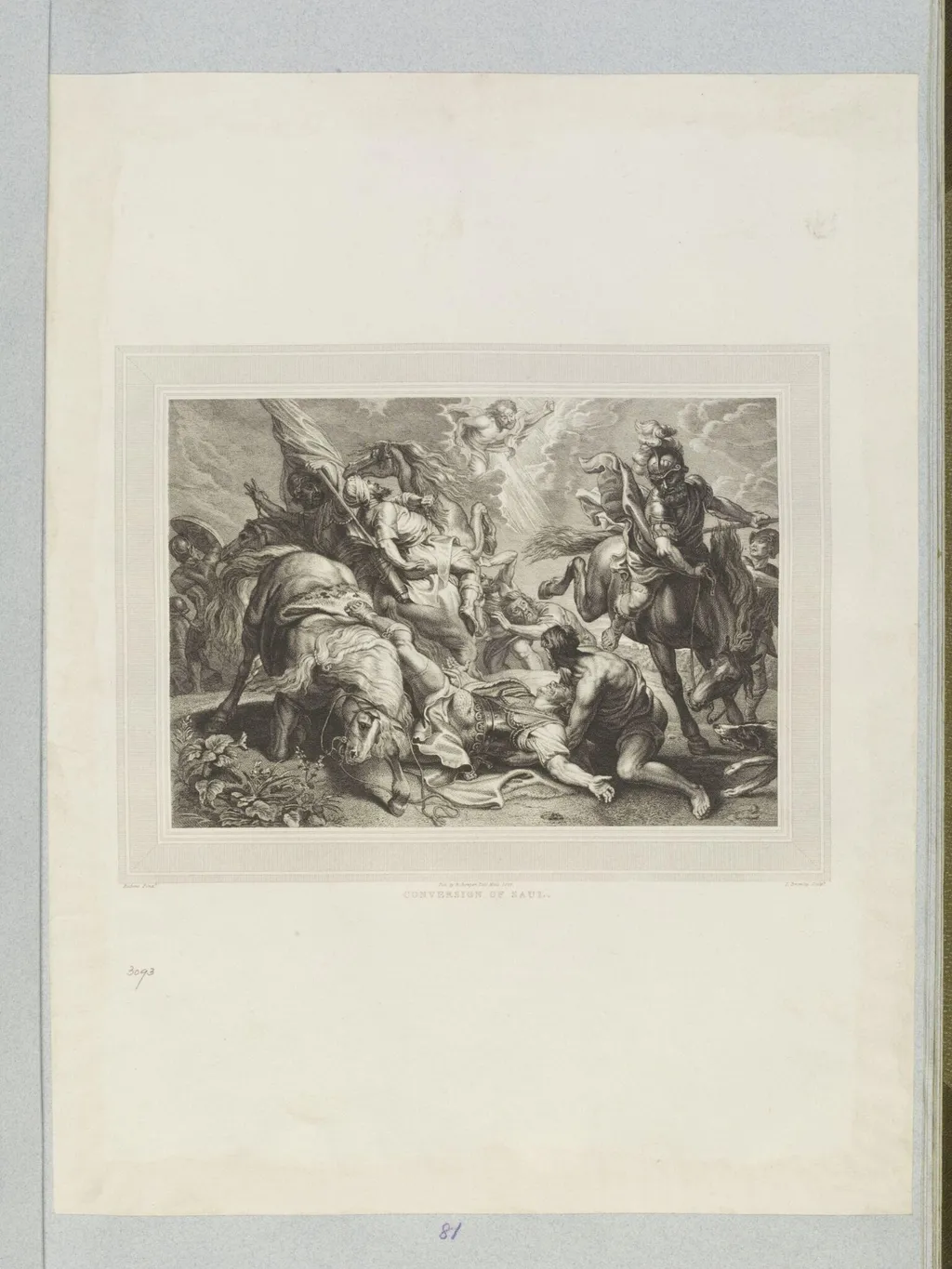
The Conversion of Saul is a print by John Charles Bromley. It dates from 1850 and is held in the collection of the Victoria and Albert Museum.
About this work
Overview
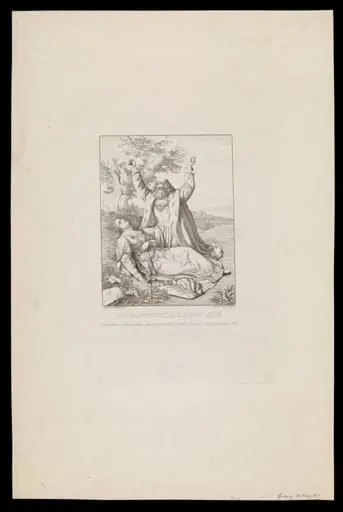
This 1850 print by John Charles Bromley reproduces a composition originally created by Peter Paul Rubens, depicting the biblical moment of Saul’s transformation on the road to Damascus. Executed in black and white on paper, the work translates Rubens’s dynamic Baroque style into the medium of printmaking, emphasizing dramatic lighting and motion through careful tonal gradations.
Subject & Meaning
His fall from horseback symbolizes the collapse of his former identity as a persecutor of Christians.
The scene illustrates Saul’s divine encounter, as described in the Acts of the Apostles, when he is struck blind by a heavenly light and hears the voice of Christ. His fall from horseback symbolizes the collapse of his former identity as a persecutor of Christians. The outstretched arms and stunned expression convey spiritual upheaval, while the surrounding figures react with surprise, underscoring the event’s supernatural weight.
Technique & Style
Bromley employs chiaroscuro to heighten emotional intensity, contrasting deep shadows with areas of bright light focused on Saul’s white robe. The horses are rendered in varied, restless poses to suggest chaos and motion, while the cloudy sky adds atmospheric depth. The print’s linear precision and tonal control reflect the conventions of 19th-century reproductive engraving, aiming to capture the energy of Rubens’s original painting.
History & Provenance
Created in 1850, the print was part of a broader 19th-century trend of reproducing Old Master paintings for wider public access. Bromley, known for his skill in translating oil paintings into engraved prints, likely worked from a known version of Rubens’s composition. The print’s circulation suggests it was intended for private collections or religious institutions seeking accessible devotional imagery.
Context
In mid-19th-century Britain, religious themes remained central to visual culture, and prints after Old Masters were widely distributed for education and piety. Rubens’s dramatic compositions were especially favored for their emotional power. Bromley’s version reflects both the enduring influence of Baroque art and the technological capacity of printmaking to disseminate such imagery beyond elite audiences.
Legacy
While not an original composition, Bromley’s print preserved and extended the reach of Rubens’s narrative vision into the Victorian era. It stands as an example of how reproductive prints served as cultural conduits, allowing audiences unfamiliar with original paintings to engage with significant religious scenes through the accessible medium of paper. Its survival offers insight into 19th-century visual literacy and devotional practices.
Artist & collection
Artist
John Charles Bromley made 19th-century religious prints that retell Bible stories in clear, dramatic lines.