Artwork
The Miraculous Draught of Fishes
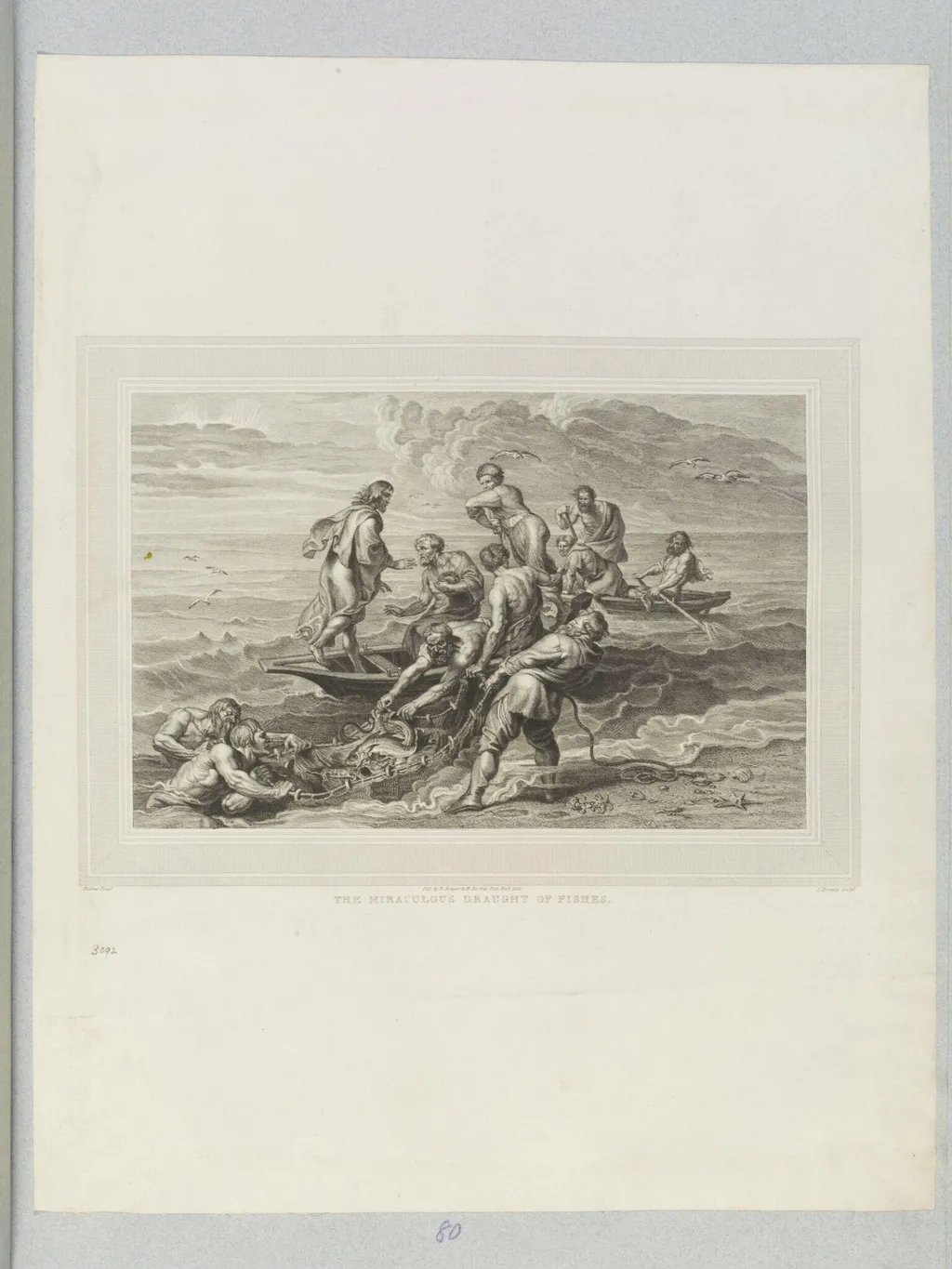
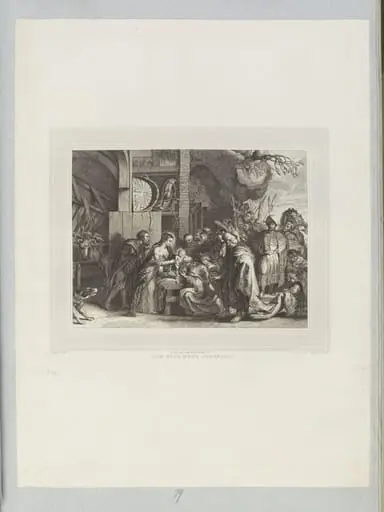
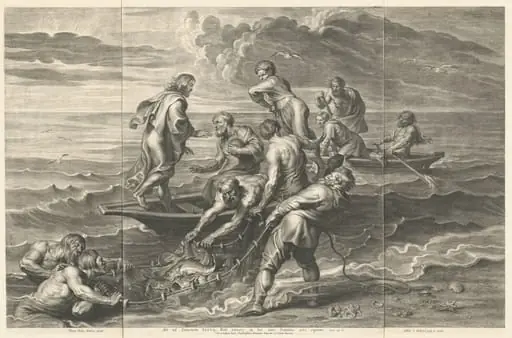
The Miraculous Draught of Fishes is a print by John Charles Bromley. It dates from 1850 and is held in the collection of the Victoria and Albert Museum.
About this work
Overview
This 1850 print by John Charles Bromley reproduces a composition originally painted by Peter Paul Rubens.
This 1850 print by John Charles Bromley reproduces a composition originally painted by Peter Paul Rubens. Executed on paper, it captures a biblical episode from the Gospel of Luke in which disciples, following Christ’s instruction, haul in an extraordinary number of fish. Bromley’s version translates Rubens’s dynamic scene into a detailed engraving, emphasizing movement and collective labor through precise line work and tonal contrast.
Subject & Meaning
The scene illustrates the miraculous catch of fish, a moment when Jesus directs inexperienced fishermen to cast their nets, resulting in an overwhelming haul. This event symbolizes divine guidance and the calling of disciples to become 'fishers of men.' Bromley’s depiction focuses on the physical exertion of the fishermen, reinforcing the narrative’s theme of faith rewarded through collective effort under unexpected circumstances.
Technique & Style
Bromley employed engraving techniques to render the scene with sharp detail and strong chiaroscuro. Deep shadows and highlighted surfaces define the muscular forms of the fishermen, the texture of wet nets, and the churning water. The composition’s diagonal energy and layered figures create a sense of depth, while the cloudy sky and flying birds add atmospheric tension, reflecting 19th-century printmakers’ reverence for Old Master compositions.
History & Provenance
The print was produced in 1850 as part of a broader 19th-century trend of reproducing celebrated paintings for wider public access. Bromley, known for his reproductive engravings, worked from Rubens’s original oil painting, likely held in a European collection at the time. The print’s circulation suggests its use in private collections or educational settings, where access to original masterworks was limited.
Context
During the mid-19th century, reproductive prints played a vital role in disseminating art beyond elite audiences. Artists like Bromley bridged the gap between high art and public taste, often adapting Baroque compositions for Victorian sensibilities. This print reflects both the enduring influence of Rubens and the era’s technological capacity to replicate complex imagery with mechanical precision.
Legacy
Though not widely exhibited today, Bromley’s print remains a documented example of how 19th-century engravers preserved and interpreted Renaissance and Baroque masterpieces. It contributes to the historical record of print culture’s role in shaping visual literacy and demonstrates the sustained interest in religious narratives through mechanical reproduction during the industrial age.
Artist & collection
Artist
John Charles Bromley made 19th-century religious prints that retell Bible stories in clear, dramatic lines.