Artwork
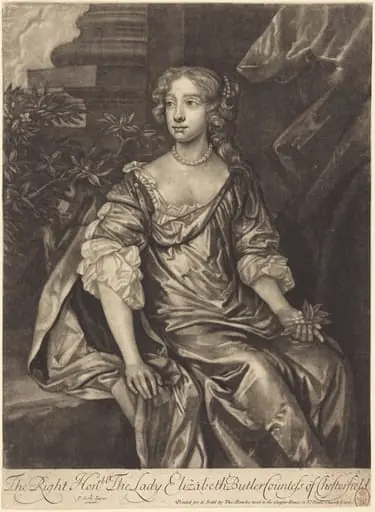
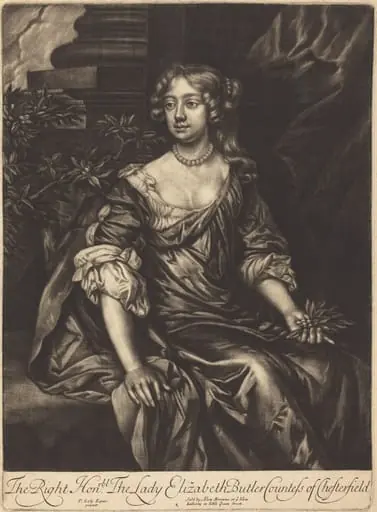
The Right Honorable Lady Elizabeth Butler, Countess of Chesterfield
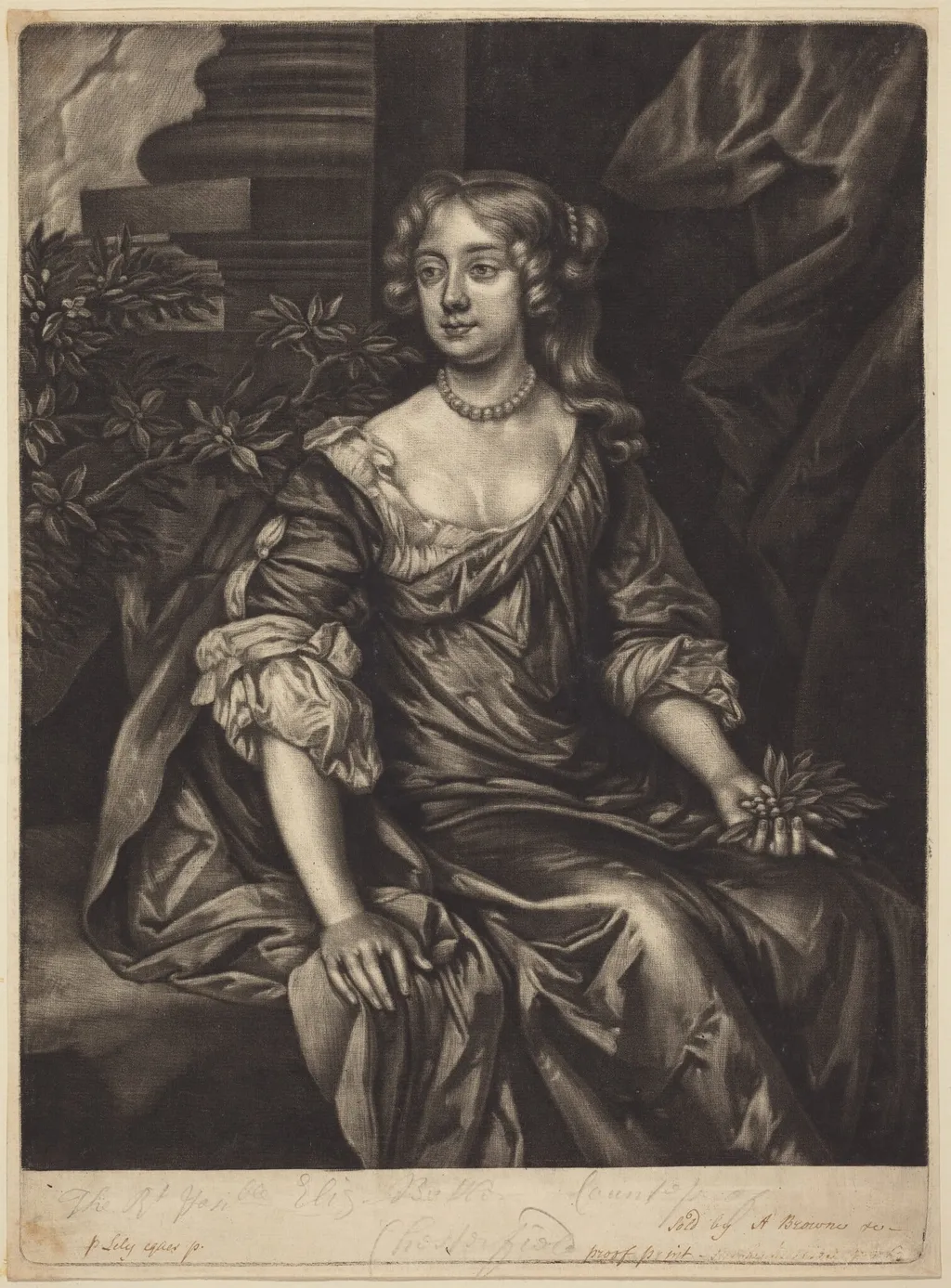
The Right Honorable Lady Elizabeth Butler, Countess of Chesterfield is an ink print by the Baroque artist Alexander Browne. It dates from 1680 and is held in the collection of the National Gallery of Art.
About this work
Overview
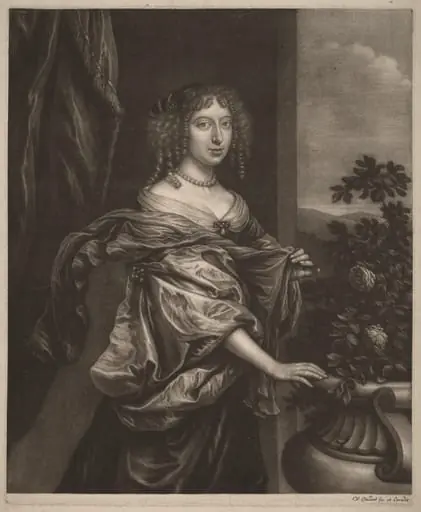
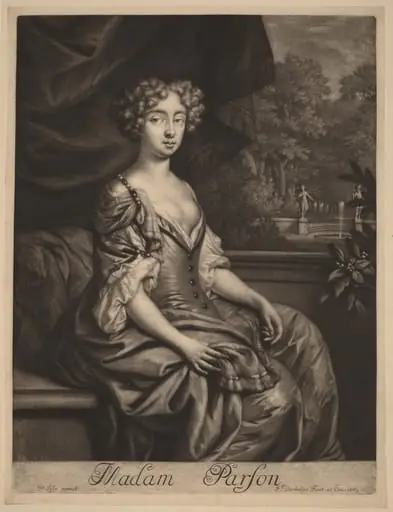
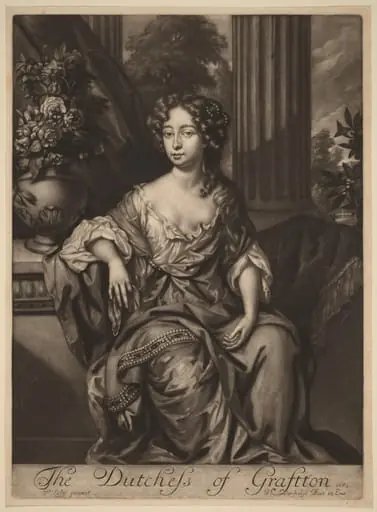
The work is a mezzotint proof dated to around 1680, executed by the English printmaker Alexander Browne. It portrays Lady Elizabeth Butler, later Countess of Chesterfield, in a seated pose. Rendered in monochrome on laid paper, the image presents a dignified portrait that emphasizes the sitter’s attire and bearing through careful tonal modeling.
Subject & Meaning
The portrait captures the countess in an elegant dress with a low neckline and ruffled sleeves, her hair arranged in soft curls. She rests one arm on a chair and holds a fan, gestures that convey both leisure and status. The composition highlights her aristocratic identity, suggesting refinement and the social expectations of a high‑ranking woman in late‑seventeenth‑century England.
Technique & Style
Browne employed the mezzotint process, a method that allows for rich gradations of light and shadow. By varying the density of the ground and the depth of the burnished areas, he achieved a three‑dimensional modeling of the face and garments. The dark, unlit background isolates the figure, a typical Baroque strategy that intensifies visual focus on the subject.
History & Provenance
Created as a proof, the print likely served as a test before a larger edition was struck, a common practice among printmakers of the period. While the original plate’s ownership history is not fully documented, the work is now catalogued as part of collections that specialize in early modern British portraiture, reflecting its value as a record of both the sitter and the mezzotint technique.
Artist & collection