Artwork
Rachel, Countess of Middlesex
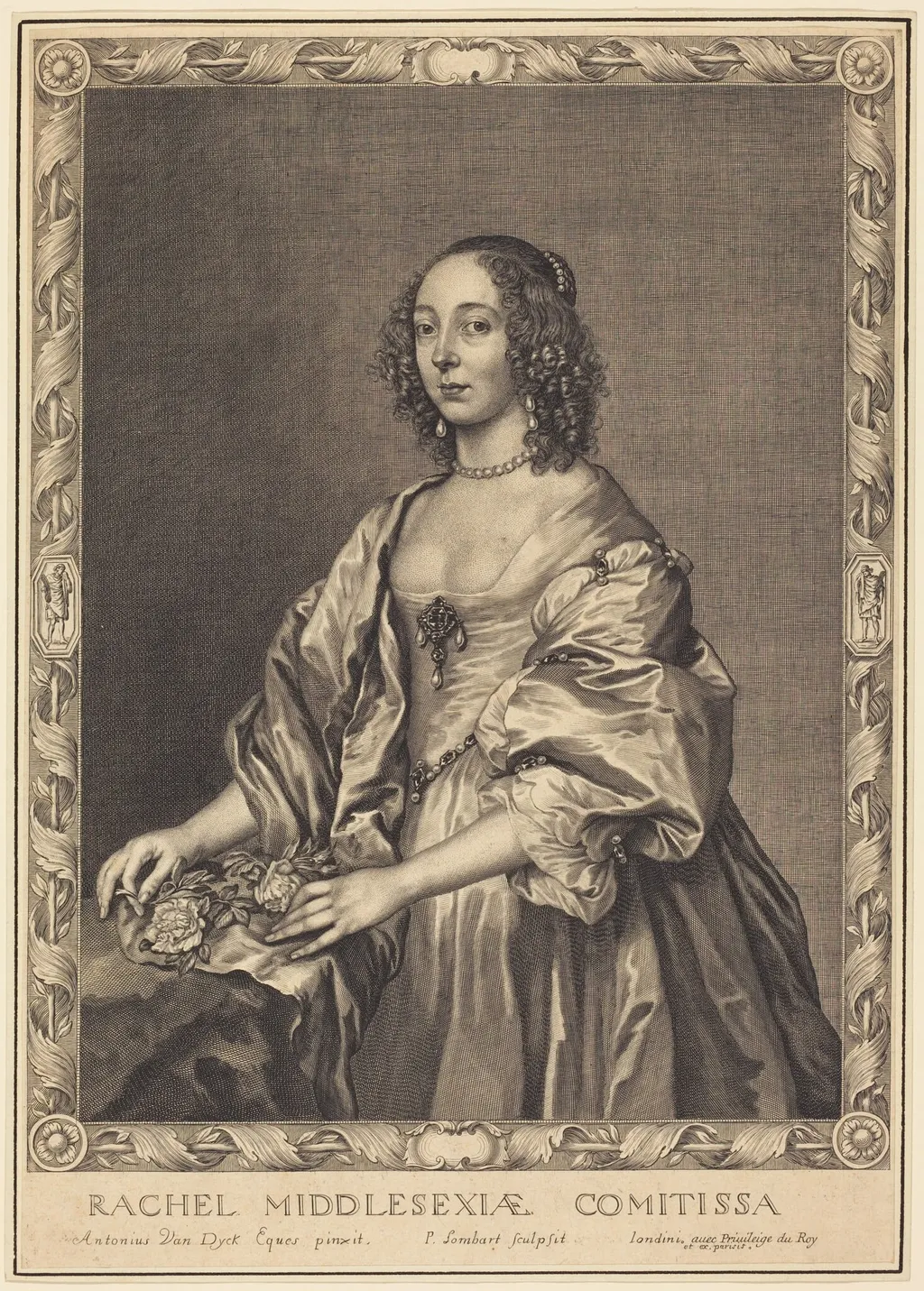
Rachel, Countess of Middlesex is an ink print by the Baroque artist Pierre Lombard. It dates from 1660 and is held in the collection of the National Gallery of Art.
About this work
Overview
Rachel, Countess of Middlesex is a print created around 1660 by Pierre Lombard, executed in etching and engraving on laid paper. The work portrays a noblewoman in a sumptuous attire, set against a plain background to emphasize her figure.
Subject & Meaning
The subject, Rachel, Countess of Middlesex, is depicted in a manner reflecting her high social status. Adornments such as a pearl necklace, earrings, and pearls in her curly hair signify wealth and nobility. A bouquet of flowers and a decorative bow on her chest add to the portrayal of elegance and refinement.
Technique & Style
The print combines etching and engraving techniques, characteristic of the Baroque period's printmaking. The style, popular during this era, is evident in the detailed rendering of textures, particularly the shiny fabric of her dress, and the dramatic emphasis on the subject through the plain background.
History & Provenance
Created circa 1660 by Pierre Lombard, specific details about the print's history and ownership prior to its current location are not provided.
Context
This etching aligns with the artistic trends of the Baroque period, where such portraits served to highlight the status and elegance of the nobility. The plain background was a common device to focus attention on the subject.
Legacy
While the broader impact or influence of this specific print by Pierre Lombard is not detailed, it remains representative of Baroque-era printmaking and the tradition of portraying nobility in 17th-century Europe.
Artist & collection

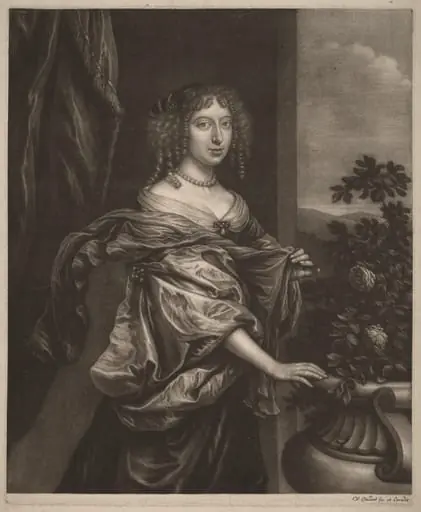 Portrait of a Lady beside a Rose Bush
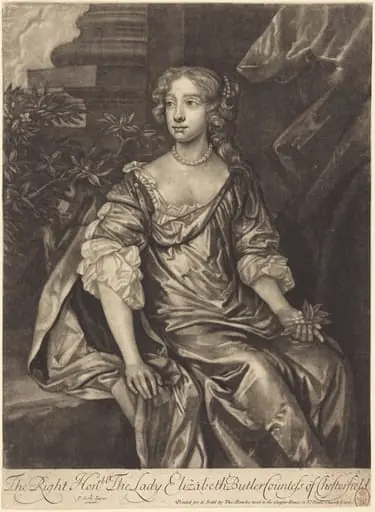 The Right Honorable Lady Elizabeth Butler, Countess of Chesterfield
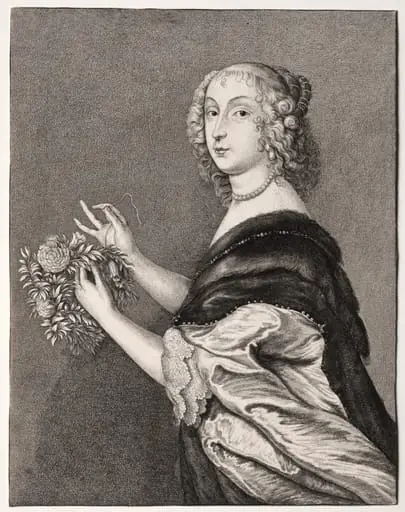 Cecilia, Lady Killigrew
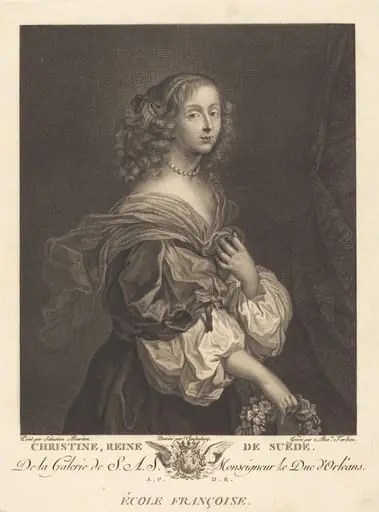 Queen Christina of Sweden
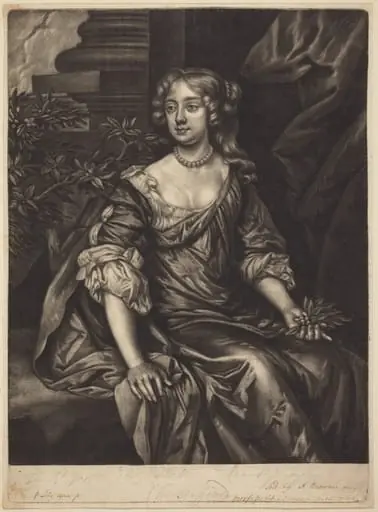 The Right Honorable Lady Elizabeth Butler, Countess of Chesterfield
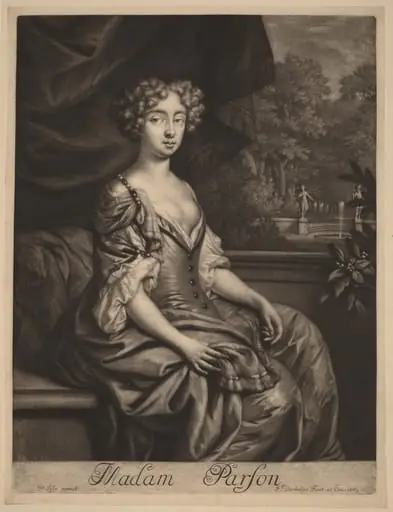 Madam Parson
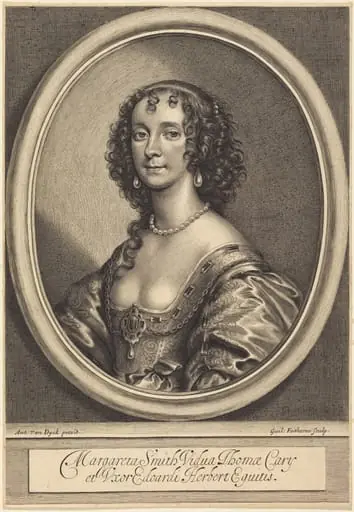 Margaret Smith
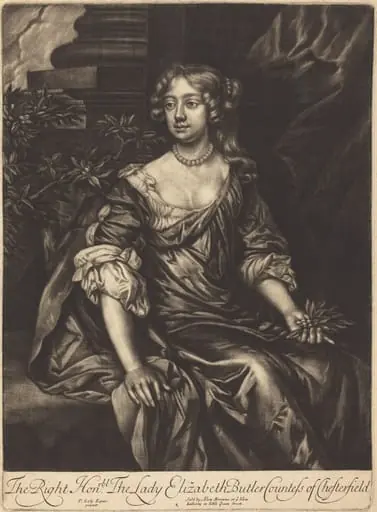 The Right Honorable Lady Elizabeth Butler, Countess of Chesterfield
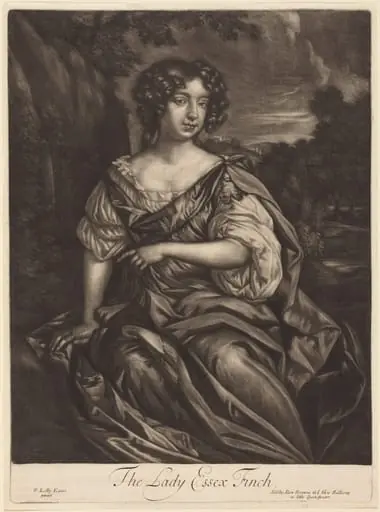 The Lady Essex Finch
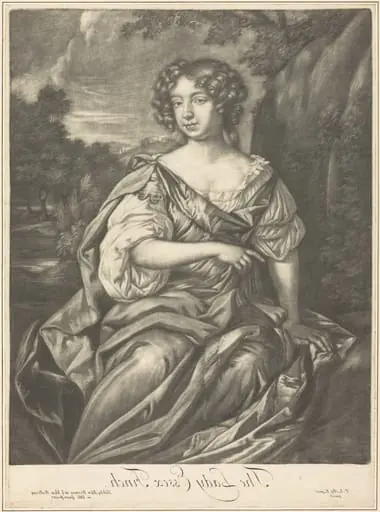 The Lady Essex Finch
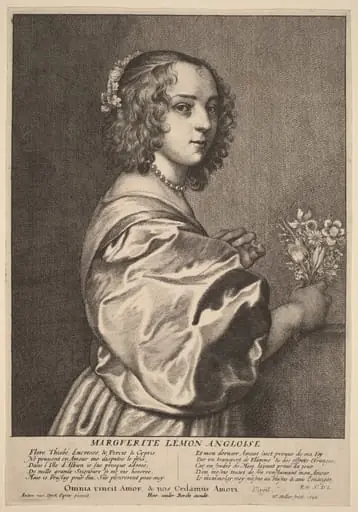 Margaret Lemon
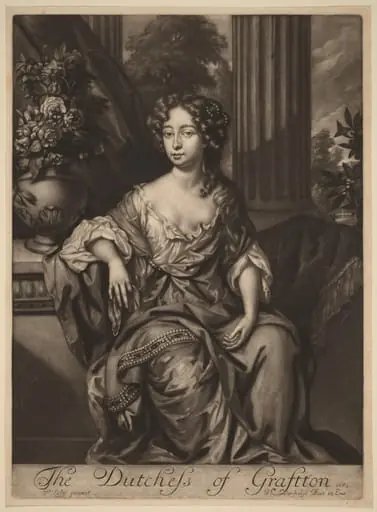 The Duchess of Grafton