Artwork
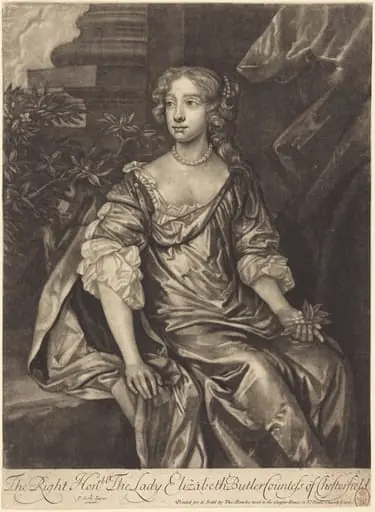
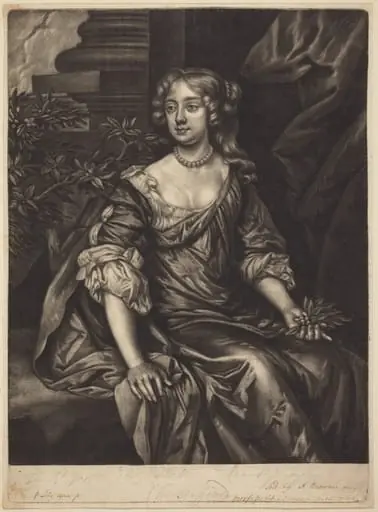
The Right Honorable Lady Elizabeth Butler, Countess of Chesterfield
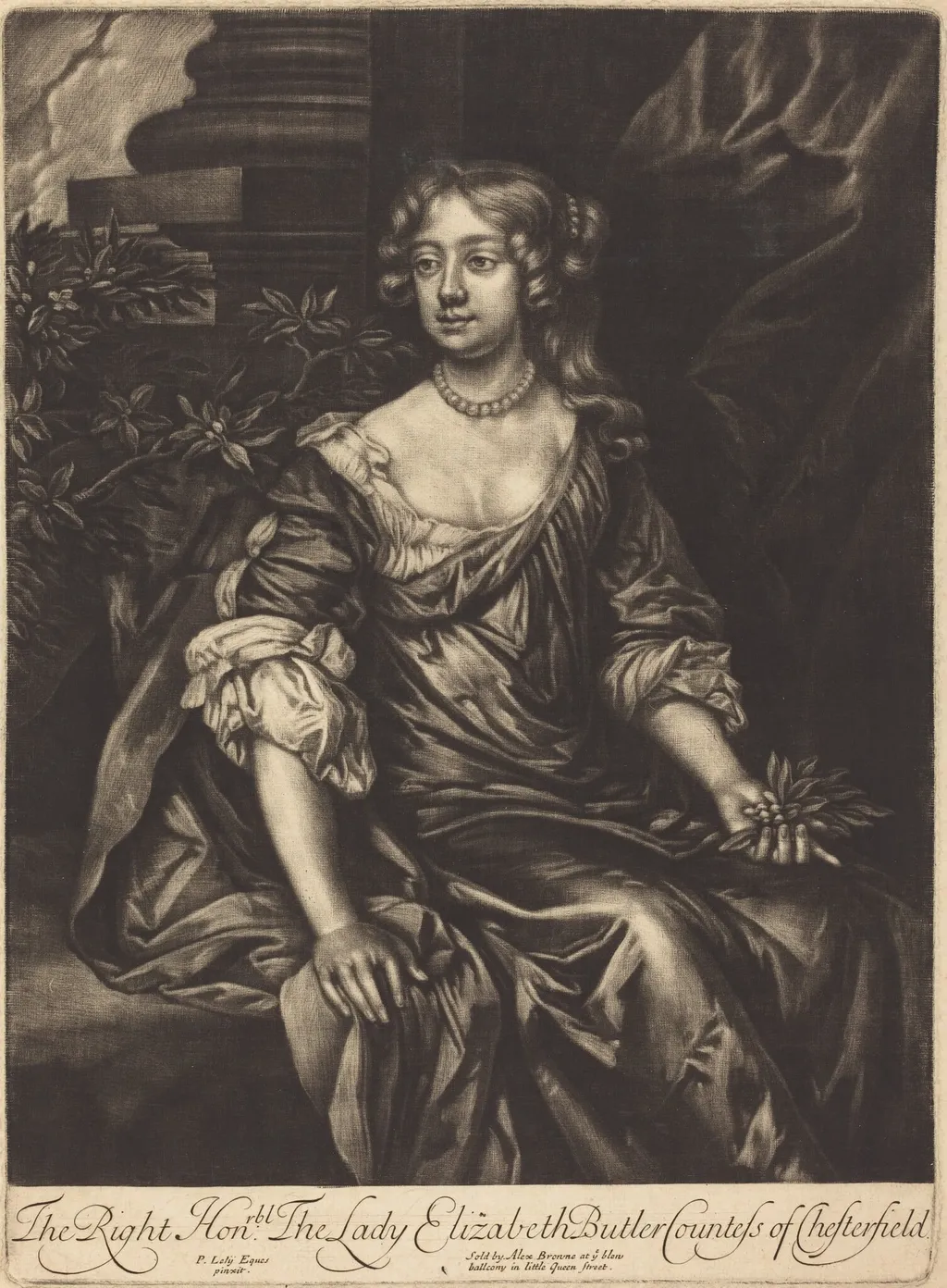
The Right Honorable Lady Elizabeth Butler, Countess of Chesterfield is an ink print by the Baroque artist Alexander Browne. It dates from 1680 and is held in the collection of the National Gallery of Art.
About this work
Overview
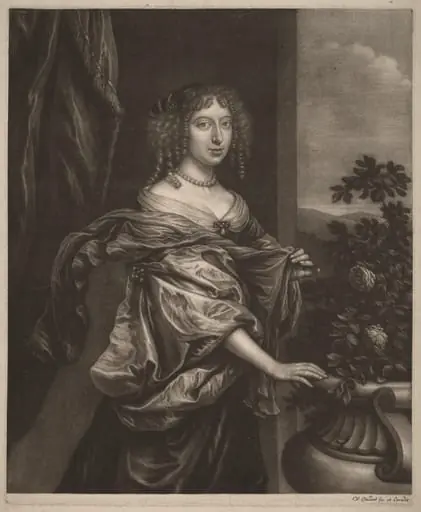
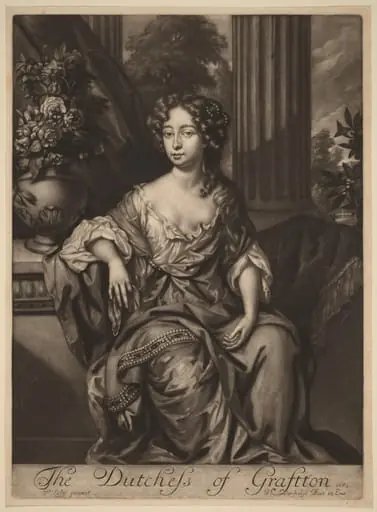
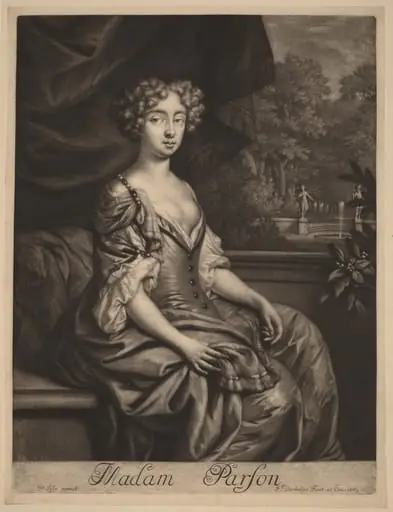
Created around 1680, this mezzotint by Alexander Browne depicts Lady Elizabeth Butler, later Countess of Chesterfield. Executed on laid paper, the print presents a monochrome portrait that emphasizes the sitter’s stature through careful tonal modulation.
Subject & Meaning
The figure is shown seated, one arm resting on a chair, her hair gathered back and a fan held in her right hand. She wears a low‑cut dress trimmed with ruffles at the neckline and a pearl necklace, symbols of aristocratic fashion and refinement in late‑seventeenth‑century England.
Technique & Style
Browne employs the mezzotint process to achieve a rich gradation of light and shadow, allowing the folds of the dress and the texture of the skin to appear three‑dimensional. The darkened background, suggested by a curtain and scattered foliage, heightens the contrast and focuses attention on the sitter’s face and hands.
History & Provenance
The print is attributed to Alexander Browne, an English engraver active in the late 1600s, known for his portraiture in the mezzotint medium. It was likely produced for circulation among the aristocratic circles that included the Butler family, though specific ownership records are limited.
Context
Mezzotint emerged in England as a preferred method for reproducing oil paintings, offering a velvety tonal range. Browne’s work aligns with contemporary portrait conventions, where elaborate dress and accessories conveyed status, while the chiaroscuro effect reflected Baroque influences on English printmaking.
Artist & collection