Artwork
The Bagpipe Player
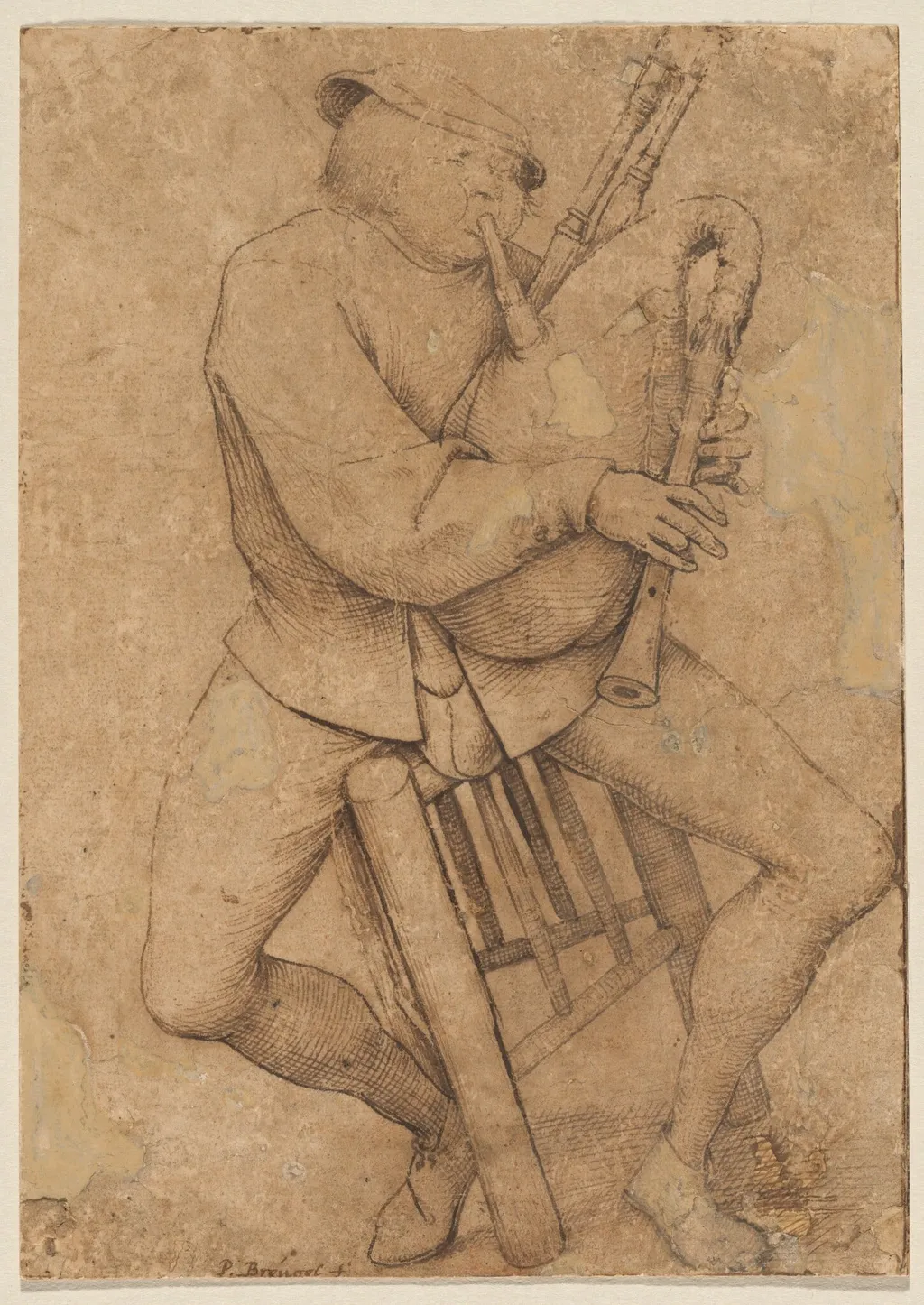
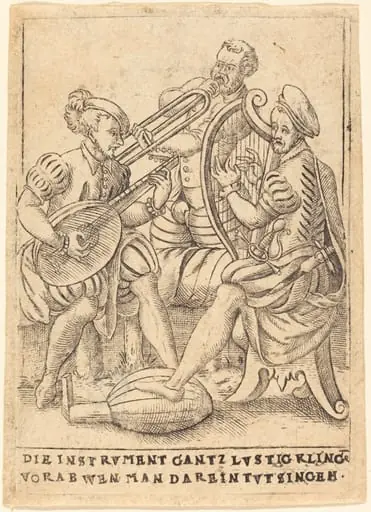
The Bagpipe Player is an ink drawing by the Renaissance artist Pieter Bruegel the Elder. It dates from 1562 and is held in the collection of the National Gallery of Art.
About this work
Overview
Pieter Bruegel the Elder’s drawing titled *The Bagpipe Player* dates to around 1562. Executed with pen and brown ink on laid paper, the work is a modestly sized study that captures a solitary figure engaged in music. The composition is rendered in a single plane, emphasizing the immediacy of the sketch.
Subject & Meaning
The image depicts a seated individual, legs folded beneath them, playing a bagpipe. Dressed in loose, draped garments and a simple hat, the figure appears as a common folk musician, reflecting Bruegel’s interest in everyday life and the cultural role of music in 16th‑century rural communities.
Technique & Style
Bruegel employs dense cross‑hatching and overlapping strokes to model volume and shadow, particularly in the folds of the clothing and the contours of the body. Incised lines add texture, while the uneven, sketchy quality suggests a rapid, observational study rather than a finished illustration.
History & Provenance
Created circa 1562, the drawing belongs to the period when Bruegel was producing numerous genre studies. It has been preserved on laid paper, a common support for drafts in the Low Countries, and is catalogued among his early works that document peasant subjects and musical scenes.
Artist & collection


![Figure of an Archer [recto], by Unknown](https://artifactworldgallery.com/img/unknown--figure-of-an-archer-recto--8de8b4fd79de4a46-w320.webp)